Wuhan’s manufacturing sector is expanding across electronics, automotive production, electrical equipment and advanced manufacturing. According to the Wuhan Municipal Bureau of Statistics, the city’s industrial added value increased by 6.2% in 2025. Computer, communication and other electronic equipment manufacturing grew by 18.9%, automotive manufacturing by 11.7%, and electrical machinery and equipment manufacturing by 11.5%. High-tech manufacturing also grew by 16.6% during the year.
These developments reflect the scale and diversity of Wuhan’s industrial base. For international buyers sourcing from the city, selecting a supplier involves more than comparing product samples or quotations. They may need to understand how a factory manages incoming materials, operates production lines, maintains equipment, monitors quality and handles finished goods.
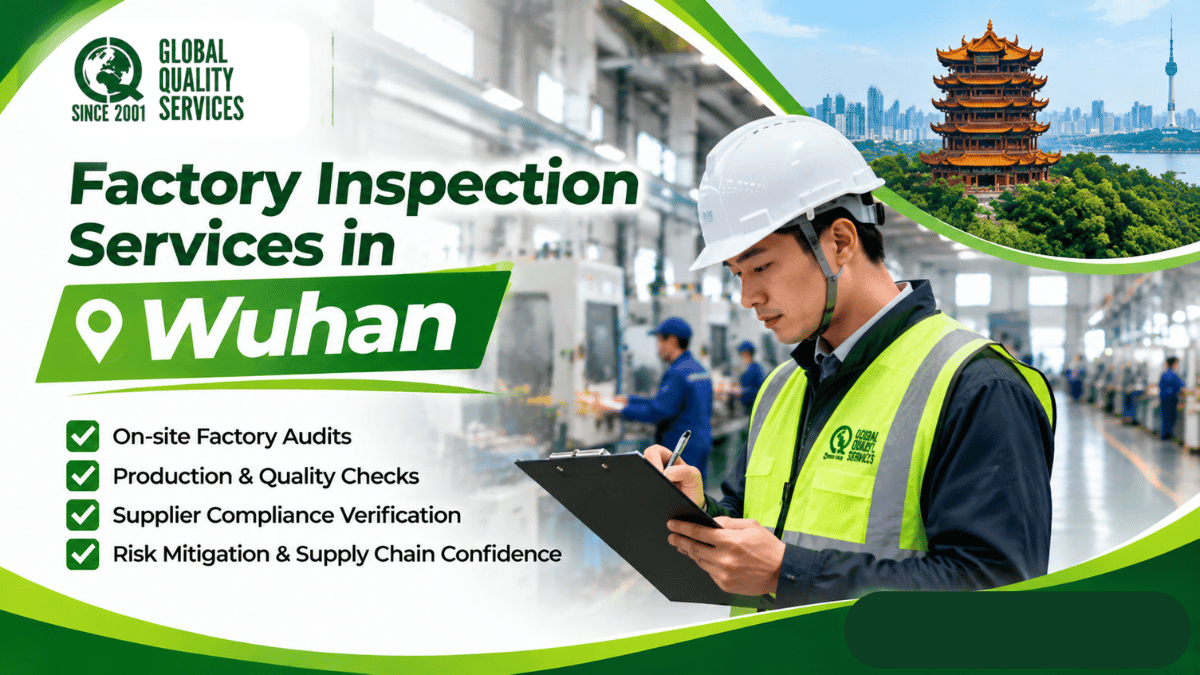
Global Quality Services provides independent factory inspection services in Wuhan, China, for importers, manufacturers, purchasing teams and businesses evaluating potential suppliers. The inspection examines agreed aspects of a factory’s facilities, production capability, manufacturing operations, quality-control practices, equipment and documentation. It gives clients a clearer picture of the supplier’s operating environment before placing orders or continuing a business relationship.
Why Factory Inspection Matters When Sourcing from Wuhan
A supplier’s ability to produce an acceptable sample does not automatically demonstrate that the factory can maintain the same quality across regular production. Manufacturing capacity, workforce availability, equipment condition, material handling and production controls all influence how orders are fulfilled.
This is particularly relevant in Wuhan, where industrial businesses operate across different manufacturing categories. An electronics factory may require close attention to component storage and process controls, while a metal fabrication facility may need a review of machinery, material identification and production-stage checks.
Factory inspection can help buyers examine:
- Actual manufacturing capability: Whether the factory has the production areas, machinery and resources relevant to the products being sourced.
- Production organization: How work orders, manufacturing stages and production activities are managed.
- Material management: How incoming materials are received, identified, stored and issued to production.
- Quality-control arrangements: Whether inspection activities and quality records are maintained at relevant production stages.
- Equipment and maintenance: The visible condition of machinery, production equipment and maintenance arrangements.
- Finished-goods management: How completed products are inspected, identified, stored and prepared for dispatch.
- Documented procedures: Whether the factory maintains relevant production instructions, inspection records and traceability information.
The findings help buyers understand the factory’s observable operations and identify areas that may need clarification before supplier approval or order placement.
Industry-Specific Factory Inspection in Wuhan
Wuhan’s manufacturing base includes several sectors with different production requirements. A useful factory inspection should reflect the processes and equipment relevant to the supplier’s industry rather than rely on a single generic checklist.
Electronics and Electrical Equipment Manufacturing
For electronics and electrical equipment factories, inspection can focus on component storage, assembly lines, soldering and wiring operations, production controls, test stations and finished-product handling.
The review may include the availability of work instructions, component identification, process records, equipment maintenance information and selected functional inspection records.
Automotive and Automotive Component Manufacturing
Automotive factories may require closer attention to machining, stamping, welding, assembly, component traceability and in-process quality checks.
The inspection can review production-line organization, material identification, process documentation, equipment condition and the records maintained for selected manufacturing stages.
Metal Processing and Machinery Manufacturing
For metalworking and machinery suppliers, the inspection can cover cutting, machining, forming, welding, surface finishing and assembly operations.
The review may include machinery availability, raw-material storage, process instructions, dimensional inspection arrangements, equipment maintenance and product identification.
High-Tech and Precision Manufacturing
Factories producing precision components or specialized equipment may require additional attention to process control, measurement arrangements, component handling and production documentation.
Depending on the product, the inspection can review clean or controlled production areas, measurement equipment records, work instructions and traceability arrangements. Formal cleanroom classification, environmental validation and laboratory testing require separate specialist assessment.
Chemical and Industrial Material Manufacturing
For selected chemical and industrial material factories, inspection can cover the production layout, raw-material identification, storage arrangements, batch records, process documentation and finished-product handling.
The inspection scope must be defined carefully for facilities involving hazardous materials, regulated processes or specialized plant equipment. It does not replace statutory safety inspections, environmental assessments or process-safety audits.
Types of Factory Inspection Services
The timing of an inspection depends on the buyer’s purpose. Global Quality Services can arrange different types of factory inspection based on the stage of supplier evaluation or manufacturing.
Initial Factory Inspection
An initial factory inspection is useful when a buyer is considering a new supplier. It provides an overview of the factory’s premises, machinery, production activities, workforce organization and quality-control arrangements before a commercial relationship is established.
During-Production Factory Inspection
A during-production inspection focuses on manufacturing activities while an order is being processed. It can examine selected production stages, material handling, work instructions, in-process quality checks and the management of identified issues.
Final Factory Inspection
A final factory inspection provides a review of the factory and its relevant operations at an agreed point before order completion or dispatch. Depending on the scope, it can include production status, finished-goods handling, quality records and available order documentation.
It is different from a product-level pre-shipment inspection, which focuses on the actual goods in a specific shipment.
Periodic Factory Inspection
Periodic inspection can be arranged to review a supplier’s operating conditions over time. It may help buyers observe changes in production facilities, equipment, process organization, quality arrangements or storage practices.
Benefits of Factory Inspection in Wuhan
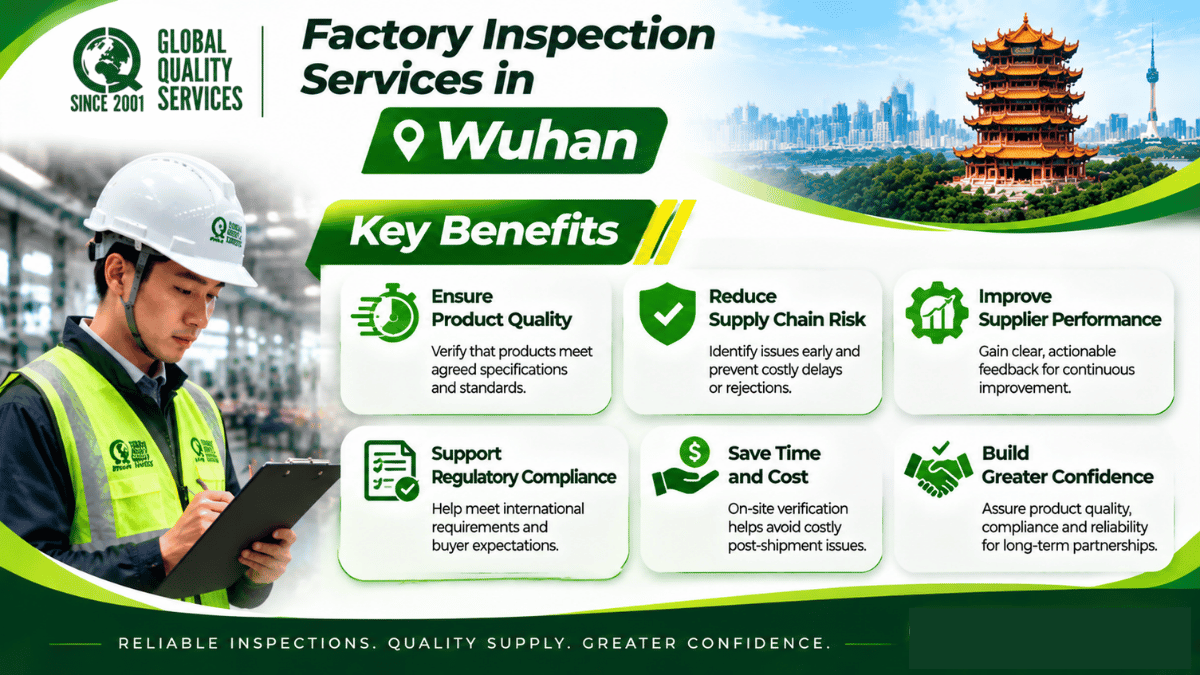
A factory inspection gives buyers an independent view of the supplier’s manufacturing environment. The findings can support sourcing decisions, supplier reviews and discussions about production requirements.
Understand the Supplier’s Actual Capabilities
A factory visit helps buyers compare the supplier’s stated manufacturing activities with the facilities, equipment and production operations observed during the inspection.
Identify Operational Gaps
The review can highlight issues such as inadequate storage arrangements, unclear material identification, incomplete production records, visible equipment concerns or gaps in inspection documentation.
Assess Production Organization
Observing selected manufacturing stages helps buyers understand how work moves through the factory, how production activities are organized and where quality checks take place.
Improve Supplier Selection Decisions
Documented findings provide additional information when comparing potential suppliers. Buyers can consider the factory’s facilities, production resources and quality-control arrangements alongside commercial factors.
Support Ongoing Supplier Monitoring
Periodic inspections allow businesses to review selected aspects of factory operations and identify changes that may affect their sourcing arrangements.
Maintain a Documented Evaluation Record
An inspection report provides a record of the areas reviewed, observations made and documents examined. Buyers can use it during internal supplier evaluations and follow-up discussions.
Our Factory Inspection Process in Wuhan
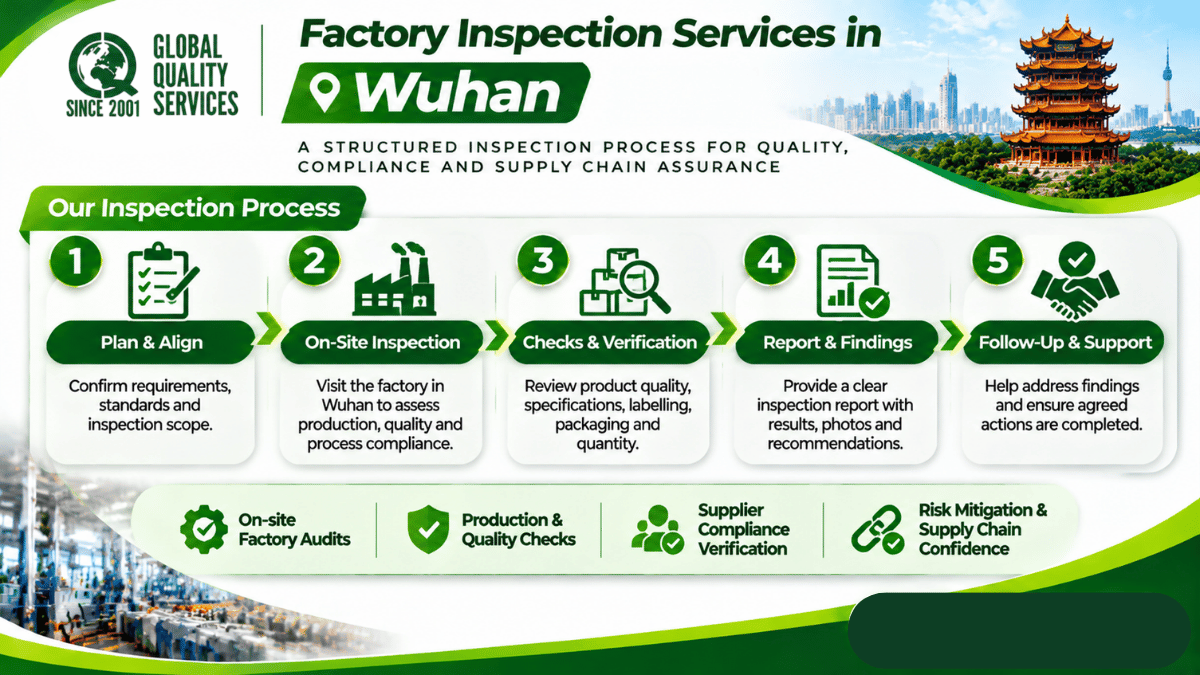
Global Quality Services follows a planned inspection process based on the factory’s manufacturing activities and the buyer’s evaluation objectives.
1. Understand the Supplier and Inspection Requirements
The process begins with collecting the supplier’s business and factory details, product information and the buyer’s inspection objectives. The required areas of review are identified, including production capability, machinery, material management, quality control and documentation.
2. Prepare the Inspection Checklist
A checklist is developed around the factory’s industry and the agreed scope. It identifies the production areas, equipment, records and operational activities that need to be reviewed during the visit.
3. Visit the Factory and Review Facilities
The inspection covers the agreed premises and production areas. Inspectors observe factory organization, manufacturing space, storage arrangements, machinery and supporting facilities relevant to the supplier’s operations.
4. Observe Manufacturing and Quality-Control Activities
Selected production stages are reviewed to understand material movement, work instructions, process organization and in-process inspection practices. Available quality records and equipment maintenance documents can also be examined within the agreed scope.
5. Review Records and Identify Observations
Relevant documents are reviewed to compare the factory’s stated procedures with available records and observed practices. Any identified gaps, inconsistencies or areas requiring clarification are recorded.
6. Prepare the Factory Inspection Report
The findings are compiled into a report covering the inspection scope, observations and relevant supporting evidence. The report gives the client a documented basis for reviewing the supplier and deciding whether additional clarification or follow-up is needed.
Factory Inspection vs. Factory Audit: What Is the Difference?
Factory inspection and factory audit are related supplier-evaluation activities, but they do not necessarily have the same purpose.
A factory inspection generally focuses on observing facilities, production operations, machinery, material handling, quality-control activities and relevant records against an agreed checklist.
A factory audit is usually a more structured evaluation against defined audit criteria, such as a management-system standard, customer-specific requirements or a supplier code of conduct. It may involve a formal audit methodology, evidence evaluation and audit conclusions.
Global Quality Services’ factory inspection service should not be presented as an ISO certification audit or a statutory compliance audit unless a separate, appropriately defined and authorized service is arranged. An inspection report does not itself award certification or establish regulatory compliance.
Why Choose Global Quality Services?
Global Quality Services provides independent third-party inspection services for businesses evaluating manufacturers and suppliers across different industries. Factory inspections are planned around the supplier’s actual operations and the buyer’s specific evaluation requirements.
Our approach emphasizes:
- Industry-relevant inspection: Checklists are developed according to the factory’s manufacturing activities and product category.
- Operational visibility: The inspection reviews agreed production areas, machinery, material handling and quality-control arrangements.
- Document review: Relevant production, inspection and maintenance records can be examined within the agreed scope.
- Independent reporting: Findings are documented clearly so buyers can review observed conditions and identified gaps.
- Flexible inspection arrangements: Initial, during-production, final and periodic factory inspections can be planned according to sourcing requirements.
The service provides an independent view of the areas inspected. It does not guarantee future production performance, replace a manufacturer’s internal quality system or grant ISO certification, statutory approval or regulatory clearance.
Frequently Asked Questions
1. What is checked during a factory inspection in Wuhan?
A factory inspection can cover manufacturing facilities, production machinery, raw-material storage, production processes, quality-control arrangements, workforce organization, finished-goods storage and relevant factory records. The exact scope depends on the supplier’s industry and the buyer’s requirements.
2. Can factory inspection be arranged before placing an order with a new supplier?
Yes. An initial factory inspection can be arranged during supplier evaluation. It allows buyers to review the factory’s facilities, production resources and observable quality-control arrangements before deciding whether to proceed with sourcing.
3. Does factory inspection include a review of production capacity?
The inspection can review observable production resources, such as machinery, production lines, available work areas, workforce organization and production records. A factory’s actual output capacity should be assessed using relevant production data and agreed verification methods; a site visit alone does not guarantee future production volumes.
4. Can Global Quality Services inspect factories in different industries in Wuhan?
Yes. Factory inspections can be planned for automotive, electronics, electrical equipment, metal processing, machinery, precision manufacturing and other industrial facilities. The checklist is adapted to the manufacturing processes and inspection objectives.
5. Is a factory inspection the same as an ISO 9001 audit?
No. A factory inspection reviews agreed aspects of a supplier’s facilities and manufacturing operations. An ISO 9001 audit evaluates a quality management system against the requirements of the standard. A factory inspection does not award ISO 9001 certification or replace an audit by an appropriately qualified certification body.