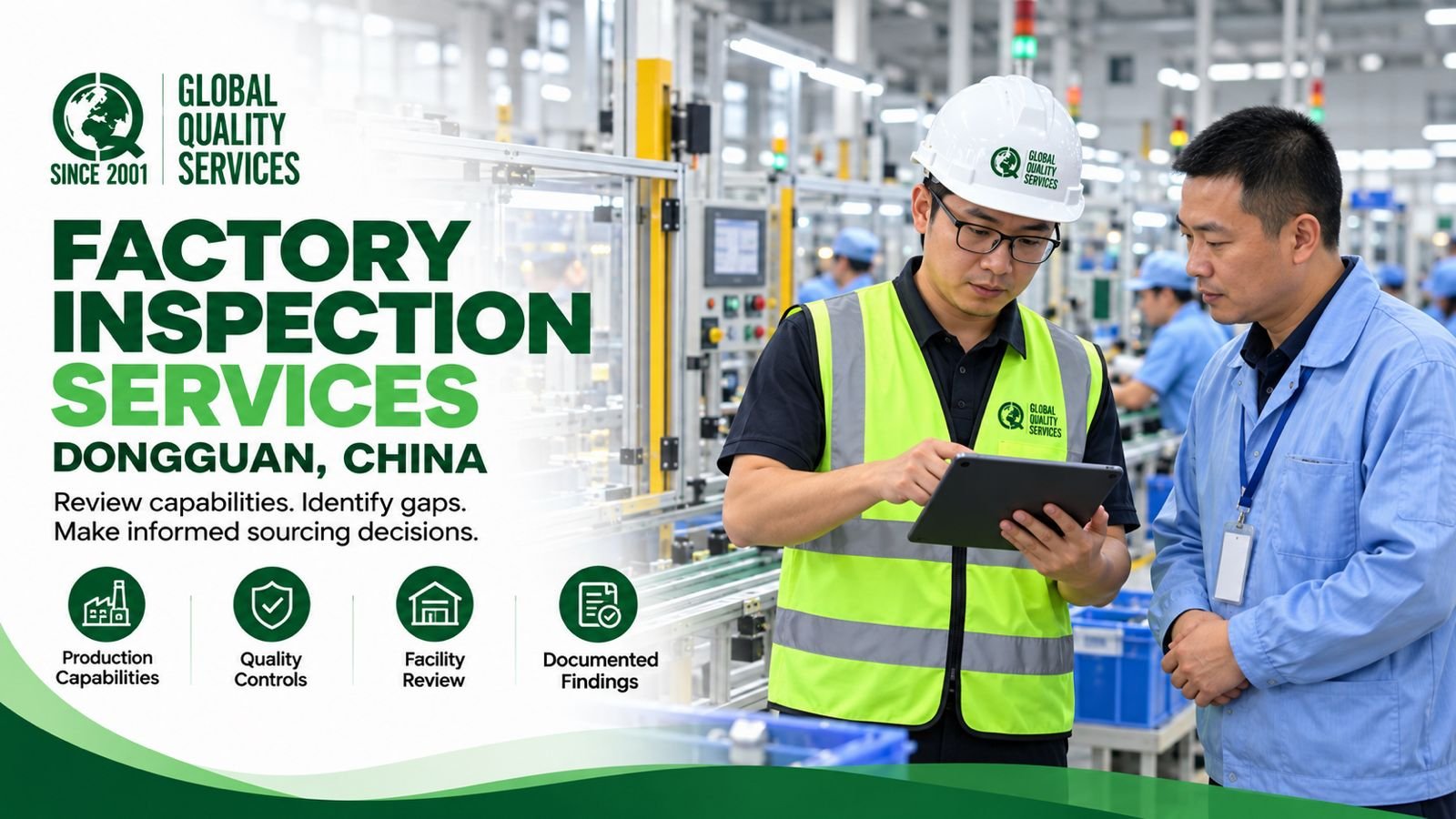
Dongguan is a major manufacturing center in Guangdong Province, China, with factories producing electronics, electrical components, machinery, furniture, textiles, plastics, and consumer products. For international buyers sourcing from this manufacturing base, evaluating a factory’s production facilities, quality control arrangements, equipment, and operating processes is an important part of supplier selection and ongoing quality management.
Global Quality Services (GQS) provides factory inspection services in Dongguan to assess manufacturing facilities against defined inspection criteria and client requirements. The inspection scope can cover production capabilities, equipment condition, material handling, quality control procedures, storage arrangements, workplace conditions, and other relevant operational areas. Findings are documented to help clients evaluate factory conditions and make informed sourcing or supplier-management decisions.
Why Are Factory Inspection Services Important in Dongguan?
A factory’s production capacity and product quality depend on several connected factors, including equipment, workforce competence, manufacturing processes, incoming materials, and quality control. Reviewing these areas helps buyers determine whether a facility’s actual operations align with their expectations.
Factory inspections can be useful when selecting a new supplier, evaluating an existing manufacturing partner, investigating quality concerns, or reviewing changes to a production facility.
Evaluate Manufacturing Capabilities
An inspection can review the available production equipment, manufacturing processes, facility layout, and resources relevant to the products being manufactured. This helps buyers compare a factory’s stated capabilities with the conditions observed during the inspection.
Review Quality Control Arrangements
Quality checks during incoming material inspection, production, and final inspection can affect finished-goods consistency. Reviewing the factory’s quality control arrangements helps identify how inspection activities are conducted and documented.
Identify Operational Risks
Equipment maintenance issues, unsuitable storage arrangements, inadequate material segregation, or gaps in production controls may affect manufacturing performance. An inspection can document observable concerns within the agreed scope.
Strengthen Supplier Evaluation
Factory inspection findings provide additional information for supplier selection and periodic supplier reviews. Buyers can use the results alongside product samples, certifications, production records, and other supplier evaluation information.
Improve Visibility Into Factory Conditions
For overseas buyers, an inspection provides a documented view of the facility without requiring the buyer’s team to visit in person. The report records the areas examined and the findings observed during the inspection.
What Do Factory Inspection Services Cover?
The inspection scope is determined by the factory’s activities, the products manufactured, and the client’s requirements. Depending on the assignment, GQS factory inspection services in Dongguan may cover the following areas.
1. Factory Facilities and Infrastructure
The inspection may review the general condition and suitability of the manufacturing premises, including production areas, workspaces, storage zones, utilities, and material movement arrangements. Observations are recorded against the agreed inspection criteria.
2. Production Equipment and Machinery
Inspectors examine relevant machinery and equipment for visible condition, general maintenance, suitability for the stated production activities, and other agreed checkpoints. Operational testing is included only where it is specified in the scope and can be performed safely.
3. Manufacturing Processes
The inspection may review the production workflow, process organization, material movement, work instructions, and controls used during manufacturing. The objective is to determine whether the observed arrangements align with the inspection requirements.
4. Quality Management and Inspection Procedures
Relevant quality control arrangements may be reviewed, including incoming material checks, in-process inspections, final product checks, nonconformity records, and corrective action procedures. The assessment focuses on the agreed criteria and available evidence.
5. Raw Materials and Component Storage
Storage arrangements can influence material condition, traceability, and production consistency. Inspection checkpoints may include material identification, segregation, storage conditions, inventory controls, and protection against damage or contamination where relevant.
6. Finished Goods and Warehouse Conditions
The inspection may examine how finished products are identified, stored, handled, and prepared for dispatch. Relevant checks can include stock segregation, packaging condition, product traceability, and arrangements for preventing mix-ups or damage.
7. Workforce and Operational Practices
Depending on the scope, inspectors may observe work practices, use of work instructions, organization of production tasks, and relevant operational controls. Any assessment of personnel qualifications or training records must be defined within the inspection requirements.
8. Documentation and Records
Relevant records may include production logs, equipment maintenance records, quality inspection reports, material records, work instructions, and other documents specified by the client. The inspection report should distinguish between documents reviewed and information that was not available.
Factory Inspection Services for Different Industries in Dongguan
Dongguan’s diverse manufacturing base includes factories with different equipment, production methods, and quality requirements. Factory inspection criteria should reflect the nature of the products and the processes involved.
- Electronics and electrical manufacturing: Production equipment, component handling, assembly processes, quality checkpoints, and storage arrangements.
- Plastic products and injection molding: Molding machinery, production organization, raw material handling, process monitoring, and finished product storage.
- Machinery and industrial equipment: Equipment condition, manufacturing processes, component identification, maintenance records, and inspection procedures.
- Furniture and woodworking: Production machinery, material storage, finishing areas, workmanship controls, and handling practices.
- Textiles and apparel: Production workflow, cutting and stitching operations, material identification, quality inspection arrangements, and finished goods storage.
- Metal fabrication: Processing equipment, material traceability, fabrication workflow, inspection records, and product handling.
- Toys and consumer products: Assembly processes, component management, quality control checkpoints, packaging areas, and relevant production records.
Specialized product testing, laboratory analysis, statutory inspections, and certification audits are separate activities unless specifically included in the agreed scope.
Benefits of Factory Inspection Services
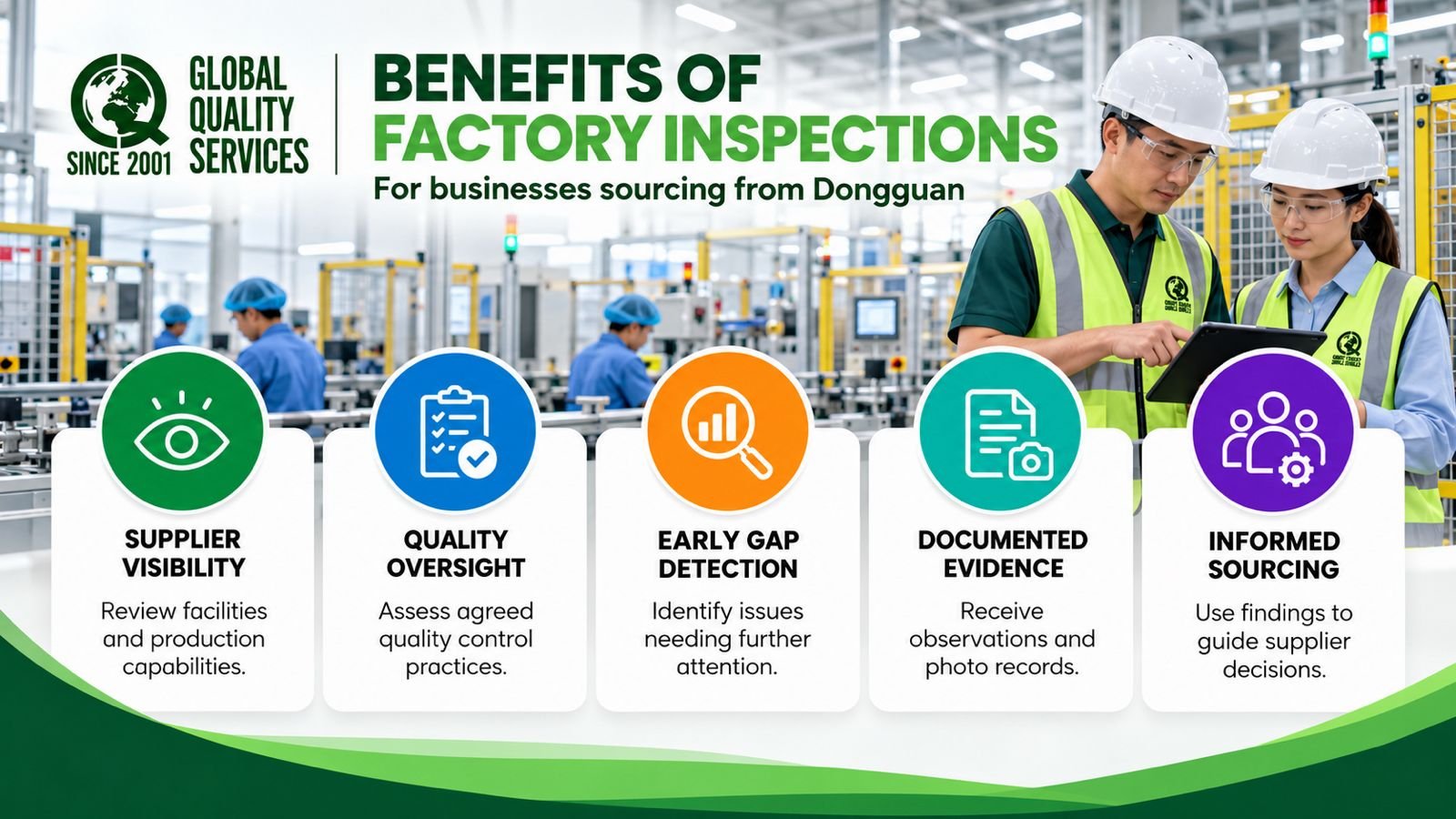
Factory inspection provides structured information about a manufacturing facility and its operating arrangements. When used alongside other supplier evaluation methods, it can help businesses make more informed decisions about sourcing, production oversight, and quality management.
1. Better Supplier Selection
Reviewing factory capabilities and operating conditions helps buyers evaluate whether a potential supplier’s facilities and processes align with their manufacturing requirements.
2. Greater Visibility Into Production Operations
Inspection findings provide information about the equipment, workflows, storage arrangements, and quality control practices observed during the visit. This helps buyers understand the factory beyond its commercial presentation.
3. Early Identification of Operational Concerns
Documenting visible deficiencies or gaps in agreed inspection checkpoints gives the relevant parties an opportunity to investigate and determine appropriate corrective action.
4. Improved Supplier Monitoring
Periodic inspections can help buyers compare factory conditions over time and review changes in production arrangements, equipment, or quality control practices.
5. More Informed Sourcing Decisions
A factory inspection report provides evidence that can be considered alongside product samples, order history, audit records, and supplier documentation when evaluating a manufacturing partner.
6. Clearer Communication With Suppliers
Documented findings identify the areas requiring attention and provide a common reference for discussions between buyers and factory management.
When Should You Arrange a Factory Inspection?
Factory inspection can be useful at different stages of a supplier relationship, depending on the risks and objectives involved.
Consider arranging an inspection when:
- Evaluating a new manufacturing supplier in Dongguan.
- Comparing multiple factories before placing a purchase order.
- Reviewing a supplier’s production facilities before increasing order volumes.
- Investigating recurring product quality problems.
- Checking changes in equipment, production capacity, or manufacturing arrangements.
- Reviewing storage, material handling, or quality control practices.
- Conducting periodic supplier performance reviews.
- Assessing a factory before assigning production of a new product category.
A factory inspection provides a snapshot of the conditions observed during the visit. It does not, by itself, guarantee future production quality, confirm every supplier claim, or replace product testing and other assessments that may be required.
What Factors Affect the Scope and Cost of Factory Inspection?
The scope and cost depend on the factory’s operations, the inspection objectives, and the amount of work required.
Key considerations include:
- Factory size: The number of production areas, warehouses, and operating units to be examined.
- Industry and manufacturing processes: Specialized machinery or complex production operations may require additional inspection time.
- Inspection criteria: A general facility review differs from a detailed examination of defined processes, records, and equipment.
- Documentation requirements: The number and type of records to be reviewed can affect the inspection duration.
- Inspection location and scheduling: Factory access, travel arrangements, availability, and the requested inspection date may influence planning.
- Reporting requirements: Specific client templates, supporting photographs, or detailed reporting requirements may affect the work involved.
- Additional services: Product inspection, laboratory testing, technical measurements, or follow-up visits may require separate arrangements.
Providing the factory address, industry, inspection objectives, and required checkpoints helps establish a suitable scope for quotation.
Our Factory Inspection Process in Dongguan
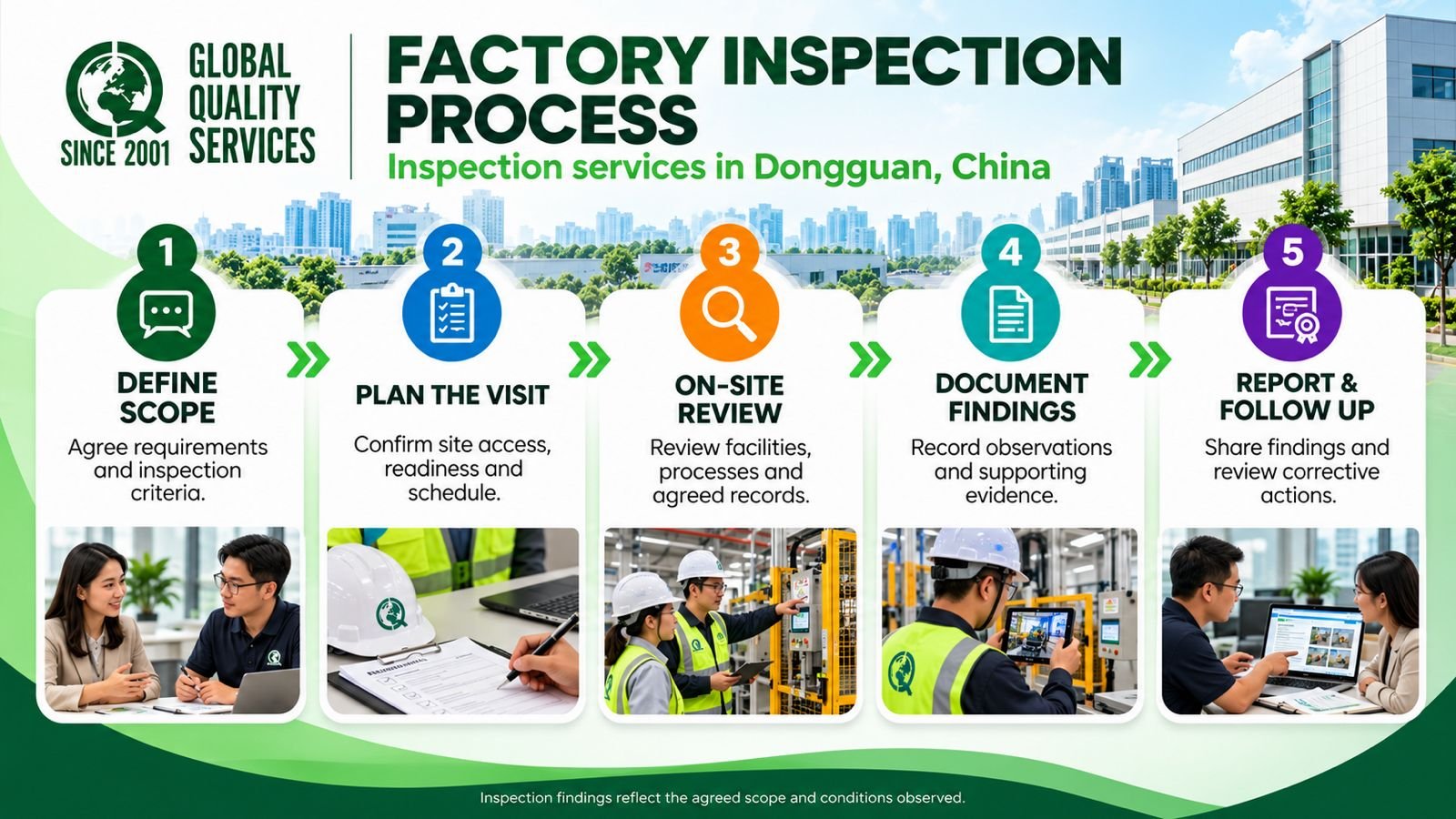
GQS establishes the inspection scope based on the client’s objectives, factory type, and areas to be assessed. The process is structured to ensure inspection findings align with defined requirements.
Step 1: Understand the Inspection Requirements
The process begins with reviewing the client’s objectives, factory details, product categories, manufacturing activities, and specific concerns. Relevant documents and inspection criteria are identified before the visit.
Step 2: Define the Inspection Scope
The scope establishes the facility areas, production processes, equipment, records, and operational checkpoints to be examined. Any exclusions, testing requirements, or limitations are clarified in advance.
Step 3: Conduct the Factory Inspection
The inspector visits the facility and examines the agreed areas. This may include production floors, machinery, material storage, quality control stations, finished goods areas, and relevant documentation.
Step 4: Record Observations and Findings
Observations are documented against the inspection criteria. Photographs, records, and other supporting evidence may be included where appropriate and permitted by the facility’s access arrangements.
Step 5: Prepare the Inspection Report
The report summarizes the inspection scope, areas examined, findings, and any identified discrepancies. It distinguishes observed conditions from information that could not be verified during the visit.
Step 6: Review Findings and Next Steps
The client can review the report and determine whether further investigation, corrective action, product inspection, or a follow-up factory visit is appropriate. Any additional work is arranged according to the agreed requirements.
Why Choose Global Quality Services for Factory Inspection in Dongguan?
Global Quality Services provides factory inspection services based on defined client requirements and the facility’s operating characteristics. Our approach focuses on reviewing agreed checkpoints, recording relevant observations, and presenting findings in a structured report. The inspection scope can be tailored to manufacturing equipment, production processes, quality control arrangements, material storage, finished goods handling, and relevant documentation. Clear scope definition helps clients understand what was inspected, what findings were recorded, and which matters may require further evaluation.
Choosing a manufacturing supplier requires more than reviewing quotations and product samples. Understanding the factory’s facilities, production setup, and quality control practices can provide valuable insight before you place an order or continue an existing supplier relationship.
Contact Global Quality Services to discuss factory inspection services in Dongguan, China. Share your supplier details, product category, inspection objectives, and required checkpoints so the inspection scope can be established according to your needs.
Frequently Asked Questions
1. What is included in a factory inspection in Dongguan?
The scope may include factory facilities, production equipment, manufacturing processes, quality control procedures, raw material storage, finished goods handling, and relevant records. The exact checkpoints depend on the industry and the client’s requirements.
2. What is the difference between a factory inspection and a product inspection?
A factory inspection focuses on the manufacturing facility, equipment, production processes, and operational controls. A product inspection examines the goods themselves against defined specifications, workmanship standards, quantity requirements, or other acceptance criteria. Both may be required for a complete supplier evaluation.
3. Can a factory inspection be conducted before placing an order?
Yes. A pre-order factory inspection can help buyers review a potential supplier’s facilities, stated manufacturing capabilities, and quality control arrangements before committing to production. The findings should be considered alongside samples, references, documentation, and other supplier evaluation evidence.
4. Does a factory inspection guarantee product quality?
No. A factory inspection records the conditions and evidence observed within the agreed scope at the time of the visit. It does not guarantee that every product will meet specifications or that future production will remain consistent. Product inspections and testing may be needed for additional verification.
5. Can factory inspection include a review of quality management records?
Yes, when record review is included in the agreed scope. Relevant documents may include quality inspection reports, production records, equipment maintenance records, work instructions, and corrective action records. The report should identify which records were reviewed and any limitations.