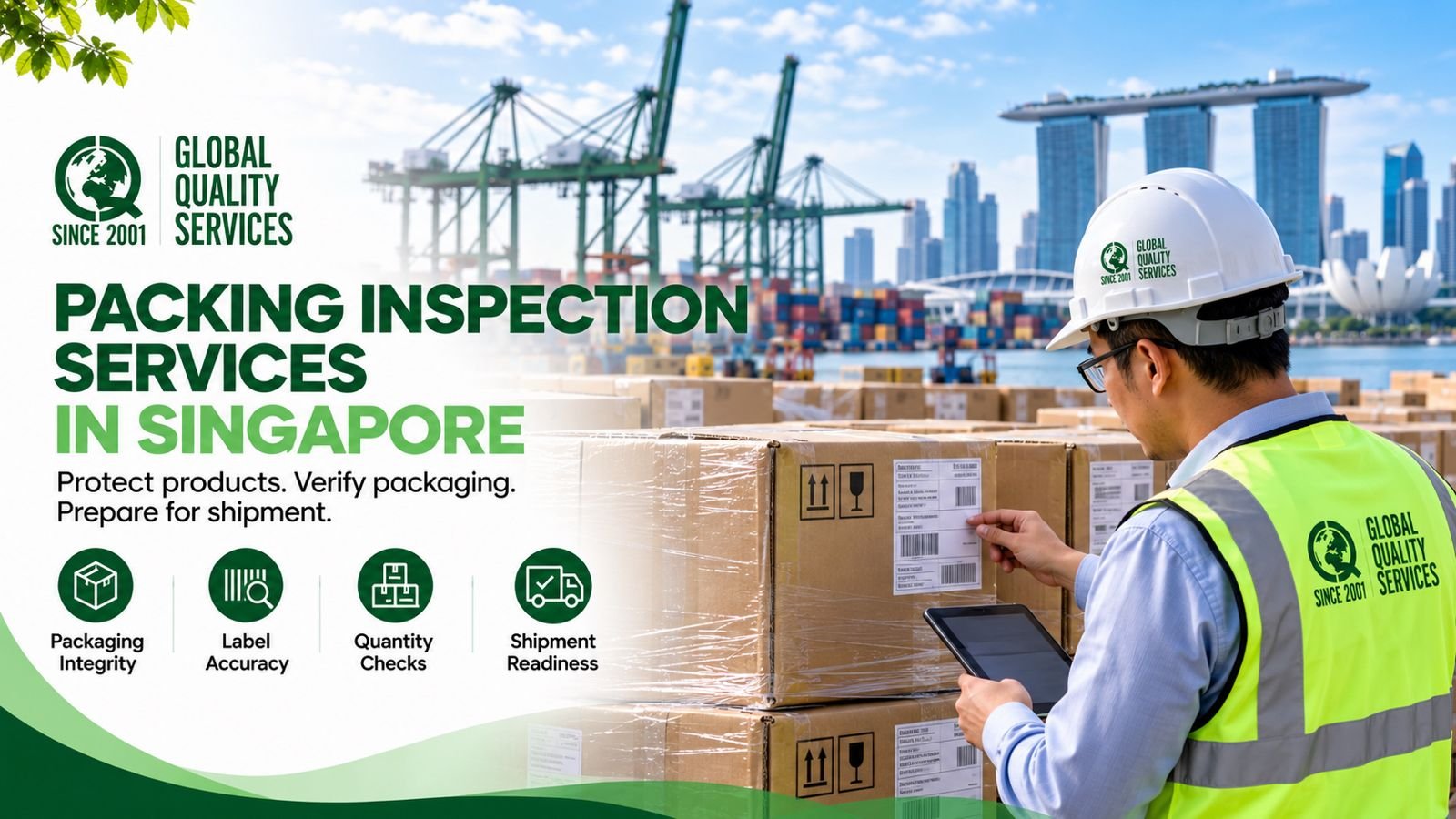
Packing quality plays an important role in protecting products during storage, handling, and transportation. Improper packing methods, damaged cartons, missing labels, or unsuitable protective materials can cause product damage, shipment delays, and customer complaints. For businesses shipping goods domestically or internationally, checking packaging before dispatch helps identify potential issues. Global Quality Services (GQS) provides packing inspection services to evaluate whether packed goods meet the buyer’s specified packaging requirements. Inspections can cover packaging materials, packing methods, carton markings, quantity verification, product protection, and shipment preparation, depending on the agreed inspection scope. Our inspections provide documented findings that help buyers, importers, and manufacturers identify packing discrepancies before goods leave the supplier’s facility.
What Are Packing Inspection Services?
Packing inspection is a quality control activity that examines how products are packed and prepared for shipment. It verifies whether packaging materials, packing configurations, labels, and outer cartons comply with the purchase order, approved samples, packaging specifications, or other agreed requirements.
The inspection may take place during packing or after packing is complete, depending on the shipment schedule and inspection objectives.
Packing inspections are particularly relevant for manufacturers, exporters, importers, wholesalers, and retailers handling products that require specific packaging, labeling, or protection during transportation.
What Do Our Packing Inspections Cover?
GQS can structure packing inspections around the product type, buyer requirements, shipping conditions, and applicable packaging specifications. The inspection checklist is agreed upon before the inspection begins.
1. Packaging Material Verification
Packaging materials are checked against specified requirements to identify discrepancies that could affect product protection or presentation.
Checks may include:
- Carton type, material, and specified strength
- Inner packaging and protective inserts
- Bubble wrap, foam, dividers, and cushioning materials
- Polybags, sleeves, and other protective coverings
- Packaging condition and visible damage
- Packing configuration against agreed specifications
2. Packing Method and Product Protection
The inspection evaluates whether products are packed according to the approved packing instructions.
This may include checking:
- Correct product placement inside cartons
- Separation and protection of individual items
- Use of cushioning and void fillers
- Prevention of excessive movement within cartons
- Protection against scratches, impact, or abrasion
- Packing configuration against approved samples or instructions
The inspection identifies visible packing deficiencies and deviations from agreed requirements. It does not establish that packaging will withstand every possible transportation condition.
3. Carton Quantity and Packing Accuracy
Packing errors can lead to shortages, incorrect deliveries, and inventory discrepancies. Quantity checks help verify whether inspected cartons contain the specified products and quantities.
Depending on the agreed scope, checks may include:
- Number of units per inner box or master carton
- Product model, size, color, or variant
- Carton count and packing configuration
- Product-to-carton matching
- Inner and outer packaging consistency
- Comparison with the packing list or purchase order
4. Labeling and Carton Markings
Correct labeling helps buyers, warehouse teams, carriers, and other stakeholders identify and handle shipments appropriately.
The inspection may verify:
- Product names and item codes
- Model numbers and variants
- Quantity information
- Carton numbers and shipping marks
- Country-of-origin markings, where required
- Barcode or QR code presence, where specified
- Handling instructions and orientation symbols
- Buyer-specific labels and identification requirements
These checks are performed against the agreed specifications. Destination-specific regulatory labeling may require a separate assessment depending on the product and target market.
5. Carton Condition and Sealing
The condition of outer cartons can affect how well products are protected during transportation and handling.
Inspection points may include:
- Crushed, torn, wet, or deformed cartons
- Damaged corners and edges
- Loose or incomplete carton sealing
- Incorrect tape or sealing methods
- Visible gaps or openings
- Strapping and wrapping, where specified
- Signs of handling damage before dispatch
6. Palletization and Shipment Preparation
Where palletized shipments are included in the scope, the inspection can examine how cartons are arranged and secured for movement.
Checks may cover:
- Carton arrangement and stacking
- Pallet condition
- Load stability and weight distribution
- Stretch wrapping and strapping
- Shipment identification
- Compliance with agreed loading or handling instructions
Container loading supervision and transport-specific testing are separate activities unless expressly included in the inspection scope.
When Should Packing Inspections Be Conducted?
The timing of an inspection depends on the production and dispatch schedule, packaging requirements, and risks associated with the shipment.
During Packing
An inspection during packing allows issues to be identified while products are still being packed. This can be useful when the packing process is ongoing or when the buyer wants to verify packing methods before the entire order is completed.
After Packing Is Completed
A final packing inspection checks completed cartons for packaging condition, labeling, quantity, and compliance with the agreed packing specifications. It is useful when goods are ready for dispatch but have not yet been shipped.
Before Shipment Dispatch
Pre-dispatch packing checks provide an opportunity to identify visible packing discrepancies before goods leave the supplier’s facility. The inspection can be coordinated with other agreed quality checks where the schedule permits.
Our Packing Inspection Process
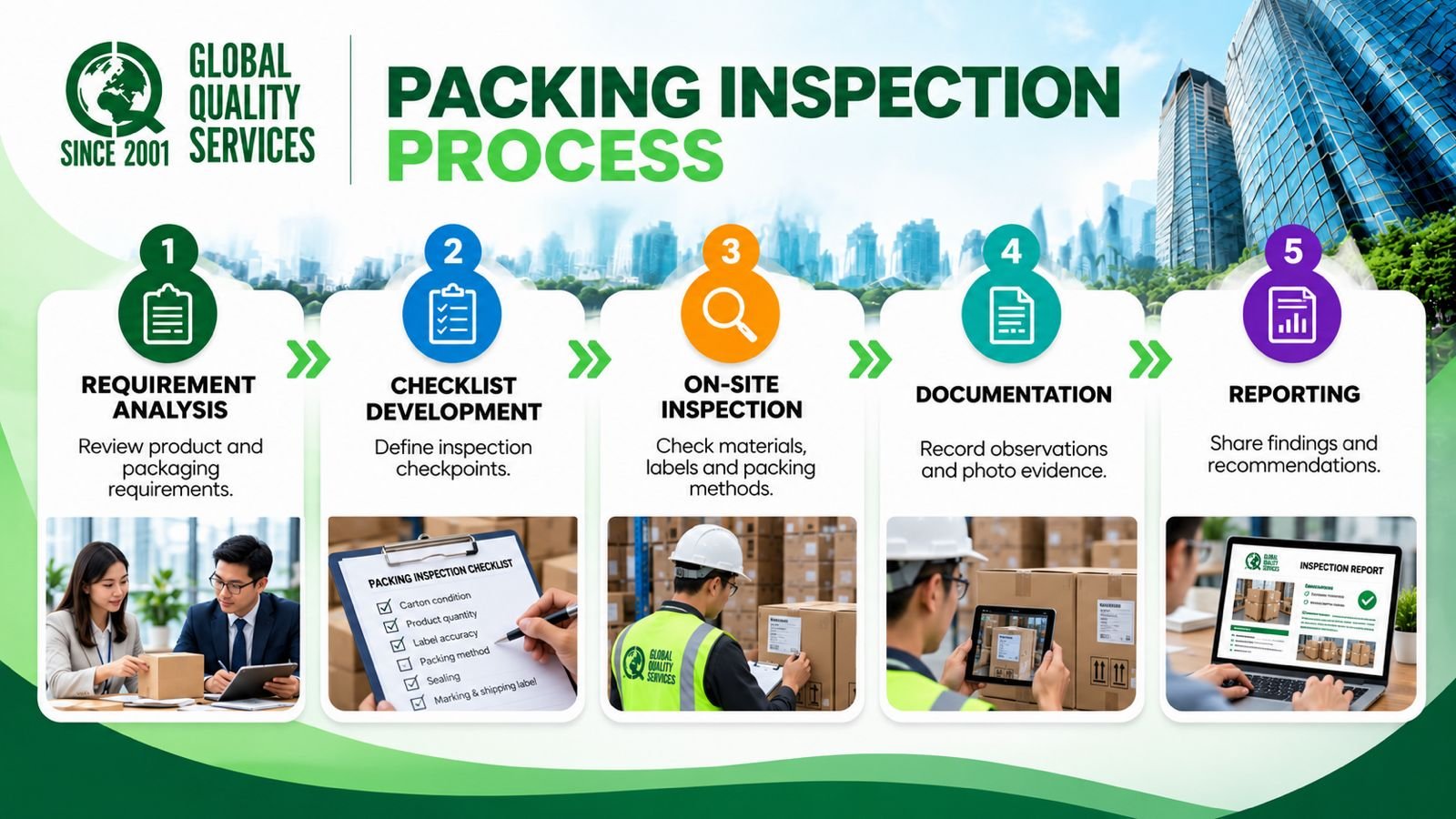
GQS provides structured packing inspections based on the buyer’s specifications and agreed quality requirements. The inspection scope is defined according to the product type, packing instructions, shipment schedule, and requirements established before the inspection.
Our packing inspection process may include:
- Requirement Review: Reviewing purchase orders, approved samples, packaging specifications, and packing instructions.
- Packaging Material Inspection: Checking carton quality, protective materials, cushioning, and inner packaging against specified requirements.
- Packing Method Verification: Evaluating product placement, protective wrapping, carton arrangement, and packing configurations.
- Quantity and Label Checks: Verifying selected product quantities, carton markings, item codes, and shipping labels against agreed specifications.
- Carton Condition Assessment: Examining cartons for visible damage, deformation, inadequate sealing, and other packing deficiencies.
- Inspection Reporting: Documenting observations, identifying discrepancies, and presenting findings for the buyer’s review before dispatch.
The inspection activities depend on the agreed scope, sampling requirements, and availability of goods at the time of inspection.
Which Industries Need Packing Inspection Services?
Packing inspections can be useful across industries where product condition, packaging accuracy, and shipment preparation are important.
- Electronics and electrical products: Check protective materials, product separation, carton markings, and packaging arrangements.
- Furniture and home furnishings: Examine corner protection, cushioning, surface protection, and packing configurations.
- Textiles and apparel: Verify folding, polybags, size labels, assortment quantities, and carton identification.
- Consumer goods: Check packaging consistency, product quantities, labels, and outer carton condition.
- Machinery and industrial equipment: Review protective packing, moisture barriers where specified, component identification, and handling markings.
- Toys and children’s products: Verify packaging configuration, product identification, and specified warning labels.
- Automotive components: Check part identification, protective packaging, quantities, and packing arrangements.
- Packaging and manufactured goods: Evaluate packaging materials, carton construction, sealing, and compliance with approved requirements.
The final inspection scope depends on the product, buyer specifications, destination requirements, and shipment conditions.
Benefits of Packing Inspection Services
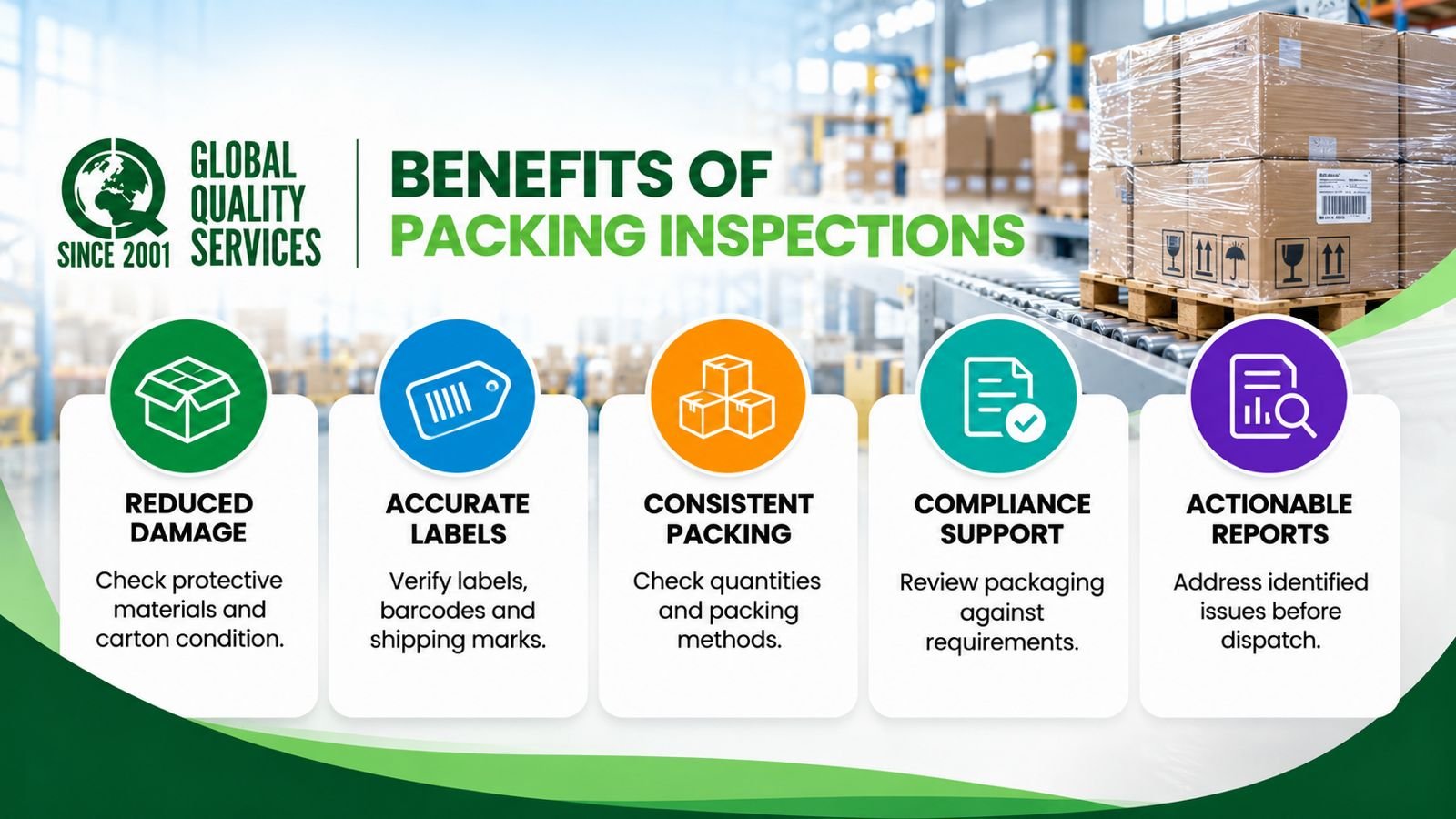
Packing inspections help businesses evaluate packaging quality and identify discrepancies before goods are dispatched. By checking packed products against agreed specifications, buyers can make better-informed decisions about shipment readiness.
1. Identify Packing Deficiencies Before Dispatch
Inspections can reveal visible issues such as damaged cartons, inadequate cushioning, incorrect packing methods, and incomplete sealing before goods leave the supplier’s facility.
2. Verify Packaging and Labeling Requirements
Checking packaging materials, carton markings, product identification, and shipping labels helps identify discrepancies between the actual packing and the buyer’s specifications.
3. Improve Shipment Accuracy
Quantity and packing checks can help identify incorrect product variants, missing units in inspected cartons, and inconsistencies between carton contents and packing documentation.
4. Reduce the Risk of Product Damage
Evaluating protective materials, product placement, and carton condition can highlight packing weaknesses that may increase the risk of damage during handling and transportation.
5. Maintain Consistent Packing Standards
Using defined inspection criteria across suppliers or shipments helps businesses evaluate whether packaging and packing methods meet their established requirements.
6. Support Better Shipment Decisions
Documented inspection findings give buyers a clearer view of identified packing discrepancies, helping them determine whether further checks or corrective actions are needed before dispatch.
Packing inspections are one part of shipment quality control. Their effectiveness depends on the inspection scope, timing, sampling method, and accuracy of the specifications provided.
Why Choose Global Quality Services for Packing Inspection Services?
GQS provides structured packing inspections based on buyer specifications, approved packing instructions, and agreed quality requirements. Our approach focuses on evaluating packaging materials, packing methods, product quantities, labeling, and carton condition according to the defined inspection scope. We document observed discrepancies in a structured report, giving buyers and importers practical information to review before shipment. By tailoring inspection criteria to the product type and packing requirements, GQS helps businesses assess packaging quality and make informed decisions about shipment readiness.
Contact Global Quality Services (GQS) to discuss your packing inspection requirements. Share the product details, inspection location, shipment schedule, and applicable packing specifications so the inspection scope can be defined accordingly.
Contact GQS to discuss packing inspection services for your products and shipments.
Frequently Asked Questions
1. What is the difference between packing inspection and product inspection?
Product inspection focuses on the product’s condition, appearance, dimensions, functionality, or other specified characteristics. Packing inspection focuses on packaging materials, packing methods, carton condition, labeling, and shipment preparation. Both may be combined when included in the agreed scope.
2. Can packing inspections be conducted before all products are packed?
Yes. An inspection can be scheduled while packing is in progress, subject to access, product availability, and the agreed inspection scope. This allows packing methods and selected completed cartons to be checked before the full order is packed.
3. Does a packing inspection include quantity verification?
Quantity verification can be included. The inspection may check the number of units in selected cartons, product variants, carton counts, or other quantities specified by the buyer. The exact checks depend on the agreed inspection plan and sampling requirements.
4. Can packing inspections check export carton markings and shipping labels?
Carton markings and shipping labels can be checked against the buyer’s specifications and the documents provided. If destination-specific regulatory labeling is required, the applicable requirements should be identified in advance and included in the agreed inspection scope.
5. Can packing inspection help reduce product damage during transportation?
Packing inspections can identify visible deficiencies such as inadequate cushioning, incorrect product placement, weak carton condition, or insecure packing. Addressing these issues may reduce certain risks, but an inspection alone cannot guarantee that products will remain undamaged throughout transportation.