Chongqing is one of China’s major manufacturing centers, with established production capabilities in automobiles, electric vehicles, motorcycles, electronics, industrial equipment, and advanced materials. In 2025, the city’s manufacturing industry value added increased by 7%, while its automotive industry grew by 12.6% and equipment manufacturing by 8.5%. The city also produced approximately 2.79 million vehicles, including 1.30 million new energy vehicles.
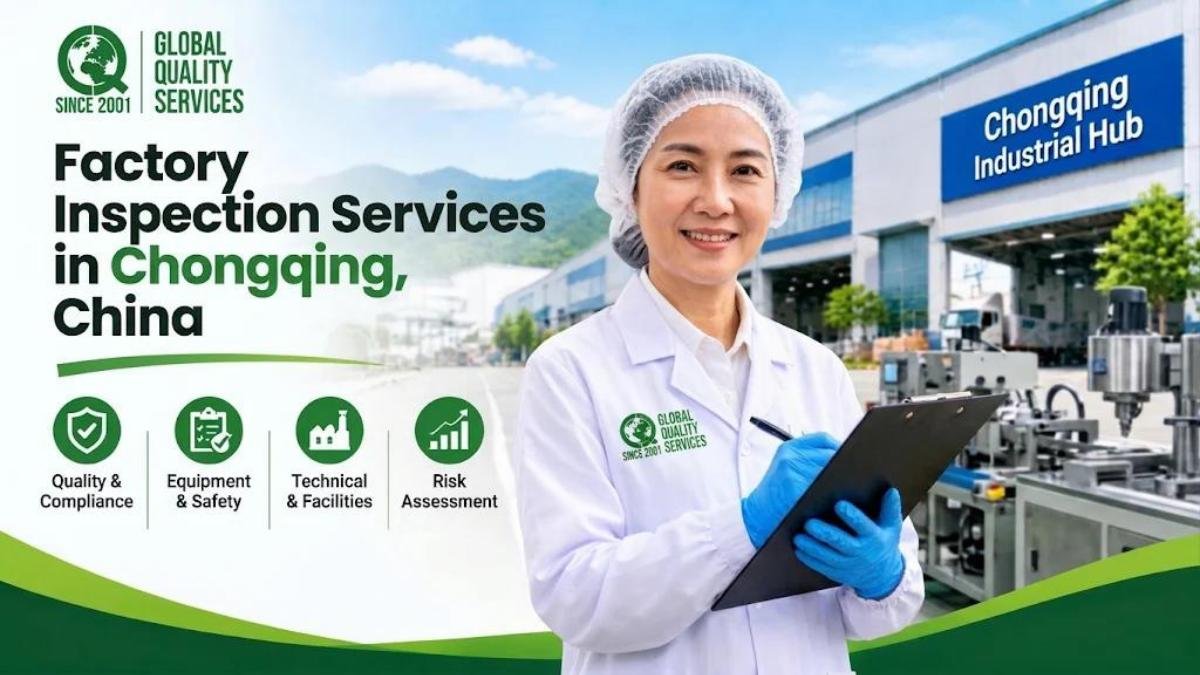
For international buyers, importers, and procurement teams, these figures highlight the scale and diversity of Chongqing’s manufacturing supply chain. They also make supplier evaluation an important part of sourcing decisions. Global Quality Services provides Factory Inspection Services in Chongqing China, helping businesses independently assess factory facilities, production processes, quality controls, and manufacturing capabilities before entering or continuing a supplier relationship.
Our inspections focus on observable conditions, documented procedures, production practices, and evidence of quality control. The findings help buyers understand a factory’s operational readiness and identify issues that may affect product consistency, delivery schedules, or contractual requirements.
Why Factory Inspection Matters for Manufacturers and Buyers in Chongqing
A factory’s ability to produce a sample does not necessarily demonstrate that it can maintain the same quality across repeated production runs. Differences in equipment condition, workforce capability, raw material control, production planning, and inspection procedures can affect the final output.
A factory inspection provides a closer look at how the supplier operates. It can help buyers identify gaps before placing large orders, approving a new supplier, or expanding an existing sourcing arrangement.
This is particularly relevant in Chongqing, where manufacturing supply chains include complex automotive components, electronic assemblies, precision parts, machinery, and materials. A supplier’s production capability should be assessed against the actual product requirements rather than its general manufacturing claims.
What Does a Factory Inspection Cover?
A factory inspection examines the manufacturing facility and its relevant operations against an agreed inspection scope. The assessment can cover the following areas.
Factory Infrastructure and Production Facilities
Inspectors review the general condition and suitability of the factory premises, production areas, storage facilities, and supporting infrastructure. This may include housekeeping, workspace organization, lighting, ventilation, material movement, equipment layout, and visible maintenance conditions.
The inspection also considers whether the available production space and equipment appear suitable for the products and manufacturing processes under review.
Production Equipment and Machinery
Production equipment plays a direct role in product consistency. The inspection can include the condition of manufacturing machinery, production lines, tools, fixtures, and measuring equipment.
Inspectors may review equipment identification, maintenance records, calibration status where applicable, operating condition, and visible signs of wear or damage. Any concerns affecting production capability or measurement reliability can be recorded.
Raw Material and Supplier Controls
Material quality can influence the performance, durability, and safety of finished products. The inspection may examine how the factory receives, identifies, stores, and issues raw materials and purchased components.
Relevant checks include incoming material inspection records, supplier documentation, identification labels, batch traceability, storage conditions, and segregation of accepted and rejected materials.
Production Process and Work Instructions
The inspection reviews how manufacturing activities are organized and controlled. This may include production planning, work instructions, process parameters, operator responsibilities, in-process checks, and handling of production deviations.
Where applicable, inspectors can compare actual production practices with approved procedures, product specifications, process flow documents, or buyer-defined requirements.
Quality Control and Testing Facilities
A factory should have suitable inspection and testing arrangements for the products it manufactures. The assessment may cover incoming quality control, in-process inspection, final product checks, testing equipment, inspection records, and the handling of nonconforming products.
Inspectors can also review whether quality personnel understand their responsibilities and whether inspection results are documented and traceable.
Workforce Competence and Operational Practices
The assessment may include a review of employee training records, operator qualifications where relevant, production responsibilities, and awareness of quality procedures.
For specialized manufacturing processes, the inspection scope can include evidence of training or authorization for personnel performing activities such as welding, electrical assembly, machine operation, or product testing.
Documentation and Traceability
Manufacturing documentation helps establish whether production activities can be traced and reviewed. Relevant records may include production orders, inspection reports, material certificates, equipment maintenance logs, calibration records, training records, and nonconformity reports.
The inspection can assess whether records are available, properly maintained, and linked to the relevant production batches or orders.
Benefits of Factory Inspection Services in Chongqing
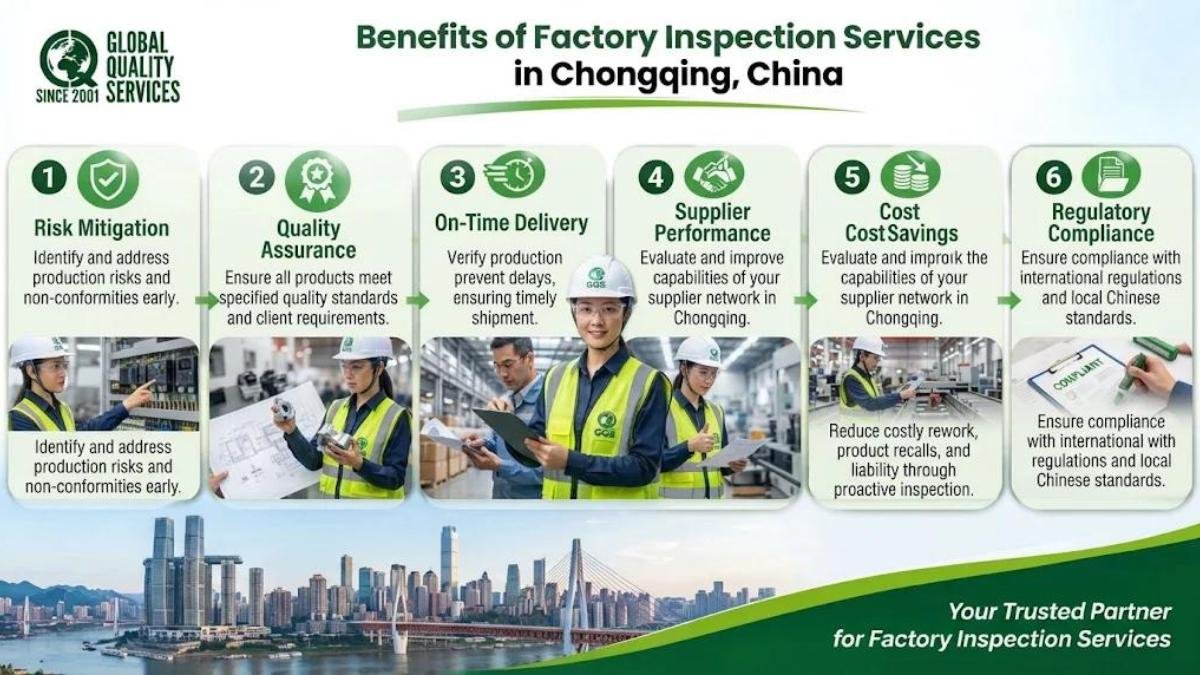
An independent factory inspection can support better sourcing decisions by providing buyers with a documented view of supplier operations. Key benefits include:
- Better supplier evaluation: Assess a factory’s facilities, production resources, and quality arrangements before committing to an order.
- Early identification of weaknesses: Identify visible process gaps, equipment concerns, documentation issues, and material-control problems.
- Improved production oversight: Obtain information about manufacturing activities and quality checks during an agreed inspection visit.
- More informed procurement decisions: Use inspection findings when approving suppliers, reviewing production readiness, or planning corrective actions.
- Greater supply chain visibility: Maintain inspection records that support supplier monitoring and purchasing decisions.
An inspection represents conditions observed during a defined visit. It does not guarantee future production performance or establish that every product manufactured by the facility will meet specifications.
Industry-Specific Factory Inspection in Chongqing
Chongqing’s manufacturing base includes several industries with different production risks and quality requirements. Global Quality Services can align the inspection scope with the supplier’s products and manufacturing activities.
Automotive and New Energy Vehicle Manufacturing
Chongqing produced approximately 1.30 million new energy vehicles in 2025, making automotive manufacturing an important part of its industrial economy.
Factory inspections for automotive suppliers may cover metal fabrication, machining, component assembly, electrical systems, battery-related components, production-line controls, and product traceability.
For EV-related suppliers, the scope can include checks on component identification, assembly controls, electrical inspection arrangements, handling procedures, and relevant testing records. Battery safety testing and specialist technical validation require separate arrangements where applicable.
Electronics and Electrical Equipment
Electronics manufacturers require consistent controls over components, assembly conditions, soldering processes, electrical testing, and product identification.
An inspection may review component storage, electrostatic discharge (ESD) controls where required, assembly procedures, soldering quality checks, testing facilities, and batch traceability.
For electronic products, the availability of suitable testing equipment and documented inspection results is particularly important.
Machinery and Industrial Equipment
Factories producing machinery, industrial equipment, and mechanical components may require checks on machining operations, fabrication, welding, assembly, surface finishing, and functional testing.
The inspection can also review engineering drawings, material identification, dimensional inspection records, equipment maintenance, and product documentation.
Motorcycle and Automotive Component Manufacturing
Chongqing’s motorcycle manufacturing sector creates demand for suppliers of engines, frames, braking components, electrical parts, and other assemblies.
Factory inspections can focus on production consistency, component specifications, assembly procedures, material traceability, workmanship, and final inspection arrangements.
Advanced Materials and Metal Processing
Manufacturers working with metals, alloys, composites, and other industrial materials may require additional attention to material identification, storage, processing parameters, equipment condition, and test documentation.
Where material properties are critical, the inspection can verify the availability of relevant test records and material certificates. Laboratory testing and independent material verification should be specified separately.
Types of Factory Inspections Available
The inspection schedule can be adapted to the buyer’s sourcing stage and supplier relationship.
- Initial Factory Inspection: Conducted before approving a new supplier. It reviews the factory’s facilities, production capacity, equipment, workforce, quality arrangements, and general suitability for the proposed order.
- During-Production Factory Inspection: Conducted while manufacturing is underway. It provides an opportunity to observe actual production activities, process controls, material handling, and in-process quality checks.
- Periodic Factory Inspection: Used to review an existing supplier at planned intervals. It helps buyers monitor changes in facilities, equipment, production practices, and quality controls.
- Follow-Up Factory Inspection: Conducted after identified issues have been addressed. It checks the status of corrective actions and records the observable condition at the time of the follow-up visit.
- Pre-Production Factory Assessment: Focuses on readiness before manufacturing begins, including the availability of materials, approved specifications, production equipment, work instructions, and inspection arrangements.
Our Factory Inspection Process
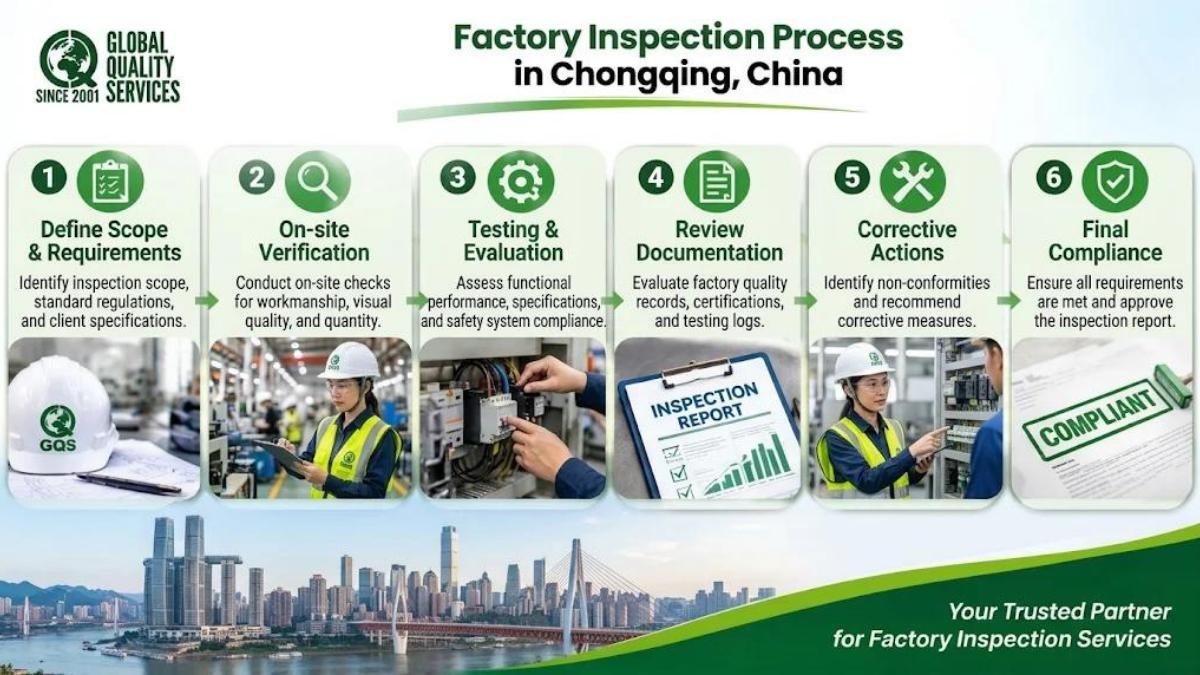
Global Quality Services follows a defined inspection process to keep the assessment aligned with the buyer’s requirements.
- Requirement Review: We review the factory’s location, products, manufacturing activities, inspection objectives, and buyer-specific requirements.
- Inspection Scope Definition: The relevant inspection areas, checkpoints, documents, and acceptance criteria are agreed before the visit.
- On-Site Factory Inspection: The inspection covers the agreed facility areas, production operations, equipment, materials, quality-control activities, and available records.
- Findings and Evidence Recording: Observations, identified gaps, and relevant supporting evidence are documented in an inspection report.
- Report Submission: The report is shared with the client for review and supplier evaluation. Where a follow-up inspection is required, a separate scope can be agreed.
Why Choose Global Quality Services for Factory Inspection in Chongqing?
Choosing a factory inspection provider involves more than arranging a site visit. Buyers need an inspection scope that reflects their products, production risks, and supplier requirements.
Global Quality Services focuses on objective inspection findings and clear reporting. Our approach considers the manufacturing activities relevant to each supplier instead of applying the same checklist to every factory.
We can tailor the inspection to automotive components, electronics, machinery, industrial equipment, metal products, and other manufactured goods. The resulting report gives procurement and quality teams a clearer basis for supplier review and follow-up decisions.
Frequently Asked Questions
What is included in a factory inspection in Chongqing?
A factory inspection can cover production facilities, machinery, raw material controls, manufacturing processes, quality-control activities, employee training records, documentation, and product traceability. The exact scope depends on the factory’s industry and the buyer’s requirements.
When should a buyer arrange a factory inspection?
A buyer can arrange an inspection before approving a new supplier, before production begins, while manufacturing is underway, or as part of periodic supplier monitoring. The timing should reflect the purchasing decision and the risks associated with the product.
Does a factory inspection guarantee product quality?
No. A factory inspection evaluates the facility and relevant operations during a defined visit. It does not guarantee that every product or future production batch will meet the buyer’s requirements. Product-specific inspections and testing may also be necessary.
What is the difference between factory inspection and Pre-Shipment Inspection?
Factory inspection evaluates the supplier’s manufacturing facility, production processes, and quality arrangements. Pre-Shipment Inspection examines a specific order of finished goods before dispatch, including quantity, workmanship, specifications, packaging, and agreed functional checks.
Can Global Quality Services inspect automotive and electronics factories in Chongqing?
Yes. The inspection scope can be tailored to automotive suppliers, new energy vehicle component manufacturers, electronics factories, machinery producers, and other industrial facilities. The agreed checkpoints depend on the products and manufacturing processes being assessed.