Chongqing is one of China’s leading automotive and manufacturing centres, with established production clusters covering passenger vehicles, new-energy vehicles (NEVs), motorcycles, electronics and industrial equipment. Its manufacturing sector continues to expand as manufacturers introduce advanced vehicle technologies, automated production systems and new equipment configurations.
According to the Chongqing Municipal Statistics Bureau, the city produced approximately 2.79 million vehicles in 2025, representing 9.7% annual growth. New-energy vehicle production reached approximately 1.30 million units, increasing by 36%. The city’s equipment manufacturing and transportation equipment industries also recorded growth, reflecting the scale of its industrial supply chain.
As vehicles, machinery and industrial equipment move from manufacturers to dealers, distributors and end users, their condition at the time of handover becomes an important quality consideration. Missing accessories, transport damage, incorrect configurations, incomplete assembly and operational defects can create problems after delivery.
Global Quality Services provides Pre-Delivery Inspection Services in Chongqing, China, to help buyers, distributors, importers, manufacturers and equipment operators verify the condition, specifications and functional readiness of products before final handover.
What Are Pre-Delivery Inspection Services?
Pre-Delivery Inspection (PDI) is an examination conducted before a product, vehicle or piece of equipment is formally handed over to its buyer or end user. It checks whether the supplied item matches the agreed specifications and is in an acceptable condition for delivery.
The inspection scope varies according to the product and its intended application. For vehicles, it may cover exterior and interior condition, vehicle identification, controls, mechanical components, electrical functions and supplied accessories. For machinery and industrial equipment, it may include assembly, dimensions, operational functions, safety features and technical documentation.
A typical PDI may cover:
- Product identification and specification verification.
- Physical condition and workmanship.
- Assembly and installation checks.
- Functional and operational testing.
- Mechanical and electrical component checks.
- Accessories, tools and supplied parts.
- Safety-related features within the agreed scope.
- Technical documentation and delivery records.
The inspection provides documented findings that help the receiving party determine whether the product is ready for handover or requires further attention.
Why Pre-Delivery Inspection Beneficial in Chongqing China
Chongqing’s automotive and equipment manufacturing ecosystem involves a wide range of products, suppliers and distribution channels. Vehicles and machinery may pass through several handling stages before reaching the final customer.
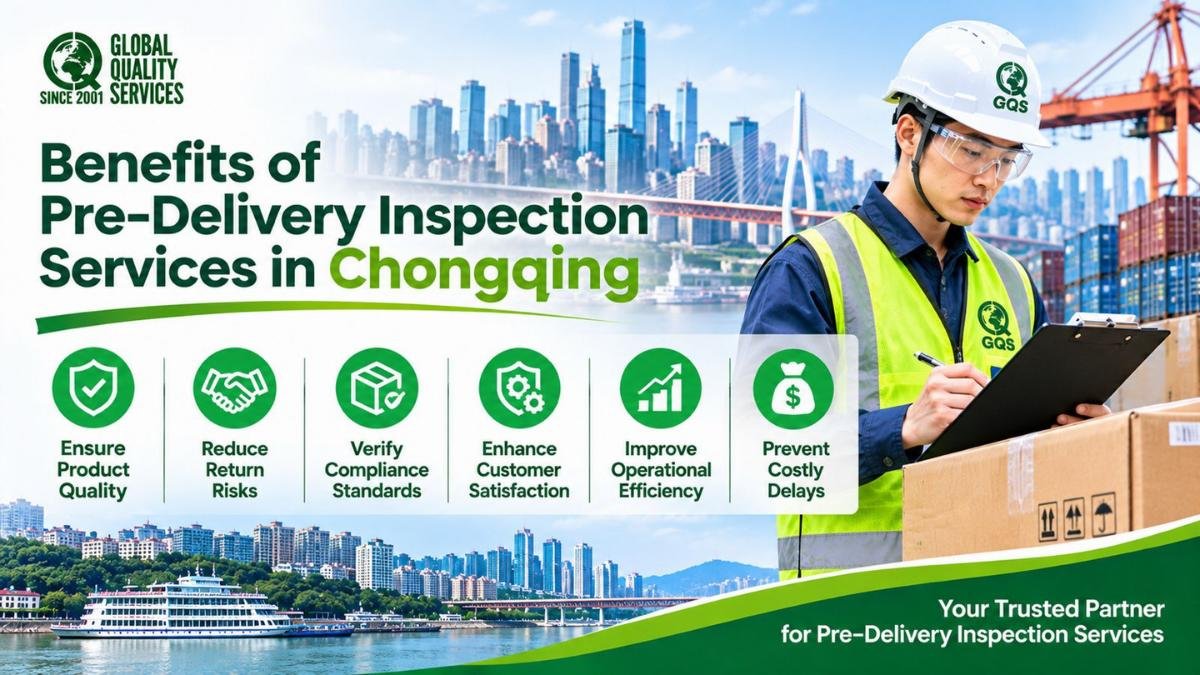
A PDI helps establish the condition of the product at this important transition point.
Identifying Transport and Handling Damage
Products may experience scratches, dents, broken components, loose fittings or packaging damage during storage and transportation. Such problems can remain unnoticed if the receiving party relies only on delivery documents.
A physical inspection helps identify visible damage and record the condition of the product before handover.
Verifying Product Configuration
A product may be supplied in different models, variants, technical configurations and accessory combinations. Incorrect model numbers, substituted components or missing accessories can affect its intended use.
PDI compares the supplied item with the purchase order, approved configuration, product specifications and agreed delivery requirements.
Checking Operational Readiness
A product that appears complete may still have functional problems. Electrical faults, control issues, incorrect assembly and abnormal operating behaviour can affect its use.
Functional checks help determine whether the product performs the specified basic operations under the agreed test conditions.
Reducing Handover Disputes
Without a documented inspection, it may become difficult to establish whether a defect existed before delivery or developed during subsequent handling or operation.
A PDI report records observations at the time of inspection, providing the buyer and supplier with a reference for resolving delivery-related concerns.
What Does a Pre-Delivery Inspection Cover?
The inspection scope depends on whether the supplied product is a vehicle, industrial machine, electrical system or another type of equipment.
Product Identification and Specification Verification
The first stage involves checking the identity of the product against the purchase and delivery documents.
Depending on the product, this may include:
- Manufacturer and brand details.
- Model and variant.
- Serial number or Vehicle Identification Number (VIN).
- Engine or motor identification, where applicable.
- Rated capacity and technical specifications.
- Manufacturing or batch details.
- Approved configuration and supplied options.
Any mismatch between the physical product and the agreed documentation is recorded for review.
Physical Condition and Workmanship
The product is examined for visible damage, incomplete assembly and workmanship defects.
For vehicles, checks may cover body panels, paint finish, glass, lamps, mirrors, seats, dashboard surfaces, tyres, wheels and interior fittings.
For machinery and industrial equipment, inspection may cover frames, enclosures, structural components, protective covers, fasteners, connections and visible fabrication quality.
Common observations include scratches, dents, cracks, corrosion, loose fittings, damaged surfaces and missing components.
Mechanical and Electrical Components
Where included in the agreed scope, accessible mechanical and electrical components are examined for visible defects and installation issues.
For vehicles, this may involve checking the engine compartment, battery connections, fluid levels, accessible hoses, wiring, lighting systems and other specified components.
For industrial machinery, checks may include motors, drives, control panels, electrical connections, hydraulic lines, pneumatic connections, lubrication arrangements and mechanical assemblies.
Specialist electrical testing, diagnostic procedures and engineering assessments should be separately defined when required.
Functional and Operational Testing
Functional testing helps verify whether the product performs its intended basic operations.
Depending on the product category, the inspection may include:
- Start-up and shutdown functions.
- Dashboard indicators and warning lights.
- Lighting, switches and control functions.
- Door locks, windows and other vehicle features.
- Motor operation and control response.
- Mechanical movement and operating cycles.
- Hydraulic and pneumatic functions.
- Display panels and electronic controls.
- Emergency stop functions where applicable.
For equipment requiring specific performance verification, test conditions, operating parameters and acceptance limits should be agreed before inspection.
Safety Features and Protective Components
Safety-related features are checked according to the product type and agreed inspection requirements.
For vehicles, the scope may include seat belts, warning indicators, mirrors, lights, accessible safety equipment and selected control functions.
For industrial equipment, the inspection may cover machine guards, protective covers, emergency stops, warning labels and accessible safety devices.
A general PDI does not replace statutory vehicle roadworthiness checks, specialist machinery safety validation or mandatory regulatory testing.
Accessories, Tools and Supplied Components
The inspection verifies whether the accessories and components specified in the order are included.
For vehicles, these may include keys, manuals, charging cables, tool kits, spare wheels where applicable, floor mats and other ordered accessories.
For machinery, the scope may include installation tools, spare parts, fittings, control accessories, cables, operating manuals and maintenance documentation.
Missing or incorrect items are recorded against the delivery checklist.
Documentation and Delivery Records
The inspection may include a review of documents supplied with the product, such as:
- Purchase orders and delivery notes.
- Product specifications and approved configurations.
- User and operating manuals.
- Warranty documents.
- Test and commissioning records.
- Serial number and identification records.
- Maintenance instructions.
- Relevant certificates and supporting documents.
The review helps establish whether the expected documentation is available at the time of handover.
Vehicle Pre-Delivery Inspection in Chongqing
Chongqing’s automotive sector makes vehicle PDI an important consideration for manufacturers, dealerships, distributors, fleet operators and vehicle buyers.
The city produced approximately 2.79 million vehicles in 2025, including around 1.30 million new-energy vehicles. With a growing range of electric and conventional vehicle models, inspection requirements must reflect differences in vehicle technology and configuration.
Exterior and Interior Condition
Vehicle inspection may cover body panels, paintwork, windows, windshields, mirrors, bumpers, wheels, tyres, seats, dashboard surfaces and interior fittings.
Inspectors check for visible damage, inconsistent finishing, loose components and signs of improper handling.
Engine and Mechanical Condition
For conventional vehicles, the agreed checks may include accessible engine components, fluid levels, visible leaks, battery condition, belts, hoses and other specified mechanical features.
For electric vehicles, inspection may include accessible charging connections, battery-related warning indicators, charging equipment and relevant system displays.
High-voltage battery testing or internal battery condition assessment requires a separately defined technical scope and suitable specialist equipment.
Electrical and Electronic Functions
The inspection may cover headlights, indicators, brake lights, dashboard displays, infotainment functions, power windows, central locking, sensors and selected electronic controls.
Where an electronic diagnostic scan is required, the appropriate diagnostic equipment and inspection procedure should be agreed in advance.
Vehicle Operation and Delivery Readiness
Where permitted and included in the scope, selected vehicle functions may be checked through static or dynamic testing.
This can include start-up, braking response, steering operation, gear selection, acceleration response and other agreed functions. Road testing must be conducted under suitable conditions by appropriately authorized personnel.
The inspection also verifies vehicle identification, supplied accessories, manuals and relevant delivery documentation.
Machinery and Industrial Equipment Pre-Delivery Inspection
Chongqing also has a significant manufacturing base for general machinery, specialized equipment, transportation systems and industrial automation.
Machinery PDI helps buyers assess whether equipment is assembled, supplied and operating according to the agreed requirements before handover.
Assembly and Installation Condition
Inspection may cover equipment frames, mechanical assemblies, mounting arrangements, fasteners, connections, alignment and visible fabrication quality.
Any missing components, incorrect installation or visible damage is documented.
Operational and Performance Checks
Depending on the equipment, functional checks may include start-up, operating cycles, motor functions, control response, movement, pressure readings, temperature readings and other specified parameters.
Results should be compared against the manufacturer’s specifications and the buyer’s agreed acceptance criteria.
Safety and Documentation
The inspection may examine accessible guards, emergency stop arrangements, warning labels, electrical enclosures and other agreed safety-related features.
Equipment manuals, drawings, spare parts lists, maintenance instructions and test records may also be checked before handover.
Where installation or commissioning is still required at the destination, PDI should not be treated as confirmation that the equipment is fully commissioned or ready for unrestricted production.
Pre-Delivery Inspection vs Pre-Shipment Inspection
PDI and PSI are related quality control activities, but they serve different purposes.
Pre-Shipment Inspection (PSI) is generally conducted before goods leave the supplier’s premises. It focuses on finished product quality, quantity, packaging, labelling and shipment requirements.
Pre-Delivery Inspection (PDI) is conducted before the product is handed over to the buyer or end user. It focuses on the delivered item’s physical condition, configuration, completeness, functionality and readiness for use or acceptance.
For example, a machine may pass PSI at the factory but sustain damage during transportation. A PDI at the receiving location can identify that damage before the equipment is accepted.
For vehicles, PDI commonly refers to the checks carried out before a new vehicle is handed over to the customer. The China Automobile Dealers Association’s passenger vehicle pre-delivery inspection guidance describes checks of exterior and interior condition, tools, functional components and mechanical construction.
The inspection stage and acceptance criteria should be agreed in advance so that PSI and PDI findings remain clearly distinguishable.
Our Pre-Delivery Inspection Process
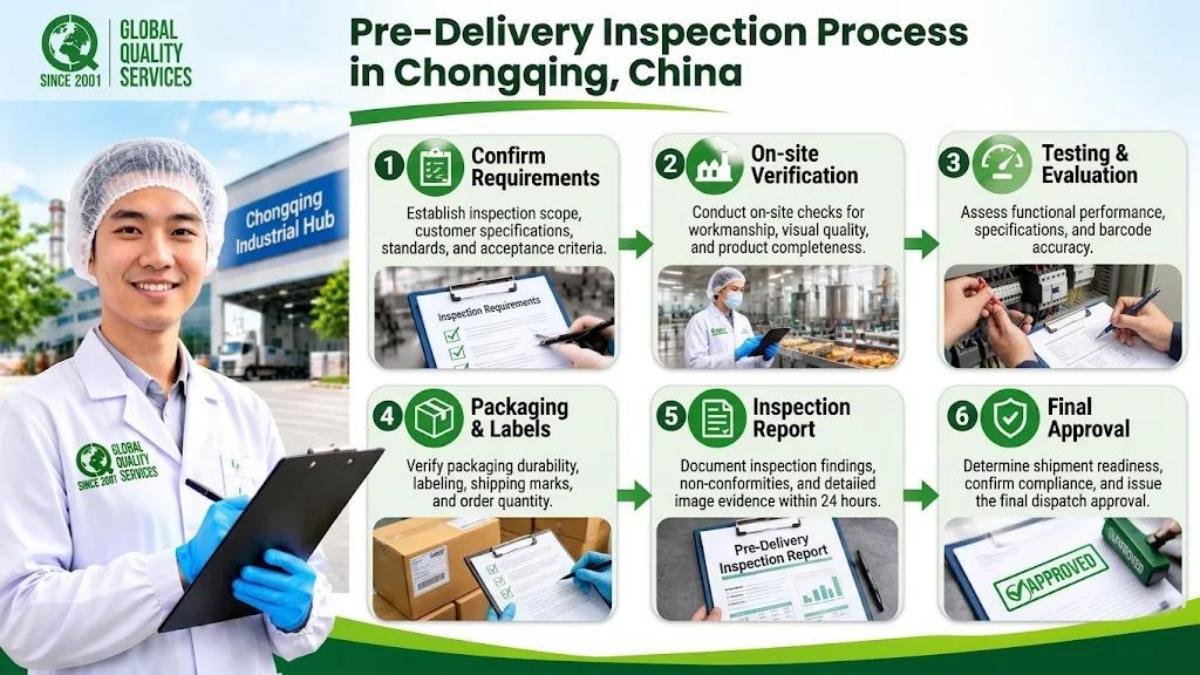
Global Quality Services follows a structured inspection process based on the product type and agreed handover requirements.
1. Requirement and Document Review
The process begins with a review of the purchase order, technical specifications, product configuration, approved samples and delivery requirements.
For vehicles and machinery, relevant identification details, manuals and test requirements are also reviewed.
2. Inspection Planning
The inspection plan establishes the product or equipment to be examined, inspection location, required checks, functional tests and acceptance criteria.
Any specialist testing, diagnostic requirements or operational trials are identified before the inspection.
3. Physical and Functional Inspection
The inspection team examines the product’s visible condition, identification, assembly, components and accessories.
Functional checks and selected measurements are performed according to the agreed inspection scope. Observations are recorded through inspection checklists and photographs where permitted.
4. Inspection Report
The findings are compiled into a structured report covering the inspected item, condition, functional observations, documentation review and identified discrepancies.
The report provides the buyer or receiving organization with a record of the inspection results.
5. Corrective Action and Final Verification
Where defects or incomplete requirements are identified, the responsible supplier or organization can review the findings and arrange corrective action.
A follow-up inspection can be conducted where required to verify the condition of the product before final acceptance.
Why Choose Global Quality Services?
Global Quality Services provides structured third-party inspection services for organizations sourcing vehicles, machinery and industrial equipment from Chongqing.
The inspection scope can be adapted to the product category, delivery requirements and intended application. Our approach focuses on objective examination, verification against agreed criteria and clear reporting of identified discrepancies.
Inspection reports help buyers and receiving organizations understand the condition of products at the time of inspection and make informed handover decisions.
Contact Global Quality Services to discuss Pre-Delivery Inspection Services in Chongqing, China. Share the product category, inspection location, delivery stage and technical requirements to establish a suitable inspection scope.
Frequently Asked Questions
1. What is checked during a pre-delivery inspection in Chongqing?
A PDI may cover product identification, physical condition, specifications, assembly, functional performance, safety-related features, accessories and documentation. The inspection scope depends on whether the product is a vehicle, machine or other type of equipment.
2. Is pre-delivery inspection necessary for new vehicles?
PDI is an important quality check before a new vehicle is handed over to its buyer. It helps identify visible damage, missing accessories, incorrect specifications and functional problems that may need attention before delivery.
3. What is the difference between PDI and PSI?
PSI is conducted before goods are shipped from the supplier and focuses on finished product quality and shipment readiness. PDI takes place before handover to the buyer or end user and focuses on the delivered product’s condition, completeness and functionality.
4. Can electric vehicles undergo pre-delivery inspection?
Yes. An EV PDI can include exterior and interior condition, vehicle identification, charging connections, charging equipment, dashboard indicators, electrical functions and selected vehicle operations. High-voltage battery testing requires a separate technical scope and suitable specialist equipment.
5. Does a pre-delivery inspection confirm that machinery is ready for production?
Not automatically. PDI can verify agreed assembly, condition and functional requirements before handover. Full installation, commissioning, performance validation and production trials may require additional activities at the destination facility.