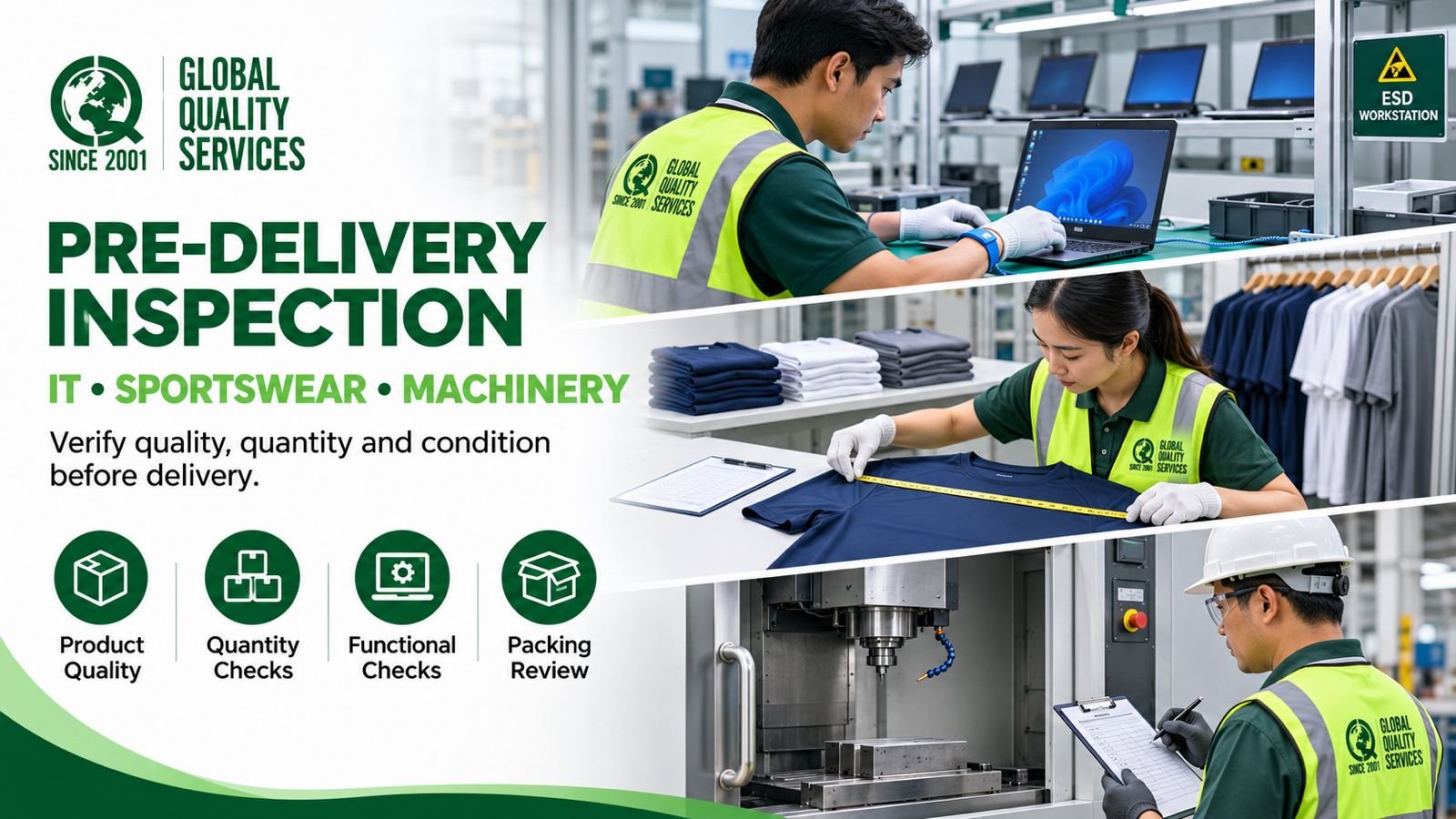
Pre-delivery inspection (PDI) is a quality verification process carried out before products are dispatched to buyers or delivered to their destination. It checks whether finished goods meet the agreed specifications, purchase order requirements and applicable inspection criteria.
For IT products, sportswear and machinery, pre-delivery inspection helps buyers identify visible defects, specification mismatches, missing components and packaging issues before accepting a consignment. It also provides an independent assessment of the products against the inspection scope agreed with the buyer.
GQS provides third-party inspection services for businesses that require independent verification of products before delivery. The inspection scope is determined by product type, order requirements, buyer specifications and the checks agreed before the inspection.
Why Is Pre-Delivery Inspection Important?
Once goods leave the supplier’s premises, resolving quality issues can become more complicated and expensive. Products may need to be returned, repaired, replaced or reworked, potentially affecting delivery schedules and business operations. A pre-delivery inspection gives buyers an opportunity to review the condition and conformity of finished goods before dispatch. It is particularly useful when:
- Placing large or high-value orders with manufacturers.
- Purchasing products from a new or unfamiliar supplier.
- Verifying goods against approved samples or technical specifications.
- Checking whether agreed product modifications have been completed.
- Confirming that accessories, components and packaging are included.
- Reviewing product condition before shipment or final acceptance.
The inspection findings allow buyers to make informed decisions about acceptance, corrective action or further verification.
Scope of Pre-Delivery Inspection Services
The inspection process is adapted to the product category and the buyer’s requirements. Global Quality Services can define the inspection checklist around the relevant specifications, purchase order, approved samples and agreed quality criteria.
1. IT Products Inspection
IT products often contain multiple components, accessories and technical specifications that need to be verified before delivery. Inspection can cover the physical condition, product identification and agreed functional checks. The scope may include:
- Product specifications: Verify model numbers, configurations, dimensions and other details against the purchase order.
- Physical condition: Check for scratches, cracks, dents, loose parts and other visible damage.
- Components and accessories: Confirm the presence of cables, adapters, chargers, manuals and other specified items.
- Basic functional checks: Perform agreed power-on, display, connectivity or operational checks where suitable equipment and access are available.
- Labelling and identification: Review serial numbers, model labels, product markings and identification details.
- Packaging: Check protective materials, product boxes, carton condition and shipping labels.
The inspection checklist should account for the type of IT equipment being supplied, such as computers, networking devices, peripherals, electronic equipment or related products.
2. Sportswear Inspection
Sportswear inspection focuses on garment construction, material quality, sizing, appearance and order conformity. It helps buyers identify production defects and inconsistencies before finished garments are dispatched. The inspection scope may include:
- Fabric and material: Check fabric type, colour, texture and other agreed material characteristics.
- Measurements and sizing: Compare garment measurements with the approved size chart and tolerances.
- Stitching and workmanship: Examine seams, hems, stitching, zippers, buttons and other garment details.
- Prints and logos: Verify the placement, appearance and consistency of printed designs, branding and embroidery.
- Colour consistency: Review colour variations across garments and production batches.
- Labels and tags: Check size labels, care instructions, brand labels and other required markings.
- Packaging and assortment: Verify folding, individual packaging, size distribution and carton quantities.
Depending on the order, the inspection may cover sports T-shirts, tracksuits, leggings, jackets, jerseys, training apparel and other performance clothing.
3. Machinery Inspection
Machinery inspection involves checking equipment condition, construction, identification and agreed operational parameters before delivery. The scope depends on the machine type, technical documentation and the inspection criteria provided by the buyer. Checks may include:
- Technical specifications: Verify model, dimensions, rated capacity and other agreed technical details.
- Physical condition: Examine the machine body, frame, surface finish and accessible components for visible damage.
- Components and assemblies: Check specified parts, fittings, accessories and assemblies.
- Operational checks: Observe agreed operating functions where the machine can be safely operated and the necessary utilities and facilities are available.
- Safety features: Review specified guards, warning labels and accessible safety provisions within the agreed inspection scope.
- Identification and markings: Verify nameplates, serial numbers, model details and required markings.
- Documentation: Check the availability of agreed manuals, drawings, test records and other supplied documents.
- Packaging and dispatch condition: Review protective wrapping, securing arrangements and packaging condition before shipment.
Machinery inspection can be arranged for industrial equipment, production machinery, material-handling equipment, mechanical assemblies and other manufactured equipment, subject to the agreed inspection scope and technical capabilities.
Key Benefits of Pre-Delivery Inspection
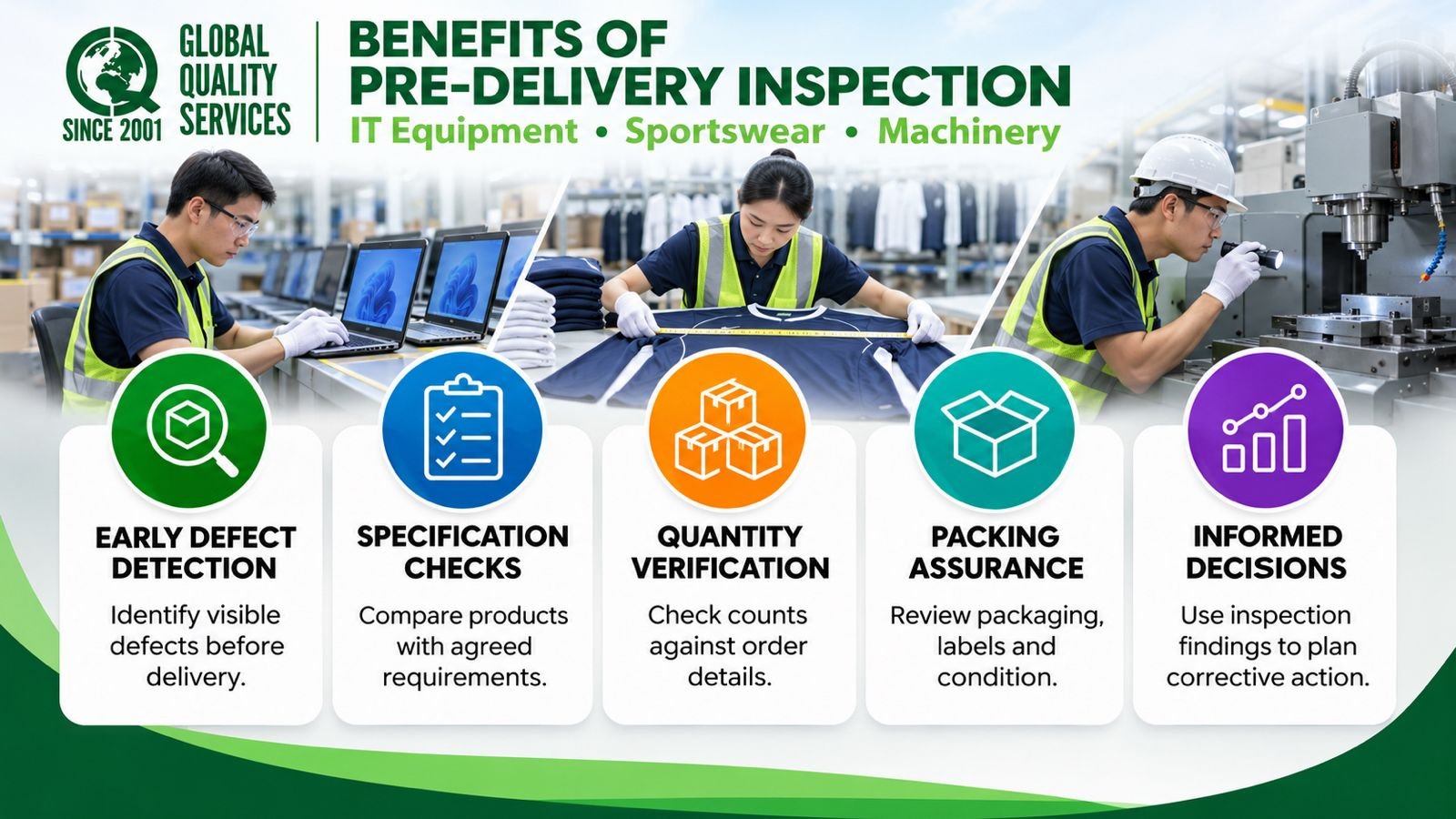
Identify Product Issues Before Dispatch
Inspection provides an opportunity to identify visible defects, missing components and specification mismatches while the goods are still at the supplier’s premises. This gives the buyer and supplier a chance to review the findings before dispatch.
Verify Compliance with Purchase Requirements
Products can be checked against purchase orders, approved samples, drawings, technical specifications and quality checklists. This helps establish whether the inspected items match the agreed requirements.
Reduce Delivery-Related Disputes
An independent inspection report records the observations made during the inspection. Buyers and suppliers can use these findings when discussing defects, corrective action or acceptance decisions.
Check Quantity and Packaging
Inspection can include carton counts, product quantities, packaging condition, shipping marks and labelling. These checks help identify discrepancies before the consignment leaves the supplier’s facility.
Review Supplier Production Quality
For repeat orders, inspection findings can help buyers identify recurring quality issues and assess whether corrective actions have been implemented in subsequent production batches.
Make Informed Dispatch Decisions
The inspection report provides buyers with documented findings based on the agreed scope. Buyers can use this information to decide whether to accept the goods, request corrections or arrange further checks.
Pre-Delivery Inspection Process
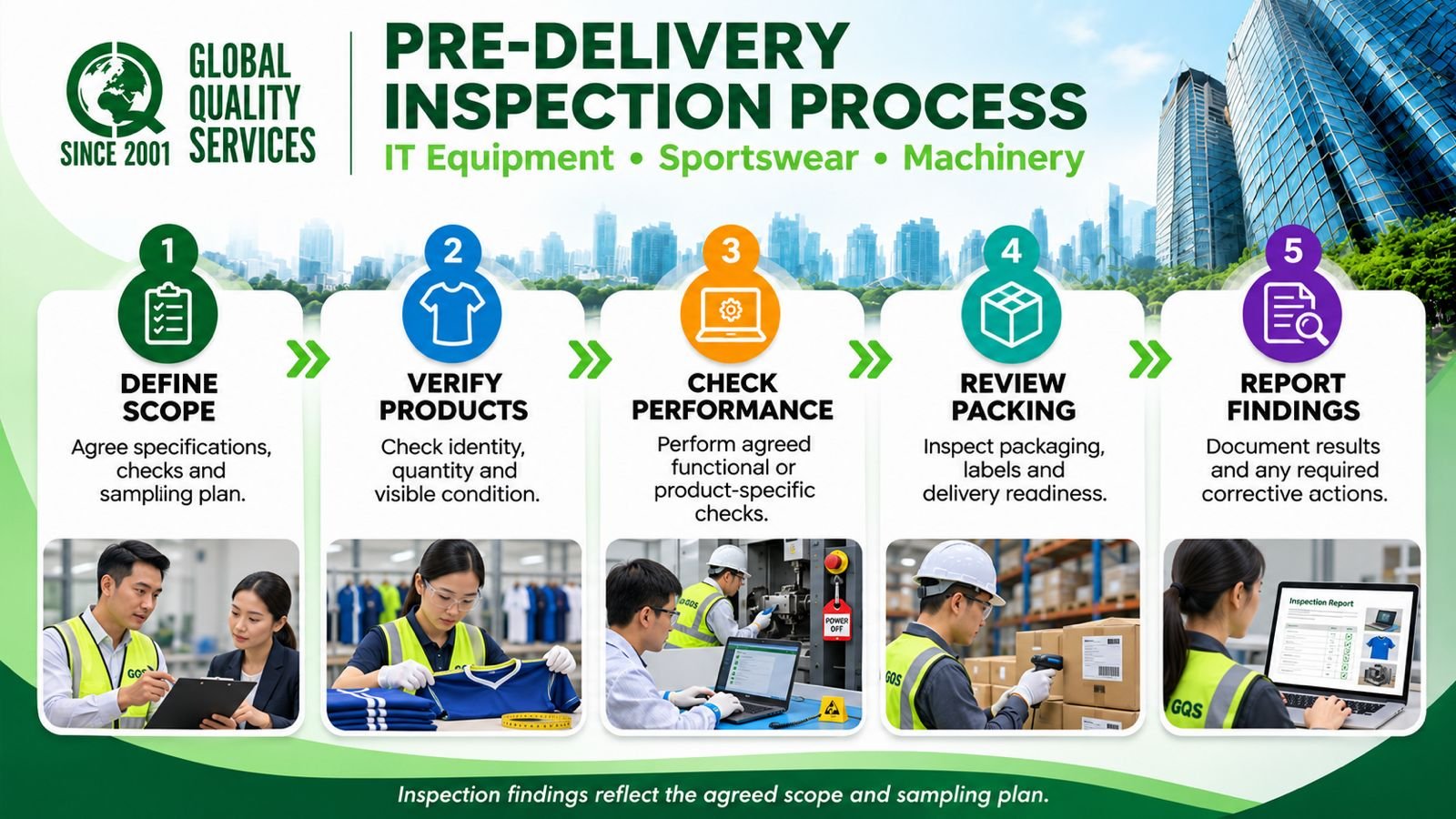
GQS follows an inspection process based on the product category, buyer requirements and agreed inspection criteria.
Step 1: Understand the Order Requirements
The buyer shares relevant documents, such as the purchase order, product specifications, approved samples, technical drawings and quality requirements.
Step 2: Define the Inspection Scope
The inspection checklist is established according to the product type. It identifies the checks to be performed, sampling requirements, acceptance criteria and any specific buyer instructions.
Step 3: Confirm Product Readiness
The inspection is scheduled once the supplier confirms that the goods are available for inspection. The agreed inspection quantity and readiness status are confirmed before the visit.
Step 4: Conduct the Inspection
The inspector examines the selected products and carries out the agreed checks. These may include visual inspection, measurements, quantity verification, accessory checks and suitable functional or operational observations.
Step 5: Record Inspection Findings
Observed defects, discrepancies and non-conformities are documented. Include photographs and relevant inspection records, depending on the agreed reporting requirements.
Step 6: Prepare the Inspection Report
The findings are compiled into an inspection report that records the scope, observations and results. Any limitations or checks that could not be completed are also identified where applicable.
Step 7: Review the Results
The buyer reviews the report and determines the next action, such as accepting the inspected goods, requesting corrective work, arranging re-inspection or seeking additional verification.
Products Covered Under Pre-Delivery Inspection
The inspection scope can be tailored to different finished products and manufactured equipment.
| Product Category | Examples of Products |
|---|---|
| IT Products | Computers, laptops, networking equipment, electronic peripherals and related devices |
| Sportswear | T-shirts, jerseys, tracksuits, leggings, jackets and performance apparel |
| Machinery | Industrial machinery, production equipment, mechanical assemblies and material-handling equipment |
The exact inspection coverage depends on product availability, technical requirements, inspection facilities and the capabilities agreed for the assignment.
Factors That Influence Pre-Delivery Inspection Requirements
The time and scope of an inspection can vary according to the nature of the order. Common factors include:
- Product category: IT equipment, garments and machinery require different inspection methods and checklists.
- Order quantity: The number of units and agreed sampling approach influence inspection time.
- Technical complexity: Products requiring functional or operational checks may need additional preparation.
- Inspection criteria: Detailed buyer specifications and testing requirements can affect the scope.
- Product readiness: Incomplete production, unavailable components or unfinished packaging may restrict the inspection.
- Location and access: Supplier location, site access and available inspection facilities influence scheduling.
Buyers should share their requirements and relevant product documents before scheduling the inspection. This allows the scope, resources and expected duration to be established more accurately.
Why Choose Global Quality Services for Pre-Delivery Inspection Services?
Global Quality Services provides third-party inspection services for businesses seeking an independent review of products before delivery. Each assignment is planned around the product category, order requirements and inspection criteria agreed with the client.
The inspection approach focuses on documenting observable conditions and checking products against the defined requirements. Findings are presented in an inspection report so buyers can review the results and decide on the next steps.
Whether the order involves IT products, sportswear or machinery, the inspection scope is established according to the nature of the goods and the checks required. A pre-delivery inspection gives buyers a documented view of product condition and conformity before goods are dispatched. It can help identify discrepancies early, verify order requirements and provide a basis for communication with suppliers.
Contact Global Quality Services to discuss your inspection requirements for IT products, sportswear or machinery. Share your product details, order quantity, supplier location and inspection checklist to establish a suitable inspection scope.
Frequently Asked Questions
1. When should I schedule a pre-delivery inspection?
Schedule the inspection after production is complete and the agreed quantity of goods is available for checking, but before dispatch. This gives the supplier time to address any issues identified during the inspection.
2. Can the inspection be based on my company’s quality checklist?
Yes. The buyer can share an internal quality checklist, approved sample, purchase order or technical specifications. The inspection scope can be defined around the checks and acceptance criteria agreed for the assignment.
3. What happens if the supplier does not agree with an inspection finding?
The observation can be reviewed against the agreed specifications and available evidence. The buyer and supplier can discuss the discrepancy and determine whether clarification, corrective action or additional verification is required.
4. Can pre-delivery inspection include functional testing?
It can include agreed functional checks where the product, inspection facilities and available equipment allow them to be performed. The required checks should be specified before the inspection, particularly for IT equipment and machinery.
5. Does a satisfactory inspection report guarantee that every product is defect-free?
No. An inspection report reflects the findings from the checks performed on the inspected items or sample. It does not guarantee that every unit in the shipment is free from defects or that issues cannot arise after delivery.