Electronics manufacturers and technology companies generate equipment, components, and materials that may eventually enter reuse, refurbishment, or recycling streams. Managing these resources responsibly requires more than an organized waste disposal process. Businesses must be able to demonstrate how electronic materials are handled, how data-bearing devices are protected, and how downstream recycling activities are controlled.
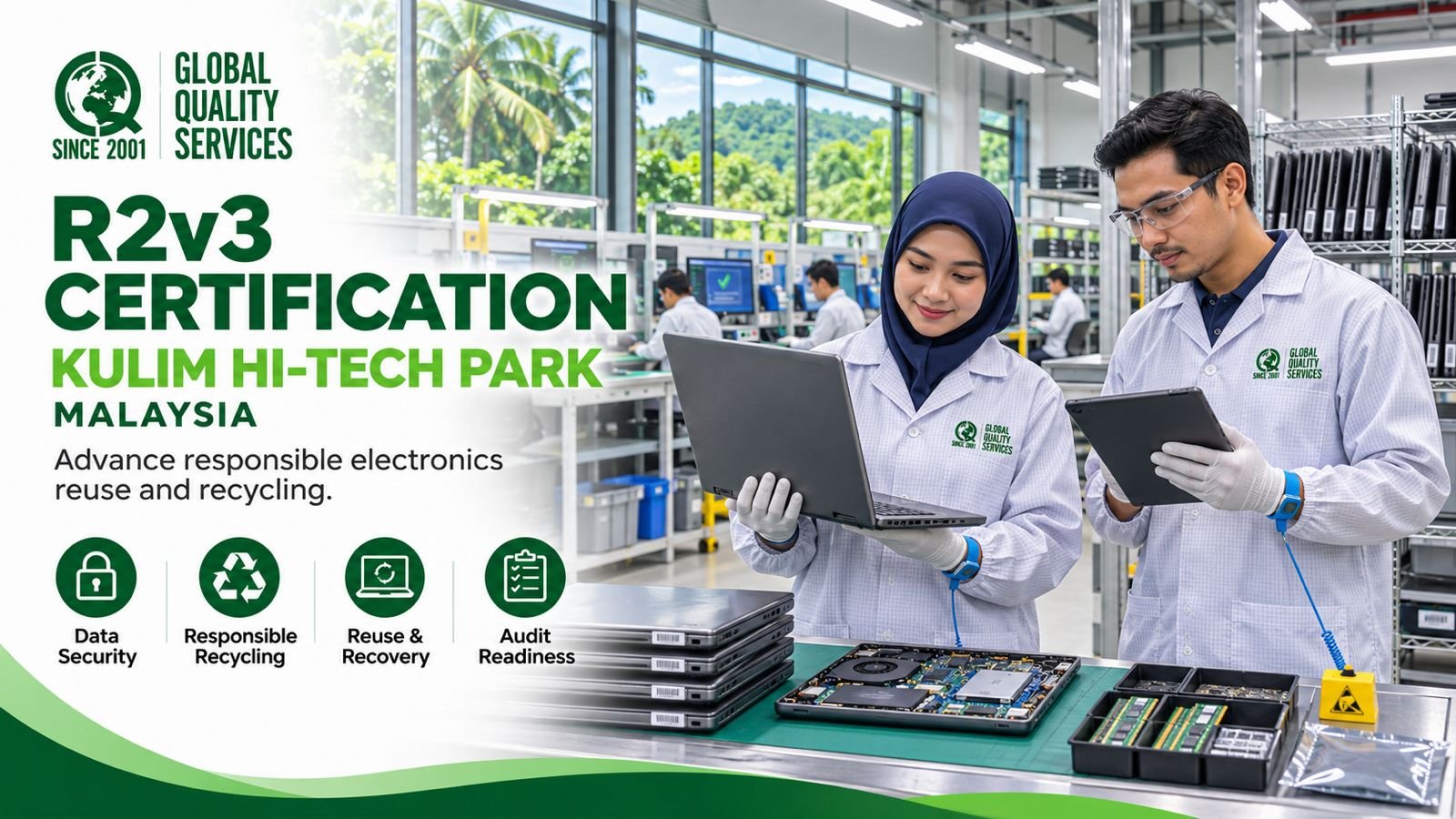
R2v3 Certification in Kulim Hi-Tech Park, Malaysia, provides a recognized framework for facilities involved in used electronics processing, repair, refurbishment, and material recovery. Developed by Sustainable Electronics Recycling International (SERI), the R2v3 Standard establishes requirements for responsible electronics reuse and recycling operations.
For eligible facilities operating in Kulim Hi-Tech Park, certification can provide a structured way to demonstrate responsible resource management, environmental protection, data security, and operational accountability.
Why R2v3 Is Relevant to Kulim Hi-Tech Park
Kulim Hi-Tech Park (KHTP) has developed into an important center for Malaysia’s high-technology manufacturing sector. Its industrial ecosystem includes semiconductor production, wafer fabrication, advanced electronics, machinery, and related technology activities.
The park’s industrial zones accommodate businesses operating across different stages of technology manufacturing and supply chains. This creates a business environment where handling obsolete equipment, production-related electronic materials, and reusable components can be an important operational consideration.
However, R2v3 is not intended for every company located in the park. Its requirements apply to facilities that perform activities covered by the standard, including qualifying electronics reuse, repair, refurbishment, and recycling operations.
Businesses in the following categories may need to evaluate whether R2v3 applies to their activities:
- Electronics recovery facilities: Organizations that collect and process used electronic equipment or components for further reuse or recycling.
- IT asset disposition (ITAD) providers: Facilities that receive, assess, sanitize, and manage retired IT assets.
- Electronics refurbishment businesses: Operations that inspect, repair, restore, and prepare used electronic products for another use cycle.
- Component testing and repair facilities: Businesses that test electronic devices or components and verify their functionality before reuse.
- Material recovery operators: Facilities that separate and recover materials from electronic equipment for appropriate downstream processing.
- Electronics recycling businesses: Organizations that dismantle or process electronic products and manage recovered materials through controlled recycling channels.
The certification scope must reflect the facility’s actual operations. A semiconductor manufacturer that only produces new products, for example, does not automatically require R2v3 Certification simply because it operates in the electronics sector.
What Does the R2v3 Standard Evaluate?
R2v3 is a facility-level standard that establishes requirements for responsible management of used electronics and related materials. It combines mandatory Core Requirements with additional Process Requirements for specialized activities.
The standard focuses on how a facility manages its operations, controls environmental and health risks, protects information, and maintains accountability throughout the electronics recovery chain.
Core Requirements: The Foundation of Certification
Every facility seeking R2v3 Certification must meet the applicable Core Requirements. These establish the baseline controls expected across R2-certified operations.
Key areas include:
- Environmental, health, and safety management: Identifying operational risks and maintaining controls to protect workers, the surrounding environment, and other affected parties.
- Legal and regulatory compliance: Identifying applicable legal obligations and maintaining processes to evaluate and meet them.
- Occupational health and safety: Establishing safe working conditions, suitable procedures, and employee awareness of workplace hazards.
- Focus Materials management: Controlling materials that require particular attention because of their potential environmental or health impacts.
- Reusable equipment assessment: Evaluating used electronic products and determining appropriate management routes based on their condition and intended destination.
- Data protection: Maintaining suitable safeguards for information stored on electronic devices and media.
- Tracking and documentation: Keeping records that demonstrate how equipment, materials, and controlled streams move through the facility.
- Downstream accountability: Ensuring that materials sent to external processors are managed through qualified and appropriately controlled channels.
These requirements establish a consistent management framework rather than treating recycling as an isolated activity.
Process Requirements: Additional Controls for Specialized Activities
R2v3 includes seven appendices covering specific operational activities. A facility must meet the Process Requirements relevant to the work it performs.
| Appendix | Operational area |
|---|---|
| Appendix A | Downstream Recycling Chain |
| Appendix B | Data Sanitization |
| Appendix C | Test and Repair |
| Appendix D | Specialty Electronics Reuse |
| Appendix E | Materials Recovery |
| Appendix F | Brokering |
| Appendix G | Photovoltaic Modules |
For example, a Kulim facility that tests and repairs electronic devices for reuse may need to meet Appendix C. An ITAD operation performing logical data sanitization may require Appendix B. A facility using external processors for R2 Controlled Streams must also consider the applicable downstream management requirements under Appendix A.
The correct combination of appendices depends on the facility’s activities, not simply its industry classification. Operations that are not performed at the facility may, where permitted by the standard, be managed through qualified downstream vendors.
What a Kulim Facility Should Establish Before Applying
R2v3 certification requires evidence that the standard’s requirements are integrated into daily operations. Preparing for an audit therefore involves more than compiling policies and procedures.
A facility should examine the following areas before entering the certification process:
1. Defined operational boundaries
Identify the activities performed at the site, including collection, sorting, dismantling, testing, repair, data sanitization, material recovery, and brokering. This helps establish the appropriate certification scope.
2. Material identification and traceability
Create a reliable method for identifying incoming equipment and materials, recording their status, and documenting their movement through internal processes and external destinations.
3. Risk-based operational controls
Evaluate workplace hazards, environmental risks, and potential exposure to hazardous substances. Maintain suitable controls for storage, handling, processing, and emergency situations.
4. Data security procedures
Where data-bearing equipment is handled, establish appropriate controls for access, storage, sanitization, verification, and recordkeeping according to the applicable requirements.
5. Downstream vendor evaluation
Review the qualifications and capabilities of external processors receiving controlled materials. Maintain the required records and agreements to demonstrate oversight of downstream activities.
6. Employee competence and awareness
Ensure personnel understand their responsibilities, operational procedures, safety requirements, and the controls relevant to their assigned work.
7. Internal evaluation and corrective action
Conduct internal audits, identify gaps, investigate nonconformities, and maintain records of corrective actions. The facility should be able to demonstrate that its management controls are implemented and maintained.
Business Value of R2v3 Certification
For an eligible electronics reuse or recycling facility in Kulim Hi-Tech Park, R2v3 Certification can provide a structured way to demonstrate how used electronics are managed.
Its value extends beyond having a certificate displayed at the facility. The standard establishes operational expectations that can strengthen process control and provide customers and business partners with greater visibility into responsible electronics management.
Some important business considerations include:
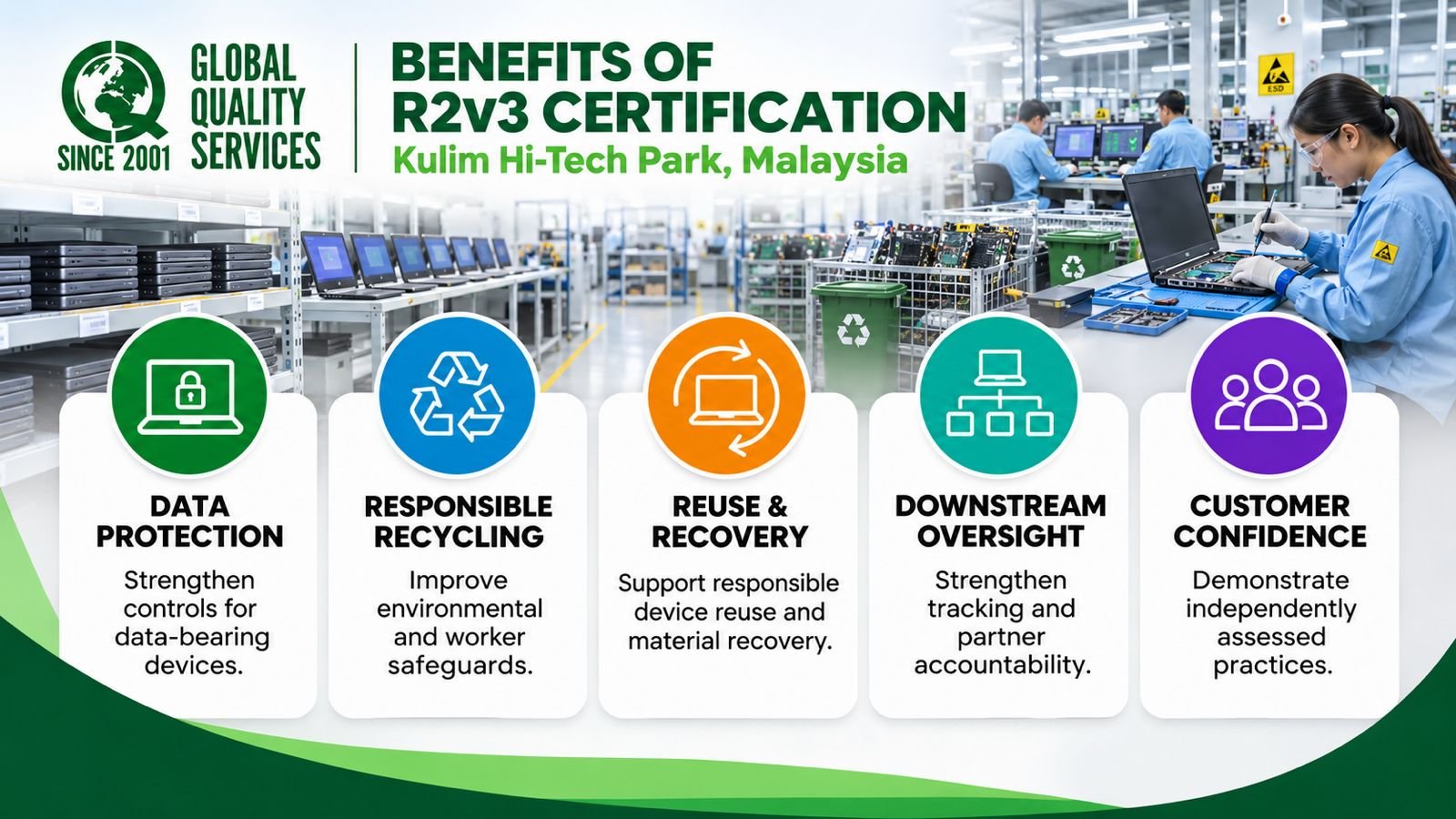
- Stronger customer confidence: Demonstrates that the facility operates against an established responsible electronics reuse and recycling standard.
- Better material accountability: Improves the documentation and tracking of equipment and materials throughout relevant processing stages.
- Improved environmental controls: Establishes procedures for managing materials and activities that may create environmental risks.
- Greater data security assurance: Provides a framework for managing data-bearing equipment through applicable sanitization and security controls.
- More controlled downstream relationships: Encourages documented evaluation and oversight of vendors involved in further processing.
- Clearer operational responsibilities: Defines processes, responsibilities, and records that can improve consistency across facility operations.
- Stronger supply-chain credibility: Provides a recognized basis for communicating responsible electronics management practices to customers and business partners.
R2v3 Certification does not guarantee that every product or material is free from risk, nor does it replace applicable environmental, safety, or data protection obligations. Its value depends on maintaining the requirements within the certified facility’s defined scope.
How to Obtain R2v3 Certification in Kulim Hi-Tech Park
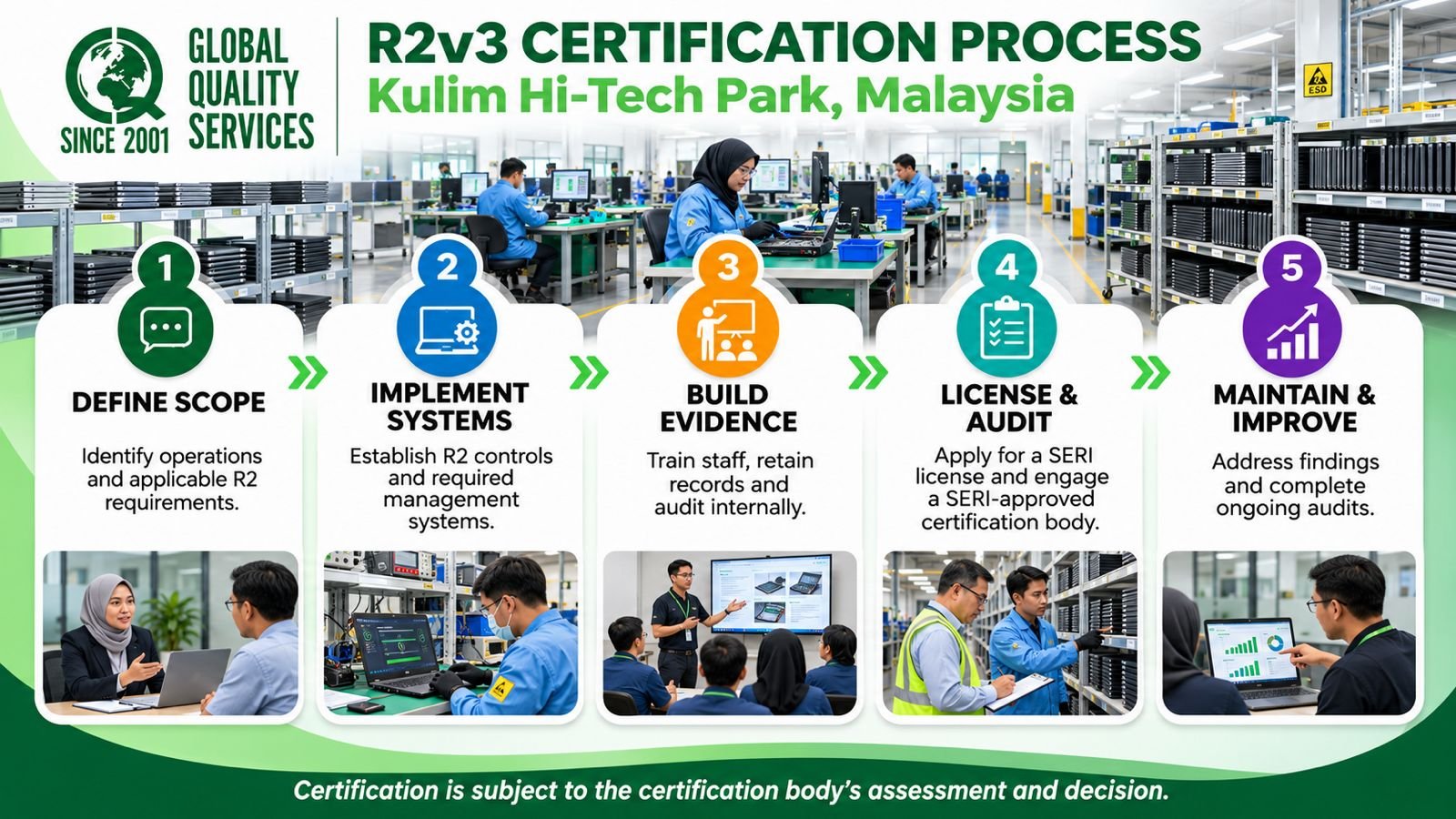
Certification involves a sequence of preparation, independent assessment, and ongoing evaluation. The exact audit arrangements depend on the facility’s activities, size, complexity, and selected certification body.
Step 1: Establish the Certification Scope
Identify the site, operational activities, equipment categories, material streams, and applicable R2v3 appendices. The scope should accurately describe what the facility performs.
Step 2: Review the Standard and Identify Gaps
Evaluate existing processes against the Core Requirements and relevant Process Requirements. Identify missing controls, incomplete records, and areas requiring operational changes.
Step 3: Develop and Implement Required Controls
Establish or update procedures for material management, environmental and safety controls, data sanitization, downstream vendor oversight, employee competence, and other applicable areas.
Step 4: Conduct Internal Audits
Evaluate whether the documented processes are being followed in actual operations. Record findings, address nonconformities, and verify corrective actions before the external audit.
Step 5: Complete the Certification Audit
Engage a SERI-authorized certification body to conduct the required independent assessment. Auditors evaluate the facility’s documentation, operational practices, and evidence against the applicable R2v3 requirements.
Step 6: Address Audit Findings and Certification Decision
Where nonconformities are identified, the facility must address them through the certification body’s corrective action process. The certification body makes the certification decision based on the audit evidence and applicable program requirements.
Step 7: Maintain Certification
R2v3 is not a one-time exercise. Certified facilities must maintain their management controls, records, and applicable Process Requirements and undergo the required surveillance and recertification activities.
R2v3 Certification Services for Facilities in Kulim Hi-Tech Park
Global Quality Services (GQS) provides certification-related services for organizations seeking to establish and demonstrate conformity with applicable management and industry standards.
For facilities in Kulim Hi-Tech Park considering R2v3, the first consideration is whether their actual operations fall within the standard’s scope. This includes reviewing the facility’s activities, material streams, data-handling responsibilities, and downstream processing arrangements.
GQS can discuss the applicable certification requirements, the expected assessment stages, and the scope considerations relevant to an organization’s operations. The certification audit and final certification decision must be undertaken by a SERI-authorized certification body.
With 26 years of experience in quality and certification-related services, GQS works with organizations across different industrial sectors to address their certification requirements.
Contact Global Quality Services to discuss R2v3 Certification requirements for your facility in Kulim Hi-Tech Park, Malaysia.
Frequently Asked Questions
1. Is R2v3 Certification mandatory for electronics companies in Kulim Hi-Tech Park?
R2v3 is not automatically mandatory for every electronics company in Kulim Hi-Tech Park. It is a voluntary standard for qualifying facilities involved in used electronics reuse and recycling activities. Customer requirements, contracts, or other business considerations may influence whether a facility pursues certification.
2. Can an electronics manufacturing company apply for R2v3 Certification?
A manufacturing company may be eligible if a facility performs activities covered by R2v3, such as used electronics refurbishment, testing, repair, or recycling. Manufacturing new electronic products alone does not establish eligibility. The proposed scope must be assessed against the standard.
3. Does every R2v3-certified facility need all seven appendices?
No. Every facility must meet the applicable Core Requirements, but the Process Requirements depend on the activities performed. A facility must be certified to the appendices relevant to its operations.
4. Who issues the R2v3 certificate in Malaysia?
R2v3 certificates are issued by certification bodies authorized by SERI. SERI administers the R2 Certification Program, while the authorized certification body conducts the audit and makes the certification decision.
5. Can a facility outsource activities that it does not perform in-house?
Certain activities may be outsourced to qualified downstream vendors, subject to the applicable R2v3 requirements. The facility must maintain the required vendor qualification, documentation, and oversight controls. Outsourcing does not remove its responsibility for managing applicable downstream requirements.