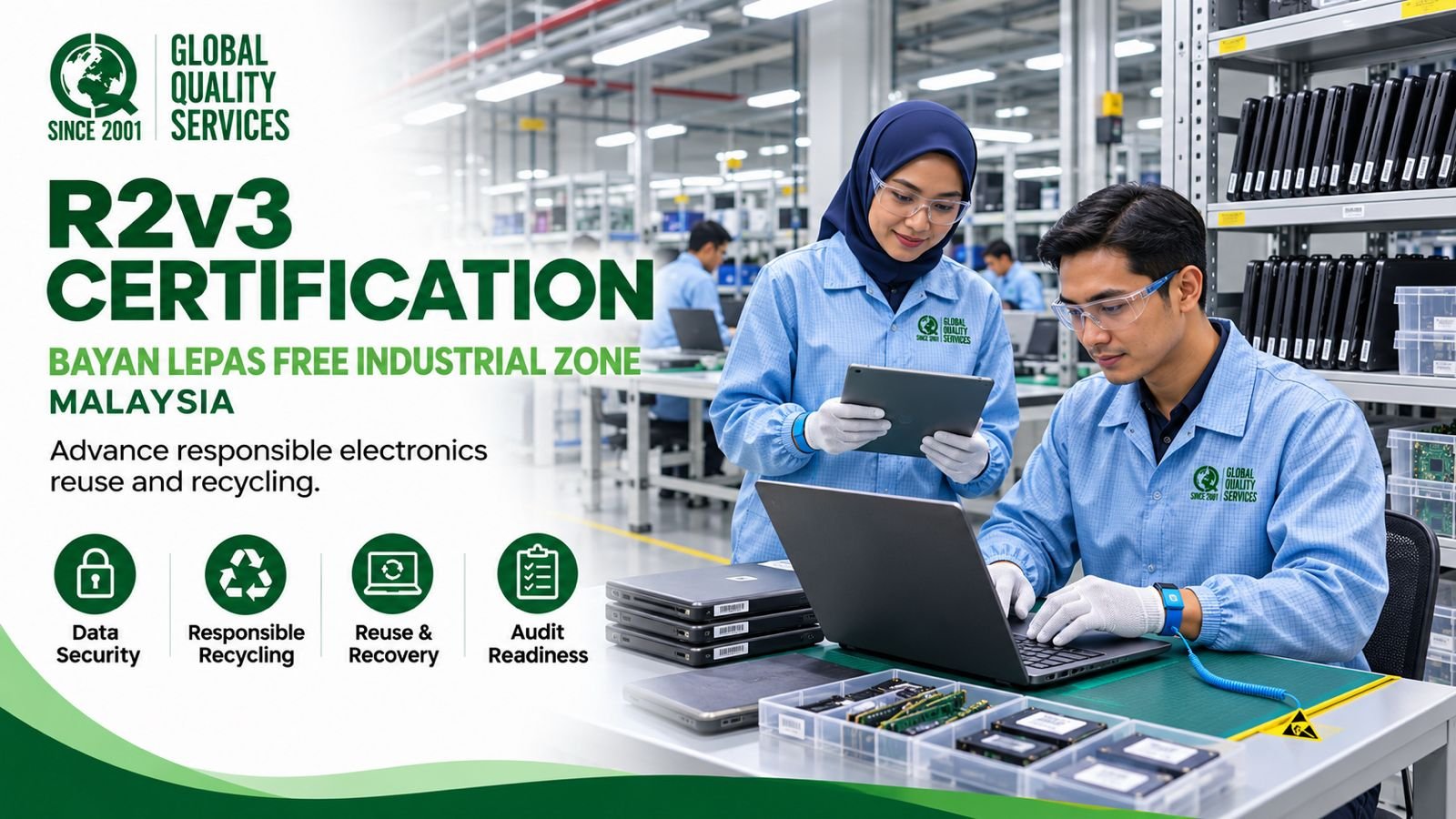
Businesses handling used electronics must do more than recover valuable components. They also need appropriate processes for data protection, environmental management, worker safety, and the responsible handling of electronic waste.
R2v3 certification is based on the Responsible Recycling (R2) Standard developed by Sustainable Electronics Recycling International (SERI). It establishes requirements for facilities involved in electronics reuse, refurbishment, repair, recycling,g and related activities. The standard focuses on responsible practices throughout the electronics lifecycle, including managing materials sent to downstream vendors.
Bayan Lepas Free Industrial Zone in Penang is an established hub for semiconductor, electrical and electronics manufacturing, electronics manufacturing services and related industries. Its electronics industry creates a relevant business environment for organizations involved in equipment recovery, IT asset disposition and electronics recycling activities.
Global Quality Services provides R2v3 certification-related services for eligible businesses in Bayan Lepas Free Industrial Zone, Malaysia. The certification process is tailored to the facility’s activities, applicable R2 requirements, and operational scope.
What Is R2v3 Certification?
R2v3 is the third version of the Responsible Recycling Standard. SERI developed it, and it sets requirements for facilities that manage used electronics and associated materials.
The standard is organized into two main sections:
Core Requirements: These apply to every R2-certified facility and address areas such as environmental, health and safety management, legal compliance, data security, downstream accountability and facility management.
Process Requirements: These apply according to the specific activities performed by a facility. They address specialized operations such as testing and repair, materials recovery and other electronics processing activities.
This structure allows facilities to be certified based on their actual operations, rather than applying every specialized process requirement to every organization.
R2v3 certification is facility-specific. The certified scope identifies the activities covered by the audit, helping customers understand the capabilities and processes assessed at the facility.
Why Is R2v3 Certification Important in Bayan Lepas?
Bayan Lepas has a significant concentration of electronics and semiconductor businesses, including manufacturing and testing operations. Alongside manufacturing, managing equipment, returned electronics, and electronic components of life-cycle devices requires responsible handling.
Organizations involved in these activities may need to demonstrate that their processes address environmental, health and safety, data security and downstream management requirements. R2v3 certification can be relevant to:
- Electronics recycling and recovery facilities.
- IT asset disposition (ITAD) service providers.
- Used computer and electronic equipment refurbishers.
- Electronics repair and testing businesses.
- Companies involved in reselling and reusing used electronic equipment.
- Facilities processing electronic components and recoverable materials.
For businesses operating in or around Bayan Lepas, R2v3 provides a framework for demonstrating responsible electronics management to customers, suppliers, and business partners.
Key Requirements of R2v3 Certification
1. Environmental, Health and Safety Management
Facilities must establish appropriate environmental, health and safety controls for their operations. These address workplace hazards, environmental risks, safe handling procedures, and relevant operational responsibilities.
2. Legal and Regulatory Compliance
Organizations must identify applicable legal requirements and maintain processes to evaluate and demonstrate compliance. This includes relevant requirements relating to waste management, environmental protection, occupational safety and electronic equipment handling.
3. Data Security and Sanitization
Used computers, storage devices and other electronic equipment may contain confidential information. Facilities must establish suitable procedures for data sanitization and the secure handling of devices containing data.
4. Downstream Vendor Management
Facilities must maintain oversight of downstream vendors that receive equipment, components or materials. This includes evaluating downstream partners, maintaining records and ensuring that materials are managed through an appropriate chain.
5. Reuse and Recovery Processes
Organizations must establish procedures for handling equipment intended for reuse, refurbishment, repai,r or recycling. The applicable controls depend on the processes performed and the relevant R2 Process Requirements.
6. Tracking and Material Management
Facilities must maintain records that support the tracking of equipment and materials through their operations. This helps establish where items are received, processed, reused, transferred, or sent for further recovery.
7. Worker Training and Competence
Employees must have the necessary knowledge and competence to perform their assigned activities. Training arrangements should address relevant safety procedures, equipment handling, data protection, and operational responsibilities.
R2v3 Process Requirements and Their Applicability
Not every R2-certified facility performs the same activities. The applicable Process Requirements must therefore be determined according to the facility’s actual operations.
Examples include:
- Appendix A – Downstream Recycling Chain: Addresses managing and verifying downstream vendors that receive equipment and materials.
- Appendix B – Data Sanitization: Applies to facilities performing data sanitization activities.
- Appendix C – Test and Repair: Covers facilities involved in testing, repairing and preparing electronic equipment for reuse.
- Appendix D – Specialty Electronics Reuse: Addresses relevant specialized reuse activities.
- Appendix E – Materials Recovery: Applies to facilities undertaking materials recovery processes.
- Appendix F – Brokering: Covers applicable brokering activities.
- Appendix G – Photovoltaic Modules: Applies to facilities handling photovoltaic modules within the scope of the relevant requirements.
The applicable appendices must be established using SERI’s current R2v3 guidance and the facility’s activities. Not every appendix applies to every facility.
Benefits of R2v3 Certification
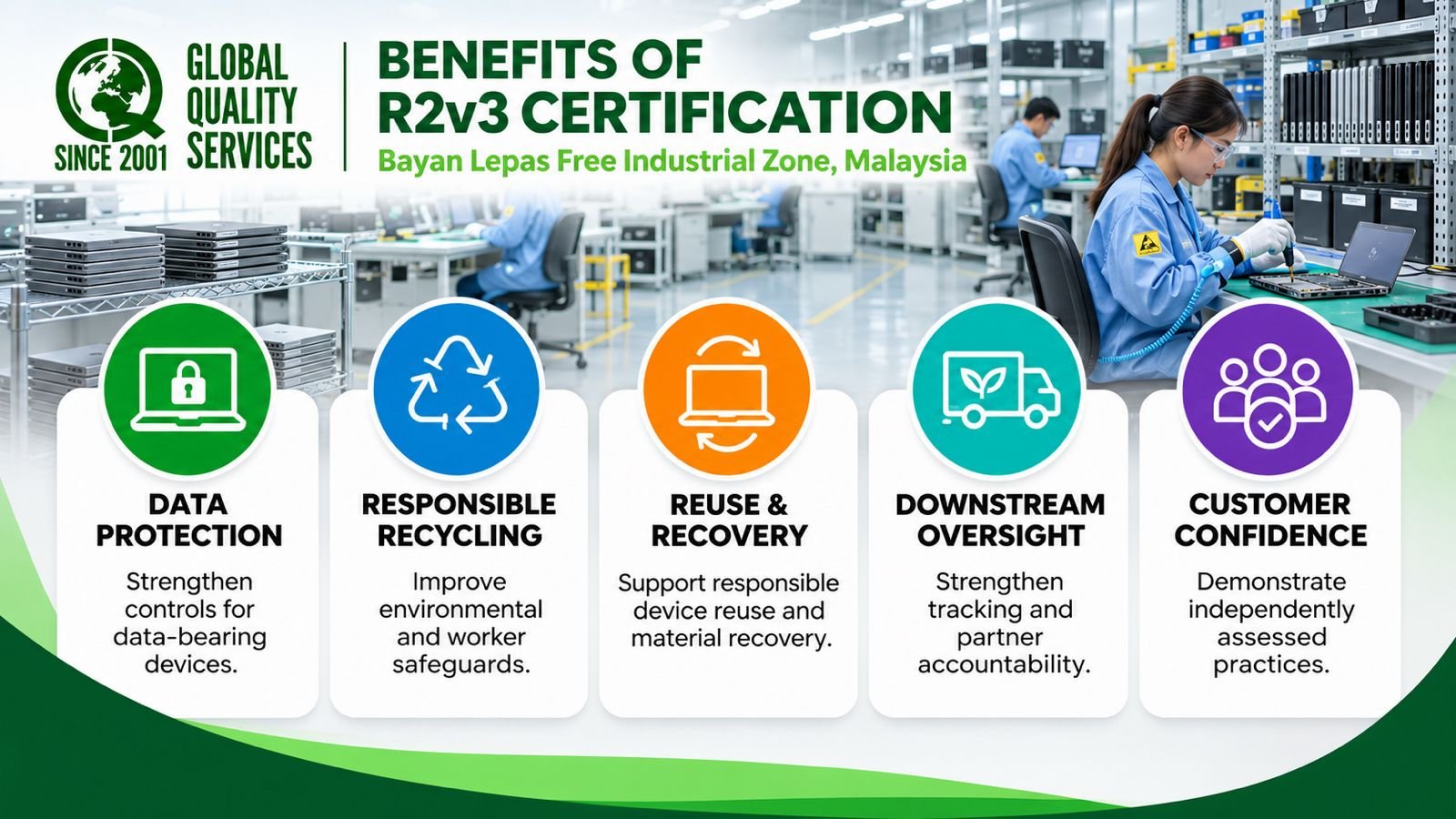
Demonstrate Responsible Electronics Management
R2v3 certification provides independent evidence that a facility has been assessed against the applicable requirements for responsible electronics reuse and recycling.
Strengthen Data Protection Practices
Defined data sanitization and security procedures help facilities manage electronic equipment that may contain sensitive business or personal information.
Improve Environmental and Workplace Controls
The standard addresses environmental, health and safety practices associated with electronics processing, helping organizations establish more structured operational controls.
Improve Downstream Accountability
Documented downstream vendor management helps organizations maintain oversight of where equipment and recovered materials are transferred.
Support Customer and Business Partner Confidence
Certification can help demonstrate responsible operating practices to customers, technology companies, manufacturers and other organizations seeking qualified electronics recovery partners.
Establish Clear Operational Scope
The distinction between Core and Process Requirements allows a facility’s certification scope to reflect the specific activities it performs.
R2v3 Certification Process in Bayan Lepas Free Industrial Zone
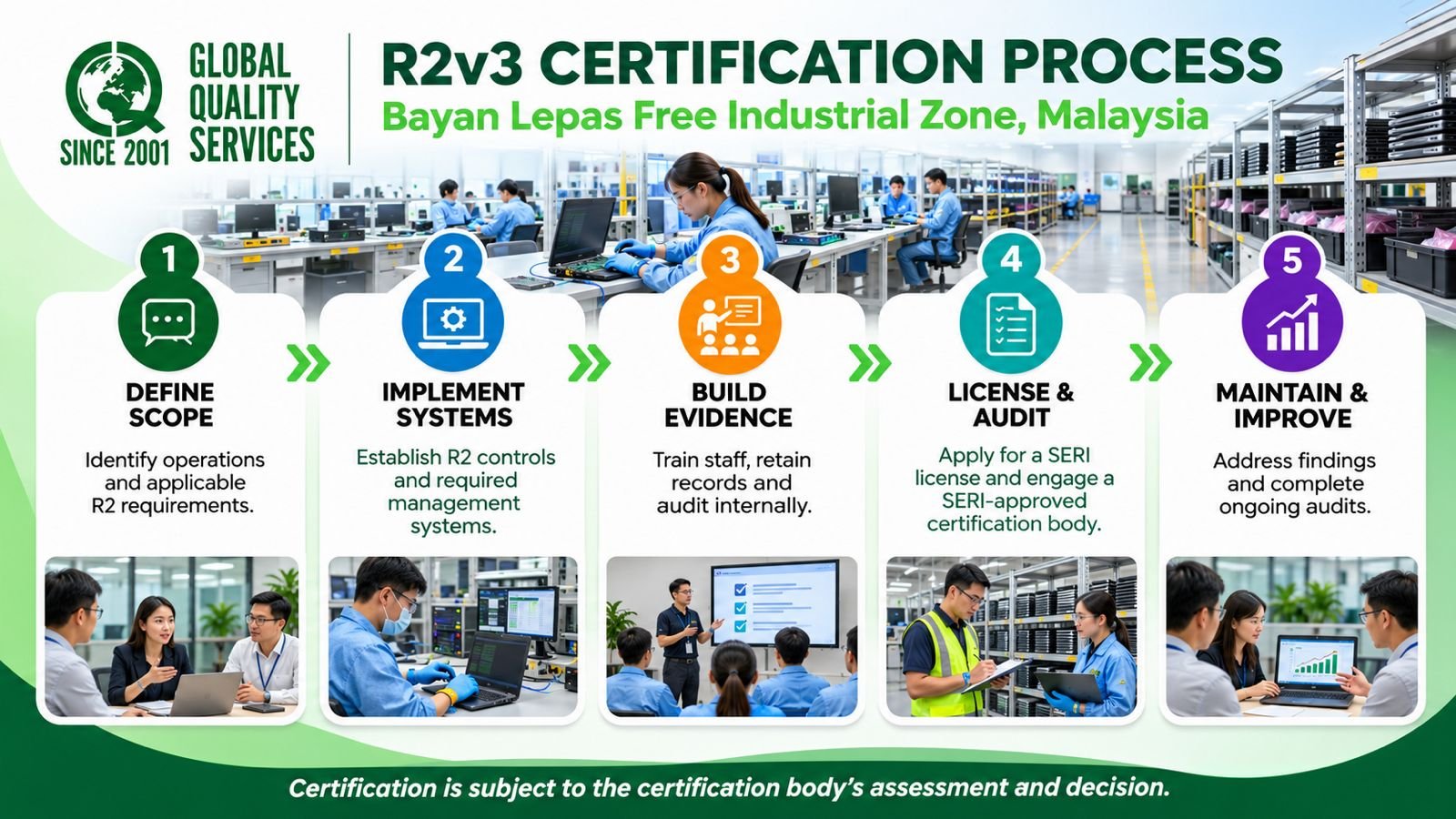
Step 1: Review Facility Activities
The organization’s operations are reviewed to identify whether they fall within the R2 Standard’s scope. This includes activities such as electronics refurbishment, data sanitization, repair, recycling, and materials recovery.
Step 2: Determine Applicable Requirements
The relevant Core Requirements and Process Requirement appendices are identified according to the facility’s activities.
Step 3: Conduct a Gap Assessment
The facility evaluates existing environmental, health and safety procedures, data security controls, downstream vendor records, and operational processes against the applicable requirements.
Step 4: Establish and Implement Required Controls
The facility develops or updates its procedures, responsibilities, records, and operational controls. Employees must understand the requirements relevant to their activities.
Step 5: Conduct an Internal Audit
An internal audit evaluates the implementation and effectiveness of the R2v3 requirements. Identified nonconformities must be addressed through corrective action.
Step 6: Complete the SERI Licensing Requirements
The facility must complete the applicable SERI licensing arrangements as part of the certification program.
Step 7: Undergo the Certification Audit
A SERI-authorised certification body conducts the required audit. The assessment examines the facility’s activities, records, processes, and evidence of conformity.
Step 8: Certification Decision
The certification body reviews the audit findings, technical review, and closure of applicable nonconformities before making the certification decision.
Why Choose Global Quality Services for R2v3 Certification?
Global Quality Services provides certification-related services for organizations seeking to establish responsible electronics management practices in line with R2v3 requirements.
For businesses in Bayan Lepas Free Industrial Zone, the approach considers the facility’s activities, operational scope, data security arrangements, environmental controls and applicable process requirements.
The objective is to clarify the standard’s requirements and the evidence needed for the certification assessment. SERI-authorised certification bodies issue R2v3 certificates only after the required audit and certification decision.
If your organization operates an electronics refurbishment, ITAD, repair or recycling facility in Bayan Lepas Free Industrial Zone, contact GQS to discuss the applicable R2v3 requirements and certification scope.
Share your facility activities, processing capabilities,, and existing management system certificationsso we cano determine the relevant requirements.
Frequently Asked Questions
1. Does every electronics manufacturer in Bayan Lepas need R2v3 certification?
No. R2v3 is intended for facilities involved in used electronics reuse, refurbishment, repair, recycling, and related activities. A business that only manufactures new electronic products would not automatically fall within its scope.
2. Can an ITAD company apply for R2v3 certification?
Yes. IT asset disposition facilities may be eligible where their activities fall within the R2 Standard’s scope. The applicable requirements depend on whether the facility performs data sanitization, testing, repair, resale, recycling, or downstream transfers.
3. Are all R2v3 Process Requirements mandatory for every facility?
No. The Core Requirements apply to all R2-certified facilities, while the Process Requirements apply according to the activities performed. The relevant appendices must be determined during scope evaluation.
4. Who issues an R2v3 certificate?
R2v3 certificates are issued by SERI-authorised certification bodies. SERI administers the R2 program and its licensing requirements, while the certification body conducts the audit and makes the certification decision.
5. Can a facility include multiple electronics processing activities in one R2v3 certification scope?
Yes, as long as the activities are eligible and properly included in the facility’s defined scope. The relevant Process Requirements must be assessed, and the certificate should accurately identify the activities covered at the facility.