
Packing inspection is a quality control activity that verifies whether products are packed according to the buyer’s specifications, approved packaging samples, and shipping requirements before dispatch. It covers packaging materials, packing methods, carton condition, labels, quantities, and shipping marks.
For businesses sourcing products from Qingdao, China, packing inspection helps identify packaging errors before goods enter the export supply chain. Incorrect carton markings, inadequate protective materials, damaged boxes, or mismatched quantities can create problems during transportation, warehousing, and delivery.
Global Quality Services provides third-party packing inspection services in Qingdao for businesses that need independent verification of finished goods and export packaging. The inspection scope is based on the product type, purchase order, and buyer’s requirements.
Why Is Packing Inspection Important in Qingdao?
Qingdao is an important port and industrial center in eastern China, with manufacturing, international trade, and logistics activities. Businesses exporting goods through the region need packaging that protects products during handling, storage and transportation. Packing inspection helps buyers verify whether suppliers have followed the agreed packing instructions before shipment. It is particularly useful when:
- Exporting large quantities of finished products.
- Working with a new supplier or packaging manufacturer.
- Shipping fragile, heavy or high-value goods.
- Using customised retail packaging or printed cartons.
- Supplying products to international retailers and distributors.
- Checking packaging changes before approving dispatch.
An inspection can identify discrepancies while goods are still accessible at the supplier’s premises, allowing the buyer to request corrections where necessary.
Scope of Packing Inspection Services
The inspection checklist depends on the product, packaging design and transportation requirements. GQS can establish the following checks according to the agreed inspection scope.
1. Packaging Material Verification
Inspectors check whether the packaging materials match the approved specifications. This may include carton type, thickness, cushioning, protective wrapping, dividers, polybags and other specified materials.
2. Packing Method and Arrangement
The inspection verifies whether products are packed in the correct orientation and quantity. It may cover individual packaging, inner boxes, master cartons, protective inserts and separation of different product models or variants.
3. Carton Condition and Construction
Outer cartons are examined for visible damage, weak construction, poor sealing, crushing, moisture and other issues that may affect handling or product protection.
4. Labels and Shipping Marks
Product labels, carton markings, barcodes, handling symbols and shipping information are compared with the buyer-approved artwork or instructions. Checks may include product identification, purchase order numbers, carton numbering, quantities and destination details.
5. Quantity and Packing List Verification
The number of products in selected cartons is checked against the agreed packing configuration. Carton counts and available quantities can also be compared with the packing list to identify discrepancies.
6. Carton Dimensions and Weight
Where required, inspectors record carton measurements and gross or net weights. These details can be compared with the buyer’s specifications or shipping documentation.
7. Protective Packaging
Inspectors review the use and placement of cushioning, foam, bubble wrap, moisture barriers, desiccants and other protective materials specified for the products.
Benefits of Packing Inspection
Identify Packaging Defects Before Dispatch
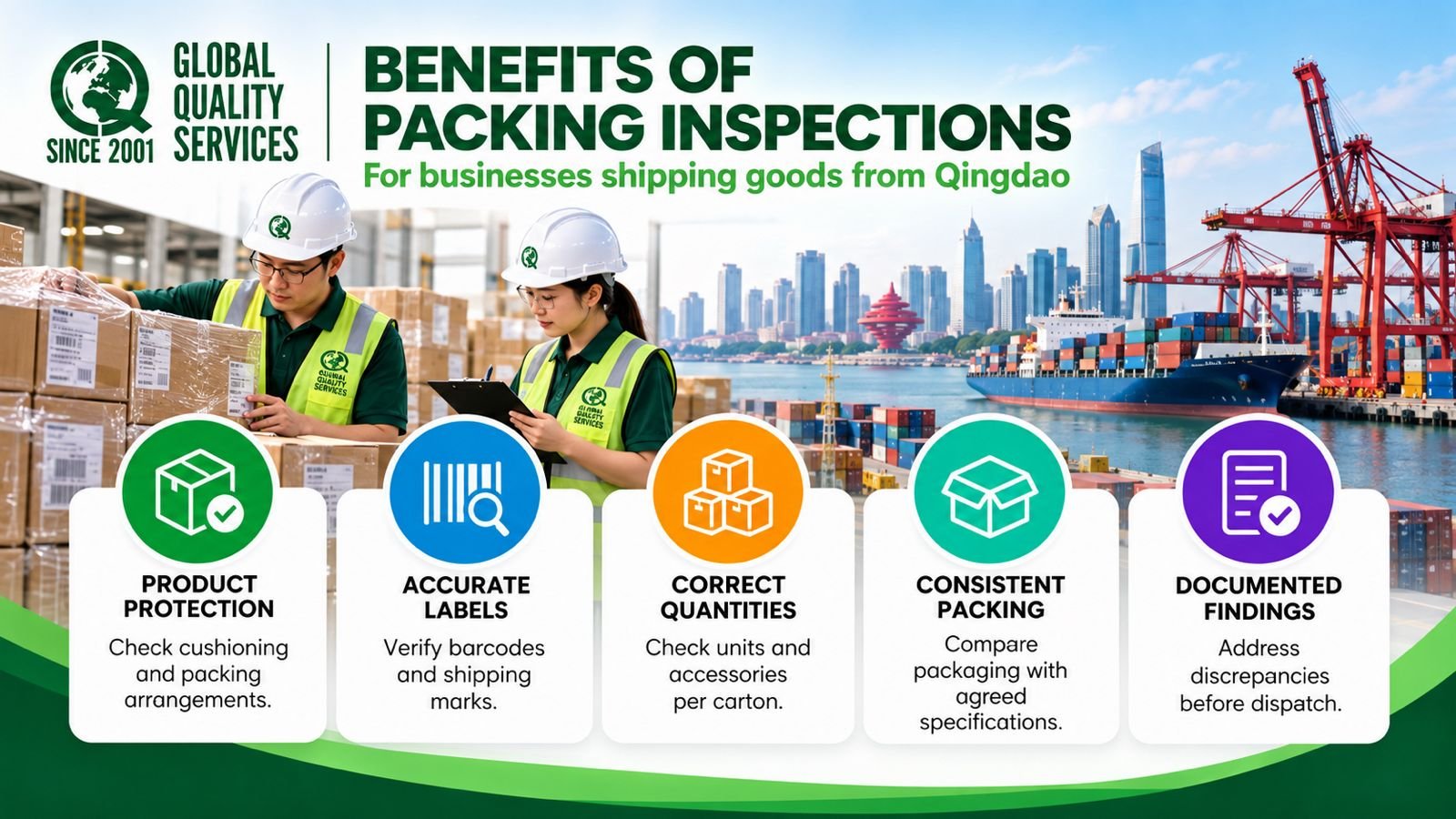
Inspection helps detect damaged cartons, incorrect packing arrangements, inadequate protection and other visible issues before goods leave the supplier’s facility.
Reduce Transportation Damage Risks
Checking protective materials, carton construction and packing methods can help identify weaknesses that may expose products to damage during handling and transportation.
Verify Export Packaging Requirements
Buyers can confirm whether shipping marks, labels, carton quantities and packaging specifications match their instructions.
Prevent Quantity and Labelling Errors
Checking product quantities, SKU details and carton markings helps reduce discrepancies that may create problems during warehouse receiving and order fulfilment.
Improve Supplier Accountability
An independent inspection report records observed packaging conditions and discrepancies. This provides documented information for discussions with suppliers and corrective action.
Support Shipment Decisions
Inspection findings give buyers a clearer view of packaging readiness before authorising dispatch. The buyer retains responsibility for the final shipment decision.
Packing Inspection Process in Qingdao
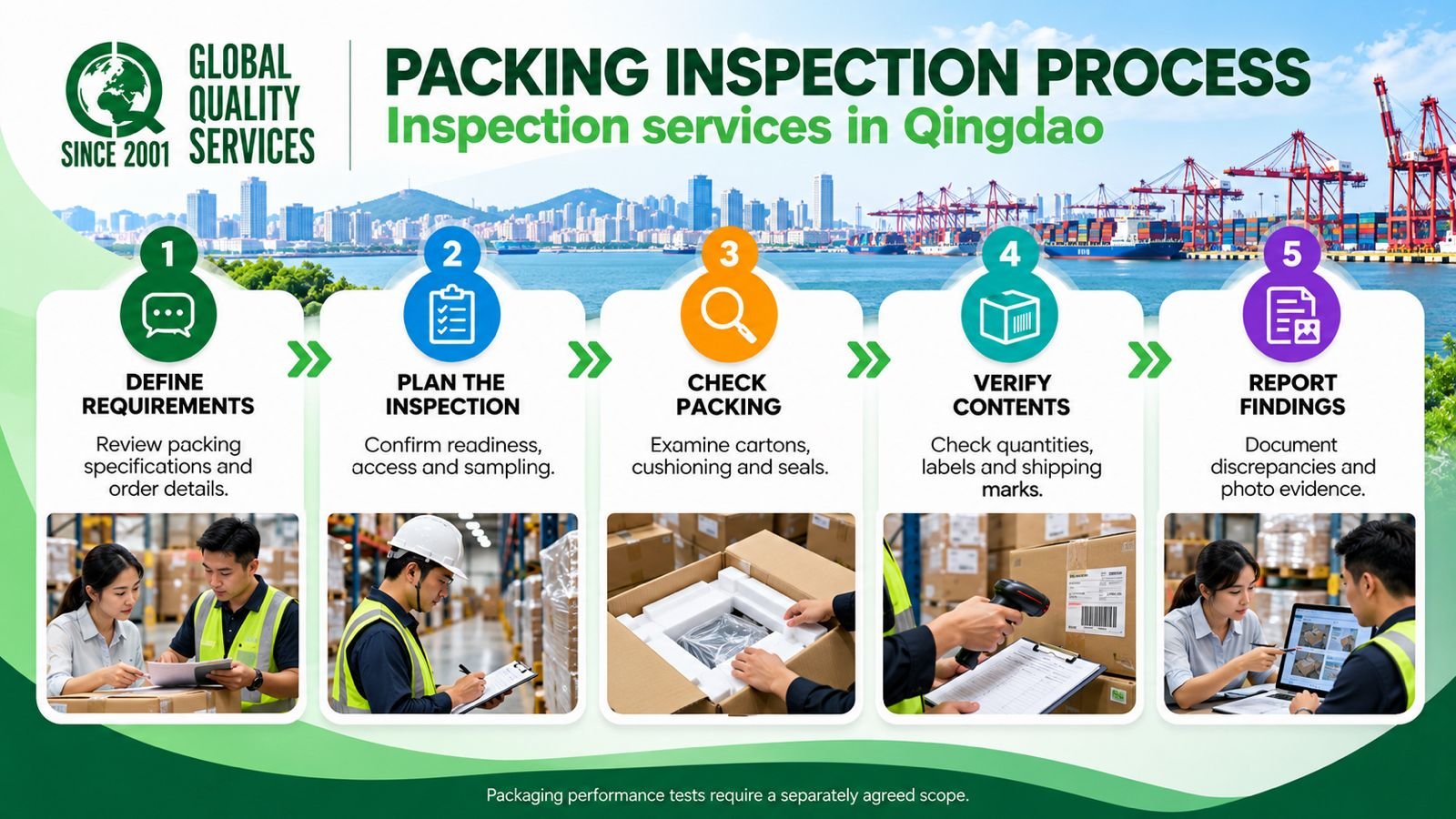
Step 1: Review Buyer Requirements
The buyer shares the purchase order, packing list, approved packaging samples, carton specifications, label artwork and relevant shipping instructions.
Step 2: Define the Inspection Checklist
The inspection scope is established based on the product category, packaging configuration, sampling requirements and acceptance criteria.
Step 3: Confirm Packing Readiness
The supplier confirms that the goods and packaging are available for inspection. The inspection schedule is arranged accordingly.
Step 4: Conduct On-Site Inspection
Inspectors examine selected products and packages, checking the packing method, materials, carton condition, quantities, labels and shipping marks within the agreed scope.
Step 5: Record Findings
Packaging discrepancies and visible defects are documented. Photographs and measurements may be included where relevant to the inspection requirements.
Step 6: Prepare the Inspection Report
The findings are compiled into a report outlining the inspection scope, observations and identified non-conformities. The buyer can use the report to determine whether corrections or further checks are required.
Products Covered Under Packing Inspection
Packing inspection can be arranged for various product categories, including:
- Electronics and IT products: Computers, peripherals, electrical equipment and electronic accessories.
- Machinery and industrial equipment: Machine components, tools, mechanical assemblies and industrial products.
- Consumer goods: Household products, kitchenware, furniture and general merchandise.
- Textiles and garments: Clothing, sportswear, fabrics and accessories.
- Packaging materials: Cartons, boxes, printed packaging and protective materials.
- Fragile products: Glassware, ceramic items and other goods requiring additional protective packaging.
The inspection scope depends on product availability, packaging requirements and the agreed inspection criteria.
Why Choose Global Quality Services for Packing Inspection Services?
Global Quality Services provides third-party inspection services for businesses that require independent checks before products are dispatched. Each packing inspection is planned according to the buyer’s requirements, product category, and packaging specifications.
For businesses sourcing goods from Qingdao, inspections focus on verifying observable packaging conditions, identifying discrepancies, and documenting findings. This gives buyers an independent reference when reviewing supplier performance and shipment readiness.
Contact Global Quality Services to discuss packing inspection services in Qingdao, China. Share your product details, supplier location, packing specifications and inspection requirements to establish an appropriate inspection scope.
Frequently Asked Questions
1. When should packing inspection be scheduled?
It is generally scheduled when the goods are packed or sufficiently ready for the agreed checks, before shipment. The timing should allow the supplier to correct identified packaging issues.
2. Can packing inspection be conducted without checking product quality?
Yes. A packing-only inspection can focus on packaging materials, packing methods, carton condition, labels, quantities and shipping marks. Product quality checks should be specified separately if required.
3. Can inspectors verify customised carton printing?
Yes. Printed carton details can be compared with buyer-approved artwork or instructions. This may include logos, product information, barcodes, shipping marks and handling symbols.
4. What happens if incorrect packaging is identified?
The findings are documented in the inspection report. The buyer can discuss corrective action with the supplier and request re-packing or a follow-up inspection where necessary.
5. Does packing inspection guarantee that products will not be damaged during shipping?
No. Packing inspection evaluates the packaging against the agreed criteria at the time of inspection. It cannot guarantee damage-free transportation because handling, storage, loading and transit conditions can also affect product condition.