Dongguan is a major manufacturing centre in Guangdong Province, China, with extensive production activity across electronics, electrical equipment, machinery, textiles, furniture, toys and consumer products. For international buyers sourcing from this region, verifying finished goods before delivery is key to maintaining product quality and meeting purchase requirements.
Pre-Delivery Inspection Services in Dongguan enable buyers, importers, manufacturers and sourcing companies to assess products against agreed specifications before they are handed over, released or delivered to the next party. Depending on the product, an inspection may cover appearance, workmanship, dimensions, functionality, quantity, accessories, packaging and identification labels.
Global Quality Services (GQS) provides third-party inspection services for businesses that require documented findings on product condition and conformity before delivery. The inspection scope is defined according to the product type, purchase order, approved samples and requirements agreed for the assignment.
Whether you are sourcing electronic equipment, manufactured components, household products, furniture or industrial machinery, a clearly defined pre-delivery inspection can help identify discrepancies before products leave the supplier’s control.
Why Pre-Delivery Inspection Matters for Businesses in Dongguan
Dongguan’s manufacturing base serves domestic and international supply chains across multiple product categories. Buyers may work with factories, trading companies, contract manufacturers and suppliers handling different stages of production. Final verification offers an opportunity to confirm whether the goods meet the agreed requirements.
Pre-delivery inspection is particularly useful when businesses need to:
- Verify finished products against approved specifications and samples.
- Identify visible defects, damage and workmanship inconsistencies.
- Confirm product models, quantities, dimensions and configurations.
- Check specified functions and operating features.
- Verify accessories, manuals, labels and product identification.
- Review packaging condition and delivery documentation.
- Record inspection findings before accepting or releasing the goods.
The inspection is conducted against predetermined criteria. Its purpose is to establish the condition of the products examined at the time of inspection, not to guarantee that every product will remain defect-free after delivery.
Products Covered Under Pre-Delivery Inspection in Dongguan
Inspection requirements vary according to the product’s design, intended use and contractual specifications. GQS can establish relevant checkpoints for the product category and assignment scope.
Electronics and Electrical Equipment
Dongguan’s electronics and electrical manufacturing sector makes product verification relevant to businesses purchasing electronic devices, electrical components and related equipment.
Inspection checkpoints may include:
- Product model, serial number and configuration.
- External appearance, assembly quality and finishing.
- Connectors, buttons, switches and visible components.
- Specified power-on and functional checks.
- Accessories, cables, manuals and other included items.
- Labels, packaging and product identification.
Specialised electrical safety testing, laboratory testing and regulatory conformity assessments are separate activities unless explicitly included in the agreed scope.
Machinery and Industrial Equipment
Industrial equipment may require checks against technical specifications, approved drawings and agreed operational requirements.
Depending on the equipment, inspection points may include:
- Model identification and equipment configuration.
- Dimensions and selected measurable characteristics.
- Visible assembly, finishing and installation components.
- Specified operational or functional tests.
- Safety guards and other specified physical features.
- Included spare parts, tools and documentation.
Complex machinery may require specialist engineers, calibrated instruments or dedicated performance tests. These requirements should be established before the inspection is scheduled.
Furniture and Home Products
For furniture and home products, pre-delivery inspection can assess whether the finished items match the agreed design, dimensions and quality expectations.
Relevant checks may include:
- Surface finish, colour consistency and visible defects.
- Dimensions and assembly quality.
- Joints, fittings, hardware and included accessories.
- Stability or specified functional features.
- Protective packaging and product labelling.
- Quantity and assortment against the order.
Toys and Consumer Goods
Consumer products may require inspection of workmanship, product configuration, finishing and packaging before delivery.
Depending on the product, the checklist can include:
- Appearance, colours and finishing.
- Dimensions and component assembly.
- Missing parts or visible defects.
- Specified functions and operating features.
- Product labels, warning information and packaging.
- Quantity, assortment and identification details.
Any specialised safety testing must be identified separately where required by the product specifications or destination-market regulations.
Textiles, Garments and Soft Goods
For clothing, textile products and related goods, inspection may focus on material appearance, workmanship, measurements and order accuracy.
Checks can cover:
- Stitching, seams and finishing.
- Colour, style and size assortment.
- Measurements against approved specifications.
- Visible stains, damage or material defects.
- Labels, tags and packaging.
- Quantity and product identification.
Key Checkpoints in Pre-Delivery Inspection
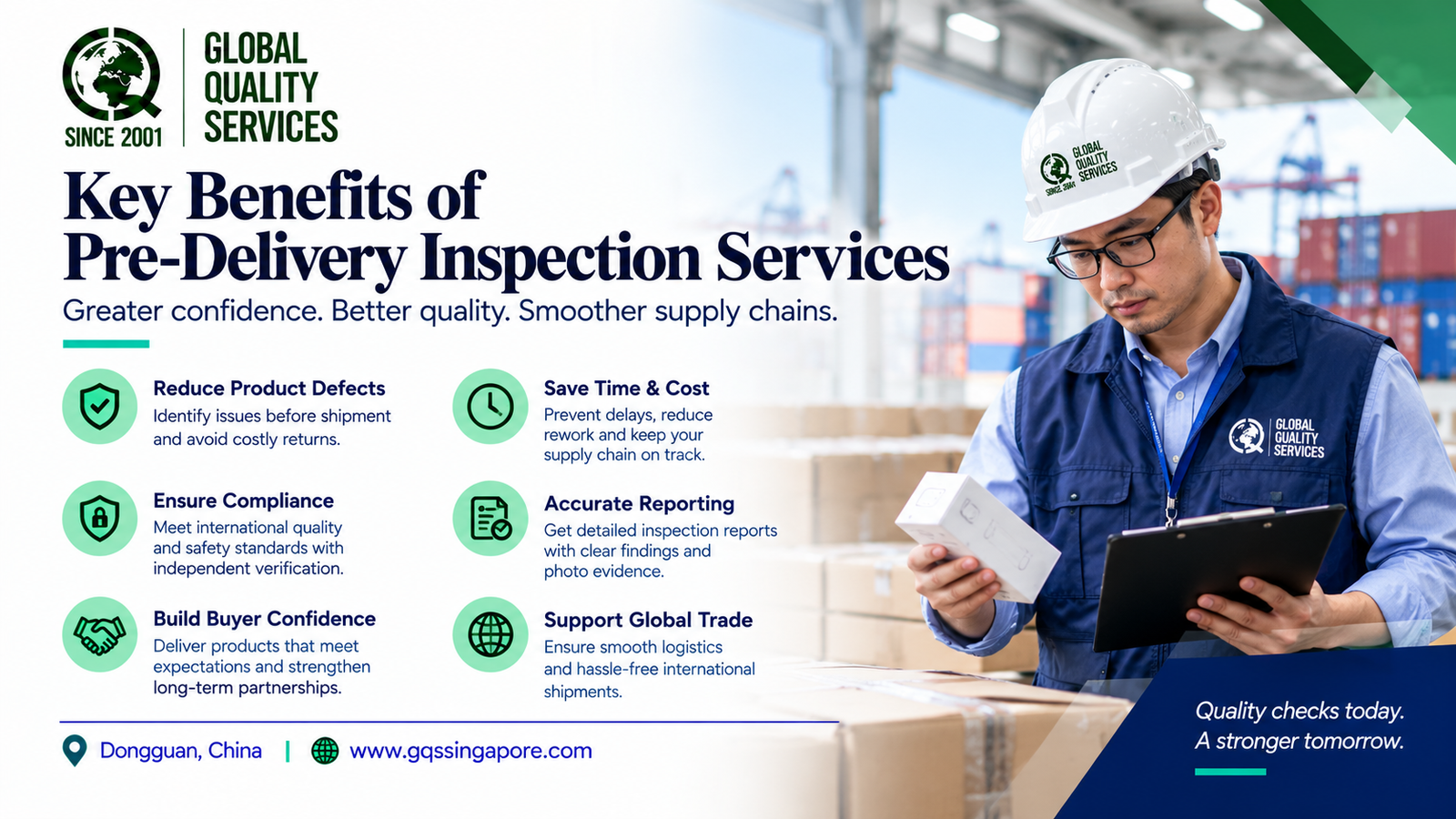
A structured inspection starts with the acceptance criteria and translates them into checks that can be performed on the products presented.
1. Product Specifications and Appearance
Products are examined against the approved sample, purchase order, technical drawing or product specification, as applicable. The inspection records relevant differences in design, finish, materials or configuration.
2. Workmanship and Defect Identification
Visible defects such as scratches, dents, poor finishing, loose components or incorrect assembly are documented. Defects can be classified according to the buyer’s agreed criteria where a classification system has been specified.
3. Quantity and Configuration
The inspection verifies the quantity presented and checks relevant models, sizes, colours, variants or configurations against the order. For products supplied with accessories or component sets, the agreed checklist can include completeness checks.
4. Functional and Dimensional Verification
Specified functions and selected measurements are checked using the agreed methods and acceptance limits. The inspection report should distinguish between checks completed, checks not applicable and tests that require separate equipment or specialist assessment.
5. Packaging, Labels and Accessories
Packaging and labelling are reviewed against the agreed delivery requirements. This can include protective materials, carton condition, product identification, barcodes, manuals, accessories and other specified items.
6. Inspection Records and Findings
The findings are documented to provide a record of the products examined and the results of the agreed checks. Photographs and supporting observations may be included where appropriate.
The report enables the buyer or designated decision-maker to evaluate any discrepancies before accepting or releasing the products.
Our Pre-Delivery Inspection Process in Dongguan
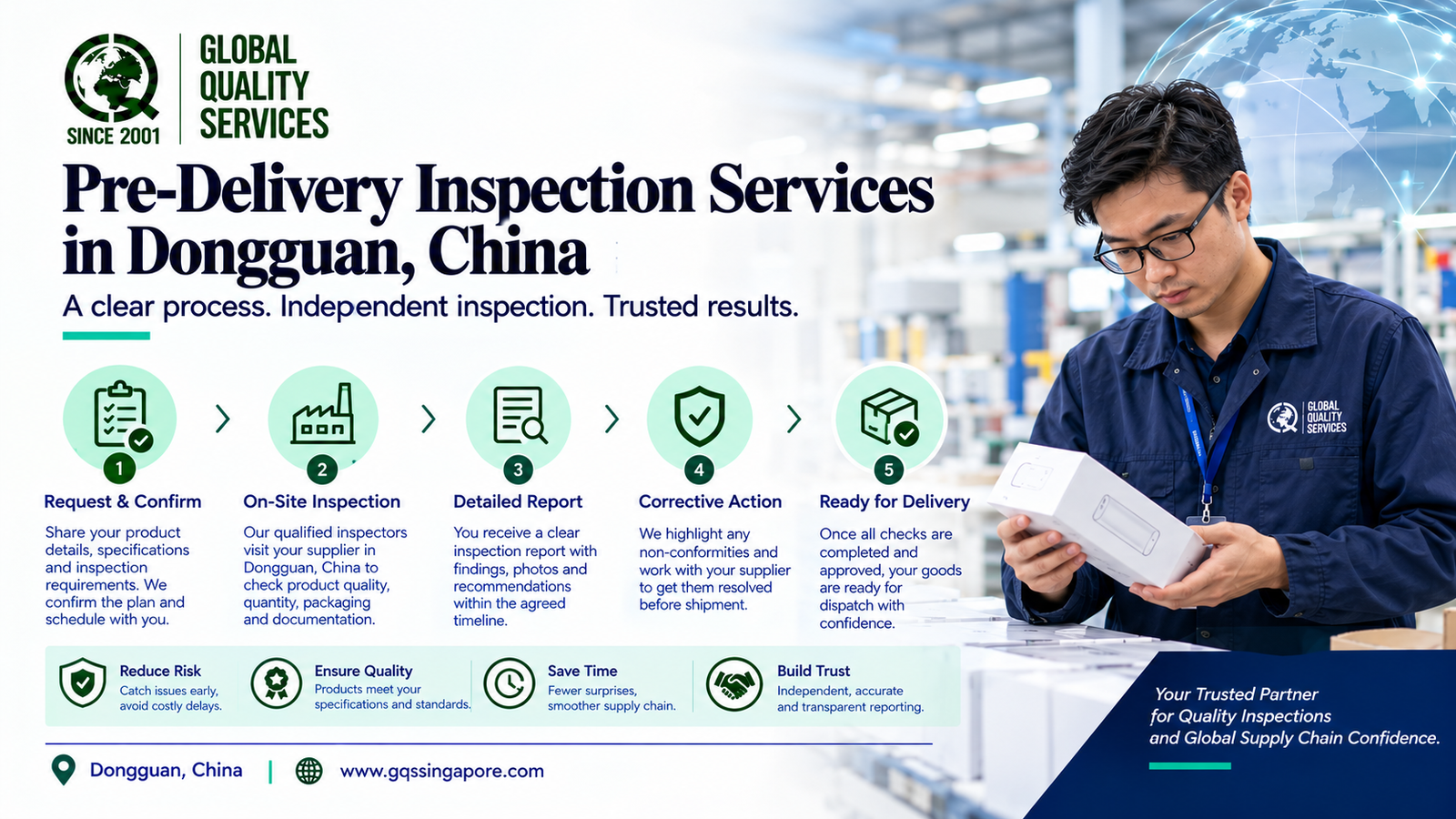
GQS follows an inspection workflow based on the product, the inspection location and the requirements established for the assignment.
Step 1: Define the Inspection Requirements
The inspection scope is established using the purchase order, product specifications, approved samples, technical drawings and any relevant acceptance criteria.
The buyer should identify the checks required and clarify whether specialised functional tests, measurements or equipment are necessary.
Step 2: Confirm Product Readiness and Location
The supplier or responsible party confirms that the products are available at the agreed inspection location. The inspection date, product quantity, site access and any operational requirements are coordinated before the visit.
Step 3: Conduct the Inspection
The inspector examines the products against the agreed checklist. Visual, dimensional, quantity and functional checks are performed as applicable to the product and inspection scope.
Where sampling is agreed, the selected units are examined according to the specified sampling plan. A sampling inspection does not mean every unit has been individually checked.
Step 4: Record Discrepancies
Relevant defects, missing components, specification differences and other observations are documented against the applicable acceptance criteria. Photographic evidence may be recorded where appropriate.
Step 5: Prepare the Inspection Report
The report consolidates the inspection findings, checks performed and relevant observations. Any limitations, excluded tests or items requiring further evaluation should be clearly identified.
Step 6: Review Findings Before Delivery
The buyer or designated decision-maker reviews the report and determines the next steps under the purchase agreement. Where discrepancies are identified, the parties can agree on corrective action, reinspection or other contractual arrangements.
An inspection report records the outcome of the inspection; final acceptance and release decisions remain subject to the agreed contractual arrangements.
Areas Covered in Dongguan, China
Dongguan’s manufacturing activity extends across multiple towns, districts and industrial clusters. Pre-delivery inspection requirements may arise wherever suppliers manufacture or store products awaiting customer handover.
Relevant locations include:
- Songshan Lake: Technology-oriented businesses, electronics and advanced manufacturing.
- Chang’an: Electronics, precision components, machinery and industrial products.
- Humen: Garments, apparel, textiles and consumer goods.
- Dalang: Knitwear, garments and textile manufacturing.
- Houjie: Furniture, home products and related manufacturing.
- Tangxia: Electronics, electrical products and industrial equipment.
- Chashan: Toys, consumer products and manufacturing operations.
- Dongcheng and Nancheng: Commercial businesses, trading companies and supplier coordination.
Inspection arrangements depend on the supplier’s exact location, product readiness, access requirements and the scope of work. The requested site and schedule should be confirmed before the assignment is accepted.
Who Needs Pre-Delivery Inspection Services in Dongguan?
Pre-delivery inspection is relevant to businesses that need an independent assessment of goods before handover, receipt or release.
- Importers and international buyers: Verify that products meet purchase requirements before accepting goods from a supplier.
- Manufacturers and exporters: Record the condition and conformity of finished products before delivery to customers or distribution partners.
- Sourcing and trading companies: Check product quality and order accuracy across different factories and suppliers.
- Retailers and private-label brands: Verify product appearance, assortment, packaging and specified features before receiving inventory.
- Industrial equipment purchasers: Confirm that selected equipment characteristics and specified operational functions meet agreed requirements before handover.
- Procurement and quality teams: Obtain documented findings to support supplier evaluation, quality control and acceptance decisions.
The inspection checklist should reflect the risks and requirements associated with the specific product rather than rely on a generic checklist for every industry.
Why Choose Global Quality Services for Pre-Delivery Inspection in Dongguan?
Global Quality Services provides third-party inspection services focused on defined inspection criteria, recorded observations, and documented findings.
- Product-specific inspection scope: Inspection points are selected according to the goods, purchase order and buyer’s requirements.
- Independent observations: Findings are recorded against the agreed acceptance criteria.
- Practical quality checks: The scope can cover appearance, workmanship, dimensions, quantity, specified functions and packaging, as applicable.
- Documented reporting: Relevant observations and photographs can provide a record for procurement and quality teams.
- Pre-handover verification: The inspection takes place before the agreed delivery or release point, subject to product readiness and scheduling.
Inspection findings apply to the products and checks covered by the assignment. Pre-delivery inspection does not automatically constitute product certification, regulatory approval or a guarantee against defects in uninspected items.
Frequently Asked Questions
What is included in Pre-Delivery Inspection Services in Dongguan?
The inspection may include product appearance, workmanship, dimensions, quantity, specified functions, accessories, packaging and labelling. The final checklist depends on the product category, purchase order and acceptance criteria agreed before the inspection.
What is the difference between pre-delivery inspection and pre-shipment inspection?
Pre-delivery inspection focuses on verifying products before handover or release, while pre-shipment inspection generally focuses on finished goods before dispatch for shipment. The checks can overlap, and some suppliers use the terms interchangeably. The inspection stage and required deliverables should therefore be defined clearly when requesting a quotation.
Can pre-delivery inspection be conducted at a factory in Dongguan?
Inspection arrangements can be considered for supplier factories and other agreed locations in Dongguan, subject to site access, product readiness, inspector availability and the required scope. Provide the factory address and expected inspection date when making an enquiry.
Can GQS inspect machinery and electronic products before delivery?
The inspection scope can be defined for machinery, electronic products and other manufactured goods, depending on the specific assignment. Complex equipment, specialised functional tests and technical measurements may require dedicated expertise or equipment, so these requirements should be confirmed in advance.
What information is required to book a pre-delivery inspection?
Provide the supplier’s name and address, product category, order quantity, proposed inspection date, purchase order, technical specifications and approved samples or drawings where applicable. Include any required functional tests, sampling criteria and packaging checks so the inspection scope can be assessed accurately.