What Does ISO 24510 Cover?
ISO 24510:2024 guides assessing drinking water and wastewater services from the user’s point of view. It helps service providers understand what users expect and evaluate how well their services meet those expectations.
The standard addresses several important areas:
- Identifying user needs and expectations
- Defining service objectives and key characteristics
- Establishing criteria to assess service quality
- Using performance indicators to review results
- Identifying opportunities to improve the user experience
ISO 24510 does not specify engineering design requirements or establish a standalone certification scheme. Businesses should confirm the applicable assessment and recognition route before marketing their work as ISO 24510 certified.
Why Consider ISO 24510 in Raffles Place?
Raffles Place is a major business district where organizations depend on reliable infrastructure, clear service arrangements, and effective communication with stakeholders. For water and wastewater service providers, a user-focused assessment can help reveal where service expectations and actual performance differ.
The standard may be useful for utilities and organizations involved in drinking water or wastewater services. It can help teams review feedback, clarify service commitments, and select performance indicators that reflect user needs.
Singapore’s water sector also places strong emphasis on reliable service delivery. In a February 2025 update, PUB reported that its network supplied potable water to 1.7 million households and businesses through a 6,000-kilometer pipeline network.
For organizations in and around Raffles Place, expert guidance can help connect the standard’s recommendations with relevant service activities, existing records, and practical improvement priorities.
How to Prepare for an ISO 24510 Assessment
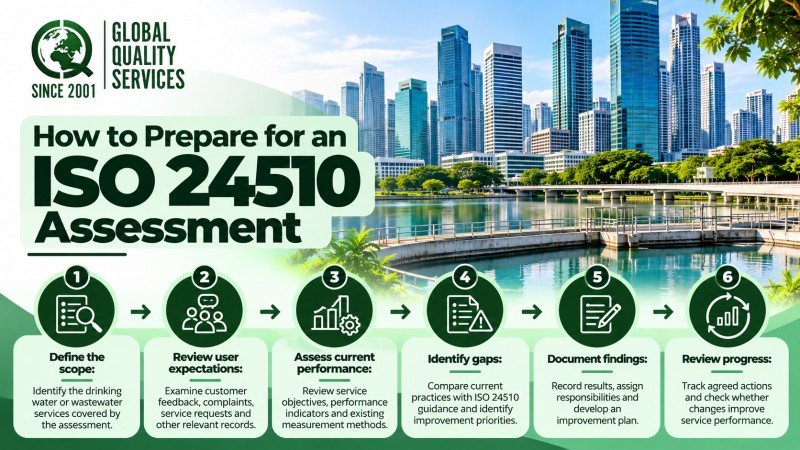
A clear preparation plan helps your team review current service practices and identify areas that need attention.
1. Define the scope:
Identify the drinking water or wastewater services covered by the assessment. Decide which service areas, customer groups, and operational activities you want to evaluate. A clear scope helps your team focus its review and collect relevant information.
2. Review user expectations:
Examine customer feedback, complaints, service requests, and other relevant records. Look for recurring concerns about service access, communication, reliability, and responsiveness. These insights help your team understand user needs and identify areas where service delivery may fall short.
3. Assess current performance:
Review service objectives, performance indicators, and existing measurement methods. Check how your organisation monitors service quality and records results. This review helps identify whether current measures reflect user expectations and gives your team useful information for evaluating performance.
4. Identify gaps:
Compare current practices with relevant ISO 24510 guidance and identify improvement priorities. Review weaknesses in user feedback management, performance monitoring, and service evaluation. Prioritise gaps based on their impact on users, operational needs, and the organisation’s service objectives.
5. Document findings:
Record assessment results, assign responsibilities, and develop an improvement plan. Include identified gaps, supporting evidence, proposed actions, responsible team members, and target dates. Clear documentation helps everyone understand their responsibilities and follow agreed improvements consistently.
6. Review progress:
Track agreed actions and check whether changes improve service performance. Review updated indicators, customer feedback, and complaint trends at suitable intervals. Use these findings to assess progress, adjust actions where necessary, and identify further opportunities to improve services.
Global Quality Services can help your team interpret the relevant guidance and organize its assessment evidence. The exact scope depends on your services and assessment objectives.
Benefits of ISO 24510 for Service Providers
Applying ISO 24510 guidance can help organizations:
- Understand user needs and service expectations more clearly.
- Identify weaknesses in service delivery and communication.
- Select meaningful indicators to assess performance.
- Use feedback to guide service improvements.
- Communicate service objectives and results more consistently.
- Support decisions with documented assessment findings.
The results depend on how well an organization applies the guidance and follows through on improvement actions. ISO 24510 does not guarantee a particular performance outcome.
How Global Quality Services Experts Help You with ISO 24510 in Raffles Place
Choosing the right consultant matters. Global Quality Services offers ISO consulting, training, documentation support, and assessment assistance across multiple standards and markets. The company’s Singapore website lists its consulting services and client testimonials.
As a reputed consultant, Global Quality Services focuses on practical guidance that fits the client’s operations rather than relying on generic templates.
- Relevant consulting experience across multiple international standards and industries
- Business-focused guidance tailored to your service scope and operating needs
- Clear communication about assessment expectations, supporting evidence, and potential gaps
- Documentation support to help organize records and maintain consistency
- Regional service presence with a Singapore office at International Plaza
Client-focused delivery supported by testimonials published on the company website
Global Quality Services can also help you explore related requirements, including ISO 46001 Water Efficiency Management System, where water efficiency is relevant to your organization’s objectives. Confirm the specific service page and scope with the team before proceeding.
Frequently Asked Questions
1. Does ISO 24510 set mandatory performance targets for water utilities?
No. ISO 24510 offers assessment guidance and examples of performance indicators, but it does not prescribe universal target values. Organizations must establish suitable objectives for their services.
2. Can ISO 24510 apply to privately operated water services?
Yes. Its guidance can support drinking water and wastewater service assessment across different operating arrangements. Organizations should confirm that their service activities fall within the standard’s scope.
3. Can an organization use customer complaint records during an ISO 24510 assessment?
Yes. Complaint records can help reveal recurring service problems and unmet expectations. Review complaint categories, response times, resolution outcomes, and recurring issues to identify useful improvement priorities.
4. Does ISO 24510 cover the engineering design of water treatment systems?
No. ISO 24510 focuses on service users, service characteristics, and assessment. It excludes methods for designing and constructing drinking water and wastewater systems.
5. How does ISO 24510 differ from ISO 24511?
ISO 24510 focuses on assessing and improving services from the user’s perspective. ISO 24511 guides the management of wastewater utilities and the assessment of wastewater services.