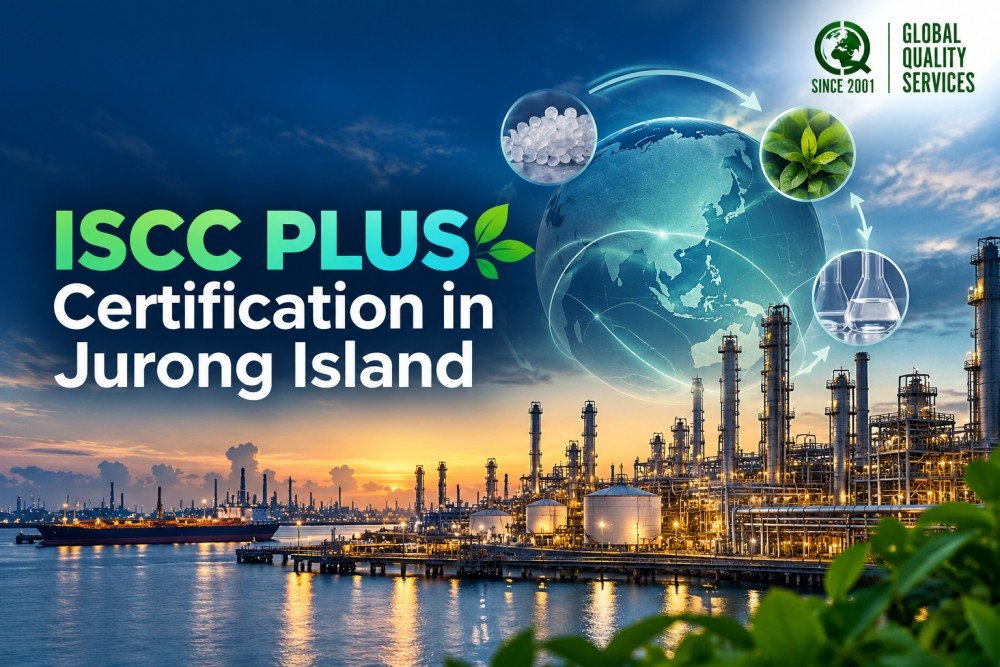
On Jurong Island, a change in raw material sourcing can affect more than the production line. It can change how a product is sold, what a customer expects from its supplier, and which records a company must maintain. This is becoming more relevant to chemical manufacturers and materials suppliers working with recycled plastics, bio-based feedstocks, and other alternative raw materials.
ISCC PLUS certification helps companies demonstrate the sustainability characteristics and traceability of eligible materials. It requires more than a sustainability statement or a supplier’s assurance. Businesses must maintain evidence that supports their material claims and shows how certified inputs move through the supply chain.
Singapore’s plans for Jurong Island include increasing sustainable product output by 1.5 times the 2019 level by 2030. This direction makes sustainable material sourcing an important consideration for industrial businesses.
This page explains what certification involves, where companies commonly face difficulties, and how the right consultancy support can help your business prepare.
What ISCC PLUS Certification Means for Your Business
ISCC PLUS is a voluntary certification scheme for verifying the sustainability characteristics and traceability of alternative feedstocks. These include eligible recycled materials, bio-based raw materials, waste-derived feedstocks, and materials linked to renewable energy.
For a company on Jurong Island, the practical question is whether its current purchasing, production, storage, and sales records can support the sustainability claims it wants to make.
Consider a polymer manufacturer purchasing recycled feedstock from several suppliers. The company needs to establish which incoming materials qualify, how it records their quantities, and how it supports claims made about the finished products. If the records do not match the physical material flows or the selected chain of custody method, the company may have difficulty demonstrating compliance during an audit.
The same concern applies to chemical producers, recyclers, traders, and businesses that handle certified materials before they reach the final manufacturer.
ISCC PLUS provides a framework for addressing these requirements. Certification is site-specific, and every site handling alternative materials that falls within the certification scope must meet the applicable requirements. An independent certification body assesses the business before issuing a certificate.
Why Companies on Jurong Island Are Considering ISCC PLUS
ISCC PLUS may become commercially relevant when a customer asks a supplier to demonstrate the origin of its feedstocks, substantiate recycled or bio-based material claims, or provide evidence of certified supply chain controls. There are four practical reasons a business might pursue certification:
- Customer approval: Some buyers require recognized sustainability certification before approving a material or supplier. Confirming these requirements early helps your business avoid preparing for the wrong scheme or scope.
- Access to new supply contracts: Manufacturers supplying sustainable polymers, chemicals, packaging materials, or other eligible products may need certification to meet a prospective customer’s purchasing conditions.
- Credible product claims: Certification can support claims about eligible feedstocks, provided the business follows the applicable rules for traceability, accounting, and communication.
- Better control over material records: Preparing for certification can expose gaps between purchasing records, production data, inventory figures, and sales documentation. Resolving these gaps improves the evidence available to support certified material claims.
Which Businesses on Jurong Island Can Apply?
ISCC PLUS may suit several types of industrial businesses, depending on the materials they handle and the activities included in their proposed certification scope.
- Chemical and petrochemical manufacturers
- Polymer and plastics manufacturers
- Recycling and waste processing companies
- Bio-based materials producers
- Traders and industrial material suppliers
- Companies supplying international manufacturers
ISCC PLUS Certification Requirements Your Company Needs to Address
The requirements depend on your business activities and certification scope. For a chemical or materials company, however, the following areas deserve particular attention.
1. Feedstock and supplier evidence
Your company needs appropriate records to identify incoming materials and support their relevant sustainability characteristics. Supplier declarations, delivery documents, purchase records, and other supporting evidence must be consistent with the applicable ISCC PLUS requirements. A supplier’s claim alone should not be treated as proof that your company meets every certification requirement.
2. Material traceability
Your records must allow the relevant material flows to be followed through your operations. This includes receiving materials, storing them, processing them where applicable, and transferring products to customers. Where several feedstocks enter the same production system, your business must be able to account for them using the selected chain of custody method.
3. Chain of custody method
ISCC PLUS provides three main chain of custody options: physical segregation, controlled blending, and mass balance. The appropriate method depends on your production arrangements, material handling practices, and the claims you intend to make. A company should not select a method simply because it appears easier to administer.
4. Mass balance and inventory reconciliation
Mass balance requires accurate accounting of relevant material inputs, outputs, inventory, and applicable conversion factors. The amount claimed as certified must remain within the limits permitted by the scheme. This is an important area for companies that mix eligible alternative feedstocks with conventional materials during storage or production. The accounting system must support the claims made, even when the materials are not physically separated.
ISCC published updated mass balance guidance on September 22, 2026. Businesses preparing for certification should review the latest applicable requirements, especially where their current procedures were developed using older guidance.
5. Operating procedures and employee responsibilities
Your company needs clear procedures for handling certified materials, maintaining records, checking transactions, and addressing discrepancies. Employees responsible for purchasing, production, inventory, and sales should understand the controls relevant to their work.
6. Audit evidence and corrective action
An independent certification body reviews the applicable requirements and supporting evidence. If the assessment identifies nonconformities, the company must address them in accordance with the certification process.
Preparing documents without checking whether they reflect actual business practices can leave important gaps. Your records, procedures, and day-to-day operations must agree.
How to Prepare for ISCC PLUS Certification in Jurong Island
The most practical starting point is to examine the way your company already handles materials. A preparation plan should reflect the actual site, the feedstocks involved, and the records your team maintains:
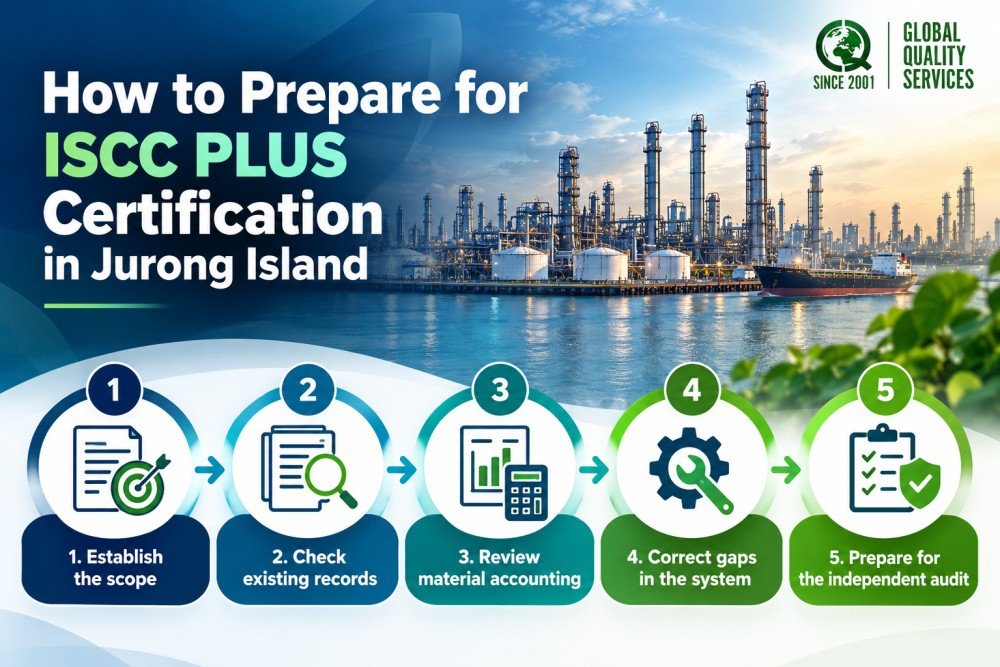
Step 1: Establish the scope
Identify the site, activities, materials, and products you want to include. Confirm whether your business operates as a processing unit, trader, storage facility, or another relevant supply chain participant.
Step 2: Check existing records
Review supplier information, incoming deliveries, production records, stock movements, and sales documents. This helps identify missing evidence and inconsistencies before the independent audit.
Step 3: Review material accounting
Check whether your chosen chain of custody method fits your operations. If you use mass balance, examine how your team records inputs, outputs, conversion factors, inventory, and certified quantities.
Step 4: Correct gaps in the system
Update procedures and records where necessary. Assign responsibilities to the employees who handle certified materials and ensure that the controls work in everyday operations, not just on paper.
Step 5: Prepare for the independent audit
Review the evidence against the applicable requirements and arrange the audit with an appropriate certification body. Address any findings through the prescribed process before certification can be granted.
Documents to Review Before Your ISCC PLUS Audit
Rather than collecting every document your company has, start with records that directly support the proposed certification scope.
- Company registration and site details
- Supplier declarations and feedstock records
- Purchase orders and delivery receipts
- Sustainability declarations and supporting evidence
- Production and processing records
- Inventory and stock movement records
- Mass balance calculations, where applicable
- Sales invoices and dispatch records
- Chain of custody procedures
- Material traceability records
- Employee training records
- Internal audit and corrective action records
- Waste management records
How Global Quality Services Helps Your Business Prepare for ISCC PLUS Certification in Jurong Island
Global Quality Services provides consultancy support to help businesses prepare for certification with a clear understanding of their scope and obligations.
- Reputed consultant with experience supporting businesses with certification and management system requirements.
- More than two decades of certification consultancy experience, subject to verification against the company’s current corporate profile.
- Support tailored to your site’s operations, supply chain, materials, and customer expectations.
- Practical guidance on documentation, traceability, material accounting, and audit preparation.
- Experience across relevant management system and sustainability certification requirements.
- Clear communication about preparation gaps, responsibilities, and the work required before an audit.
- Support for businesses seeking to coordinate ISCC PLUS preparation with relevant environmental management systems.
For companies that also need a formal environmental management system, ISO 14001 certification may be relevant alongside ISCC PLUS. The two address different requirements, so the scope and purpose of each should be assessed separately.
Discuss ISCC PLUS Certification for Your Jurong Island Facility
If a customer has requested ISCC PLUS certification, or your company is planning to introduce recycled or bio-based feedstocks, start by establishing what the certification must cover.
Global Quality Services can help you review your business activities, identify the applicable preparation requirements, and understand the records your team will need to maintain. This gives your company a clearer basis for planning the project, assigning responsibilities, and preparing for the independent audit.
Contact Global Quality Services to discuss ISCC PLUS certification consultancy in Jurong Island. Share your site activities, material categories, and certification objectives to get guidance on the next steps for your business. Our regional presence across Singapore, the Philippines, Indonesia, Malaysia, and China supports businesses with their certification needs across key Asian markets.
Frequently Asked Questions
1. Is ISCC PLUS certification mandatory for companies on Jurong Island?
No. ISCC PLUS is a voluntary certification scheme. However, customers or supply chain partners may make it a condition of supplier approval or purchasing agreements. Check the requirements of your intended customers before starting the certification process.
2. How long does ISCC PLUS certification take?
There is no single timeline that applies to every company. The time required depends on the scope, the condition of existing records, the complexity of material flows, and the availability of the certification body. A gap assessment can help establish a more realistic preparation schedule.
3. Can a chemical manufacturer on Jurong Island apply for ISCC PLUS?
Yes, provided the company’s activities and materials fall within the scheme’s scope. The manufacturer must meet the applicable requirements for feedstock sustainability, traceability, chain of custody, and material accounting.
4. Does ISCC PLUS certification cover every site operated by a company?
No. Certification is site-specific. A business with multiple facilities should establish which sites and activities require certification rather than assume that one site’s certificate covers all operations.
5. Does existing ISO certification replace ISCC PLUS?
No. Existing ISO certification does not automatically satisfy ISCC PLUS requirements. For example, ISO 14001 addresses environmental management, while ISCC PLUS focuses on the sustainability characteristics and traceability of eligible alternative feedstocks. The certifications may complement each other, but they serve different purposes.