Chongqing’s industrial development is creating demand for machinery and equipment across manufacturing, automotive, transportation and engineering sectors. According to the Chongqing Municipal Bureau of Statistics, the city’s equipment manufacturing industry recorded 8.5% growth in industrial added value in 2025. General equipment manufacturing grew by 13.3%, railway, shipbuilding, aerospace and other transportation equipment manufacturing by 17.3%, and electrical machinery and equipment manufacturing by 15.5%. Investment in the city’s equipment manufacturing sector also increased by 25.9%.
These figures reflect the importance of machinery suppliers and equipment manufacturers within Chongqing’s industrial economy. For buyers sourcing industrial machines, however, production capacity alone does not determine whether a particular unit meets their requirements. Equipment must be checked for correct specifications, component assembly, visible manufacturing defects, electrical arrangements and operational characteristics before acceptance or dispatch.
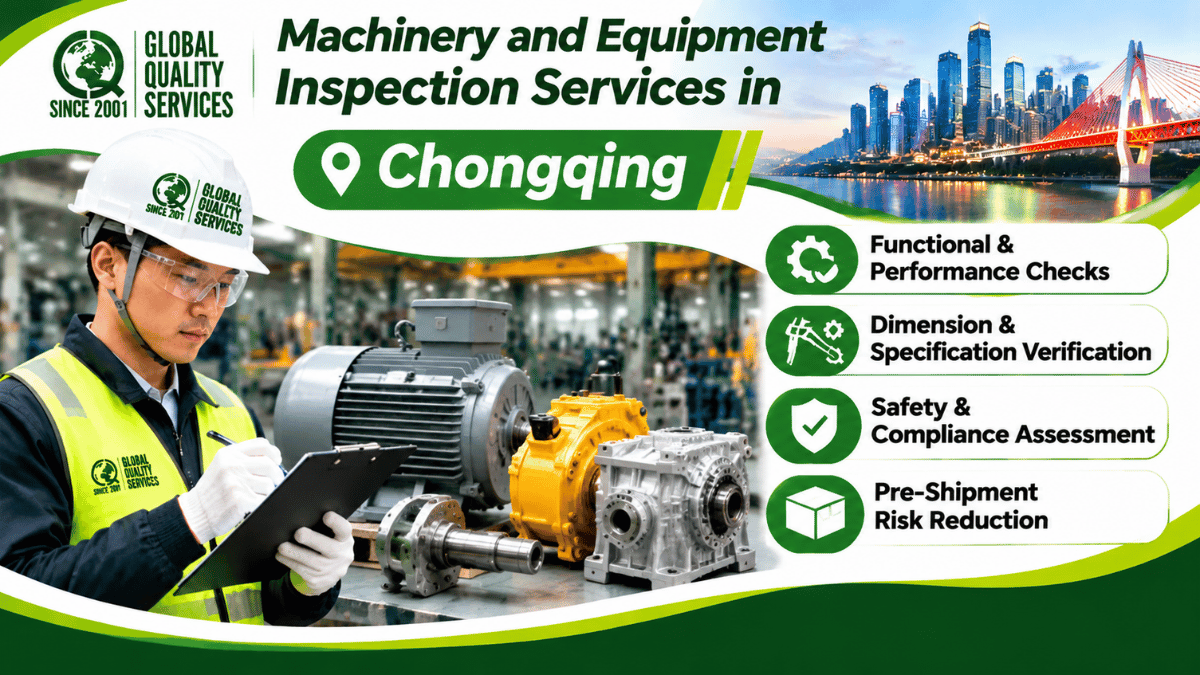
Global Quality Services provides independent machinery and equipment inspection services in Chongqing, China, for equipment buyers, manufacturers, importers and engineering businesses. The inspection scope can cover individual machines, industrial assemblies and selected production equipment, with checks tailored to technical drawings, purchase orders and agreed acceptance criteria.
What Machinery and Equipment Can Be Inspected in Chongqing?
Machinery inspection can be arranged for equipment used in different industrial applications. The inspection checklist depends on the machine’s construction, operating purpose and technical requirements.
The service can cover:
- Industrial production machinery: CNC machines, machining centers, cutting equipment, stamping machines and fabrication machinery.
- Material handling equipment: Conveyors, lifting accessories, industrial handling systems and selected warehouse equipment.
- Pumps and compressors: Industrial pumps, air compressors, motors, valves and related mechanical assemblies.
- Construction and mining machinery: Excavators, loaders, crushing equipment, drilling machinery and other industrial equipment.
- Electrical and power equipment: Motors, control panels, electrical assemblies, generators and distribution equipment.
- Automation systems: Industrial robots, automated production units, control systems and integrated machine assemblies.
- Transportation equipment: Selected railway-related equipment, mechanical assemblies and associated industrial components.
The inspection can be conducted at the manufacturer’s facility, supplier premises or another agreed location, subject to equipment availability and access arrangements.
Key Areas Covered During Machinery and Equipment Inspection
A machinery inspection should establish whether the supplied equipment corresponds to the approved specifications and whether its observable condition is consistent with the agreed requirements. Global Quality Services can organize the inspection around the following checkpoints.
Equipment Identification and Technical Specifications
The first step is to establish whether the equipment presented for inspection is the model and configuration ordered by the buyer.
Inspectors can compare the machine nameplate, manufacturer details, model number, serial number, rated capacity, power requirements and other available identification details with the purchase order and technical documentation.
Where applicable, the review can also cover dimensions, operating range, speed, pressure ratings and other specified parameters. Any differences between the ordered configuration and the equipment presented can be documented.
Mechanical Structure and Component Condition
Mechanical inspection focuses on the machine’s physical construction and visible condition. Depending on the equipment, this may include frames, housings, shafts, gears, bearings, couplings, fasteners, guards and moving assemblies.
The inspection can identify visible issues such as:
- Cracks, dents, deformation or corrosion.
- Loose or missing fasteners.
- Misaligned or incorrectly assembled components.
- Damaged machine surfaces or protective coatings.
- Visible oil leakage or other fluid leakage.
- Incomplete guards, covers or mechanical fittings.
For fabricated equipment, the inspection may also include a visual review of weld appearance, joint condition and assembly alignment. Weld strength and internal defects require suitable specialist testing.
Dimensions and Manufacturing Accuracy
Specified dimensions are checked against approved drawings or technical requirements using suitable measuring instruments. This may include equipment length, width, height, mounting positions, hole spacing, shaft dimensions, base alignment and other critical features.
For machinery with installation interfaces, the inspection can review whether mounting points and connection dimensions correspond with the supplied technical drawings.
The buyer should identify critical dimensions and acceptable tolerances before inspection so that the measurements can be included in the inspection checklist.
Electrical Components and Control Systems
For electrically operated machinery, the inspection can include a review of accessible electrical components and control arrangements.
Depending on the agreed scope, checks may cover:
- Electrical panels and visible wiring arrangements.
- Motor identification and nameplate information.
- Switches, indicators and control buttons.
- Cable routing and visible cable condition.
- Connector and terminal arrangements.
- Emergency-stop devices and visible safety features.
- Control panel labels and warning markings.
Basic operational checks can be included where the equipment can be safely energized and suitable arrangements are available. Detailed insulation resistance testing, electrical safety certification and control-system validation require appropriate technical procedures and equipment.
Functional and Operational Checks
Functional inspection helps establish whether selected machine operations respond as expected under the agreed test conditions.
Depending on the equipment, checks may include motor starting, movement of mechanical assemblies, conveyor operation, pump operation, control response, speed settings, indicator status and basic operating sequences.
Where a load test or performance test is required, the buyer should define the test conditions, acceptance limits, measurement methods and required test equipment in advance. A visual inspection or basic operation check does not establish long-term reliability or full rated performance.
Accessories, Spare Parts and Documentation
Machinery deliveries may include tools, attachments, spare parts, operating manuals, electrical drawings and maintenance documents. The inspection can compare the supplied items with the purchase order and packing list.
The review may cover equipment manuals, technical specifications, available test records, maintenance instructions, warranty information and component lists where these form part of the agreed delivery requirements.
Benefits of Independent Machinery and Equipment Inspection in Chongqing
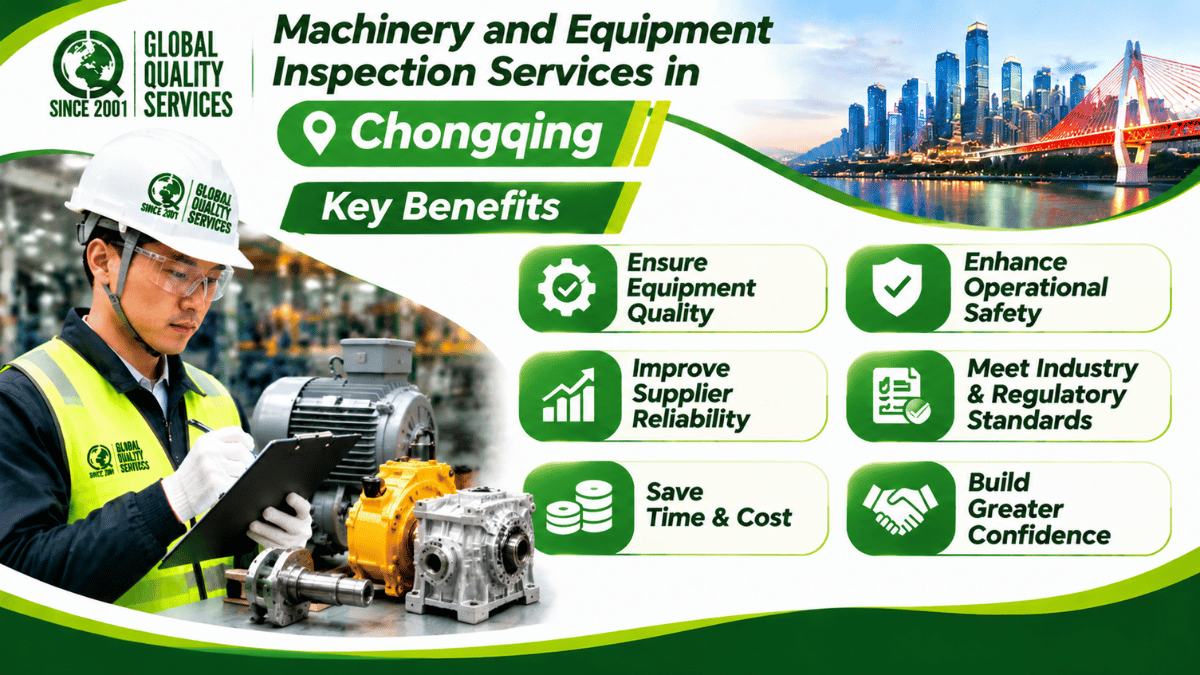
An independent inspection gives buyers a documented review of equipment against the requirements agreed with the supplier. It can help identify differences before acceptance, dispatch or installation.
Verify Equipment Against the Purchase Order
Checking model numbers, technical specifications, rated parameters and configuration details helps identify equipment that does not correspond with the order.
Identify Visible Manufacturing and Assembly Defects
Inspection can reveal damage, incomplete assembly, misalignment, loose fittings and other visible issues before the machinery is accepted.
Review Basic Operational Readiness
Where testing is feasible, selected operational checks can provide information about machine movement, control response and basic operating functions under the agreed conditions.
Check Accessories and Technical Documents
A review of manuals, drawings, spare parts and supplied accessories can help identify missing delivery items before the equipment is shipped.
Support Equipment Procurement Decisions
Documented findings give purchasing and engineering teams additional information when reviewing equipment condition and discussing corrective action with suppliers.
Maintain a Record of Inspection Findings
The inspection report records the checks performed, observations and relevant supporting evidence. It can be used for internal review, supplier communication and equipment acceptance discussions.
Machinery Inspection Before Dispatch: Important Checks
Equipment can appear complete while still having missing accessories, incorrect configurations or damage from handling and storage. A pre-dispatch inspection can provide an additional review before the machinery leaves the manufacturer’s facility.
The agreed scope may include:
- Confirmation of equipment model, serial number and configuration.
- Review of visible mechanical and electrical condition.
- Verification of specified dimensions and connection points.
- Basic functional checks where feasible.
- Confirmation of accessories and supplied documentation.
- Review of paintwork, corrosion protection and surface condition.
- Packaging, lifting points and protective covering.
- Shipping marks and equipment identification.
For large machinery, the buyer may also specify checks on dismantled sections, separately packed components and the identification of items required for later assembly.
Our Machinery and Equipment Inspection Process in Chongqing
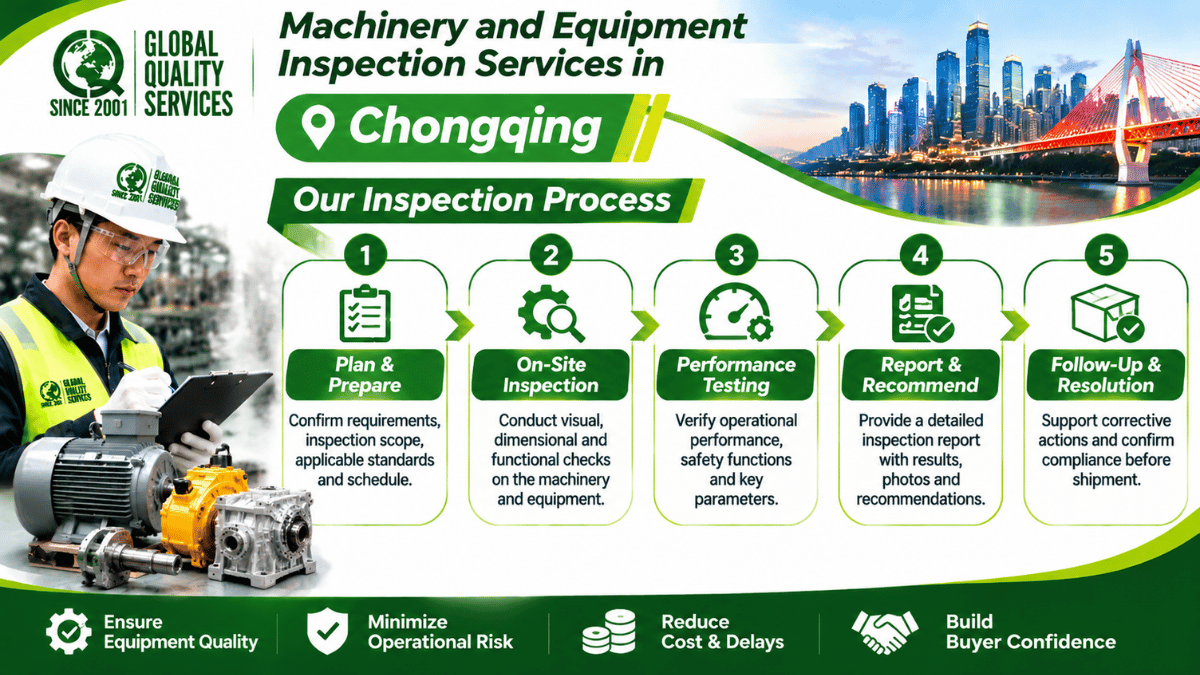
Global Quality Services follows a structured inspection process based on the equipment category, purchase requirements and agreed inspection scope.
1. Review of Technical and Purchase Documents
The process begins with reviewing the purchase order, technical specifications, approved drawings, equipment data sheets and inspection requirements. The buyer identifies critical dimensions, rated parameters, operational checks and any specific acceptance conditions.
2. Inspection Planning and Checklist Preparation
An inspection checklist is prepared according to the machine type and agreed scope. It identifies the equipment details, physical checks, measurement requirements, functional tests and documents to be reviewed.
3. Physical Examination of Equipment
Inspectors examine the equipment’s external condition, structural components, assembly, visible electrical arrangements, identification markings and accessories. Any observable damage or incomplete work is recorded.
4. Dimensional and Specification Verification
Selected dimensions and technical details are checked against the supplied drawings and specifications. Suitable instruments and measurement methods are used according to the characteristics being examined.
5. Functional and Operational Verification
Where practical and safely permitted, the agreed functional checks are carried out. The results are reviewed against the specified operating requirements and documented as part of the inspection findings.
6. Final Documentation and Inspection Report
The final stage involves compiling the inspection observations, relevant measurements, photographs and identified discrepancies. The report provides the client with a documented account of the inspection and the condition of the equipment within the agreed scope.
Machinery Inspection vs. Factory Inspection vs. FAT
These services address different aspects of equipment procurement and should not be treated as interchangeable.
- Machinery and equipment inspection focuses on a particular machine or equipment assembly. It checks identification, specifications, physical condition, dimensions, workmanship and agreed operational characteristics.
- Factory inspection evaluates the supplier’s manufacturing facilities, machinery, production arrangements, quality-control practices and related factory operations. It focuses on the supplier’s manufacturing environment rather than the conformity of one specific machine.
- Factory Acceptance Testing (FAT) involves testing equipment against defined performance and acceptance requirements, generally before delivery. It may include operating sequences, load conditions, performance measurements, control functions and other specified tests.
An inspection may include selected FAT witness or verification activities when specifically agreed. However, a routine machinery inspection is not automatically a complete FAT or engineering performance certification.
Why Choose Global Quality Services?
Global Quality Services provides independent third-party inspection services for buyers and businesses sourcing industrial machinery and equipment. The inspection scope is developed around the actual equipment, technical documents and acceptance requirements supplied by the client.
Our approach emphasizes:
- Equipment-specific inspection: Checkpoints are selected according to machine design, application and purchase specifications.
- Physical and technical verification: Inspection can cover visible construction, dimensions, assembly details and specified operational characteristics.
- Document and accessory review: Available technical records and supplied items can be compared with delivery requirements.
- Independent reporting: Findings are documented to help buyers review equipment condition and communicate discrepancies.
- Flexible inspection arrangements: Services can be planned for individual machines, equipment assemblies and selected industrial systems.
The inspection report reflects the checks performed within the agreed scope. It does not guarantee future equipment performance or replace statutory inspections, specialist engineering tests, accredited laboratory testing or regulatory certification.
Frequently Asked Questions
1. What types of machinery can be inspected in Chongqing?
Inspection can cover CNC machines, industrial production equipment, pumps, compressors, motors, construction machinery, electrical equipment, automation systems and selected transportation equipment. The scope depends on the machine’s specifications and intended application.
2. Can machinery inspection include operational testing?
Yes. Basic functional and operational checks can be included when the equipment can be operated safely and the required arrangements are available. Load testing, performance validation and specialized engineering tests require separately defined procedures and acceptance criteria.
3. What documents are needed before machinery inspection?
Common documents include the purchase order, technical data sheet, approved drawings, equipment specifications, inspection checklist and acceptance criteria. The buyer may also provide electrical drawings, component lists, test procedures and reference photographs.
4. Can Global Quality Services inspect machinery before shipment?
Yes. A pre-dispatch inspection can be arranged to review equipment identification, physical condition, dimensions, accessories, documentation and agreed functional checks before dispatch. Packaging and shipment-readiness checks can also be included.
5. Does machinery inspection include statutory certification for lifting or pressure equipment?
No. An independent machinery inspection does not automatically satisfy statutory inspection or certification requirements for regulated equipment. Any mandatory examination, load testing or approval must be arranged with the relevant authorized or qualified organization.