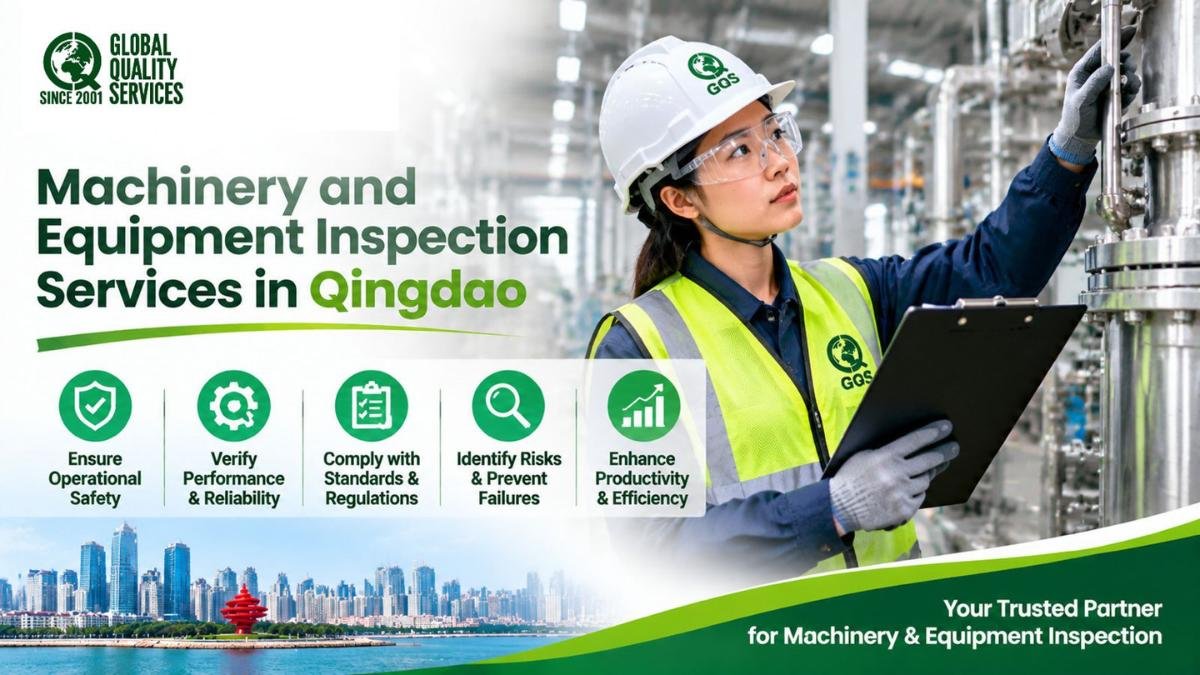
Qingdao is an important manufacturing and industrial centre in Shandong Province, with established industries covering machinery, automotive components, chemicals, marine equipment, electrical products and industrial automation. Its manufacturing sector continues to expand, creating demand for reliable machinery and equipment across production facilities and supply chains.
According to Qingdao’s 2025 economic report, the city’s equipment manufacturing industry recorded 11.8% growth in industrial value added. Specialized equipment manufacturing increased by 13.6%, while the railway, shipbuilding, aerospace and other transportation equipment manufacturing sector grew by 12.8%. These figures reflect the importance of equipment quality and operational reliability across the city’s industrial economy.
Machinery defects can lead to production interruptions, equipment damage, safety concerns and costly delivery disputes. Problems such as incorrect dimensions, poor welding, electrical faults, missing components and inadequate performance can remain unnoticed without suitable inspection.
Global Quality Services provides Machinery and Equipment Inspection Services in Qingdao, China, to help manufacturers, importers, exporters, equipment buyers and industrial operators assess equipment condition, verify specifications and document inspection findings before delivery or acceptance.
What Are Machinery and Equipment Inspection Services?
Machinery and equipment inspection involves examining equipment against agreed technical specifications, drawings, purchase requirements, quality criteria and applicable safety requirements.
The inspection scope depends on the equipment category, manufacturing stage and intended application. It may cover industrial machinery, production equipment, mechanical assemblies, electrical equipment, material handling systems, processing machinery and customized industrial units.
An inspection may include:
- Visual examination of equipment and components.
- Dimensional and specification verification.
- Material identification and component checks.
- Welding and fabrication quality assessment.
- Electrical installation and control panel checks.
- Mechanical assembly and alignment verification.
- Functional and operational testing.
- Review of technical documents and inspection records.
- Packaging, marking and shipment readiness checks.
The objective is to identify deviations from agreed requirements and provide documented findings for the buyer or responsible organization.
Why Machinery Inspection is Beneficial in Qingdao China
Qingdao’s industrial base includes manufacturers and suppliers of specialized equipment, transportation machinery, industrial components and production systems. Equipment purchased from local factories may also be supplied to customers across China and international markets.
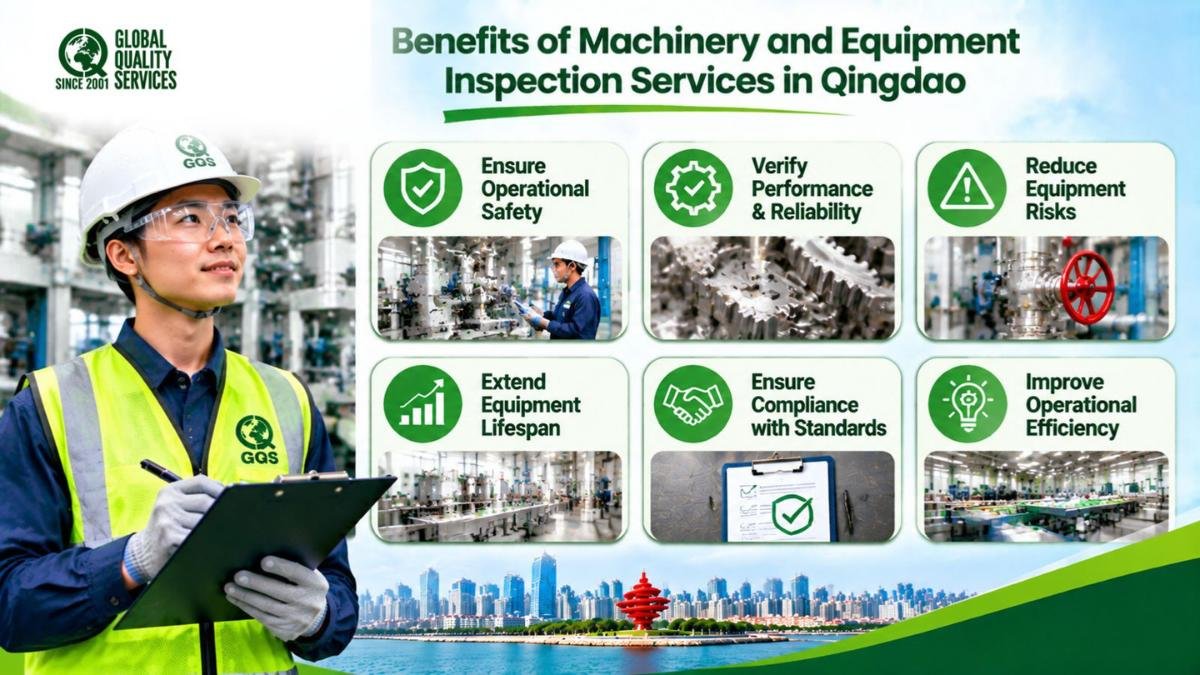
Inspection helps buyers establish whether machinery matches the order requirements before it is accepted, dispatched or installed.
Preventing Manufacturing and Assembly Defects
Machinery often contains multiple components that must work together within specified tolerances. Incorrect machining, poor surface finishing, unsuitable materials, loose connections and assembly errors can affect equipment performance.
Inspection can identify visible defects and verify selected dimensions, component specifications and assembly conditions against approved drawings and technical documents.
Checking Mechanical and Electrical Safety
Industrial equipment may contain moving parts, electrical systems, hydraulic circuits, pneumatic components and automated controls. Defects in these systems can create operational hazards.
Inspection can examine accessible guards, emergency stop devices, electrical enclosures, wiring arrangements and other agreed safety features. More detailed electrical measurements and specialist safety validation must be defined separately where required.
Reducing Equipment Delivery Disputes
Equipment buyers may encounter differences between approved specifications and the finished machinery. These can include incorrect motor ratings, missing accessories, substituted components, different control configurations or incomplete documentation.
A pre-shipment inspection provides an opportunity to identify such discrepancies before equipment leaves the factory.
Supporting Production Reliability
Equipment that fails during initial operation can delay production and increase maintenance costs. Functional checks, trial runs and verification of key operating parameters can help identify problems before handover.
The inspection should use agreed acceptance criteria, including operating conditions, test duration and performance limits.
What Does a Machinery and Equipment Inspection Cover?
Global Quality Services can establish inspection requirements according to the equipment type and buyer’s specifications.
Equipment Identification and General Condition
The inspection begins with verification of equipment identity and general condition. This may include manufacturer details, model numbers, serial numbers, nameplates, rated capacity and other identification information.
The equipment is examined for visible damage, corrosion, dents, cracks, incomplete assemblies, poor finishing and signs of improper handling. Identification details are compared with the purchase order and approved technical documents.
Dimensions, Materials and Components
Selected dimensions and component details are checked against approved drawings, specifications and inspection plans.
Depending on the equipment, this may include overall dimensions, mounting points, shaft measurements, alignment, connection sizes and other critical measurements. Material certificates and component identification records may also be reviewed where applicable.
Where material composition or mechanical properties need confirmation, suitable material testing should be arranged separately through an appropriately qualified testing facility.
Welding and Fabrication Quality
For fabricated machinery, frames, pressure-containing components and structural assemblies, inspection may cover weld appearance, joint preparation, surface condition, alignment and visible fabrication defects.
Where required by the agreed inspection plan, non-destructive testing such as ultrasonic testing, radiographic testing, magnetic particle testing or liquid penetrant testing can be included through suitably qualified personnel and facilities.
A visual examination alone does not establish the internal integrity of a weld.
Mechanical Assembly and Moving Parts
Mechanical components are checked for correct installation, fastening, alignment and assembly condition.
Depending on the equipment, the inspection may cover bearings, shafts, couplings, gears, belts, chains, lubrication arrangements, hydraulic connections and pneumatic components.
Inspectors may also examine accessible guards and covers to identify missing or improperly installed protective components.
Electrical Systems and Control Panels
Electrical inspection may cover control panels, wiring arrangements, cable identification, electrical enclosures, terminal connections, grounding provisions and visible component installation.
The assessment can also examine control switches, indicators, interlocks and emergency stop arrangements where included in the agreed scope.
GB/T 5226.1-2019, China’s national standard for the electrical equipment of machinery, provides a relevant technical reference for machinery electrical safety. Formal electrical testing and compliance verification must follow the applicable requirements and be conducted by appropriately qualified personnel.
Functional and Performance Testing
Functional testing checks whether the equipment performs its intended operations under defined test conditions.
Depending on the machinery, checks may include:
- Start-up and shutdown operations.
- Operating speed and cycle functions.
- Motor rotation and control response.
- Conveyor movement and material handling.
- Hydraulic and pneumatic operation.
- Temperature, pressure or other specified readings.
- Alarm indicators and emergency stop response.
- Noise, vibration and abnormal operating conditions.
Performance results should be compared with the manufacturer’s specifications and agreed acceptance criteria. A successful short trial does not automatically establish long-term reliability or suitability under every operating condition.
Documentation and Accessories
Inspection may include a review of equipment manuals, drawings, parts lists, maintenance instructions, test reports, calibration records, certificates and other agreed documents.
The inspection can also verify whether the supplied accessories, tools, spare parts, control components and installation materials match the purchase requirements.
Packaging and Shipment Readiness
Before dispatch, machinery may be checked for suitable protective packaging, moisture prevention, component securing, identification labels and shipping marks.
Inspectors can examine whether loose parts are properly packed, sensitive components are protected and the equipment is prepared for the intended transportation method.
Machinery Inspection Standards and Regulatory Considerations in China
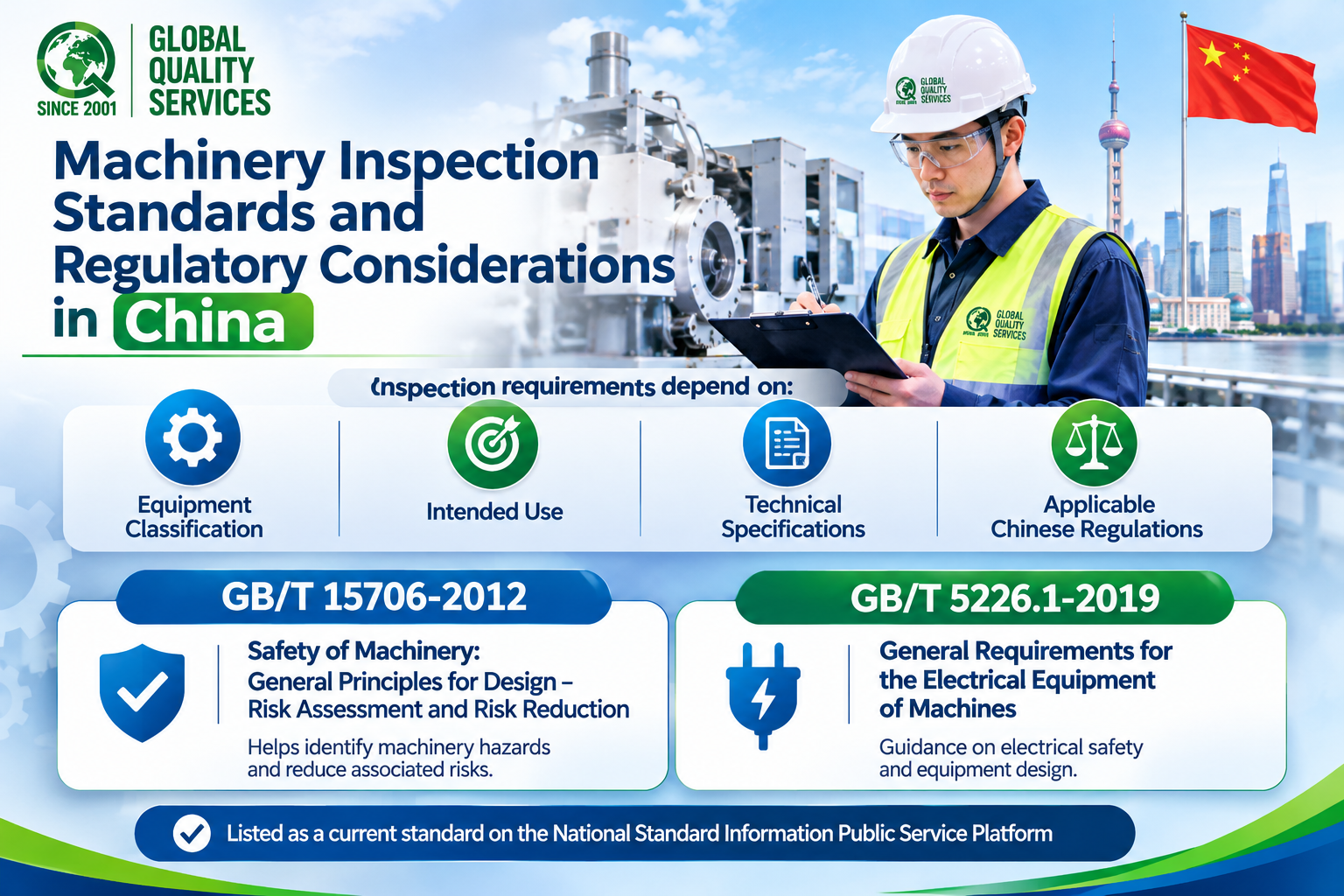
Machinery inspection requirements depend on equipment classification, intended use, technical specifications and applicable Chinese regulations.
One relevant reference is GB/T 15706-2012, Safety of Machinery: General Principles for Design – Risk Assessment and Risk Reduction. This standard provides a framework for identifying machinery hazards and considering measures to reduce associated risks. The National Standard Information Public Service Platform lists it as a current standard.
For machinery electrical systems, GB/T 5226.1-2019 addresses general requirements for the electrical equipment of machines. It is relevant when reviewing electrical safety features and equipment design requirements.
Special Equipment Requirements
Certain equipment in China falls under the country’s special equipment safety regulatory framework. Depending on its classification, this may include boilers, pressure vessels, pressure pipelines, elevators, lifting machinery and other regulated equipment.
China’s State Administration for Market Regulation (SAMR) oversees special equipment safety supervision. Applicable equipment may require specific registration, supervision, inspection or testing by institutions with the relevant qualifications.
A general third-party machinery inspection does not replace statutory inspection, regulatory approval or mandatory testing for special equipment. Buyers should confirm the equipment classification and applicable requirements before arranging an inspection.
Types of Machinery and Equipment Inspections
Inspection can take place at different stages of the equipment supply process.
Incoming equipment inspection: Examines machinery and components received from suppliers before they enter production or installation. It can verify identity, quantity, visible condition and selected technical specifications.
During-production inspection: Reviews manufacturing progress, component installation, fabrication quality and selected processes before the equipment is fully assembled.
Pre-shipment inspection: Checks completed machinery before dispatch. It may include identification, dimensions, workmanship, functional testing, accessories, documentation and packaging.
Factory Acceptance Testing (FAT): Evaluates equipment against predefined acceptance criteria at the manufacturer’s facility. It may involve functional demonstrations, performance measurements and verification of specified operating sequences.
Installation and commissioning inspection: Examines equipment after installation at the destination site. It can cover installation condition, alignment, connections and agreed commissioning checks.
These inspection stages serve different purposes and should be selected according to the equipment’s complexity, purchase contract and delivery requirements.
Our Machinery and Equipment Inspection Process
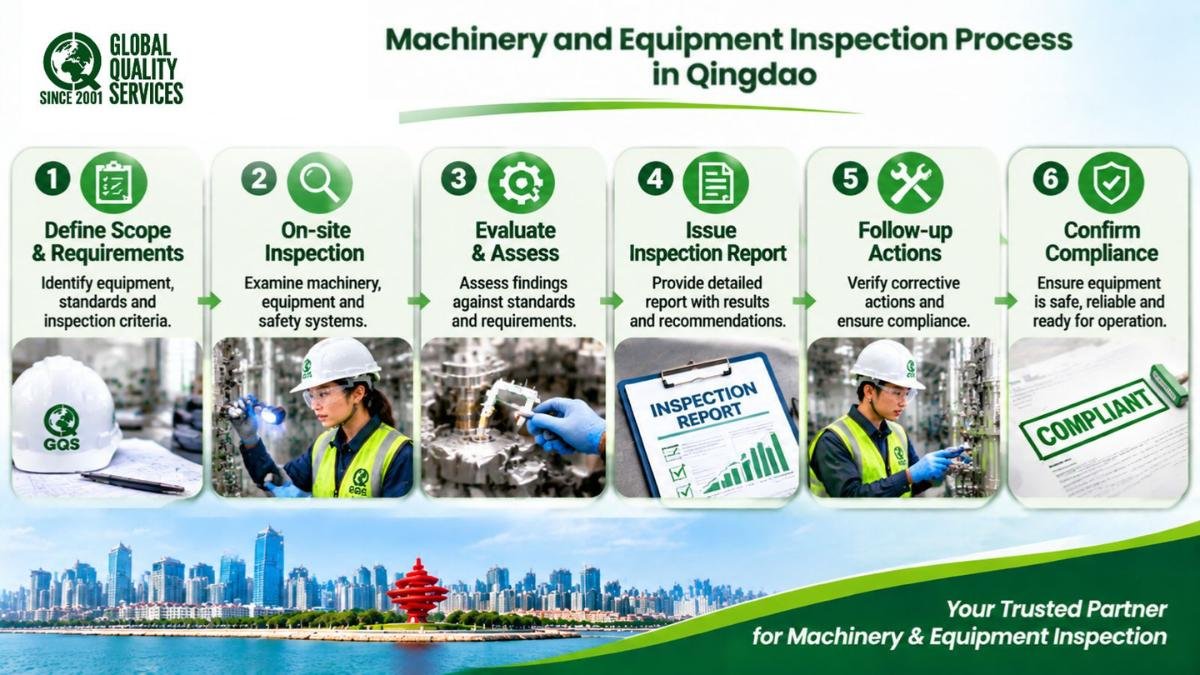
Global Quality Services follows a structured approach based on the equipment category and agreed inspection requirements.
1. Requirement and Document Review
The process begins with a review of the purchase order, equipment specifications, approved drawings, technical data sheets and relevant quality requirements. The inspection objectives and acceptance criteria are established.
2. Inspection Planning
The inspection plan identifies the equipment and components to be examined, inspection stages, sampling requirements, test arrangements and site access conditions.
Where specialized testing or technical expertise is required, the relevant scope and personnel are identified before inspection.
3. On-Site Equipment Inspection
The inspection team examines the agreed equipment and records observations relating to workmanship, dimensions, components, assembly, electrical features and general condition.
Functional checks and measurements are performed where included in the approved inspection scope.
4. Findings and Reporting
Inspection findings are documented in a structured report. Depending on the scope, the report may include photographs, measured values, test observations, document review results and identified deviations.
5. Corrective Action and Verification
The buyer or responsible organization reviews the findings and determines whether the equipment should be accepted, held, repaired or subjected to further testing. A follow-up inspection can be arranged where required.
Why Choose Global Quality Services?
Global Quality Services provides structured third-party inspection services for organizations sourcing machinery and equipment from Qingdao and surrounding manufacturing areas.
The inspection scope can be tailored to the equipment’s technical requirements, manufacturing stage and intended application. The approach focuses on objective examination, verification against agreed criteria and clear documentation of findings.
Our inspection reporting can help buyers understand the condition of supplied equipment and make informed decisions before acceptance or dispatch.
The inspection report reflects the agreed scope and conditions observed during inspection. It does not automatically constitute statutory approval, product certification, engineering design verification or a guarantee of future equipment performance.
Machinery defects can affect production schedules, equipment safety and the overall cost of procurement. Inspecting equipment against agreed technical and quality requirements helps buyers identify discrepancies before delivery or acceptance.
Contact Global Quality Services to discuss Machinery and Equipment Inspection Services in Qingdao, China. Share the equipment type, manufacturer details, inspection stage and relevant technical specifications to establish a suitable inspection scope.
Frequently Asked Questions
1. What types of machinery can be inspected in Qingdao?
Inspection can cover industrial machinery, production equipment, mechanical assemblies, electrical equipment, material handling systems, processing machinery, automation equipment and customized industrial units. The inspection scope depends on the equipment’s design and technical requirements.
2. When should machinery and equipment be inspected?
Inspection can be arranged during manufacturing, before shipment, during factory acceptance testing or after installation. The appropriate stage depends on equipment complexity, contractual requirements and the buyer’s quality control plan.
3. Does machinery inspection include functional testing?
Functional testing can be included when specified in the inspection scope. It may cover start-up, shutdown, operating sequences, motor functions, control responses and selected performance parameters. Test conditions and acceptance limits should be agreed before inspection.
4. Is machinery inspection in China the same as statutory special equipment inspection?
No. General third-party machinery inspection is different from statutory inspection of regulated special equipment. Equipment such as certain pressure vessels, lifting machinery and elevators may be subject to specific Chinese regulatory requirements and inspection by qualified institutions.
5. What documents are required for machinery inspection?
Common documents include the purchase order, technical specifications, approved drawings, equipment data sheets, inspection and test plans, material certificates where applicable, previous test records and acceptance criteria. Additional documents may be required depending on the equipment category.