According to Singapore’s Cyber Security Agency, almost nine in 10 organizations reported at least one cybersecurity incident in 2025. This finding shows why businesses need to take cloud security seriously. ISO 27017 gives cloud service providers and customers specific guidance for managing security risks. It also clarifies the responsibilities each party must handle. Working with an experienced consultant can help your team understand the requirements, identify gaps, and prepare for the assessment.
What is ISO 27017 Certification
ISO/IEC 27017:2015 is an international standard that provides security guidance for cloud computing services. It builds on ISO/IEC 27002 and includes additional controls for organizations that provide or use cloud services.
Cloud computing creates security challenges that traditional information security practices may not fully address. Providers and customers share responsibility for protecting cloud environments. They also need to manage virtual machines, remote access, administrative activities, and customer information.
ISO 27017 offers additional guidance to address these areas. It helps organizations assign security duties, manage cloud-related risks, and protect information stored or processed through cloud services.
The standard covers areas such as:
- Shared security duties: Clarifies the responsibilities of cloud service providers and their customers.
- Cloud asset management: Guides organizations in identifying and protecting assets within cloud environments.
- Virtual machine protection: Addresses security when organizations create, operate, or remove virtual machines.
- Cloud administration: Covers administrative access and the management of cloud-related activities.
- Virtual infrastructure security: Provides guidance for protecting virtual networks and shared cloud environments.
- Customer information security: Addresses the protection of information handled through cloud platforms and services.
Cloud service providers and cloud service customers can both apply ISO 27017 guidance. Organizations can also incorporate the relevant controls into an existing ISO 27001 Information Security Management System (ISMS).
Why is ISO 27017 Certification Important for Businesses in Raffles Place?
Raffles Place is a major business district where companies work across finance, technology, professional services, and other commercial sectors. Many organizations in this area use cloud platforms to handle customer records, business applications, financial information, and internal data.
As companies depend more on cloud services, they need to understand the security responsibilities that come with them. ISO 27017 offers guidance that helps organizations manage these responsibilities and address risks linked to cloud computing.
Here are some important reasons businesses in Raffles Place should consider ISO 27017 controls.
1. Keep Sensitive Business Information Safe
Companies often store financial records, customer details, employee information, and confidential documents on cloud platforms. Poor access management or weak security settings can expose this information.
ISO 27017 offers cloud-specific guidance that organizations can use to review user permissions, administrative access, and information protection practices. This helps businesses take a closer look at how they secure important records.
2. Make Cloud Security Responsibilities Clear
Cloud providers and customers do not handle every security task together. Each party has specific duties, but businesses may not always understand where the provider’s responsibility ends and their own begins.
ISO 27017 helps define these responsibilities. Clear ownership makes it easier for both parties to manage access, infrastructure security, incident reporting, and customer information.
3. Manage Risks Within Cloud Services
Cloud environments can face problems such as unauthorized access, incorrect configurations, data exposure, and service interruptions.
ISO 27017 gives organizations guidance for identifying these concerns and selecting suitable security controls. Businesses can use this guidance to review their cloud operations and make better security decisions.
4. Earn Greater Confidence From Clients and Partners
Customers want to know how a company handles their information. This matters even more when a business processes confidential records or delivers services through cloud platforms.
Applying ISO 27017 controls shows that an organization takes cloud security responsibilities seriously. It can also help businesses respond to client security questionnaires and supplier evaluations with greater clarity.
5. Add Cloud-Specific Controls to ISO 27001
An organization with an ISO 27001 Information Security Management System may still need to address security concerns specific to cloud computing.
ISO 27017 complements ISO 27001 with additional cloud security guidance. Applying the relevant controls alongside an existing ISMS can help businesses address cloud-related responsibilities more clearly.
Benefits of ISO 27017 Certification for Businesses
ISO 27017 guidance gives organizations a clearer way to manage cloud security. It can also improve coordination between internal teams, cloud providers, and other business partners.
Here are some benefits businesses can gain from applying the standard’s guidance.
1. Greater Visibility Into Cloud Security
Organizations can review how their cloud services operate and identify who manages different security activities. This makes it easier to examine configurations, access rights, and administrative practices.
2. Stronger Protection for Business Data
ISO 27017 encourages organizations to apply suitable safeguards to information handled through cloud services. These controls support better protection against unauthorized access and other cloud-related security concerns.
3. Clearer Communication With Cloud Providers
Businesses often depend on external providers for infrastructure, hosting, and applications. Defined security responsibilities make discussions about service agreements, access, and information protection more productive.
4. Greater Readiness for Customer Assessments
Enterprise customers may review a supplier’s security practices before entering into a business agreement. A structured approach to cloud security helps organizations explain their controls and responsibilities during these reviews.
5. Improved Monitoring of Cloud Activities
Organizations can establish suitable practices to monitor cloud environments and review security events. This gives IT teams a better understanding of unusual activities and potential security concerns.
6. Better Support for Contractual and Regulatory Duties
Businesses may have to meet specific data protection, industry, and contractual obligations. ISO 27017 guidance can support these efforts by helping organizations address security responsibilities within their cloud services.
7. Stronger Preparation for Service Disruptions
Cloud security also involves protecting service availability and managing operational risks. Suitable controls help organizations prepare for security incidents, provider-related issues, and interruptions to cloud services.
Step-by-Step Process to Get ISO 27017 Certification in Raffles Place
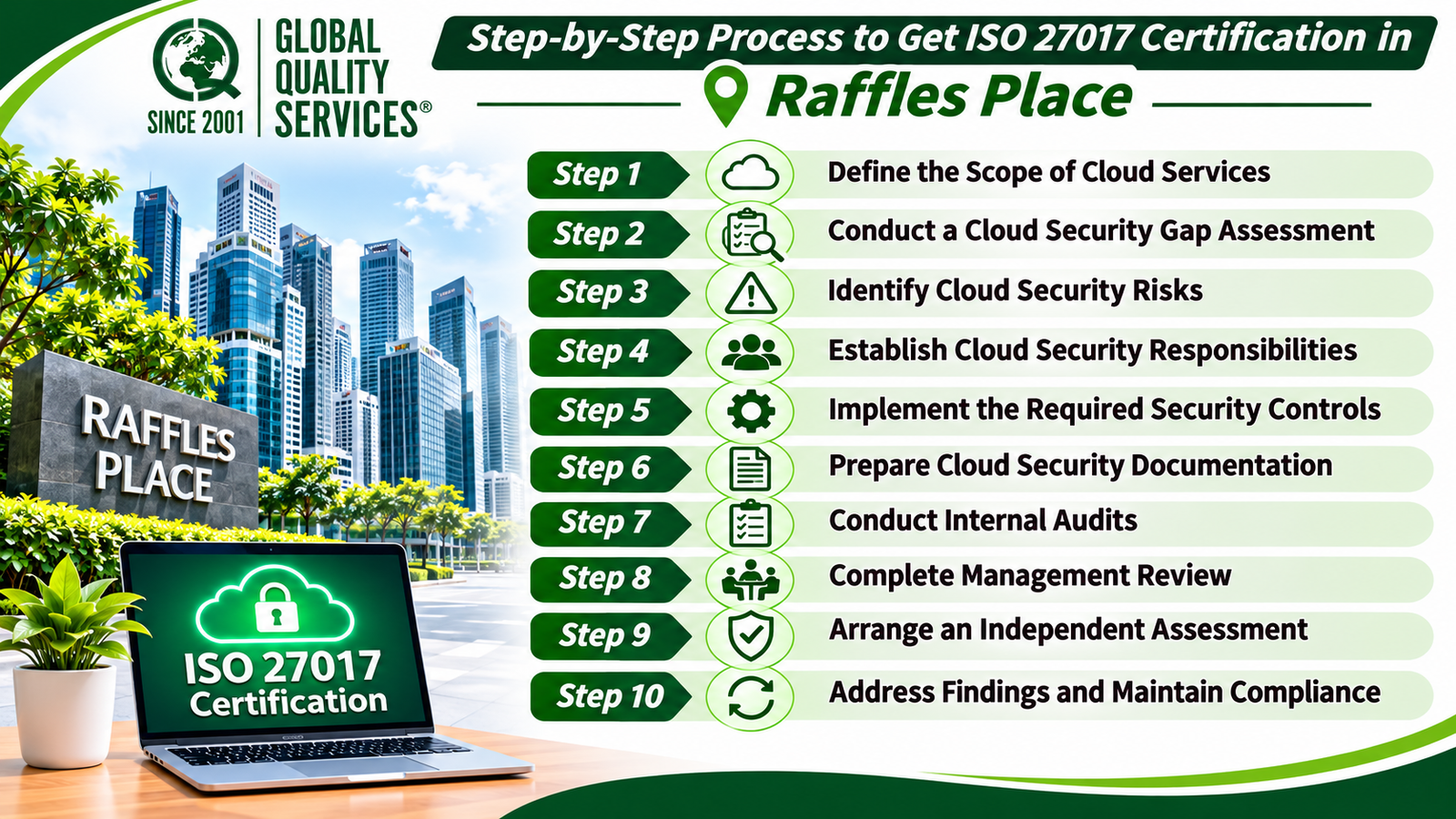
Getting ready for ISO 27017 requires a proper understanding of your cloud services and existing security practices. Your team must identify relevant risks, assign responsibilities, and address gaps before the independent assessment.
Here is how businesses in Raffles Place can prepare for the process.
Step 1: Define the Scope of Cloud Services
List the cloud services your organization uses or provides. Include relevant platforms, applications, infrastructure, business activities, and external service providers. A well-defined scope helps your team identify the security controls that apply.
Step 2: Conduct a Cloud Security Gap Assessment
Compare your existing cloud security arrangements with the applicable ISO 27017 guidance. Review user access, data protection, virtual environments, configurations, and administrative activities. Document the areas that require improvement.
Step 3: Identify Cloud Security Risks
Examine the risks connected with your cloud services. Consider unauthorized access, information exposure, configuration errors, service downtime, and reliance on third-party providers. Rank these risks according to their possible impact on business operations.
Step 4: Establish Cloud Security Responsibilities
Set out the security duties of your organization and its cloud providers. Check service agreements and shared responsibility arrangements. Assign clear ownership for access management, infrastructure protection, incident communication, and customer data.
Step 5: Implement the Required Security Controls
Choose controls that match your cloud environment and identified risks. Review administrative access, user permissions, monitoring activities, and virtual infrastructure protection. Keep suitable records to show how your team applies these controls.
Step 6: Prepare Cloud Security Documentation
Prepare the policies, procedures, and records that describe your cloud security practices. Include relevant risk assessments, access reviews, incident records, supplier agreements, and documented responsibilities.
Step 7: Conduct Internal Audits
Check whether your organization follows its documented procedures and applies the relevant controls. Internal audits help uncover remaining issues before the external assessment. Record the findings and assign corrective actions.
Step 8: Complete Management Review
Share the audit results, risk findings, and implementation progress with senior management. Discuss outstanding concerns and decide which corrective actions your organization must complete before proceeding.
Step 9: Arrange an Independent Assessment
Arrange an assessment with a competent independent certification or assessment body, where an applicable certification scheme is available. The assessment examines your documented arrangements, implemented controls, and supporting evidence.
Step 10: Address Findings and Maintain Compliance
If the assessment identifies any nonconformities, complete the required corrective actions within the agreed period. Continue reviewing cloud security risks and update your controls whenever your services, infrastructure, or business requirements change.
Why Choose Global Quality Services for ISO 27017 Certification in Raffles Place?
Managing cloud security requirements can be challenging, particularly when your business works with several service providers and cloud platforms. You need consulting support that considers your actual operations, security concerns, and certification objectives.
Global Quality Services is a reputable consultant supporting organizations with ISO certification and compliance requirements. Our team works with businesses to understand their requirements and prepare for management system assessments.
Here is how Global Quality Services can support your ISO 27017 project:
- Business-focused consulting: We consider your cloud services, operations, and security priorities when discussing your certification requirements.
- Cloud security gap assessment: We help your team identify weaknesses and understand which areas need further attention.
- Documentation guidance: We support the preparation of relevant cloud security policies, procedures, and records.
- Practical control guidance: We explain the applicable requirements and help your team understand how to address them.
- Assessment preparation: We assist with audit readiness, evidence checks, and corrective action planning.
- Support for changing requirements: We help your organization review its security arrangements as cloud services and business needs develop.
We focus on making the requirements clear and relevant to your organization. Our consultants work with your team to address practical security concerns instead of treating certification as a paperwork exercise.
If your business operates in Raffles Place, speak with Global Quality Services about your ISO 27017 requirements. Contact Global Quality Services to discuss your cloud security needs and plan your next steps.
Frequently Asked Questions
1. Can businesses using different cloud platforms apply ISO 27017?
Yes. Organizations using platforms such as AWS, Microsoft Azure, and Google Cloud can apply relevant ISO 27017 guidance. Their scope should cover the cloud services and security responsibilities involved.
2. Does ISO 27017 address what happens when a cloud contract ends?
Yes. The guidance addresses the return or removal of customer assets when cloud services end. Organizations should agree on suitable procedures for retrieving information, removing access, and handling stored data.
3. How can companies protect cloud access for employees working remotely?
Companies should set appropriate authentication requirements, restrict access according to job roles, and review permissions regularly. They should also monitor remote access and limit cloud accounts to authorized users.
4. Can an organization switch cloud providers after applying ISO 27017 controls?
Yes. However, the organization should assess the new provider, review contractual duties, and examine data migration risks. It should also update its cloud security documentation and controls where necessary.
5. What should a business do when its cloud provider updates security policies?
Review the updated policies, service terms, and security arrangements. Identify any changes to your responsibilities, reassess related risks, and revise internal procedures when the updates affect your cloud security practices.