Cyberjaya has developed into an important technology and digital infrastructure hub in Malaysia, with data centres, cloud service providers, enterprise IT operations, and technology businesses operating in the area. The growing concentration of digital infrastructure increases the demand for reliable computing hardware, servers, storage devices, and networking equipment.
Refurbished IT assets offer businesses an alternative to purchasing new equipment, but their condition and performance can vary considerably. A device described as refurbished may have undergone anything from basic cleaning and component replacement to extensive hardware testing and software reconfiguration. Without an independent assessment, buyers may find it difficult to establish whether the equipment meets the agreed specifications.
Why Inspect Refurbished IT Assets Before Acceptance?
A refurbished device may look clean and presentable but still contain hidden hardware faults, degraded batteries, incompatible components, or storage devices approaching the end of their useful life. Global Quality Services provides Inspection of Refurbished IT Assets in Cyberjaya, Malaysia, covering the physical condition, hardware configuration, functional performance, accessories, identification, and supporting documentation of used and refurbished IT equipment. The inspection provides buyers, resellers, IT asset managers, and procurement teams with documented findings before accepting equipment or completing a purchase.
For businesses purchasing IT equipment in bulk, even a small percentage of defective units can create additional repair costs, deployment delays, and operational interruptions. An independent inspection helps establish whether the equipment matches the purchase order, declared refurbishment grade, technical specifications, and agreed acceptance criteria. It can also identify discrepancies between the seller’s asset inventory and the actual equipment presented for inspection.
Types of Refurbished IT Assets We Inspect
The inspection scope can be adapted to different equipment categories and intended applications.
Refurbished Laptops and Desktop Computers
Inspection of laptops and desktop computers can cover the processor, RAM, storage capacity, operating system, display, keyboard, touchpad, ports, connectivity, cooling system, and power supply.
For laptops, additional checks may include battery health, charging performance, hinges, screen condition, webcam, microphone, speakers, and wireless connectivity. Desktop inspections can include cabinet condition, internal components, cooling fans, expansion slots, and power connections.
Refurbished Servers and Storage Equipment
Servers and storage systems require closer attention because component condition can affect reliability and data availability.
The inspection may cover processor configuration, memory modules, drive bays, storage devices, RAID controller identification, power supply units, cooling fans, network interfaces, and visible internal damage.
Where permitted and included in the agreed scope, basic startup and diagnostic checks can be performed. Advanced load testing, storage endurance testing, and compatibility validation require separate technical arrangements.
Networking Equipment
Refurbished routers, switches, firewalls, access points, and network interface devices may be inspected for physical condition, model identification, port availability, power connections, indicator lights, and basic functionality.
The inspection can also compare firmware versions, interface configurations, and declared technical specifications against the buyer’s requirements. Configuration security testing and penetration testing are separate services.
Monitors, Printers and IT Peripherals
Monitors can be checked for screen damage, dead or stuck pixels where agreed, brightness, display connections, and control functions. Printers may be assessed for power-up, paper feeding, print quality, connectivity, and visible wear.
Keyboards, mice, docking stations, adapters, cables, and other accessories can also be checked against the supplied inventory.
Our Refurbished IT Asset Inspection Process
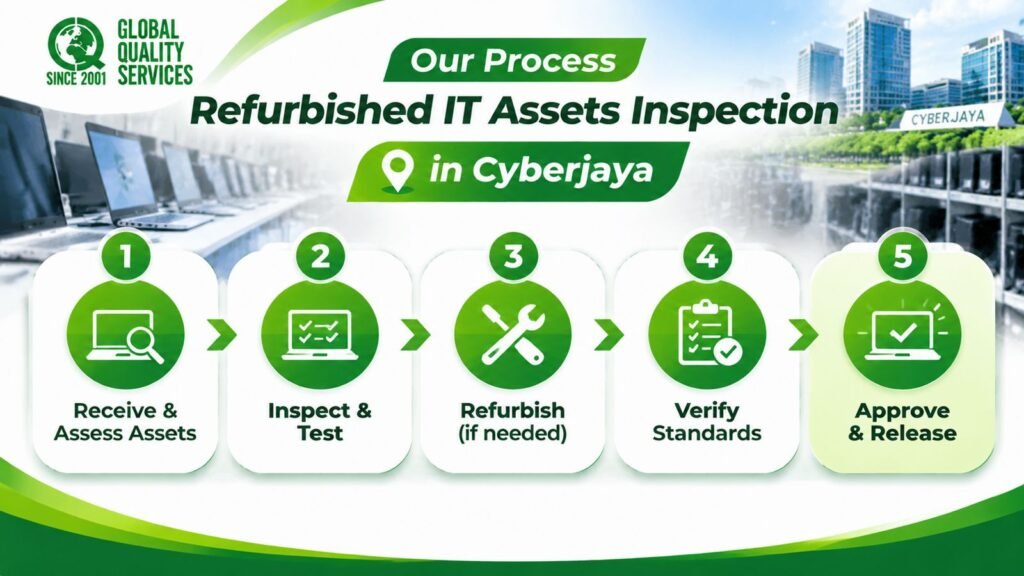
- Requirement Review: We review the equipment category, quantity, purchase specifications, refurbishment grades, and inspection objectives.
- Inspection Checklist Preparation: The agreed checklist defines physical checks, hardware verification, functional tests, accessories, documentation, and acceptance criteria.
- On-Site Inspection: The equipment is examined and tested within the agreed scope. Asset identification and relevant findings are recorded.
- Defect Classification: Observed issues are documented according to the agreed criteria, such as cosmetic defects, functional failures, missing components, or specification mismatches.
- Inspection Reporting: A report presents the inspected quantities, findings, discrepancies, and supporting evidence to help the buyer decide whether to accept, reject, or request corrective action.
Key Inspection Checkpoints for Refurbished IT Assets
Physical Condition and Refurbishment Quality
Inspectors examine the equipment for scratches, cracks, dents, corrosion, loose components, damaged connectors, missing screws, and signs of improper repairs.
The cosmetic condition is compared with the refurbishment grade agreed by the buyer. For example, equipment sold as Grade A should not be accepted solely on the basis of a clean exterior if it has significant screen damage, loose hinges, or other defects inconsistent with the agreed grading criteria.
Hardware Configuration and Specification Verification
The actual hardware configuration is compared with the purchase order, product listing, or asset specification.
Relevant checks may include processor model, RAM capacity, SSD or HDD capacity, graphics configuration, motherboard identification, display resolution, network interfaces, and installed components.
This is particularly important when purchasing mixed batches of refurbished equipment, where similar-looking models may have different internal specifications.
Functional Performance Testing
Where equipment can be safely powered on, inspectors can perform agreed operational checks. These may include startup, BIOS or system recognition, display output, keyboard response, USB ports, network connectivity, audio, charging, cooling fans, and basic operating system functions.
For servers and specialist networking equipment, the buyer should define the required test environment and access permissions in advance.
Battery and Power System Checks
Battery condition is an important consideration for refurbished laptops and portable devices. Inspection may include battery health information reported by the device, charging response, power adapter compatibility, and visible battery swelling or damage.
Power supply units, charging ports, connectors, and cables can also be checked for visible damage and basic operation.
A short functional inspection cannot establish the remaining useful life of a battery. Extended battery capacity testing requires a separate test method and acceptance threshold.
Data Sanitisation and Storage Verification
Refurbished computers and storage devices may previously have contained business, customer, or personal information. Buyers should therefore request documented evidence that data has been sanitised before equipment is transferred or redeployed.
The inspection can review sanitisation records, asset identifiers, storage-device serial numbers, process documentation, and available verification results.
NIST SP 800-88 Rev. 2, published in September 2025, provides updated guidance for media sanitisation programmes. It emphasizes selecting appropriate methods and controls based on information sensitivity. A visual inspection or operating system reset alone should not be treated as proof of secure data sanitisation.
Accessories, Labels and Asset Traceability
Each unit can be checked against the supplied asset list and purchase documentation. Relevant details include manufacturer, model, serial number, asset tag, manufacturing year where available, and refurbishment status.
Inspectors can also verify the presence of chargers, power cables, mounting rails, adapters, keyboards, and other accessories specified in the order.
Malaysia’s Regulatory Considerations for Used and Refurbished IT Equipment
Businesses handling refurbished IT equipment in Malaysia should distinguish between functional used equipment intended for reuse and electronic waste intended for disposal or material recovery.
The Department of Environment (DOE) provides guidelines for the transboundary movement of Used Electrical and Electronic Equipment (UEEE). These guidelines address functionality assessment, equipment identification, inspection documentation, and the conditions associated with direct reuse, reuse, repair, and refurbishment.
The guidelines specify equipment-age and documentation criteria for relevant categories of transboundary movement. For example, the direct-reuse criteria include equipment that is five years old or less, proof of functionality through an inspection certificate, and a packing list identifying the brand, model, serial number, manufacturing year, equipment status, and inspection date.
An important 2026 development: Malaysia announced a full ban on e-waste imports effective 4 February 2026. This makes correct classification especially important. Functional refurbished equipment should not automatically be treated as e-waste, but neither should waste equipment be described as reusable stock to bypass applicable controls.
An independent inspection report can provide evidence of equipment condition and functionality. It does not replace DOE approvals, customs clearance, import permits, or regulatory classification decisions.
Benefits of Independent Refurbished IT Asset Inspection
An independent inspection gives buyers a clearer understanding of the condition and conformity of refurbished equipment before acceptance.
Key benefits include:
- Reduced purchasing risk: Identify defective units, missing accessories, and specification mismatches before completing a transaction.
- More reliable asset grading: Compare physical condition with the seller’s declared refurbishment grade.
- Improved inventory accuracy: Match equipment serial numbers and asset identifiers against supplied records.
- Better deployment planning: Identify devices requiring repair, replacement, or further testing before installation.
- Documented acceptance decisions: Use inspection findings to support supplier discussions, claims, and procurement decisions.
- Greater visibility of data handling: Review available sanitisation documentation and identify missing evidence
Why Choose Global Quality Services?
Global Quality Services focuses on independent inspection findings that help businesses make informed purchasing and asset acceptance decisions. We recognize that refurbished IT equipment requires more than a cosmetic check. Hardware configuration, operational condition, storage devices, accessories, and asset identification all contribute to its suitability for reuse.
Our inspection scope can be tailored to individual devices, mixed equipment batches, enterprise hardware purchases, and refurbished IT asset consignments. The checks and report format are agreed with the client before inspection to ensure that the findings address the intended use and purchasing requirements.
Frequently Asked Questions
What is checked during refurbished IT asset inspection?
The inspection can cover physical condition, hardware specifications, functional performance, battery and power systems, storage devices, accessories, serial numbers, asset tags, and supporting refurbishment records.
Can you inspect refurbished servers and networking equipment?
Yes. The scope can include servers, storage systems, switches, routers, firewalls, and related IT infrastructure. Functional and diagnostic checks depend on equipment access, available test facilities, and agreed technical requirements.
Does refurbished IT asset inspection include data sanitisation?
The inspection can review available data sanitisation records and verification evidence. Actual data wiping, cryptographic erasure, forensic verification, or physical destruction of storage media must be arranged as a separate service unless specifically included in the agreed scope.
Is an inspection report sufficient for importing refurbished IT equipment into Malaysia?
An inspection report can provide evidence of equipment condition and functionality, but it does not guarantee import clearance. Importers must verify the applicable DOE, customs, and other regulatory requirements for the equipment category and intended movement.
When should refurbished IT assets be inspected?
Inspection is recommended before bulk purchases, supplier acceptance, shipment, deployment, or resale. For imported equipment, the inspection should be scheduled early enough to support the required documentation and regulatory checks.