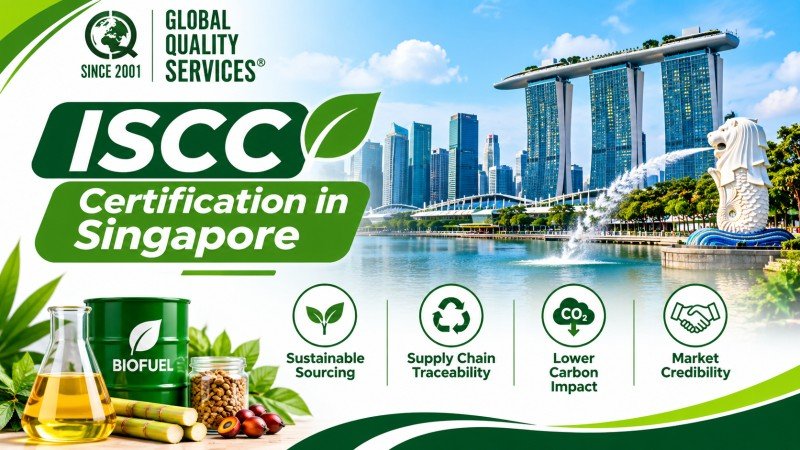
Singapore’s growing biofuel and sustainable aviation fuel markets are creating new opportunities for businesses across the supply chain. According to S&P Global, Singapore’s biobunker sales reached a record 1.36 million metric tons in 2025, rising 54.4% from the previous year. Companies handling bio-based, circular, or renewable materials must now pay closer attention to sourcing and traceability requirements.
ISCC certification helps businesses demonstrate responsible material handling and sustainability practices. Working with an experienced consultant such as Global Quality Services can help you select the right ISCC scheme, prepare documentation, and approach the certification audit with confidence.
What is ISCC Certification
ISCC stands for International Sustainability and Carbon Certification. It is a certification system that supports sustainable, traceable, and responsible supply chains. The system covers different feedstocks, materials, and markets through separate certification schemes.
ISCC evaluates how businesses source, process, handle, and trade materials. Depending on the selected scheme, companies must demonstrate compliance with sustainability criteria, traceability requirements, chain-of-custody rules, and greenhouse gas requirements.
ISCC offers several certification schemes, including:
- ISCC EU: Supports compliance with European Union sustainability and greenhouse gas requirements for renewable fuels and energy produced from biomass.
- ISCC PLUS: Covers bio-based, circular, and renewable raw materials used across various industries and markets.
- ISCC CORSIA: Supports sustainable aviation fuel supply chains under the International Civil Aviation Organization’s CORSIA requirements.
- ISCC CORSIA PLUS: Covers additional sustainability requirements for relevant aviation fuel supply chains.
- ISCC Carbon Footprint Certification: Helps companies quantify and verify the carbon footprint of products and supply chains.
Businesses should select the scheme that matches their materials, operations, and target markets. One ISCC scheme does not automatically cover every product or regulatory requirement.
Why is ISCC Certification Important for Businesses in Singapore?
Singapore connects manufacturers, traders, logistics providers, and suppliers across international markets. Many businesses source raw materials from overseas and sell finished products to customers in different countries. These supply chains face growing demands for traceability and credible sustainability information.
ISCC certification gives companies a structured way to demonstrate how they manage these responsibilities. It also helps them respond to customers who ask for evidence of responsible sourcing and material traceability.
Here are some reasons businesses in Singapore consider ISCC certification.
1. Meet Customer Sustainability Requirements
International buyers increasingly ask suppliers to demonstrate the origin and sustainability characteristics of their materials. ISCC certification gives eligible businesses documented evidence that supports these requirements under the relevant scheme.
2. Improve Supply Chain Traceability
Companies need accurate information about where materials come from and how they move through the supply chain. ISCC requirements encourage businesses to maintain records that connect incoming materials, processing activities, storage, and outgoing products.
3. Support Access to Target Markets
Some markets and customers require specific sustainability evidence before accepting certain products. For example, ISCC EU supports compliance with applicable EU renewable energy requirements. Companies targeting different markets should identify the relevant scheme before preparing for certification.
4. Demonstrate Responsible Material Sourcing
Businesses that work with agricultural, waste-based, recycled, circular, or bio-based materials must understand their sourcing responsibilities. The applicable ISCC scheme sets requirements for demonstrating the sustainability characteristics of these materials.
5. Improve Control Over Material Records
Companies must maintain reliable records of material quantities, suppliers, processing activities, and product movements. ISCC preparation encourages teams to review these records and correct gaps that could affect traceability.
6. Support Sustainability Claims With Evidence
Businesses often communicate the environmental characteristics of their products to customers and commercial partners. ISCC certification can support specific sustainability claims when companies follow the relevant scheme requirements and approved communication rules.
Step-by-Step Process to Get ISCC Certification in Singapore
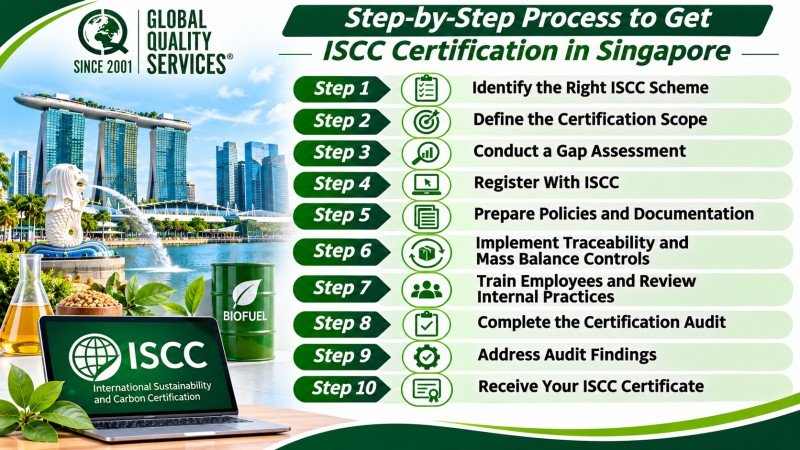
Obtaining ISCC certification involves selecting the correct scheme, preparing your records, registering with ISCC, and completing an independent audit. The requirements depend on your business activities and the materials you handle.
Here is how companies in Singapore can prepare.
Step 1: Identify the Right ISCC Scheme
Start by reviewing your products, raw materials, operations, and target markets. Determine whether ISCC EU, ISCC PLUS, ISCC CORSIA, or another scheme applies to your business. Selecting the right scheme helps you avoid preparing for requirements that do not match your activities.
Step 2: Define the Certification Scope
Identify the facilities, activities, materials, and operational units you want to include in the certification scope. Your scope should accurately reflect how your business receives, processes, stores, and supplies materials.
Step 3: Conduct a Gap Assessment
Compare your current practices with the applicable ISCC requirements. Review supplier records, sustainability information, material tracking, mass balance calculations, and internal procedures. Record any gaps that need attention before the certification audit.
Step 4: Register With ISCC
Choose an ISCC-recognized certification body and agree on the audit arrangements. Register your organization through the ISCC HUB. The registration must receive the required approvals before the certification audit can take place.
Step 5: Prepare Policies and Documentation
Organize the documents that support your certification scope. These may include supplier information, purchase records, delivery documents, sustainability declarations, processing records, mass balance calculations, and internal procedures.
Step 6: Implement Traceability and Mass Balance Controls
Set up a reliable method to track certified and non-certified materials. Record incoming and outgoing quantities, processing losses, stock movements, and relevant sustainability characteristics. Your records should allow auditors to follow material flows across the certified operations.
Step 7: Train Employees and Review Internal Practices
Explain the relevant ISCC requirements to employees who handle purchasing, production, storage, sales, and recordkeeping. Conduct an internal review to check whether teams follow the documented procedures and maintain accurate information.
Step 8: Complete the Certification Audit
The selected certification body conducts the independent audit. Auditors review documents, records, processes, and relevant operational sites to assess compliance with the applicable ISCC scheme.
Step 9: Address Audit Findings
If the auditor identifies non-conformities, your company must take corrective action. Review each finding, identify its cause, implement the required changes, and submit supporting evidence within the applicable deadline.
Step 10: Receive Your ISCC Certificate
Once your company meets the applicable requirements and completes the audit process, the certification body can issue the certificate. Your certificate and summary audit report are then submitted through the ISCC system.
After certification, continue following the scheme requirements, checking supplier certificate validity, maintaining traceability records, and issuing sustainability declarations where required.
Benefits of ISCC Certification
ISCC certification can support business growth while improving how companies manage sustainability information. Its value depends on the selected scheme, the company’s operations, and the markets it serves.
1. Stronger Business Credibility
A valid ISCC certificate gives customers documented evidence that an independent certification body has assessed your operations against the applicable scheme requirements. This can support business discussions with buyers who prioritize sustainable sourcing.
2. Better Supplier Accountability
ISCC preparation encourages companies to collect relevant supplier information and verify the sustainability status of incoming materials. This gives purchasing teams a clearer basis for reviewing suppliers and maintaining records.
3. Improved Material Tracking
The traceability and chain-of-custody requirements encourage businesses to track material movements more carefully. Teams can follow quantities from receipt through processing, storage, and sale.
4. Support for International Trade
Companies serving markets with specific sustainability requirements can use the relevant ISCC scheme to demonstrate compliance. This may support commercial opportunities where buyers require recognized sustainability evidence.
5. More Reliable Sustainability Reporting
Accurate material records and sustainability information give companies a stronger basis for reporting on their supply chains. Depending on the scheme, ISCC may also support greenhouse gas calculations and related reporting.
6. Better Internal Coordination
Certification preparation brings purchasing, production, quality, logistics, and sales teams into the same process. Employees gain a clearer understanding of their responsibilities for material records and sustainability information.
7. Support for Circular and Bio-Based Products
ISCC PLUS can support companies working with circular and bio-based raw materials. It gives eligible businesses a way to demonstrate the sustainability characteristics and traceability of materials within their certified supply chains.
Why Choose Global Quality Services for ISCC Certification in Singapore?
Choosing the right consultant can make ISCC preparation easier to manage. Your company needs to identify the correct scheme, understand its requirements, and organize records that accurately reflect daily operations.
Global Quality Services supports businesses with certification consulting, documentation guidance, gap assessments, and audit preparation. We focus on your business activities and help your team understand what the applicable ISCC requirements mean in practice.
Why work with Global Quality Services?
- Guidance on selecting the appropriate ISCC scheme
- Initial review of certification scope and business activities
- ISCC gap assessment support
- Assistance with sustainability policies and procedures
- Guidance on supplier records and material traceability
- Support with mass balance documentation
- Employee awareness and training assistance
- Internal audit and audit preparation support
- Guidance on addressing identified documentation gaps
- Consulting support throughout certification preparation
Our team works with your business to identify the preparation needed before the independent audit. We help you organize the relevant information and understand the requirements that apply to your operations. Contact Global Quality Services to discuss your ISCC certification requirements in Singapore and plan your next steps.
Speak With Global Quality Services About ISCC Certification in Singapore
Are your customers asking for proof of sustainable sourcing or better material traceability? Is your company planning to supply bio-based, circular, renewable, or certified materials to international markets?
Global Quality Services can help you understand the applicable ISCC scheme and prepare your business for the certification audit. Contact our team to discuss your products, operations, and certification goals. Let us help you take the next step toward ISCC certification.
Frequently Asked Questions
1. Can a company hold both ISCC EU and ISCC PLUS certification?
Yes. A company can hold multiple ISCC certifications when its activities and materials meet the requirements of each scheme. The organization must complete the applicable registration and audit requirements separately.
2. Does ISCC certification cover every product manufactured at a facility?
No. The certificate covers the approved scope, which identifies relevant materials, activities, and operational units. A company should check its certificate scope before making ISCC-related claims about a product.
3. What is a mass balance system in ISCC certification?
Mass balance tracks the quantities and sustainability characteristics of certified and non-certified materials as they enter, move through, and leave a supply chain. Companies must maintain records that support their calculations.
4. Can a company use the ISCC logo on its products after certification?
Not automatically. Companies must follow ISCC rules for sustainability claims and logo use. They should obtain the required approval before using ISCC logos or making certification-related marketing claims.
5. What happens if an ISCC certificate expires?
The company should not present an expired certificate as valid. It must contact its certification body and follow the applicable recertification or renewal requirements before continuing to make claims that depend on valid certification.