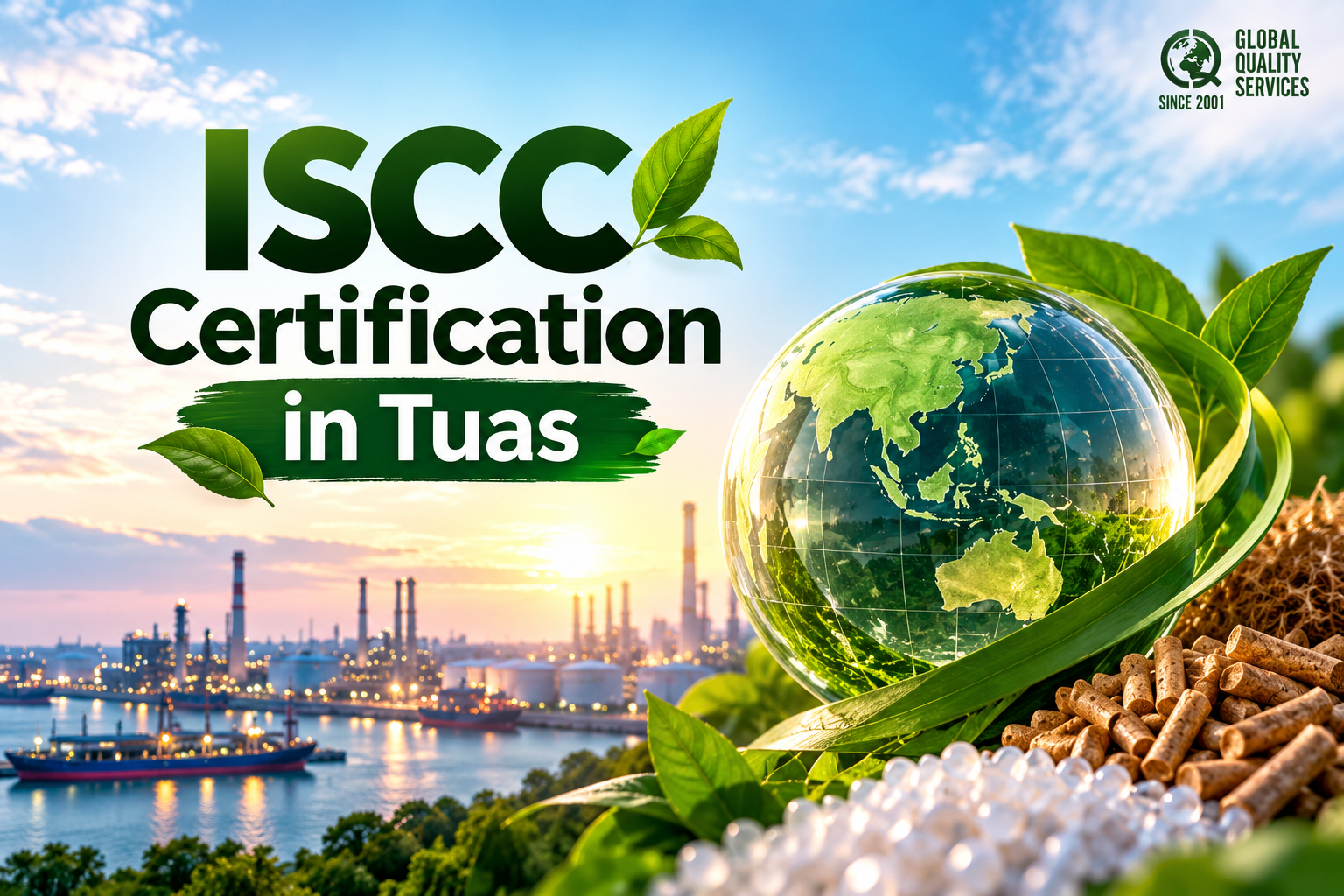
If your business supplies biofuels, processes recycled feedstocks, manufactures chemicals, or trades sustainable materials, your customers may ask you to prove where those materials came from and how you tracked them. ISCC Certification in Tuas can help your company meet these expectations and build trust with buyers who need reliable evidence of sustainability and traceability.
Singapore’s maritime industry gives this requirement real commercial weight. The Maritime and Port Authority of Singapore reported a record 56.77 million tonnes of bunker sales in 2025, reflecting the scale of the country’s fuel supply market. The authority also encourages licensed bunker suppliers to provide ISCC-certified biofuel to vessels operating in the port.
For companies in Tuas, the challenge is to match the right ISCC scheme to their products, customers, and business activities. Global Quality Services (GQS) helps you assess these requirements, prepare your documentation, and get ready for an independent certification audit. This page explains what your business needs and how our consultants can help you move forward.
What Does ISCC Certification Mean for Your Business
International Sustainability and Carbon Certification (ISCC) is a certification system for sustainable, traceable, and deforestation-free supply chains. It covers eligible materials across industries such as energy, chemicals, plastics, food, feed, and recycling.
For your business, certification means more than having a certificate to show customers. You must be able to support your sustainability claims with records that match your actual material purchases, production, storage, and sales.
For example, a company trading used cooking oil for biofuel production needs reliable supplier information and records showing how the material moved through its supply chain. A chemical manufacturer using recycled feedstock needs controls that support the claims it makes about those materials.
ISCC requirements vary according to the scheme and the activities covered. GQS helps you identify the applicable requirements before you spend time preparing documents that may not fit your intended certification scope.
Which ISCC Scheme Does Your Company Need
Choosing the correct scheme is one of the first decisions your business must make. ISCC offers different schemes for different markets and sustainability requirements. The right option depends on the material you handle, your role in the supply chain, and the claims your customers expect you to support.
ISCC EU
ISCC EU applies to eligible supply chains that need to demonstrate compliance with relevant European Union sustainability and greenhouse gas emissions requirements. It is particularly relevant to businesses involved in eligible renewable fuels and other covered activities supplying regulated European markets.
If your company exports eligible biofuels or supplies materials into an EU-regulated fuel supply chain, you should establish whether ISCC EU certification applies to your activities.
ISCC PLUS
ISCC PLUS supports eligible circular and bio-based material supply chains across global markets. It is relevant to businesses working with recycled feedstocks, bio-based chemicals, plastics, packaging materials, and other covered products.
For a Tuas manufacturer or materials trader, this scheme may help demonstrate the origin and traceability of eligible alternative feedstocks. Your business must still follow the applicable chain-of-custody requirements and support its product claims with the required records.
ISCC CORSIA
ISCC CORSIA applies to eligible sustainable aviation fuel supply chains that need to demonstrate compliance with the sustainability requirements under the Carbon Offsetting and Reduction Scheme for International Aviation (CORSIA).
Businesses supplying aviation fuel or participating in its certified supply chain should assess this scheme against their intended market and activities.
Why Tuas Companies Should Consider ISCC Certification
Tuas has a strong industrial base, with businesses involved in manufacturing, chemicals, logistics, energy, and materials handling. For companies in these sectors, sustainability claims must stand up to customer checks and supply chain reviews. ISCC certification can help your business address several practical needs.
- Respond to customer requirements: Provide documented evidence when buyers request ISCC-certified materials or suppliers.
- Support international sales: Meet relevant certification requirements for eligible products entering target markets.
- Track incoming and outgoing materials: Keep records that connect supplier deliveries, inventory, production, and sales.
- Substantiate sustainability claims: Support claims about eligible recycled or bio-based materials with the required evidence.
- Improve supplier oversight: Establish clearer controls for collecting and checking supplier information.
- Prepare for external audits: Organize the records and procedures needed to demonstrate compliance.
ISCC Certification Requirements for Businesses in Tuas
Before you apply, your company needs to understand what the chosen scheme requires and whether your existing systems can support it. These are the main areas to review.
Supply Chain and Supplier Records
Your business must keep the supplier information and supporting documents required for the materials it receives. Depending on your activities, these may include delivery records, sustainability declarations, invoices, and information about the material’s origin.
Missing or inconsistent supplier records can make it difficult to support sustainability claims during an audit. GQS helps you identify gaps and determine what evidence your business needs to maintain.
Material Traceability and Quantity Control
Your records must show how certified materials enter, move through, and leave your operation. Where applicable, your company must also maintain a reliable mass balance or follow another permitted chain-of-custody method.
This is particularly important for traders, processors, storage facilities, and manufacturers that handle both certified and non-certified materials. The controls must follow the selected scheme rather than rely on a general inventory procedure.
Sustainability and Greenhouse Gas Information
The information required depends on the scheme, feedstock, and business activity. Certain supply chains must maintain greenhouse gas emissions data and calculations, while others have different sustainability evidence requirements.
Your company should confirm which requirements apply before finalizing its procedures.
Documented Procedures and Staff Responsibilities
Employees who handle purchasing, production, inventory, dispatch, and sales must understand the records they need to maintain. Written procedures should reflect actual working practices and explain who checks the information.
GQS helps businesses prepare procedures that their teams can follow during daily operations, rather than creating paperwork that serves only an audit.
Internal Review and Audit Readiness
Before the external audit, your business should check whether its records are complete, its material quantities reconcile, and its procedures match actual activities. Any gaps should be addressed before the certification body assesses the system. The precise requirements depend on the applicable ISCC scheme and certification scope.
How Global Quality Services Helps Your Business Prepare for ISCC Certification
Global Quality Services works with your team to understand your existing arrangements and identify the changes needed for certification. The consultancy focuses on your actual business activities, not a standard set of documents applied to every company.
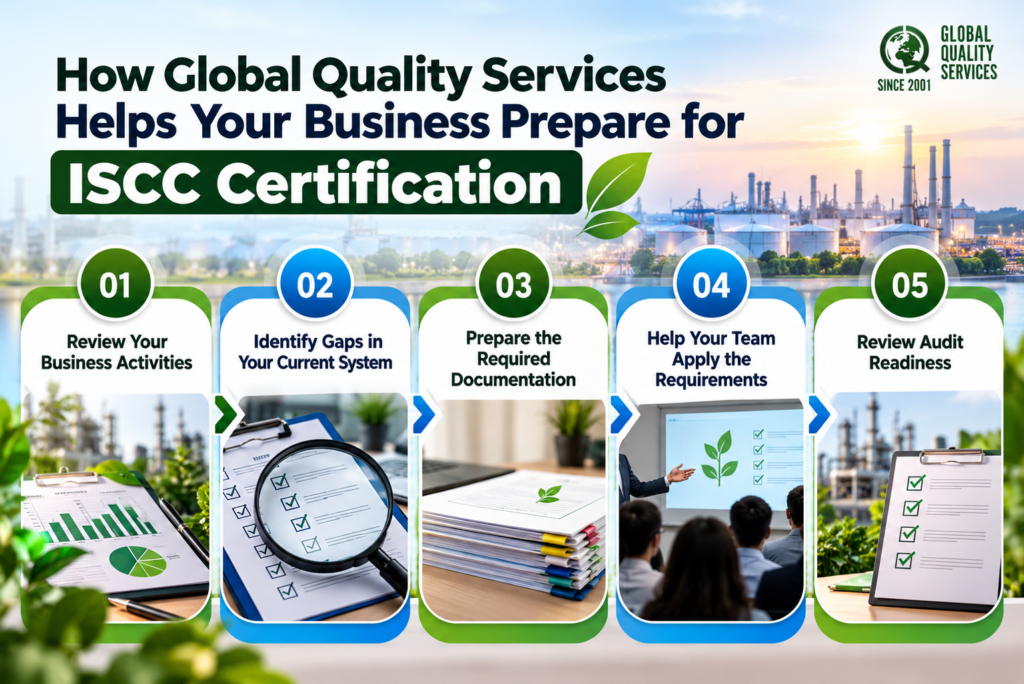
Step 1: Review Your Business Activities
We discuss the materials you handle, your role in the supply chain, your operating sites, and the markets you serve. This review helps establish which ISCC scheme and certification scope may apply.
Step 2: Identify Gaps in Your Current System
Our consultants review relevant records, supplier controls, material tracking, and existing procedures. We explain which areas need attention and help you prioritize the work.
Step 3: Prepare the Required Documentation
GQS supports the preparation or revision of applicable procedures, records, and controls. We base this work on your operations so that your employees can use the documents in practice.
Step 4: Help Your Team Apply the Requirements
Your staff needs to understand how the procedures work, what evidence they must keep, and how to handle gaps in records. We guide to help your team apply the required controls consistently.
Step 5: Review Audit Readiness
Before the external assessment, we help you review the available evidence and address identified gaps. We can also guide your team on the records and explanations it may need to present during the audit.
How Global Quality Services Experts Help You With ISCC Certification in Tuas
Global Quality Services has a track record in certification consultancy and management system support across Singapore and other regional markets. The company’s published profile reports 21 years of experience, 1,450 customers, 17 locations, and 1,200 training engagements. These figures reflect GQS’s broader consulting background, not ISCC-specific certification totals. Businesses choose Global Quality Services for:
- A reputed consultant with experience across multiple certification and compliance standards.
- Singapore-based support for local businesses and companies serving regional markets.
- Practical advice tailored to your industry, material flows, and customer requirements.
- Clear identification of documentation gaps and areas requiring corrective action.
- Consultancy support that considers existing systems instead of rebuilding everything unnecessarily.
- Experience supporting management systems, environmental requirements, and responsible recycling programs.
- Guidance that helps employees understand their responsibilities and maintain records consistently.
- Support for related environmental management needs, including RC 14001 Consultancy and Certification, where relevant to your business.
Get ISCC Certification Consultancy in Tuas From Global Quality Services
If your customers require ISCC-certified materials, or your business plans to enter a market where certification matters, start by confirming the right scheme and scope. Preparing without that clarity can lead to unnecessary work, missing records, and delays during the audit.
Contact Global Quality Services to discuss your products, supply chain, and certification goals. Our team can review your requirements and recommend the next steps for your business.
Call the Global Quality Services Singapore team or email us to arrange an initial consultation. Get clear guidance on your ISCC certification requirements and prepare your business for the next stage of its sustainability and market access plans.
Frequently Asked Questions
1. Is ISCC certification mandatory for companies in Tuas?
ISCC certification is not mandatory for every business. However, it may be required by applicable regulations, customer contracts, or supply chain requirements. The need depends on your products, business activities, and target markets. For biofuel suppliers, the Maritime and Port Authority of Singapore encourages the supply of ISCC-certified biofuel to vessels operating in the port.
2. How do I choose between ISCC EU and ISCC PLUS?
ISCC EU applies to eligible supply chains that need to meet relevant EU sustainability requirements. ISCC PLUS covers eligible circular and bio-based materials and related products across global markets. Your target market, materials, and activities determine which scheme may be suitable.
3. What documents are needed for ISCC certification?
The required documents depend on your scheme and scope. They may include supplier information, delivery records, invoices, sustainability declarations, inventory data, mass balance records, operating procedures, and greenhouse gas information where applicable. GQS can help identify the documents your business needs.
4. How long does ISCC certification take?
The timeline depends on your business size, number of sites, supply chain complexity, existing records, and audit arrangements. Companies with organized records may need less preparation than those that must establish new tracking controls. GQS can estimate the likely timeline after reviewing your current system.
5. Can GQS guarantee that my company will receive ISCC certification?
No consultant can guarantee certification. GQS helps your business understand the applicable requirements, prepare documentation, address gaps, and get ready for the audit. An independent ISCC-recognized certification body assesses compliance and decides whether to issue the certificate.