Suzhou is a major industrial center in Jiangsu Province, China, with manufacturing activities spanning industrial equipment, electronics, advanced materials, automation, and high-tech production. The city’s industrial base creates demand for machinery and equipment that meet specified technical, operational, and quality requirements. For manufacturers, importers, and international buyers, inspecting equipment before delivery or installation can help identify discrepancies while corrective action is still possible.
Global Quality Services (GQS) provides machinery and equipment inspection services in Suzhou China to assess equipment against agreed specifications, purchase orders, drawings, and inspection criteria. Depending on the assignment, inspections may cover physical condition, workmanship, component identification, assembly, functional checks, safety-related features, documentation, and packing. The findings are recorded to help clients evaluate equipment conformity and make informed purchasing, acceptance, or shipment decisions.
Why Are Machinery and Equipment Inspection Services Important in Suzhou, China?
Industrial equipment can involve complex assemblies, electrical systems, mechanical components, control units, and operating requirements. A discrepancy in one component may affect the performance, installation, or operation of the complete machine. An inspection provides a structured opportunity to examine key features before accepting or dispatching equipment.
Suzhou Industrial Park’s industrial output reached RMB 736.2 billion in 2025, according to the park’s administrative committee, reflecting the scale of its manufacturing base. Equipment manufacturing and advanced industrial activities are part of a wider ecosystem where machinery quality and operational readiness matter.
Verify Equipment Against Purchase Requirements
Inspection helps compare the supplied machine or equipment with agreed specifications, technical drawings, model details, and purchase order requirements. It can identify missing components, incorrect configurations, visible defects, or deviations requiring review.
Identify Defects Before Delivery
Physical damage, assembly issues, poor finishing, and incomplete equipment can be easier to address before dispatch or installation. Documented findings give the buyer and supplier a clear basis for discussing corrective action.
Check Functional Readiness
Where included in the inspection scope, functional checks can help establish whether selected equipment operations work as expected under the agreed test conditions. More complex performance testing may require a separate test plan and suitable facilities.
Review Supporting Documentation
Equipment deliveries may require manuals, drawings, maintenance instructions, test records, spare-part lists, and other technical documents. Reviewing the agreed documents helps identify missing or inconsistent information before handover.
Support Procurement and Acceptance Decisions
Inspection findings provide additional evidence for buyers evaluating equipment conformity. They can be considered alongside contractual requirements, factory acceptance test results, supplier records, and other technical assessments.
What Do Machinery and Equipment Inspection Services Cover?
The inspection scope depends on the type of machinery, its intended application, the stage of production, and the buyer’s requirements. GQS can establish relevant checkpoints before the inspection so the assessment focuses on the features that matter for the equipment being supplied.
1. Equipment Identification and Specifications
Inspectors verify available identification details against the agreed purchase and technical documents. Checks may include the manufacturer, model, serial number, equipment rating, configuration, and specified accessories.
2. Physical Condition and Workmanship
The equipment is examined for visible damage, corrosion, surface defects, loose or missing components, poor finishing, and other observable workmanship issues. Where relevant, the inspection may include accessible welds, fasteners, joints, housings, and assembled parts.
3. Assembly and Component Verification
Selected components and assemblies can be checked against the approved drawings, bills of materials, or equipment specifications. The inspection may identify incorrect components, incomplete assembly, missing guards, or other discrepancies within the agreed scope.
4. Dimensions and Technical Measurements
Where measurements are required, relevant dimensions and tolerances can be checked against the supplied technical specifications. The measurement method, instruments, acceptance limits, and required records should be agreed before the inspection.
5. Functional and Operational Checks
If the equipment can be operated safely and the necessary facilities are available, functional checks may be conducted against agreed criteria. These may include start-up and shutdown functions, movement of mechanical parts, control responses, operating indicators, or other specified functions.
Full performance testing, precision calibration, load testing, and factory acceptance testing may require a separate technical protocol and specialist equipment. These activities should not be assumed to be included in a general visual inspection.
6. Electrical and Control Systems
For machinery with electrical or electronic systems, the inspection may cover accessible wiring, connectors, control panels, indicators, labels, and selected control functions. Electrical testing should only be performed where it is included in the agreed scope and suitable personnel and equipment are available.
7. Safety-Related Features
Where specified, inspectors can examine observable safety-related features such as machine guards, warning labels, emergency-stop devices, and access restrictions. A visual inspection does not, by itself, establish full compliance with all applicable machinery safety regulations or standards.
8. Documentation and Accessories
The inspection may verify the availability and consistency of specified operating manuals, technical drawings, maintenance instructions, spare parts, tools, certificates, and test records. Missing or inconsistent items can be documented for review before handover.
9. Packaging and Shipment Readiness
For equipment being shipped, the inspection may include protective packaging, moisture protection where required, securing arrangements, shipping marks, equipment identification, and packing-list consistency. These checks help identify visible concerns before the machinery leaves the supplier’s facility.
Benefits of Machinery and Equipment Inspection Services
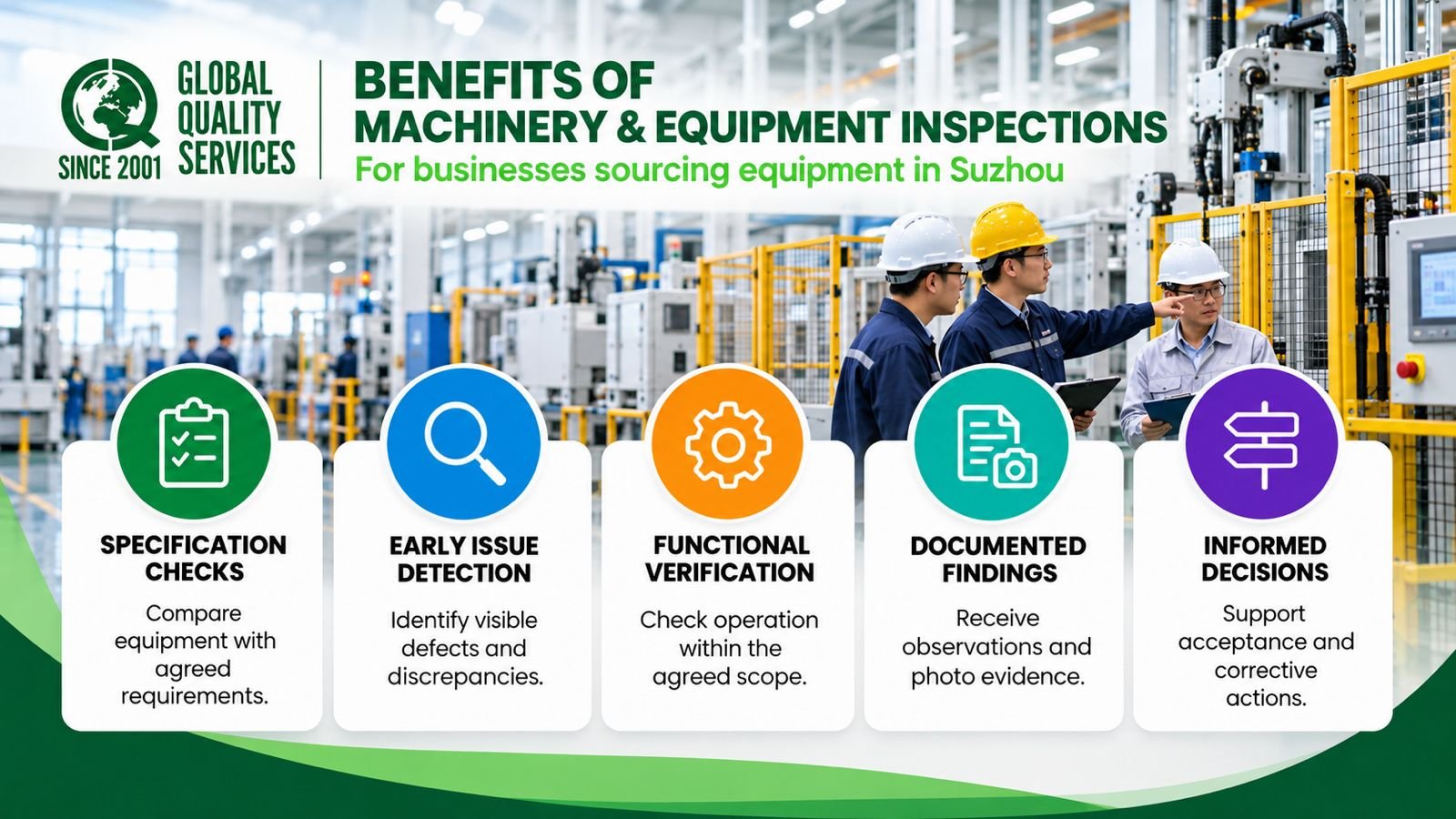
A defined inspection can provide buyers with documented information about equipment condition and conformity before delivery, installation, or acceptance. Its value depends on the inspection scope, the quality of the available reference documents, and the checks performed.
1. Better Equipment Purchasing Decisions
Inspection findings help buyers compare supplied equipment with contractual and technical requirements. This additional evidence can be considered before accepting a delivery or proceeding with installation.
2. Early Identification of Non-Conformities
Visible defects, missing components, incorrect configurations, and documentation gaps can be recorded before equipment leaves the supplier’s premises. Early identification may reduce the effort involved in resolving issues later.
3. Greater Confidence in Equipment Condition
A structured review of physical condition, workmanship, and specified functions gives the buyer a clearer view of the equipment at the time of inspection.
4. Improved Documentation and Traceability
Recording equipment identification, inspection checkpoints, and findings creates a reference for procurement teams, suppliers, project managers, and maintenance personnel.
5. Better Coordination With Suppliers
Documented findings help buyers and suppliers identify the items requiring clarification, correction, replacement, or further testing. This can make follow-up discussions more specific and easier to track.
6. Support for Shipment and Handover Planning
Inspection results can be considered when planning shipment release, installation, commissioning, or acceptance activities. The report supports these decisions but does not automatically replace contractual acceptance or regulatory approval.
Which Industries Need Machinery and Equipment Inspection in Suzhou?
Machinery inspection is relevant to businesses purchasing new equipment, sourcing machinery from local manufacturers, or reviewing equipment supplied for industrial projects. Inspection criteria should reflect the type of equipment and the conditions under which it will be used.
- Industrial manufacturing: Production machinery, processing equipment, assembly systems, and machine tools.
- Electronics and electrical manufacturing: Assembly equipment, automated production systems, electrical machinery, and supporting equipment.
- Automation and robotics: Robotic systems, conveyors, control units, automated handling equipment, and production-line components.
- Automotive and component manufacturing: Manufacturing machinery, testing equipment, assembly systems, and specialized production tools.
- Advanced materials and chemical processing: Processing machinery, mixing systems, handling equipment, and specified industrial components.
- Packaging and material handling: Packaging machines, filling equipment, conveyor systems, lifting equipment, and handling units.
- Warehousing and logistics: Material handling systems, automated storage equipment, and specified warehouse machinery.
- Engineering and infrastructure projects: Pumps, compressors, generators, mechanical assemblies, and other equipment supplied against project specifications.
The final inspection scope should be based on the equipment’s intended function, technical requirements, and the client’s acceptance criteria.
Machinery and Equipment Inspection Process in Suzhou
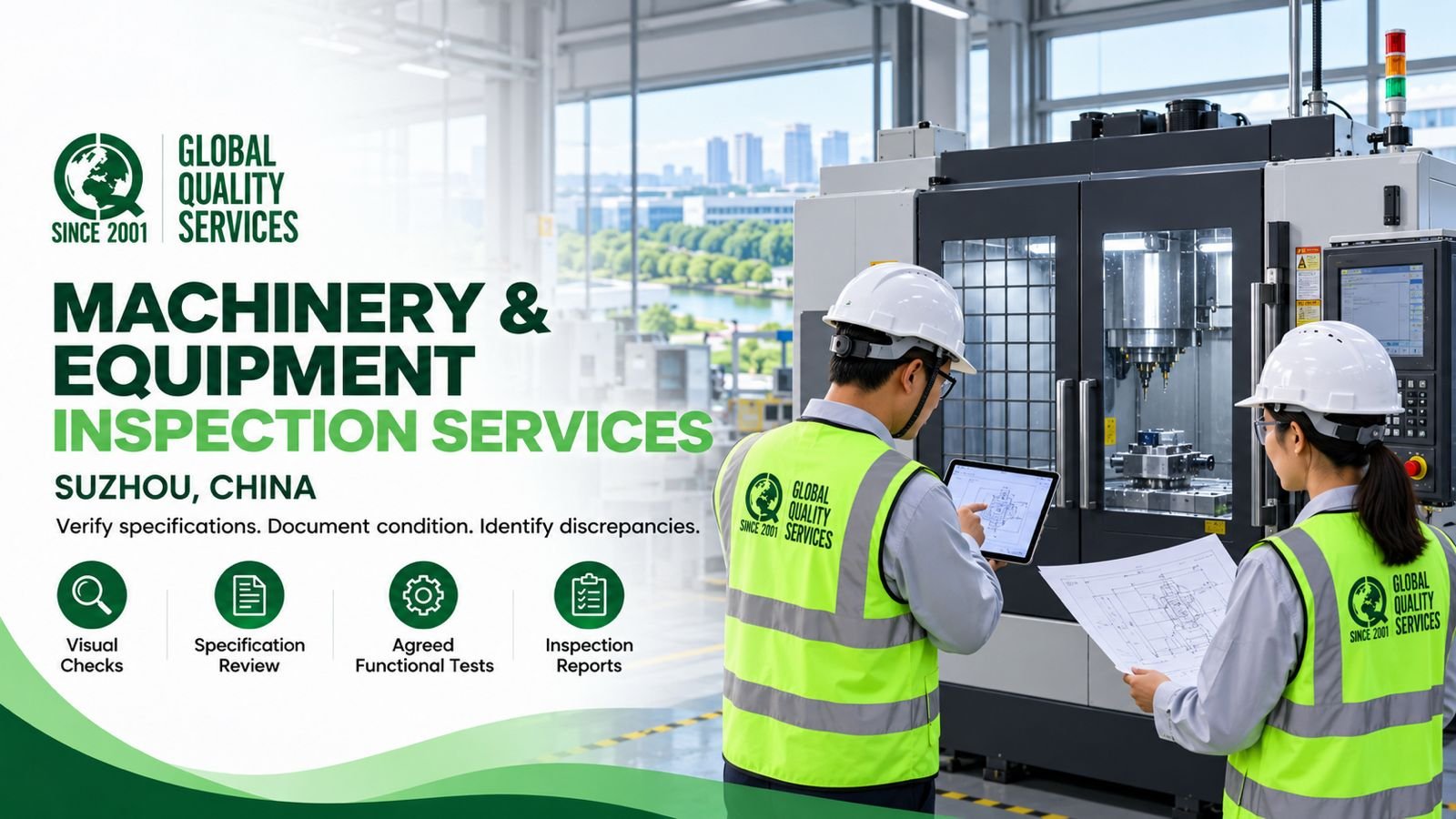
GQS establishes the inspection scope according to the equipment type, delivery stage, technical documentation, and client requirements. The process is designed to document the checks performed and identify any discrepancies against the agreed criteria.
Step 1: Review Equipment Requirements
The process begins with reviewing the purchase order, equipment specifications, technical drawings, approved configuration, and relevant acceptance requirements. The client identifies the concerns or technical features that need particular attention.
Step 2: Define the Inspection Scope
The inspection plan establishes which components, dimensions, functions, records, and packaging details will be checked. Any required measurements, operational tests, safety precautions, and exclusions are clarified before the visit.
Step 3: Inspect Equipment Condition and Assembly
The inspector examines the equipment against the agreed criteria. Depending on the scope, this may include identification, workmanship, visible condition, component installation, assembly completeness, and specified measurements.
Step 4: Conduct Agreed Functional Checks
Where the equipment is ready for operation and testing can be performed safely, selected functions are checked according to the agreed procedure. Any special testing, load testing, or factory acceptance test must be arranged as part of the defined scope.
Step 5: Review Documentation and Packing
The inspector verifies the specified technical documents, accessories, and records. If the machinery is being prepared for shipment, the inspection may also cover protective packaging, identification marks, and relevant packing details.
Step 6: Record Findings and Issue the Report
The inspection report records the scope, checks performed, observations, and identified discrepancies. Photographs and supporting evidence may be included where appropriate. Any limitations, unavailable documents, or tests not performed should be clearly stated.
Step 7: Review Corrective Actions or Follow-Up Checks
The client and supplier review the findings and determine whether corrections, additional testing, or re-inspection are needed. Follow-up activities depend on the contractual requirements and the agreed inspection arrangement.
When Should You Arrange Machinery and Equipment Inspection?
The timing of an inspection depends on the equipment’s delivery stage and the risks associated with the purchase or project.
Consider arranging an inspection when:
- Purchasing machinery from a new supplier in Suzhou.
- Verifying equipment before shipment to an overseas destination.
- Checking whether supplied machinery matches approved drawings and specifications.
- Reviewing equipment after assembly or before factory acceptance.
- Investigating concerns about visible defects, missing parts, or workmanship.
- Checking specified functions before delivery.
- Verifying accessories, manuals, and other required documentation.
- Reviewing packaging and shipment readiness for high-value equipment.
For complex equipment, inspection checkpoints should be agreed early enough for identified issues to be addressed before the machine is packed, shipped, or installed.
What Factors Affect the Cost of Machinery and Equipment Inspection?
Inspection costs depend on the complexity of the equipment, the technical checks required, and the time needed to complete the agreed scope.
Key factors include:
- Equipment type and complexity: A machine with multiple assemblies or control systems may require more inspection time than a simple mechanical unit.
- Number of machines: The number of units, models, or production lines to be inspected affects the scope.
- Technical documentation: Detailed drawings, specifications, and acceptance criteria may require additional review.
- Testing and measurement requirements: Functional tests, precision measurements, electrical checks, and other specialized activities can affect the cost.
- Inspection location and access: The factory location, site access arrangements, and scheduling requirements influence planning.
- Documentation and reporting: Client-specific report formats, photographs, and supporting records may affect the work involved.
- Follow-up inspections: Additional visits may be required after corrective action or when equipment is not ready for inspection.
Providing the equipment type, manufacturer, location, technical documents, and required checkpoints helps establish a suitable inspection scope for quotation.
Why Choose Global Quality Services for Machinery and Equipment Inspection in Suzhou?
Global Quality Services provides inspection services based on defined client requirements and the characteristics of the equipment being assessed. The inspection scope can cover physical condition, assembly, component identification, specified measurements, agreed functional checks, documentation, and shipment preparation. Findings are recorded against the applicable criteria so clients can review the observed condition and identify matters requiring further attention. The scope, technical testing requirements, and reporting arrangements are agreed before the assignment to clarify what the inspection will and will not cover.
Machinery purchases can involve significant investment, technical specifications, and delivery commitments. Inspecting equipment against agreed requirements before shipment or handover provides documented information that can help buyers and suppliers address discrepancies at the appropriate stage.
Contact Global Quality Services to discuss machinery and equipment inspection services in Suzhou, China. Share the equipment details, supplier location, technical specifications, inspection objectives, and required tests so the scope can be established for your needs.
Frequently Asked Questions
1. What is included in machinery and equipment inspection in Suzhou?
Depending on the agreed scope, the inspection may cover equipment identification, physical condition, workmanship, assembly, component verification, dimensions, selected functional checks, documentation, accessories, and shipment packaging. Specialized tests are included only when specified and available.
2. Can machinery be inspected before shipment from Suzhou?
Yes. Pre-shipment inspection can be arranged to verify selected equipment characteristics, specified functions, documentation, and packing before dispatch. The machinery should be ready for the agreed checks, and any operational testing should be planned in advance.
3. What is the difference between machinery inspection and factory acceptance testing?
Machinery inspection can involve visual checks, measurements, component verification, documentation review, and agreed functional checks. Factory acceptance testing (FAT) generally follows a defined test protocol to evaluate specified equipment functions or performance before delivery. FAT requires agreed acceptance criteria and suitable testing arrangements.
4. Can an inspection verify whether machinery meets safety requirements?
An inspection can examine specified safety-related features, such as guards, warning labels, and emergency-stop devices, when these checks are included in the scope. Determining full compliance with applicable machinery safety standards or regulations may require a separate conformity assessment by appropriately qualified personnel.
5. What documents are required for machinery inspection?
Useful documents include the purchase order, technical specifications, drawings, equipment manuals, component lists, test procedures, acceptance criteria, and relevant inspection or maintenance records. The documents required depend on the type of machinery and the inspection objectives.