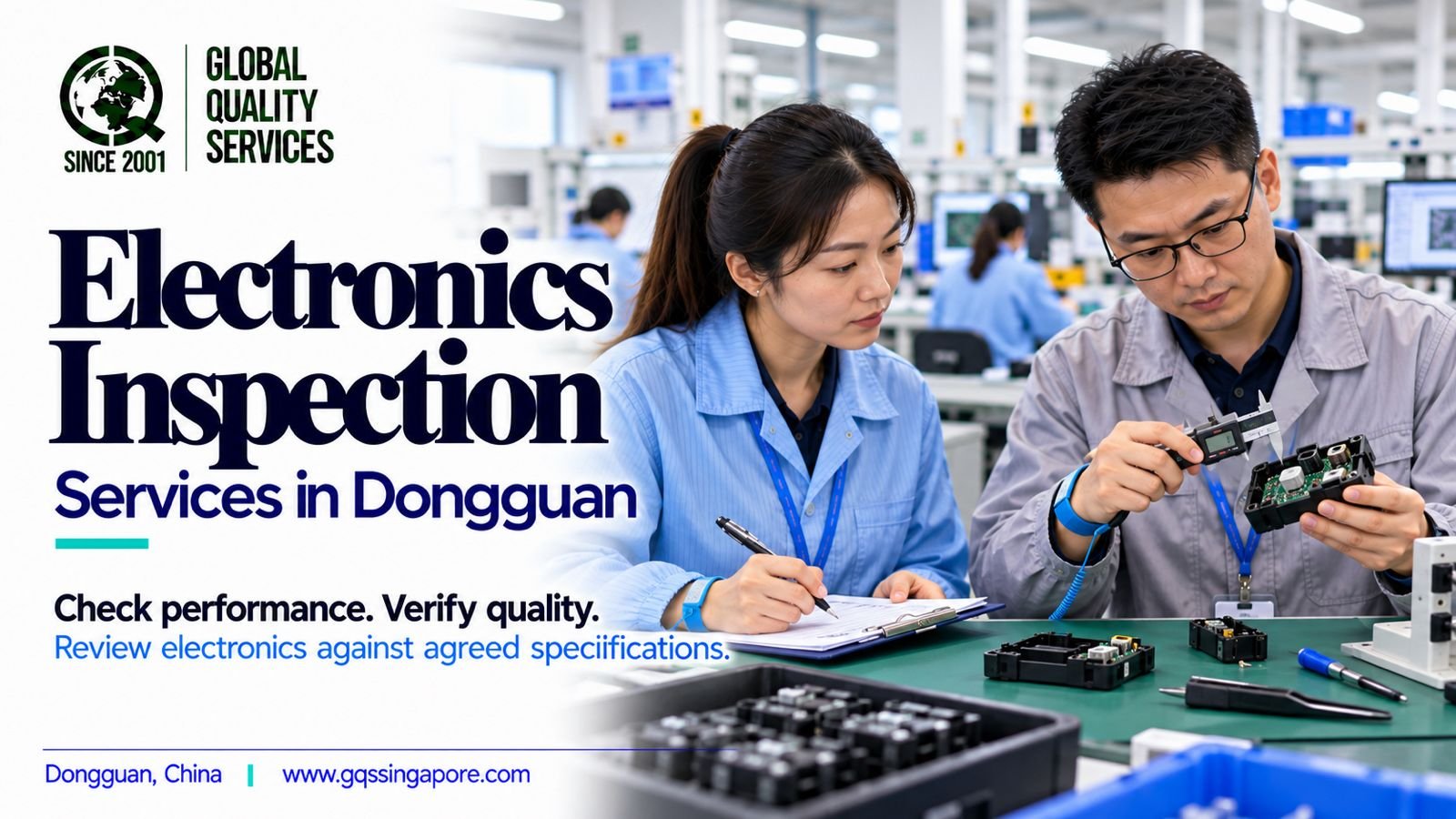
Dongguan is one of China’s major electronics manufacturing centers, with an extensive supply chain covering consumer electronics, smart devices, communication equipment, electronic components, and intelligent terminals. For international buyers sourcing products from Dongguan, verifying product quality before shipment is essential to reducing defects, avoiding costly rework and meeting purchase specifications.
Global Quality Services (GQS) provides Electronics Inspection Services in Dongguan, China, helping importers, manufacturers, distributors and international brands verify product quality at different stages of production. Our inspection services focus on workmanship, component assembly, product functionality, labeling, packaging, and compliance with agreed inspection criteria.
Whether you are sourcing finished electronic products or individual components, inspections can help identify quality issues before goods leave the manufacturing facility.
Types of Electronics Inspection Services in Dongguan
GQS can arrange electronics inspection activities according to the product type, manufacturing stage and agreed inspection scope.
1. Pre-Production Inspection
Pre-production inspection takes place before or at the beginning of manufacturing. It helps verify the availability and condition of materials, components, approved samples and production specifications.
For electronics projects, the inspection may cover:
- Availability of approved product samples and technical specifications.
- Verification of selected components against the bill of materials, where available.
- Initial assembly arrangements and production readiness.
- Identification of potential quality concerns before mass production begins.
This inspection is useful when introducing a new electronic product or placing an order with a new supplier.
2. During Production Inspection
During Production Inspection (DUPRO) takes place while manufacturing is underway. It helps buyers identify recurring defects before the entire order is completed.
Depending on the product and inspection scope, checks may include:
- Component placement and assembly quality.
- Soldering workmanship and visible connection defects.
- PCB assembly and enclosure fitting.
- Product functionality using agreed test procedures.
- Consistency between finished units and approved samples.
- Identification of repeated defects requiring corrective action.
Early identification of production problems gives manufacturers more time to address them before final inspection.
3. Pre-Shipment Inspection
Pre-Shipment Inspection (PSI) is performed when the order is substantially complete and the goods are available for inspection. It helps verify whether the finished products and their packaging meet the agreed purchase requirements.
Electronics pre-shipment inspections may cover:
- Product quantity and model identification.
- Visual appearance and workmanship.
- Assembly quality and component completeness.
- Basic functional checks based on approved test instructions.
- Accessories, manuals and supplied components.
- Product labels, serial numbers and carton markings.
- Packaging condition and shipping readiness.
Sampling levels and acceptance criteria should be agreed upon before inspection. Where appropriate, an established sampling plan, such as ISO 2859-1, may be used.
4. Electronics Packing Inspection
Packaging is particularly important for electronic devices that contain delicate displays, circuit boards, connectors and other sensitive components.
Packing inspection checks whether products are packed according to the buyer’s specifications and whether the packaging is suitable for the intended handling and transportation arrangements.
The inspection may cover protective inserts, cushioning, individual product boxes, moisture-protection measures where specified, accessories, carton labels and shipping marks.
Drop, vibration and other laboratory or packaging performance tests are separate activities that may require specific equipment and an agreed testing scope.
5. Loading Supervision
Loading supervision helps verify that inspected electronic products are handled and loaded according to the agreed shipping instructions.
Depending on the assignment, checks may include:
- Verification of carton quantities and shipping marks.
- Confirmation of product and shipment identification.
- Observation of loading and handling practices.
- Checks for visible carton damage before loading.
- Verification of loading arrangements against the approved instructions.
This service can help reduce the risk of shipment discrepancies and handling-related damage.
Why Are Electronics Inspection Services Important in Dongguan?
Dongguan has a well-established electronics and intelligent terminal manufacturing ecosystem, supported by suppliers of components, modules, accessories and finished products. This interconnected supply chain lets businesses source a wide range of electronic products, but it also makes consistent quality control essential when working with multiple factories and suppliers.
An independent inspection gives buyers a clearer view of whether products meet agreed specifications before shipment.
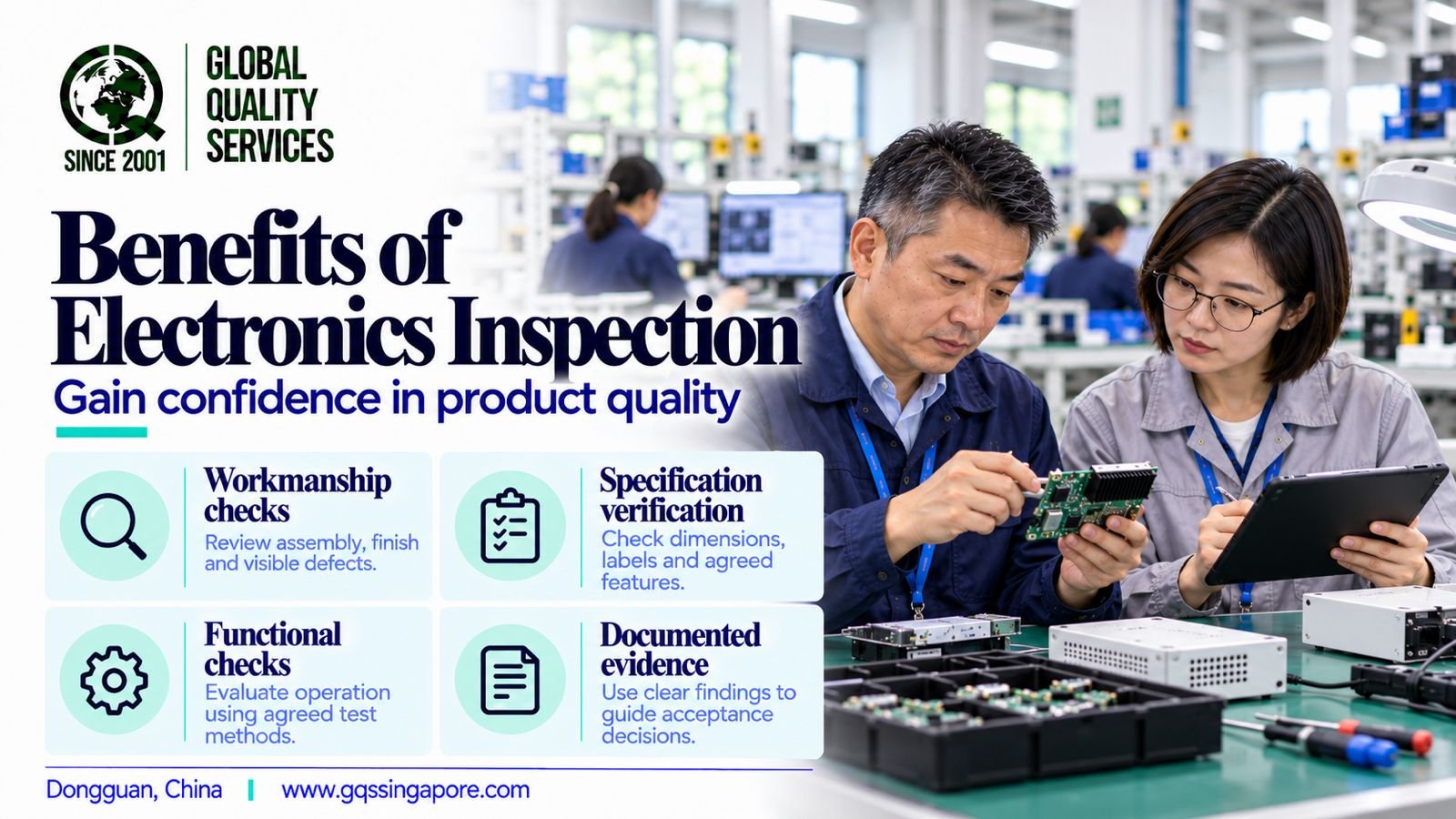
Identify Manufacturing Defects Before Shipment
Electronic products can develop defects during component installation, soldering, assembly or final finishing. Inspections help identify visible defects, incorrect assembly, loose connections and other issues that may affect product quality.
Verify Product Functionality
A product may look correct but fail during operation. Functional checks against agreed specifications help identify issues with buttons, displays, connectors, charging functions, indicators and other accessible features.
Check Components and Assembly Quality
Incorrect components, missing parts and poor assembly can affect product performance and reliability. Inspection helps verify that the selected samples match the approved product specifications and assembly requirements.
Reduce Returns and Rework Costs
Identifying defects before dispatch gives buyers an opportunity to request corrective action from the supplier. This can reduce the risk of receiving non-conforming products and incurring avoidable costs associated with returns, replacements or rework.
Verify Packaging and Shipping Readiness
Electronic products often require protective packaging to reduce the risk of damage during handling and transportation. Packaging inspections help verify labelling, accessories, carton condition and packing arrangements against the buyer’s requirements.
What Do We Check During an Electronics Inspection?
Electronics inspection requirements vary according to the product category, design and intended use. GQS can develop an inspection checklist based on the buyer’s specifications, approved samples and relevant quality requirements.
Visual Quality and Workmanship
Inspectors examine the product’s exterior and accessible components for visible defects, including scratches, cracks, dents, uneven finishing, poor assembly, loose parts and inconsistent labelling.
Component and Assembly Verification
Where the required specifications are available, inspectors check selected components, assembly details, connectors, fasteners and other accessible features against the approved product requirements.
Basic Functional Checks
Functional checks may include powering on the product, operating buttons, checking display functions, testing accessible ports and verifying selected operating modes. The exact tests depend on the product and the agreed inspection procedure.
Accessories and Product Completeness
The inspection verifies whether the required accessories, cables, adapters, manuals, mounting components and other supplied items are present in the inspected units.
Labelling and Identification
Product labels, model numbers, serial numbers, barcodes, warning labels and carton markings can be checked against the approved artwork and shipping requirements.
Packaging and Carton Condition
Inspectors check packaging quality, protective materials, product placement and carton condition. Any specified packaging requirements are verified against the agreed criteria.
Important: A visual inspection or basic functional check does not replace specialist electrical safety testing, electromagnetic compatibility testing, reliability testing or laboratory certification. These activities require separate arrangements where applicable.
Electronics Products We Inspect in Dongguan
GQS can tailor inspection activities to a range of electronic products manufactured or assembled in Dongguan.
| Product Category | Examples of Inspection Checks |
|---|---|
| Consumer electronics | Appearance, assembly, basic functions and accessories |
| Mobile devices and smart terminals | Display operation, buttons, connectors, charging functions and model identification |
| Computer peripherals | Connectivity, ports, switches, assembly and packaging |
| Electronic components | Part identification, visible condition, quantity and specified physical characteristics |
| Printed circuit board assemblies | Visible soldering workmanship, component placement and assembly condition |
| Communication equipment | Ports, indicators, connectors, enclosure quality and agreed functional checks |
| Power adapters and chargers | Labelling, appearance, assembly and specified functional checks |
| LED lighting products | Appearance, assembly, illumination and specified operating checks |
| Smart home devices | Connectivity-related functions where accessible, controls, indicators and accessories |
| Electronic accessories | Product dimensions where specified, finishing, compatibility-related features and packaging |
The inspection checklist is determined by the actual product and purchase specifications. Some characteristics, including internal component authenticity, electrical safety and long-term reliability, cannot be conclusively verified through a standard visual inspection alone.
Our Electronics Inspection Process
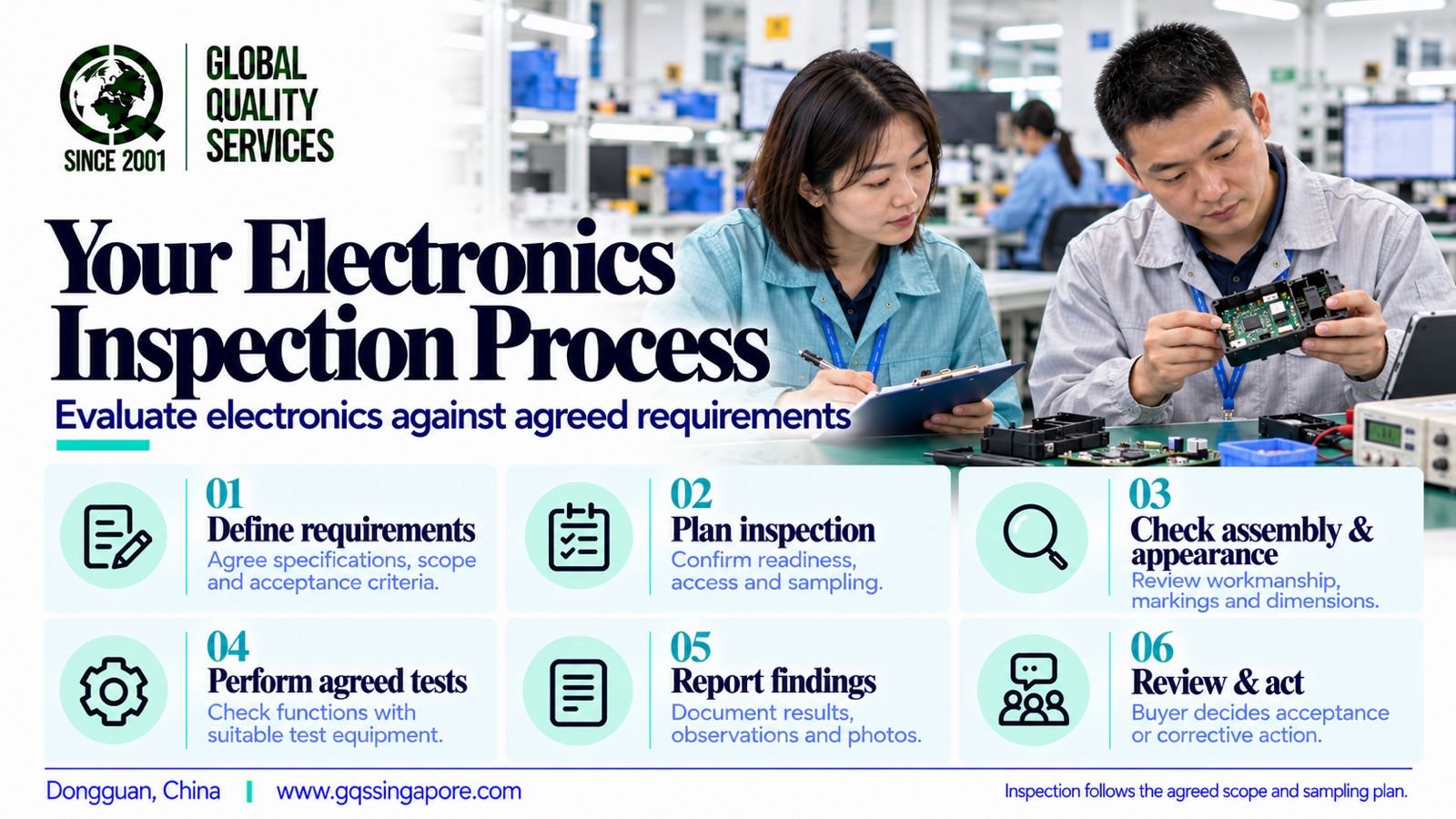
GQS follows a structured inspection process designed around the buyer’s requirements and the characteristics of the electronic products being inspected.
Step 1: Understand the Product Requirements
We review the purchase order, product specifications, approved samples, drawings, inspection checklist and any applicable acceptance criteria.
Step 2: Confirm the Inspection Scope
The inspection scope is established according to the product category, manufacturing stage, sampling requirements and tests that can be performed on-site.
Step 3: Conduct the On-Site Inspection
The inspector examines the available products and records observations against the agreed checklist. Where applicable, the inspection includes visual checks, quantity verification, workmanship assessment and specified functional tests.
Step 4: Record Defects and Findings
Identified defects are documented with relevant observations and photographs where appropriate. Findings are classified according to the agreed defect categories and acceptance criteria.
Step 5: Prepare the Inspection Report
The inspection report summarizes the inspection scope, sample size, checks performed and findings. It provides the buyer with information to support a decision about shipment acceptance, corrective action or further evaluation.
An inspection report reflects the findings within the agreed inspection scope. It does not guarantee that every unit in the shipment is defect-free.
Benefits of Choosing Global Quality Services for Electronics Inspection in Dongguan
Working with an inspection service provider gives buyers an additional quality-control checkpoint between the supplier’s production process and shipment.
- Independent quality verification: Obtain inspection findings based on agreed specifications rather than relying solely on the supplier’s internal quality checks.
- Early defect identification: Identify visible workmanship problems, assembly issues and specified functional failures before shipment.
- Product specification checks: Verify selected product characteristics against approved samples, drawings and purchase requirements.
- Better supplier accountability: Document inspection findings to support discussions about corrective actions and recurring quality issues.
- Reduced shipment uncertainty: Review product condition, quantities, packaging and labelling before authorizing dispatch.
- Product-specific inspection planning: Establish inspection criteria suited to the electronics category, manufacturing stage and buyer’s quality expectations.
When sourcing electronic products from Dongguan, quality verification is an important part of managing supplier performance and shipment readiness. An inspection planned around your product specifications can help identify defects, document non-conformities and provide a clearer picture of the order’s condition before dispatch.
Global Quality Services provides Electronics Inspection Services in Dongguan, China, for businesses seeking independent verification of product quality and conformity to agreed requirements.
Contact GQS to discuss your product category, order quantity, manufacturing stage and inspection requirements. Our team can help define a suitable inspection scope for your shipment.
Frequently Asked Questions
1. When should I arrange an electronics inspection in Dongguan?
The right timing depends on the product and the risks associated with the order. Pre-production inspection helps verify materials and production readiness, during-production inspection identifies problems while manufacturing continues, and pre-shipment inspection checks finished goods before dispatch.
2. Can GQS check whether electronic products work correctly?
Yes, functional checks can be included when the required test procedures, equipment and product specifications are available. The inspection may cover functions such as powering on, button operation, display performance, connectors and other accessible features. Specialist electrical safety or laboratory testing requires a separate scope.
3. What documents should I provide before an electronics inspection?
Useful documents include the purchase order, product specifications, approved samples, drawings, bill of materials where relevant, inspection checklist, packaging requirements and any specified functional test procedures. These documents help establish objective inspection criteria.
4. Can electronics inspection identify counterfeit or substituted components?
Inspection may identify discrepancies in component markings, part numbers, visible characteristics and supplied documentation. However, visual inspection alone cannot conclusively establish the authenticity of every electronic component. Additional traceability checks, specialist analysis or laboratory testing may be required.
5. Does passing a pre-shipment inspection guarantee that an entire electronics order is defect-free?
No. A pre-shipment inspection typically examines a sample of the finished order unless a different inspection arrangement is agreed. The results indicate whether the inspected sample meets the specified acceptance criteria; they do not guarantee that every unit is free from defects.