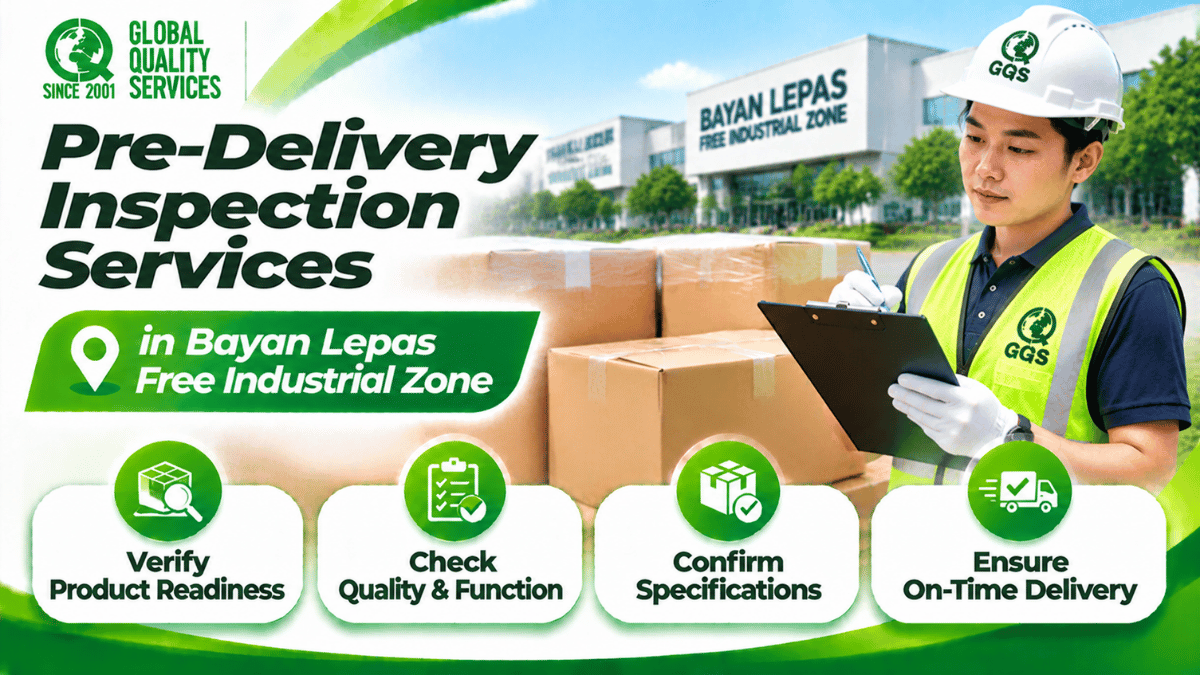
Pre-Delivery Inspection (PDI) services in the Bayan Lepas Free Industrial Zone help buyers verify that finished products, machinery, and equipment meet agreed specifications before handover or delivery. The inspection checks product condition, configuration, workmanship, functionality, accessories, identification details, and accompanying documents.
Bayan Lepas is an important part of Penang’s electrical and electronics manufacturing ecosystem. According to the Malaysian Investment Development Authority (MIDA), Penang’s E&E cluster attracted RM11.3 billion in approved investments across 83 projects in 2025. This activity supports a supply chain involving semiconductor components, electronic assemblies, industrial equipment, automation systems, and medical technology.
For manufacturers and buyers operating in Bayan Lepas, a product that passes production checks may still have issues that become apparent during final inspection. Incorrect configurations, missing accessories, damaged enclosures, incomplete documentation, or functional defects can affect acceptance at the receiving facility.
Global Quality Services provides independent Pre-Delivery Inspection services in Bayan Lepas to help buyers identify such issues before accepting finished goods.
What Are Pre-Delivery Inspection Services?
Pre-Delivery Inspection is a final quality verification carried out before a product, machine, or equipment item is delivered to the buyer. It determines whether the selected goods match the agreed purchase order, technical specifications, approved samples, and acceptance requirements.
Unlike an inspection limited to appearance, PDI can include dimensional checks, configuration verification, operational tests, safety-feature observations, and document review. The inspection scope depends on the product and the tests that can reasonably be performed at the supplier’s premises.
For businesses in Bayan Lepas, PDI can be arranged for electronic products, semiconductor-related equipment, industrial machinery, electrical assemblies, medical devices, and other manufactured goods.
What Does Our Pre-Delivery Inspection Cover?
Our PDI services cover the condition, specifications, functionality, and delivery completeness of finished products. Inspection checkpoints are selected according to the product category and the buyer’s approved requirements.
1. Product Identification and Specification Verification
Inspectors verify product names, model numbers, serial numbers, manufacturing details, and other identification information against the purchase order or approved specifications. They also check selected technical parameters, dimensions, ratings, and configurations where applicable.
For electronic equipment, this may include checking model variants, component configurations, port arrangements, power ratings, and specified hardware options. Any differences between the delivered configuration and the buyer’s requirements are recorded.
2. Physical Condition and Workmanship Inspection
The physical inspection checks the visible condition of finished goods for scratches, dents, cracks, loose components, corrosion, surface defects, and poor assembly.
For electronic assemblies and industrial products, inspectors may examine connectors, cable routing, fasteners, enclosures, display panels, mounting points, and accessible joints. The objective is to identify defects that could affect product acceptance, installation, or operation.
3. Functional and Operational Testing
Functional testing verifies whether the product performs the agreed basic operations under the specified test conditions. Depending on the product, this may include power-on checks, display operation, connectivity, control functions, movement, switching, and response to operating commands.
For industrial machinery, the agreed checks may cover startup, operating sequences, control panels, emergency stops, and selected operating parameters. Any performance or safety test requiring specialist facilities, calibrated instruments, or statutory authorization must be separately defined and arranged.
4. Electrical and Electronic Checks
For electrical and electronic products, PDI may include visual verification of wiring, connectors, terminals, power supplies, indicator lights, and control components. Where included in the agreed scope, inspectors can witness or review specified electrical tests and record the results.
For semiconductor-related equipment, checks may include model and configuration verification, visible condition, interface connections, accessory completeness, and selected operational functions. Specialized semiconductor performance validation remains subject to the manufacturer’s test procedures and appropriate technical facilities.
5. Accessories and Component Completeness
Missing accessories can delay installation even when the main product is acceptable. Inspectors compare the supplied items against the approved bill of materials, packing list, or purchase order.
This may include power cables, adapters, mounting kits, control units, software media, manuals, spare parts, installation tools, and other specified components. Any missing, substituted, or incorrect item is documented.
6. Documentation and Product Identification
The inspection includes a review of documents supplied with the product, where applicable. These may include user manuals, technical datasheets, warranty information, test records, calibration certificates, inspection records, and product identification labels.
For medical technology and regulated equipment, the review can cover the presence and consistency of specified documents. It does not constitute regulatory approval, product registration, or independent validation of medical performance.
7. Packaging and Delivery Condition
The final stage checks whether products are adequately protected for the planned delivery. Inspectors may examine packaging condition, protective materials, labels, carton markings, accessories packed with the product, and visible handling damage.
Where equipment is transported in crates or on pallets, the inspection can also cover securing arrangements and visible signs of inadequate protection.
Benefits of Pre-Delivery Inspection
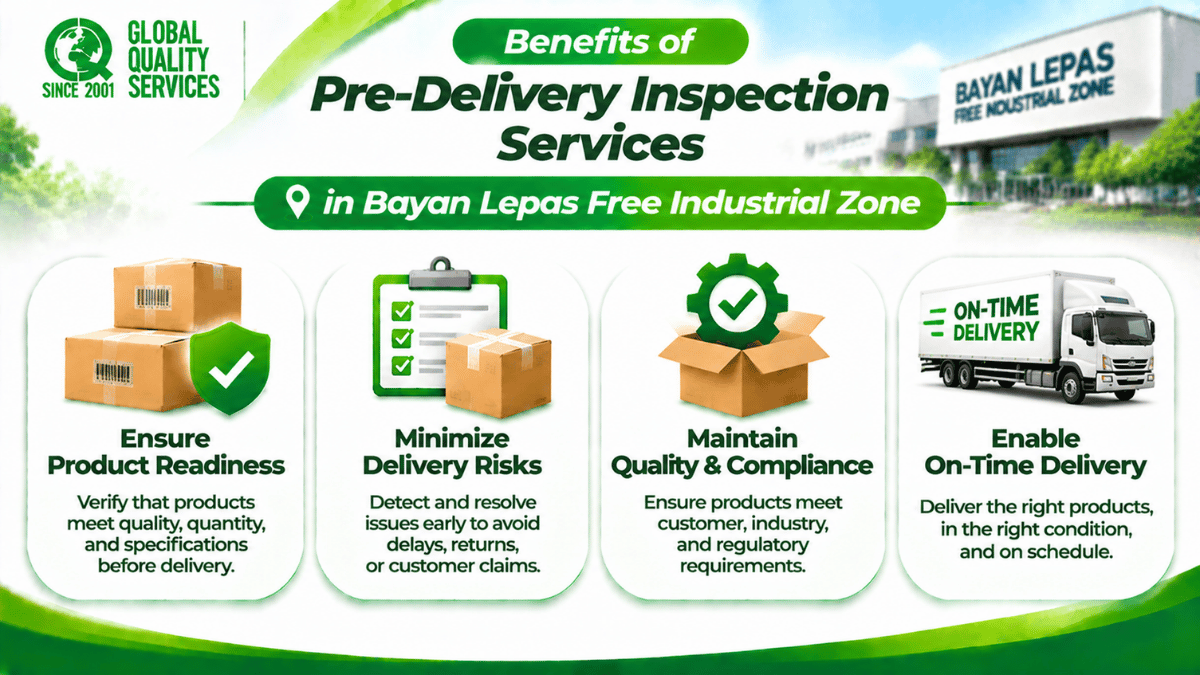
PDI helps buyers identify discrepancies before accepting products from suppliers. It provides a documented view of the inspected goods and supports more informed delivery decisions.
Early Identification of Defects
Physical and functional checks can reveal visible damage, assembly problems, incorrect configurations, and operational issues before products leave the supplier’s facility.
Verification Against Purchase Requirements
Comparing finished goods with approved specifications helps identify incorrect models, missing components, and deviations that may otherwise be discovered only after delivery.
Reduced Receiving and Installation Problems
Checking accessories, connections, documentation, and basic functionality can reduce avoidable delays during receiving, setup, and installation.
Better Supplier Accountability
A PDI report records the inspection scope, sample details, observations, and nonconformities. Buyers can use these findings to request corrections, replacements, or further verification.
Who Needs PDI Services in Bayan Lepas?
Pre-Delivery Inspection is useful for companies purchasing finished products, equipment, and machinery from manufacturers or suppliers in the Bayan Lepas industrial area.
Semiconductor and Electronics Companies
Businesses purchasing electronic assemblies, semiconductor-related equipment, test systems, components, and industrial electronics can verify configurations, physical condition, and agreed operating functions before acceptance.
Electrical and Industrial Equipment Buyers
Buyers of electrical panels, automation systems, control units, power equipment, and machinery can check specifications, assembly quality, accessories, and selected operating functions.
Medical Technology Manufacturers and Buyers
Companies handling medical devices and healthcare equipment can verify product identification, physical condition, accessories, labeling, and required documentation before delivery.
OEMs and Contract Manufacturers
Original equipment manufacturers (OEMs) and electronics manufacturing services (EMS) providers can use PDI to verify finished products supplied by subcontractors before accepting them into their own production or distribution systems.
Importers and International Procurement Teams
Overseas buyers can arrange an independent inspection at the supplier’s premises in Bayan Lepas before authorizing delivery or shipment, subject to the agreed inspection arrangements.
Our Pre-Delivery Inspection Process
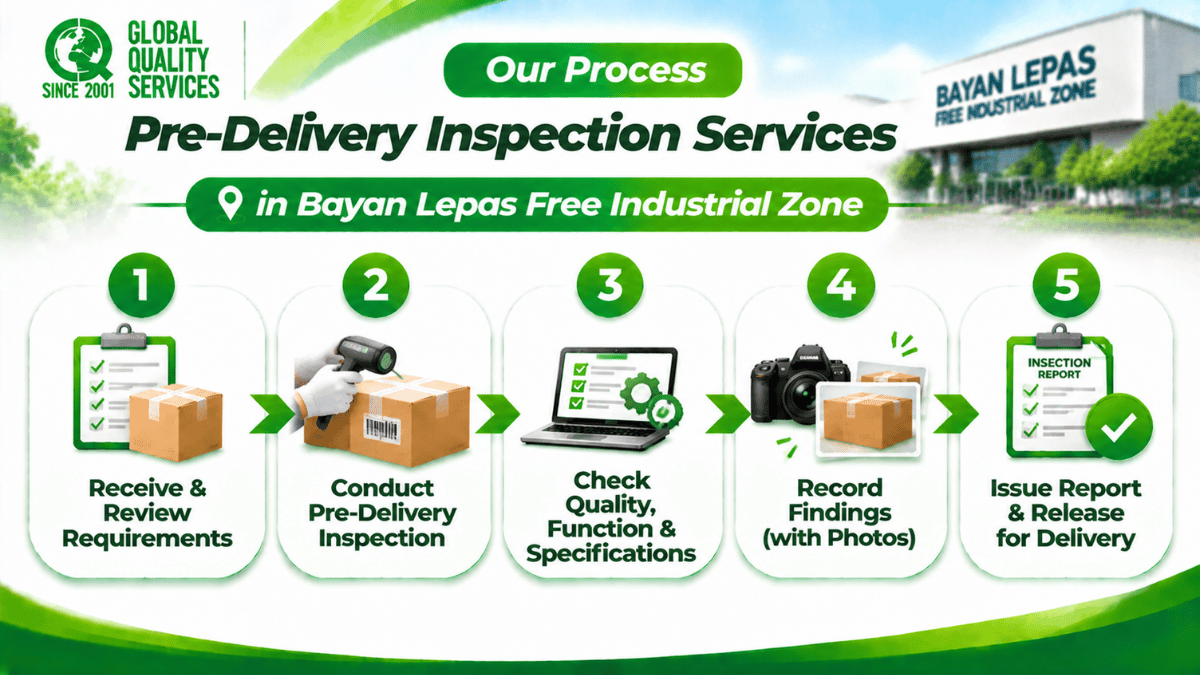
Global Quality Services follows a structured inspection process based on the buyer’s requirements, product specifications, and agreed acceptance criteria.
1. Requirement and Document Review
We review the purchase order, technical specifications, product drawings, approved samples, inspection checklist, and relevant acceptance requirements. This helps establish which characteristics and functions must be checked.
2. Inspection Planning
The inspection location, schedule, product quantity, sampling approach, and testing requirements are agreed with the client. Any special equipment, operating conditions, or supplier support needed for testing is identified in advance.
3. On-Site Product Inspection
Inspectors examine the selected products for identification, configuration, physical condition, workmanship, accessories, and documentation. Agreed functional checks are carried out or witnessed where suitable facilities and operating conditions are available.
4. Recording of Nonconformities
Any observed discrepancy is recorded against the applicable requirement. Photographs, measurements, and test observations may be included where relevant and permitted.
5. Inspection Report and Follow-Up
The inspection report summarizes the scope, inspection results, observations, and identified nonconformities. The buyer can use the findings to decide whether to accept the goods, request corrective action, place delivery on hold, or arrange a reinspection.
PDI vs. Factory Acceptance Testing vs. Pre-Shipment Inspection
These inspections serve different purposes and should not be treated as interchangeable.
- Pre-Delivery Inspection (PDI) verifies finished goods against the buyer’s requirements before handover or delivery. It focuses on the condition, configuration, completeness, and agreed functionality of the products.
- Factory Acceptance Testing (FAT) is generally a more detailed verification of equipment or systems against predefined functional and performance requirements. It may involve operating sequences, system integration, performance parameters, and customer-witnessed test protocols.
- Pre-Shipment Inspection (PSI) focuses on verifying goods before dispatch or export. It commonly checks quantity, workmanship, product specifications, packaging, labeling, and shipment documentation.
A project may require more than one of these activities. The inspection plan should clearly define the purpose and acceptance criteria for each stage.
Areas Covered Around Bayan Lepas
Our inspection coverage can extend across the Bayan Lepas industrial and manufacturing corridor, including:
- Bayan Lepas Free Industrial Zone Phase 1: Established manufacturing facilities and industrial operations.
- Bayan Lepas Free Industrial Zone Phase 2: Electronics, engineering, and manufacturing premises.
- Bayan Lepas Free Industrial Zone Phase 3: Industrial and technology-related production facilities.
- Bayan Lepas Free Industrial Zone Phase 4: Manufacturing and electronics supply-chain operations.
- Bayan Lepas Industrial Park: Industrial premises and supporting manufacturing businesses.
- Bayan Baru: Commercial and business facilities supporting the wider industrial area.
- Batu Maung: Industrial, logistics, and port-related operations in southern Penang.
- Bayan Lepas Technology Park: Technology-focused manufacturing and related business facilities.
Why Choose Global Quality Services?
Global Quality Services provides independent third-party inspection services for buyers, manufacturers, and procurement teams. Our PDI approach focuses on objective verification against agreed specifications rather than general visual approval.
We consider the product category, technical requirements, inspection stage, and buyer’s acceptance criteria when defining the inspection scope. Findings are documented to help clients understand the condition of inspected goods and communicate required corrective actions to suppliers.
Our inspection reporting gives buyers a clearer basis for delivery decisions without replacing statutory certification, regulatory approval, specialized laboratory testing, or engineering validation.
Frequently Asked Questions
1. When should a Pre-Delivery Inspection be arranged?
PDI is generally arranged after production and required in-house testing are completed but before the buyer accepts the goods or authorizes delivery. This allows the supplier to address identified issues before handover.
2. Can you inspect electronic and semiconductor-related equipment?
Yes. The inspection can cover identification, configuration, physical condition, connectors, accessories, documentation, and agreed functional checks. Specialized semiconductor testing or performance validation may require dedicated facilities and separate arrangements.
3. Does PDI include testing of machinery?
PDI can include agreed operational and functional checks, such as startup, control response, and selected operating functions. Load testing, endurance testing, commissioning, and specialized performance validation must be defined separately.
4. Can an overseas buyer arrange PDI at a Bayan Lepas supplier’s factory?
Yes. An overseas buyer can request an inspection at the supplier’s facility, subject to access approval, product readiness, inspection scheduling, and availability of the required test conditions.
5. What documents are needed to arrange PDI?
The buyer should provide the purchase order, product specifications, drawings where applicable, approved sample details, inspection checklist, quantity, and acceptance criteria. Any required functional test procedure should also be shared before the inspection.