Pre-Delivery Inspection services in Batu Kawan Industrial Park help equipment buyers confirm that machinery, automation systems, and manufactured products are ready for handover. The inspection compares the finished equipment with approved drawings, technical specifications, purchase orders, and agreed acceptance criteria.
Batu Kawan has a strong position in Malaysia’s machinery and equipment (M&E) manufacturing ecosystem. MIDA’s 2024 investment report recorded RM1.2 billion in approved investments across 13 projects in its Batu Kawan M&E cluster, generating 695 employment opportunities. The industrial park also accommodates companies involved in semiconductor equipment, medical devices, electronics, and precision engineering.
This creates a specific procurement challenge: buyers are not simply checking whether a machine looks complete. They need to establish whether its supplied configuration is correct, components are installed properly, controls respond as specified, and the equipment is accompanied by the records required for installation and operation.
Global Quality Services provides independent Pre-Delivery Inspection services in Batu Kawan to examine these requirements before equipment is accepted from the supplier.
What Should Be Verified Before Accepting Industrial Equipment?
A machine should be checked against its agreed technical and commercial requirements, not just its general appearance. The inspection should establish whether the delivered configuration matches the approved design and whether the specified functions can be demonstrated.
Equipment Configuration and Bill of Materials
The first check is whether the supplied machine matches the equipment configuration agreed during procurement. Inspectors can compare the model, serial number, major assemblies, installed options, and component list with the approved bill of materials (BOM).
This is particularly relevant when buyers order customized machinery. Two units of the same model may have different motor ratings, control systems, tooling arrangements, software versions, or production capacities.
Mechanical Assembly and Installation Readiness
Mechanical inspection focuses on how the equipment has been assembled. Relevant checkpoints include:
- Frame alignment and structural condition
- Fasteners, brackets, and mounting arrangements
- Moving parts, guides, belts, and drive assemblies
- Guards, covers, and accessible safety components
- Lubrication points and visible fluid connections
- Signs of vibration damage, corrosion, or poor finishing
Where dimensional tolerances are specified, measurements can be taken using suitable instruments and compared with the approved drawings.
Electrical Panels and Control Systems
Electrical and control-system checks are important for machinery that uses programmable controllers, drives, sensors, and operator interfaces.
The agreed inspection may cover panel identification, visible wiring arrangements, terminal connections, cable routing, protective enclosures, indicator lights, and control-panel functions. Inspectors can also witness specified startup and operating sequences where the supplier provides suitable test conditions.
Electrical safety certification and specialized electrical testing are separate requirements unless specifically included in the inspection scope and performed by appropriately qualified personnel.
PDI Requirements for Batu Kawan’s Key Manufacturing Sectors
The pre-delivery inspection criteria should reflect the equipment’s intended application. A semiconductor production system, a medical-device assembly machine, and an automotive production unit do not have identical acceptance requirements.
Semiconductor Manufacturing and Testing Equipment
Semiconductor-related equipment requires careful verification of configuration, mechanical precision, interfaces, and environmental requirements.
Depending on the equipment, PDI may cover wafer-handling assemblies, automated material-handling components, test handlers, precision stages, control units, cooling arrangements, and equipment enclosures.
Buyers may specify additional checks for vibration control, temperature monitoring, cleanroom compatibility, interface connections, and equipment footprint. These requirements should be compared with the approved technical documentation.
Specialized wafer-processing performance, contamination analysis, and semiconductor process validation require dedicated facilities and test procedures.
Automation and Precision Engineering Systems
Automation systems often combine mechanical assemblies, sensors, programmable controllers, drives, and software-controlled operations.
Inspection can focus on whether the specified modules are installed, sensors are positioned correctly, actuators respond to commands, and the agreed operating sequence works as intended.
For robotic systems, checks may include visible mechanical condition, axis movement, end-effectors, cable arrangements, guarding, and programmed operating modes. Repeatability and accuracy testing require defined tolerances, suitable measurement equipment, and an agreed test procedure.
Medical Device Manufacturing Equipment
Production equipment used in medical-device manufacturing may require additional verification of process-related features and documentation.
The inspection can cover assembly machines, filling systems, packaging equipment, measurement instruments, and other production units. Depending on the buyer’s requirements, checks may include material identification, equipment configuration, calibration records, and the presence of specified operating documents.
PDI does not establish that a medical device or manufacturing process complies with all regulatory requirements. Validation, qualification, and regulatory assessments remain separate activities.
Automotive and Electrical Equipment
For automotive production and electrical equipment, the inspection may include assembly fixtures, testing stations, electrical panels, conveyors, motor-driven systems, and production-line modules.
Relevant checks include component completeness, control response, mounting points, wiring condition, specified operating cycles, and compatibility with the buyer’s documented requirements.
What Is the Difference Between PDI and Factory Acceptance Testing?
PDI and Factory Acceptance Testing (FAT) can overlap, but they have different objectives. PDI verifies the condition and delivery readiness of finished equipment, while FAT evaluates whether a system meets predefined functional and performance requirements before it leaves the manufacturer’s facility.
For complex machinery, buyers may require FAT first and PDI afterward.
A typical FAT may involve:
- Testing equipment against a predefined operating sequence.
- Verifying machine capacity and specified performance parameters.
- Checking communication between integrated modules.
- Evaluating alarm functions and control responses.
- Recording test results against agreed acceptance limits.
PDI then concentrates on the final supplied configuration, physical condition, completeness, identification, and remaining delivery requirements.
For example, an automated inspection machine may pass its FAT but still require a PDI to verify that the correct camera modules, lighting assemblies, control units, accessories, and documentation are included in the delivery.
Technical Documents to Check Before Handover
Equipment acceptance should include more than the physical machine. The supporting documents are important for installation, maintenance, troubleshooting, and future verification.
Depending on the purchase agreement, buyers may request the following:
- Approved technical drawings: Confirm the final equipment arrangement, dimensions, and component configuration.
- Electrical and pneumatic diagrams: Verify that the supplied documentation reflects the actual machine configuration.
- Operating and maintenance manuals: Check that instructions cover the supplied model and installed options.
- Test and inspection records: Review the results of agreed factory tests and other specified verification activities.
- Calibration certificates: Check the availability, identification, and validity details of certificates for instruments supplied with the equipment, where applicable.
- Spare parts and consumables list: Verify the agreed initial spare parts, replacement components, and consumables.
- Software and configuration records: Confirm the specified software version, backup files, license details, and configuration records where these form part of the order.
Missing or inconsistent documents should be recorded as outstanding handover items rather than assumed to be acceptable.
Common Problems Found During Pre-Delivery Inspection
A machine can appear ready for dispatch while still containing issues that affect installation or operation. The following are examples of discrepancies that a properly defined PDI can identify:
- A supplied motor or drive has a different rating from the approved specification.
- A control panel contains an incorrect component or incomplete labeling.
- A sensor, connector, or accessory is missing from the delivered configuration.
- A machine enclosure has sustained damage during assembly or internal handling.
- An operating sequence does not match the agreed functional test.
- Calibration records are missing or refer to a different instrument.
- Software or control-system versions do not match the approved configuration.
- Protective covers, mounting parts, or installation hardware are incomplete.
Identifying these issues before handover gives the buyer an opportunity to request clarification or corrective action while the equipment remains accessible to the supplier.
Benefits of Pre-Delivery Inspection Services in Batu Kawan
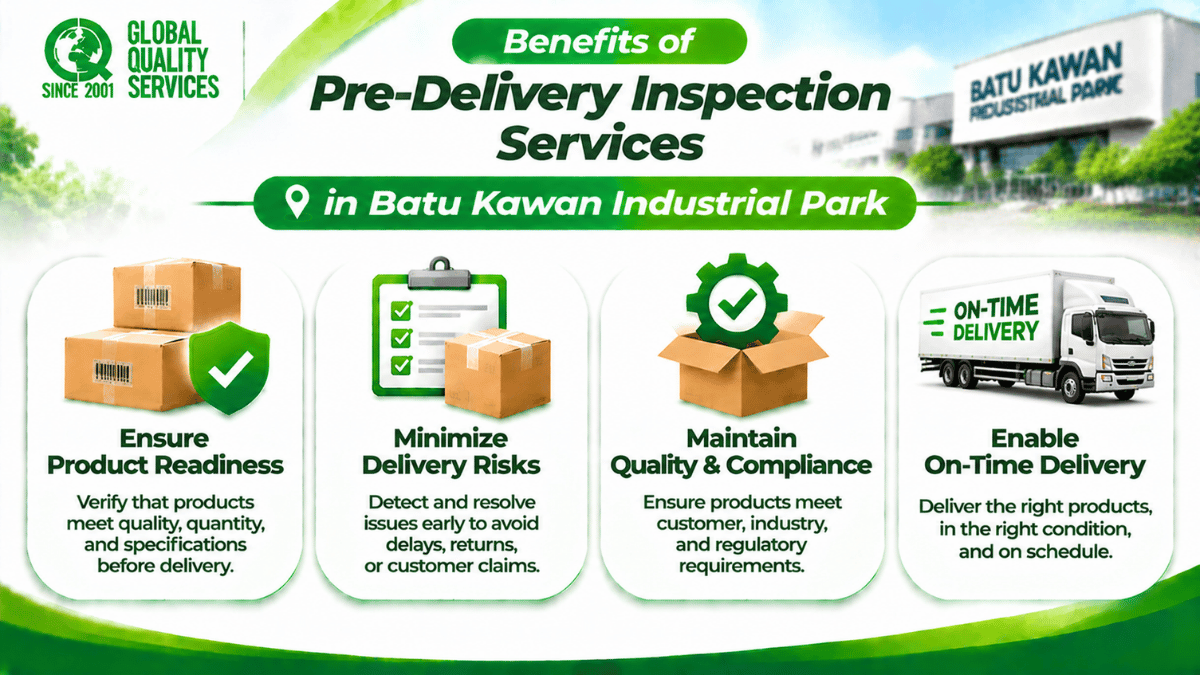
Pre-Delivery Inspection helps equipment buyers confirm that machinery and industrial systems meet the agreed requirements before accepting delivery. It provides an opportunity to identify technical discrepancies, incomplete components, and documentation gaps while the supplier can still address them.
Avoid Costly Equipment Rework
Identifying incorrect components, assembly defects, or configuration differences before dispatch can prevent avoidable rework after equipment reaches the buyer’s facility. This is particularly important for customized machinery and automated production systems.
Confirm Equipment Matches the Purchase Order
PDI compares the finished equipment with the approved specifications, drawings, and bill of materials. It helps identify differences in motor ratings, installed modules, control systems, dimensions, and supplied options before handover.
Reduce Installation and Startup Delays
Missing mounting hardware, incorrect connectors, incomplete accessories, and unavailable technical documents can delay equipment installation. Checking these items before delivery helps buyers identify outstanding requirements in advance.
Obtain Documented Evidence of Equipment Condition
An independent inspection report records the condition of the inspected equipment, test observations, and identified nonconformities. Procurement and engineering teams can use this information when discussing acceptance and corrective actions with suppliers.
Improve Supplier Delivery Accountability
A defined inspection checklist gives buyers and suppliers a common basis for evaluating completed equipment. Documented findings help clarify which requirements have been met and which issues remain open before delivery approval.
Our Pre-Delivery Inspection Process
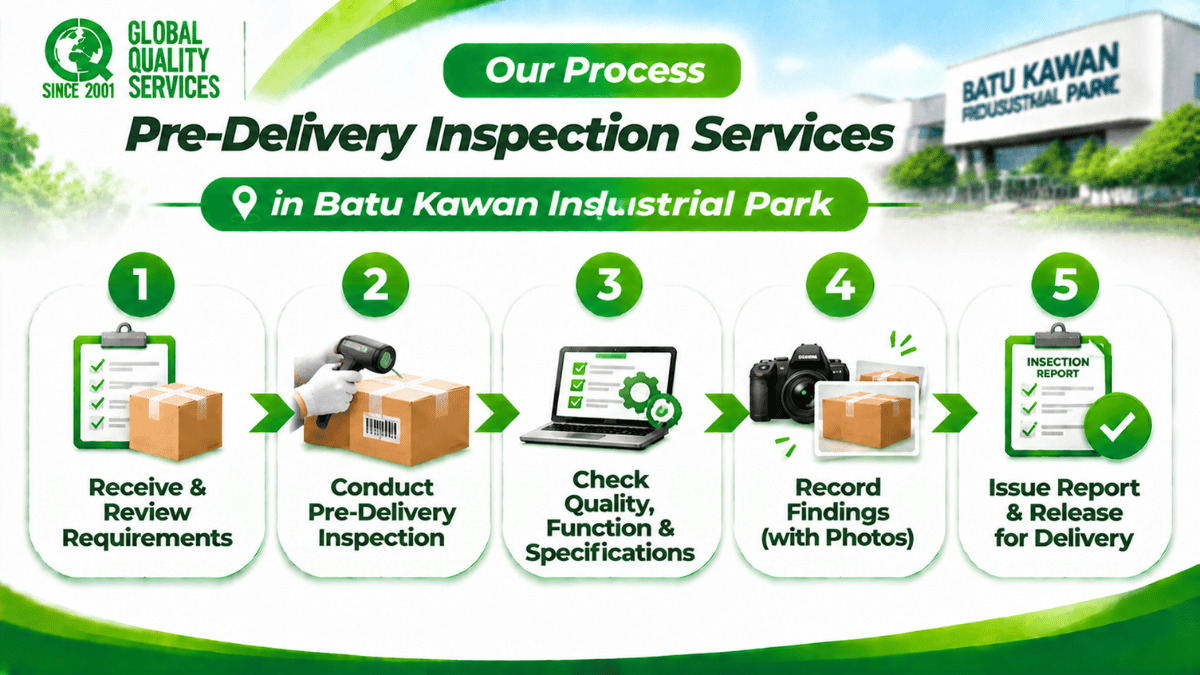
Global Quality Services follows a requirement-based inspection process for machinery, automation systems, and other industrial products. Each stage is planned around the equipment type, supplier readiness, and the buyer’s acceptance criteria.
1. Review of Technical Specifications
We begin by reviewing the purchase order, approved drawings, equipment specifications, bill of materials, and relevant technical documents. The review identifies the components, dimensions, functions, and documentation that need verification.
2. Preparation of the Inspection Checklist
The inspection checklist is developed around the agreed acceptance requirements. It may include mechanical assembly, electrical configuration, control systems, accessories, operating functions, and equipment identification. Any special measurements or functional tests are identified before the inspection.
3. Supplier Coordination and Equipment Readiness
The inspection schedule is coordinated with the supplier. The equipment should be assembled and available for examination, with suitable power, utilities, operating conditions, and technical personnel arranged where functional testing is required.
4. Physical Inspection and Configuration Verification
Inspectors examine the equipment’s external condition, assembly, identification, installed components, and supplied accessories. Selected measurements and configuration checks are compared with the approved technical documents.
5. Functional Testing and Test Observation
Where included in the agreed scope, inspectors witness or conduct specified functional checks. These may include startup, control-panel response, operating sequences, movement, switching, and selected safety-related functions. Test results are recorded against the defined acceptance criteria.
6. Recording and Classification of Findings
Any observed deviation is documented with a description of the issue and relevant supporting evidence. Findings may include incorrect components, physical defects, incomplete accessories, unsuccessful functional checks, or missing handover records.
7. Inspection Reporting and Reinspection
A structured inspection report summarizes the inspected equipment, scope, observations, and nonconformities. The buyer can use the report to decide on acceptance, corrective action, or further testing. A follow-up inspection can be arranged to verify corrections where required.
Why Independent PDI Matters for Equipment Buyers
Equipment purchases often involve substantial capital expenditure and installation planning. Accepting a machine with an incorrect configuration or incomplete components can affect production schedules and create additional costs after delivery.
An independent inspection provides a separate record of the equipment’s condition against the agreed requirements. It also helps buyers distinguish between completed work, outstanding supplier obligations, and items requiring further testing.
Global Quality Services provides third-party inspection services for manufacturers, equipment buyers, OEMs, and international procurement teams. The inspection scope is established around the product and its intended use, with findings documented for buyer review.
PDI does not replace commissioning, statutory inspection, product certification, or specialist engineering approval.
Industrial Locations Covered Around Batu Kawan
Inspection services can be arranged at manufacturing facilities and supplier premises across Batu Kawan and nearby industrial locations, subject to access and scheduling.
- Batu Kawan Industrial Park: Manufacturing facilities involved in machinery, electronics, semiconductor equipment, and medical technology.
- Batu Kawan Industrial Park 3: Industrial expansion area intended for advanced manufacturing and technology-related investment.
- Bandar Cassia: Industrial and commercial development supporting the wider Batu Kawan business community.
- Penang Science Park: Industrial and technology-related facilities in the wider Seberang Perai region.
- Bukit Minyak Industrial Park: Manufacturing and engineering businesses involved in industrial production and supply chains.
- Valdor Industrial Area: Industrial premises and supporting manufacturing operations in Seberang Perai Selatan.
How Global Quality Services Conducts PDI
Global Quality Services bases each inspection on the equipment’s purchase requirements and the buyer’s acceptance criteria.
Defining the Inspection Criteria
The buyer’s purchase order, technical drawings, BOM, specifications, and test requirements are reviewed to identify the characteristics that need verification.
Supplier Readiness and Test Arrangements
The inspection date is coordinated with the supplier. Equipment availability, power supply, operating conditions, test instruments, and technical personnel are considered before the visit.
Physical and Functional Verification
The inspector examines the equipment configuration, assembly, visible condition, accessories, and supporting records. Agreed functional checks are performed or witnessed where appropriate facilities are available.
Nonconformity Recording
Any deviation from the agreed requirements is documented with relevant details. Photographs, measurements, and test observations may be included where applicable and permitted.
Inspection Report
The final report presents the inspection scope, observations, identified discrepancies, and available test results. The buyer can use it to decide whether to accept the equipment, request rectification, or arrange further verification.
Frequently Asked Questions
1. Can PDI be performed on a machine that has already passed FAT?
Yes. PDI can be arranged after FAT to verify the final equipment configuration, physical condition, accessories, identification, and handover documentation before delivery.
2. Can you inspect customized machinery built to buyer specifications?
Yes. Customized equipment can be inspected against approved drawings, technical specifications, BOMs, and contractual acceptance criteria. The buyer should provide the latest approved documentation before the inspection.
3. Can you witness a machine’s operating cycle during PDI?
Yes. Agreed operating cycles and functional demonstrations can be included when the equipment is ready and the supplier provides the required operating conditions. Complex performance testing should have a separate test procedure and acceptance limits.
4. Does PDI include equipment installation and commissioning?
No. PDI verifies the equipment before handover. Installation, site integration, commissioning, and production-line qualification are separate activities unless separately agreed.
5. Can the buyer request a reinspection after defects are corrected?
Yes. A reinspection can be arranged to verify previously reported discrepancies after the supplier completes the agreed corrective actions.