
Products manufactured for export must meet the buyer’s specifications before they leave the supplier’s facility. Third-party pre-shipment inspection in Pasir Gudang, Malaysia, provides an independent assessment of finished goods, industrial components, product quality, quantity, packaging and shipping details before dispatch.
Pasir Gudang is an established industrial centre in Johor, with activities spanning petrochemicals, chemicals, oleochemicals, engineering, manufacturing and logistics. Its industrial facilities are supported by Johor Port, which handles containerized cargo, general cargo, dry bulk and liquid bulk shipments. This mix of industries creates different inspection requirements for companies supplying finished products, machinery parts, packaged industrial materials and export consignments.
Global Quality Services provides independent third-party pre-shipment inspection services for buyers, importers, exporters and manufacturers. Inspections are conducted against the purchase order, approved specifications, samples, drawings and acceptance criteria provided by the client. The findings help buyers review product conformity before authorizing shipment.
What Is Third-Party Pre-Shipment Inspection?
Third-party pre-shipment inspection is an independent examination of finished goods before they are dispatched to the buyer. It is generally arranged when production is substantially complete and the products are available for inspection.
The purpose is to identify discrepancies between the supplied goods and the agreed purchase requirements. Depending on the product, the inspection can cover workmanship, dimensions, quantity, functionality, packaging, labeling and documentation.
For businesses in Pasir Gudang, this can be relevant when sourcing industrial components, engineering products, packaged chemicals, manufactured goods or equipment from local suppliers. An independent inspection report provides a record of the condition and conformity of the goods examined at the time of inspection.
What Do Our Pre-Shipment Inspection Services Cover?
The inspection scope depends on the product, order specifications and buyer’s acceptance requirements. The following checks can be included in a pre-shipment inspection.
Product Specifications and Material Verification
The inspector compares the supplied products with the approved specifications, technical drawings, samples or purchase order. Checks may cover product dimensions, material type, model numbers, construction, finish, thickness, color and other measurable characteristics.
For industrial components, the inspection may include checking part numbers, visible material markings, dimensions and manufacturing details. Where material composition or chemical properties require laboratory analysis, separate testing arrangements are necessary.
Workmanship and Physical Condition
Products are examined for visible defects that may affect their appearance, assembly or intended use. These can include cracks, dents, scratches, corrosion, poor finishing, loose fittings, damaged edges and inconsistent workmanship.
For fabricated metal products and engineering components, the inspection can focus on visible weld quality, surface finishing, assembly condition and dimensional conformity within the agreed scope. Non-destructive testing and specialist welding examinations are separate activities unless specifically arranged.
Quantity and Product Identification
Quantity verification helps establish whether the shipment contains the agreed number of products. The inspector can check carton counts, individual units, bundles, product variations, batch references and model identification against the purchase order and packing list.
For orders containing multiple product lines, each category can be checked separately to identify shortages, excess quantities or incorrect product combinations.
Functional and Operational Checks
Selected products can be operated or tested to confirm that their basic functions work as expected. Depending on the product, this may include checking switches, controls, moving parts, indicators, electrical connections or other accessible functions.
Industrial equipment and mechanical components may require specific operating procedures. The buyer should provide the required test parameters and acceptance criteria before the inspection. Detailed load testing, pressure testing, performance validation and laboratory testing are not automatically included in a standard pre-shipment inspection.
Packaging and Export Protection
Packaging is checked to determine whether it matches the buyer’s instructions and provides suitable protection for the intended transportation conditions. Inspection can cover cartons, wrapping, cushioning, dividers, moisture protection, protective covers and pallet arrangements.
For metal components, machinery parts and industrial products, particular attention may be given to exposed surfaces, corrosion protection, edge protection and securing arrangements. Damaged cartons, inadequate cushioning or exposed products can be recorded before dispatch.
Labels, Batch Details and Shipping Marks
Product and carton identification is checked against the approved labeling requirements. Depending on the goods, this may include product descriptions, model numbers, batch numbers, manufacturing references, quantities, country-of-origin details and handling instructions.
For industrial and chemical-related products, buyers should provide the applicable labeling and transport requirements. A visual inspection does not establish regulatory compliance or replace specialist dangerous-goods classification and documentation checks.
Documentation and Shipment Records
The inspector can review the documents supplied for consistency with the goods examined. These may include packing lists, product specifications, technical datasheets, operating manuals, warranty documents, test reports and other agreed records.
For packaged industrial materials, batch identification and product traceability documents may also be checked. The inspection records the documents reviewed but does not independently validate every technical statement or replace customs and regulatory procedures.
Pre-Shipment Inspection for Pasir Gudang’s Industrial and Export Sectors
Pasir Gudang’s industrial profile makes it important to consider the product and its handling requirements when preparing an inspection checklist. The checks for fabricated metal components, packaged chemical products and general manufactured goods are not interchangeable.
Petrochemical and Oleochemical Products
Businesses in the petrochemical and oleochemical supply chain may ship packaged products, drums, containers, industrial components and related materials. For packaged goods, inspection can cover product identification, packaging condition, visible leakage, batch markings, labeling and quantity.
This scope should not be confused with bulk liquid cargo inspection. Tank gauging, cargo sampling, laboratory analysis, quantity determination, contamination testing and chemical certification require specialist procedures and qualified service providers.
Metal Fabrication and Engineering Components
Fabricated products, machinery parts, structural components and industrial assemblies may require dimensional checks, surface-condition assessment, weld appearance checks and verification against approved drawings.
Inspection can also identify missing fittings, incorrect components, visible deformation and packaging concerns that could affect the condition of goods during transportation.
Industrial Machinery and Equipment
Machinery and equipment intended for export may need checks covering model identification, configuration, assembly, accessories, electrical panels, visible mechanical condition and selected functions.
Where the buyer has specified particular operating requirements, the relevant checks can be included in the inspection plan. Factory Acceptance Testing (FAT), commissioning and specialist engineering validation remain separate activities.
Food Processing and Packaged Goods
Manufacturers and suppliers handling packaged food products may require verification of packaging integrity, product identification, batch details, quantities, expiry or date markings where applicable, and carton condition.
The inspection can record visible packaging and labeling discrepancies. It does not replace food-safety audits, laboratory analysis, regulatory inspection or official export certification.
General Manufacturing and Export Products
For general manufactured goods, inspection can cover product appearance, dimensions, workmanship, quantity, accessories, labeling and packing. The checklist is adapted to the product category rather than applying the same inspection points to every shipment.
Benefits of Third-Party Pre-Shipment Inspection in Pasir Gudang
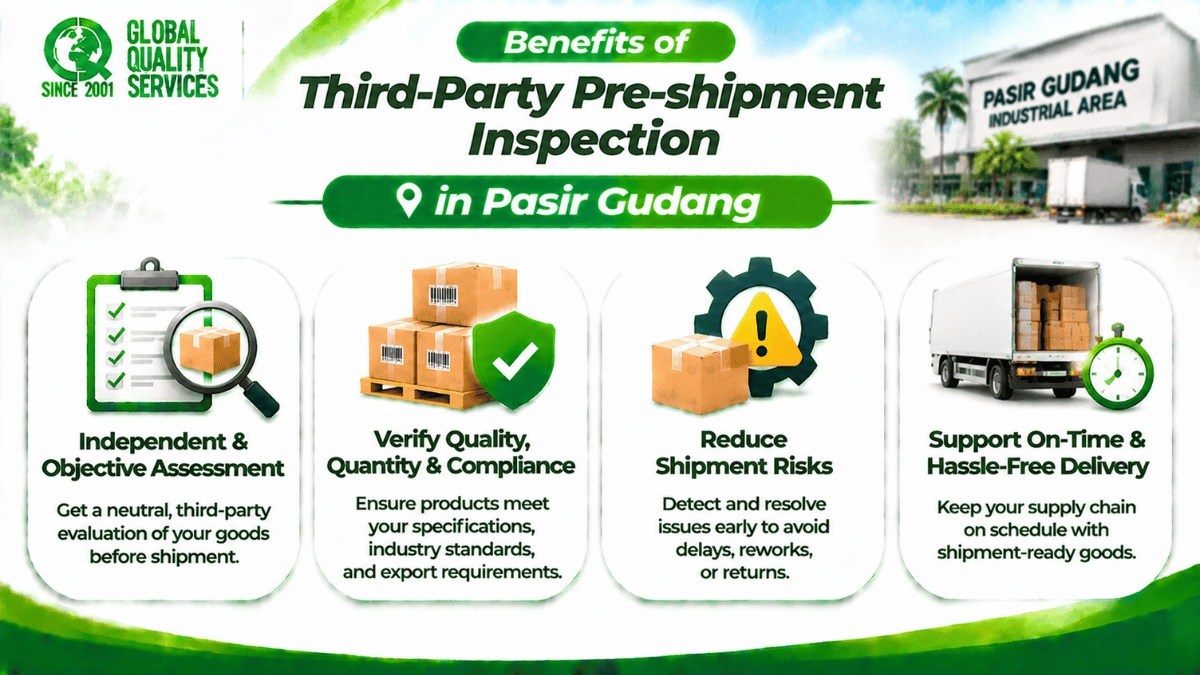
Independent inspection provides buyers with documented information about the goods before shipment. It can help identify issues while products are still available at the supplier’s facility.
Identify Product and Specification Deviations
Inspection can reveal incorrect dimensions, material differences, missing components, poor workmanship and other deviations from the approved requirements. Buyers can review these findings before the shipment is released.
Reduce Export Packing Problems
Checking packaging, protective materials, carton condition and shipping marks helps identify issues that could complicate transportation or receiving. This is particularly relevant for industrial products that need corrosion protection or additional physical protection.
Maintain Batch and Quantity Accuracy
Quantity checks and product identification help buyers confirm that the inspected goods correspond with the order and packing records. This can reduce avoidable discrepancies between supplier dispatch records and the buyer’s receiving documents.
Establish an Independent Inspection Record
The report provides a record of the inspection scope, sample details, observed defects and supporting photographs. It can be referred to when discussing product quality or shipment discrepancies with the supplier.
Support Better Supplier Quality Control
Consistent inspection criteria across repeat orders can help buyers monitor recurring issues and communicate quality expectations more clearly to suppliers.
AQL Sampling for Pre-Shipment Inspection
Acceptance Quality Limit (AQL) sampling is commonly used to assess a defined sample from a production lot rather than examine every individual product. It provides a structured approach to classifying defects and determining whether a lot meets the buyer’s agreed acceptance criteria.
The buyer and supplier should establish the sampling requirements before inspection. These typically include the inspection level, lot size, sample size, AQL values, defect classifications and acceptance and rejection numbers.
ISO 2859-1:2026 is the current third edition of the international standard for AQL-indexed lot-by-lot sampling by attributes. It was published in January 2026 and replaced the 1999 edition and its amendments. The updated edition includes skip-lot sampling procedures and revised guidance on sampling strategies.
Defects are commonly classified as critical, major or minor according to their nature and the agreed product requirements. The classification should be defined before inspection so that findings are assessed consistently.
AQL sampling is not a guarantee that every defective product will be identified. It also does not mean that the stated AQL is the permitted percentage of defects in every accepted shipment. Buyers should agree on the sampling plan and acceptance criteria according to the product’s risk and intended use.
Our Third-Party Pre-Shipment Inspection Process
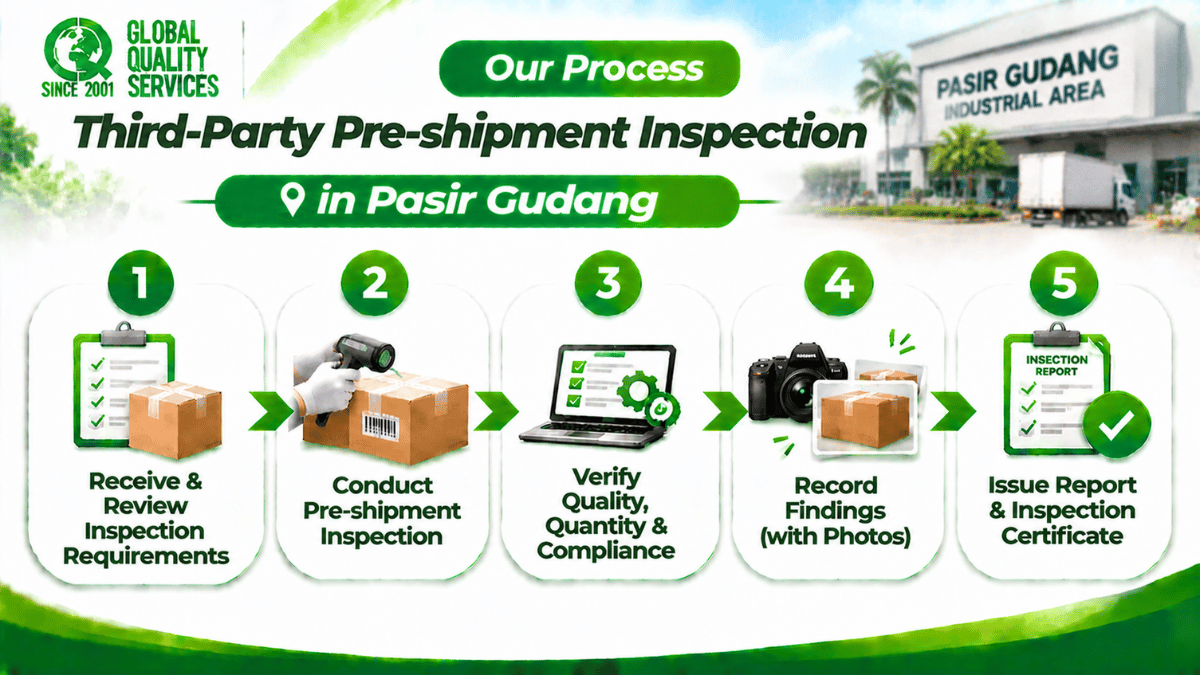
Global Quality Services follows an inspection process based on the product category, buyer’s requirements and agreed inspection criteria.
1. Review of Order and Technical Requirements
The inspection begins with a review of the purchase order, approved samples, drawings, technical specifications, packaging instructions and other relevant documents. The required checks and acceptance criteria are identified before the inspection is scheduled.
2. Inspection Planning and Sampling
An inspection checklist is prepared for the product and shipment. Where AQL sampling is required, the sampling standard, inspection level, sample size and defect classifications are agreed with the buyer.
3. Confirmation of Product Readiness
The supplier confirms that the goods are available at the agreed inspection location. Production completion, packing status, access arrangements and availability of supporting documents are checked before the visit.
4. Physical Inspection and Product Testing
The inspector examines the selected samples for product specifications, workmanship, quantity, identification and visible condition. Functional checks and measurements are carried out where they are included in the agreed scope.
5. Packaging and Documentation Checks
The inspection covers packaging materials, carton condition, product labels, shipping marks and accessories. Relevant shipment records are reviewed against the goods examined.
6. Defect Classification and Recording
Observed defects and discrepancies are documented according to the agreed acceptance criteria. Photographs and relevant product references are included to make the findings clear and traceable.
7. Inspection Report and Follow-Up
The report presents the inspection scope, sampling details, observations, defect records and supporting evidence. The buyer can review the findings and decide whether to release the shipment, request corrective action or arrange another inspection.
Areas Covered Around Pasir Gudang
Third-party pre-shipment inspection assignments can be arranged in Pasir Gudang and nearby industrial and logistics locations, subject to scheduling and site access.
- Pasir Gudang Industrial Estate: Manufacturing, engineering, petrochemical and industrial facilities.
- Tanjung Langsat Industrial Complex: Heavy industrial, oil and gas-related, marine and manufacturing operations.
- Johor Port vicinity: Exporters, cargo-handling facilities and businesses involved in port-related logistics, subject to access permissions.
- Kota Masai: Industrial and commercial premises serving the wider Pasir Gudang area.
- Masai: Manufacturing, warehousing and distribution facilities.
- Plentong: Industrial and commercial businesses involved in production and supply-chain activities.
Why Choose Global Quality Services for Pre-Shipment Inspection in Pasir Gudang?
Global Quality Services provides independent third-party inspection services for buyers, manufacturers, exporters, importers and trading companies. The inspection scope is based on the product specifications, purchase requirements and acceptance criteria agreed with the client.
Assignments can cover manufactured products, fabricated components, machinery parts, packaged industrial goods and other export consignments. Product-specific checklists help ensure that the inspection addresses the characteristics that matter for the shipment.
Global Quality Services records inspection observations objectively and provides a report for the buyer’s review. The inspection does not constitute product certification, customs clearance, statutory approval, chemical analysis or a guarantee of future product performance.
Frequently Asked Questions
1. When should a pre-shipment inspection be arranged?
It is generally arranged when production is substantially complete and the goods are ready for inspection before dispatch. Buyers often use the guideline that around 80% of the order should be completed and 80% packed or ready for packing. The actual inspection stage should follow the purchase agreement and the buyer’s instructions.
2. Can third-party inspection cover petrochemical products in Pasir Gudang?
Inspection can cover packaged petrochemical-related products and associated industrial goods, including visible packaging condition, product identification, batch markings and quantities. Bulk cargo measurement, chemical composition analysis, tank inspection and laboratory testing require separate specialist arrangements.
3. Does pre-shipment inspection include AQL sampling?
Yes. AQL sampling can be included when requested by the buyer. The inspection level, sampling plan, AQL values, defect classifications and acceptance criteria should be agreed before the inspection takes place.
4. Can machinery and fabricated components be inspected before export?
Yes. The scope can include identification, dimensions, visible workmanship, assembly condition, accessories, packaging and selected functional checks. Detailed engineering tests, load testing and FAT are separate activities unless specifically included.
5. Does a pre-shipment inspection report confirm that a shipment is ready for customs clearance?
No. The report records the results of the agreed product and shipment checks. Customs declarations, export permits, dangerous-goods documentation, statutory approvals and other regulatory requirements remain separate responsibilities.