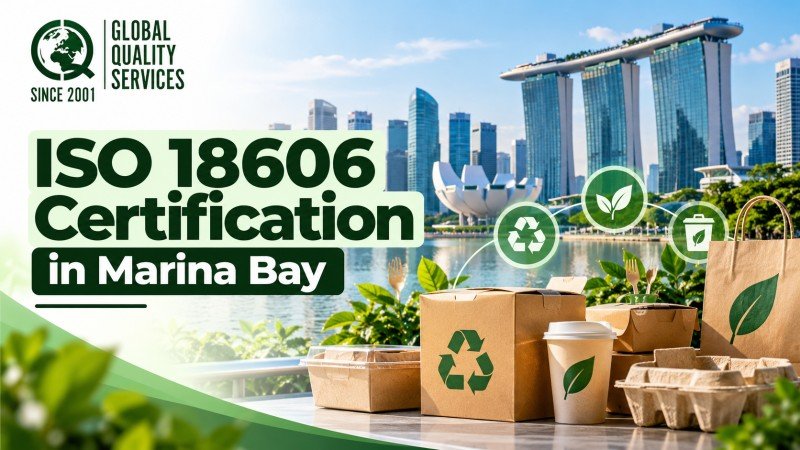
ISO 18606 Certification in Marina Bay helps businesses assess whether their packaging meets organic recycling requirements. The standard evaluates biodegradation, disintegration, effects on biological treatment processes, and compost quality. Singapore’s National Environment Agency estimates that 186,000 parcels were delivered daily in Singapore in 2023, highlighting the importance of managing packaging waste responsibly.
Businesses in Marina Bay can review packaging materials and support credible environmental claims. Hiring an experienced consultant helps identify compliance gaps, coordinate laboratory testing, organise documentation, and prepare for the relevant assessment or certification process.
What is ISO 18606 Certification
ISO 18606 is an international standard titled Packaging and the environment: Organic recycling. It sets requirements for assessing whether used packaging is suitable for organic recycling. The standard examines the packaging as a whole, rather than judging it by its main material alone.
For example, a package may contain paper, a coating, printing inks, adhesives, or other components. Each component must meet the applicable requirements unless it can be easily separated before disposal. The assessment also considers whether the packaging breaks down appropriately and negatively affects neither the biological treatment process nor the quality of the resulting compost.
One important distinction: ISO 18606 is a standard, not a certification body. The available certification or conformity assessment route depends on the scheme and provider your business chooses.
Why Does ISO 18606 Matter for Businesses in Marina Bay?
Marina Bay is a major commercial district with offices, hospitality businesses, retailers, and corporate operations. Companies that introduce packaged goods into Singapore may need to consider packaging design, environmental claims, and applicable local requirements.
ISO 18606 can help businesses assess packaging intended for organic recycling. It also encourages companies to look beyond labels such as “biodegradable” or “compostable” and check whether their materials meet the relevant technical requirements.
Businesses should also distinguish organic recycling from conventional material recycling. A package designed for composting does not automatically qualify for paper, plastic, or other material recycling streams. Selecting the correct recovery route helps companies communicate more accurately with customers, suppliers, and waste management partners.
Key Requirements of ISO 18606 Certification
Understanding the key requirements of ISO 18606 helps businesses evaluate packaging suitability for organic recycling, maintain relevant evidence, and make informed material choices.
1. Packaging Material Assessment
Businesses need accurate information about every packaging component. This includes the base material, coatings, adhesives, inks, labels, and other elements that could affect organic recycling. Supplier specifications and material declarations help establish what the packaging contains.
2. Biodegradation Testing
The assessment considers whether packaging materials can biodegrade under the relevant biological treatment conditions. Businesses should use suitable test evidence rather than rely solely on supplier claims or general descriptions of a material.
3. Disintegration Assessment
Packaging must disintegrate appropriately during the biological waste treatment process. The assessment examines how the material breaks down under the relevant conditions and whether remaining fragments affect the treatment outcome.
4. Biological Process Compatibility
Packaging must not adversely affect the biological process used for organic recycling. Businesses need to consider how their packaging behaves during treatment, not just whether the material eventually breaks down.
5. Compost Quality Assessment
The standard considers potential negative effects on the resulting compost, including concerns involving regulated metals and other substances hazardous to the environment. Businesses should review relevant laboratory evidence for the packaging components.
Which Businesses Can Benefit from ISO 18606 Assessment?
ISO 18606 may be relevant to businesses that manufacture, specify, import, or sell packaging intended for organic recycling.
- Packaging manufacturers: Assess materials and components before marketing packaging as suitable for organic recycling.
- Food and consumer goods brands: Review packaging choices and support substantiated environmental claims.
- Retailers and e-commerce businesses: Work with suppliers to evaluate packaging used for deliveries and product presentation.
- Packaging material suppliers: Maintain clear technical information and test evidence for customers.
- Hospitality businesses: Assess relevant takeaway containers and other packaging when they intend to use organic recycling routes.
- Importers and distributors: Check packaging documentation and confirm that claims align with the intended recovery process.
The suitability of ISO 18606 depends on the packaging type and intended treatment route. Businesses should confirm that the standard matches their product and market requirements before beginning an assessment.
Steps to Prepare for ISO 18606 Assessment in Marina Bay
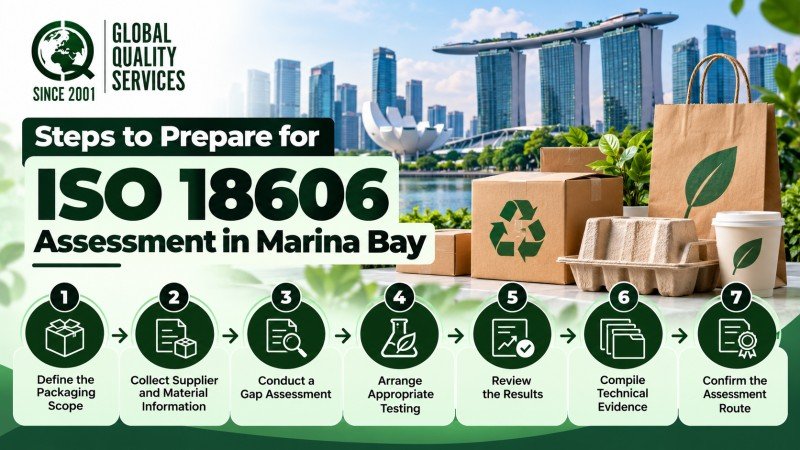
Preparing for an ISO 18606 assessment requires clear documentation, suitable testing, and careful planning. Follow these steps to review packaging materials and address potential gaps.
Step 1: Define the Packaging Scope
Identify the packaging products you want to assess. Record their intended use, structure, materials, and components. A clear scope helps your team identify which specifications and test results the assessment requires.
Step 2: Collect Supplier and Material Information
Gather technical data sheets, material declarations, and specifications for the packaging and its components. Contact suppliers when information about coatings, adhesives, inks, or additives is missing.
Step 3: Conduct a Gap Assessment
Compare the available documentation and existing test evidence against the relevant ISO 18606 requirements. Identify missing information, potential material concerns, and areas that need further testing or technical review.
Step 4: Arrange Appropriate Testing
Work with a suitable laboratory or assessment provider to determine which tests the packaging requires. The testing plan should reflect the material composition, packaging design, and applicable requirements.
Step 5: Review the Results
Examine laboratory reports and technical findings to understand whether the packaging meets the relevant criteria. Investigate any failures or unclear results before making environmental claims or moving to the next stage.
Step 6: Compile Technical Evidence
Organise packaging specifications, supplier declarations, test reports, and assessment records. Keep the documents traceable to the relevant product and packaging version so your team can retrieve the evidence when needed.
Step 7: Confirm the Assessment Route
Discuss the results and next steps with the relevant conformity assessment provider. Confirm the scope, applicable scheme, required documentation, and whether the provider offers a certification outcome for your packaging.
Documents Required for ISO 18606 Assessment
The documents depend on the packaging design, materials, and assessment route. Businesses commonly prepare:
- Packaging specifications and technical drawings
- Material composition and component details
- Supplier declarations and technical data sheets
- Information about inks, coatings, adhesives, and additives
- Relevant laboratory test reports
- Records supporting environmental or compostability claims
- Packaging samples, where required
- Product identification and version control records
Keep these records current whenever you change a supplier, material, coating, or packaging design. A change may affect the relevance of existing test evidence, so review it with your laboratory or assessment provider before reusing previous results.
Common Challenges During ISO 18606 Assessment
Incomplete supplier information: Suppliers may not disclose the full composition of coatings, inks, or adhesives. Request detailed technical documentation early.
- Mixed-material packaging: Multiple components can complicate assessment. Identify each component and check whether it must meet the requirements separately or can be physically separated before disposal.
- Unsupported environmental claims: Terms such as “eco-friendly” or “compostable” can mislead customers if the business lacks appropriate evidence. Match every claim to the available test results and intended treatment conditions.
- Changes to packaging design: Even a small change can affect material performance. Maintain version records and review whether previous test reports remain relevant.
- Confusion about disposal conditions: Packaging suitable for industrial organic recycling is not automatically suitable for home composting or disposal in the environment. Communicate the intended recovery route clearly.
Why Choose Global Quality Services for ISO 18606 Consulting in Marina Bay?
Global Quality Services helps businesses understand packaging assessment requirements and prepare the technical information they need. Our consultants can review your packaging documentation, identify information gaps, coordinate with relevant testing or assessment providers, and help organise the evidence for review.
Whether you manufacture packaging, import products, or manage a consumer brand in Marina Bay, a structured approach can help your team make informed packaging decisions. Contact Global Quality Services to discuss your packaging scope and the most suitable assessment route for your business.
FAQ’s
1. Can businesses use ISO 18606 assessment results when selling packaging in different countries?
Possibly, but acceptance depends on local regulations, customer requirements, and the assessment scheme. Confirm whether each target market recognises your existing test evidence before relying on it.
2. Does ISO 18606 assess the safety of the product inside the packaging?
No. ISO 18606 focuses on packaging suitability for organic recycling, not the safety of the packaged product. Separate food contact or product safety requirements may apply.
3. Can packaging with detachable components qualify for organic recycling under ISO 18606?
Yes, components that can be easily separated before disposal may be assessed individually. The business must still confirm that each relevant component meets the applicable requirements.
4. What should a business do if a laboratory report contains inconclusive results?
Ask the laboratory or assessment provider to explain the uncertainty, identify missing evidence, and recommend further testing if needed. Avoid making unsupported environmental claims until the findings are resolved.
5. How should businesses maintain evidence after completing an ISO 18606 assessment?
Keep test reports, material specifications, supplier declarations, and packaging versions together. Review the records whenever suppliers, formulations, coatings, or designs change to determine whether reassessment is necessary.