Businesses in Tampines Regional Centre operate across retail, professional services, financial services, technology, and other commercial activities. Many depend on digital platforms, customer databases, cloud applications, and outsourced IT services to manage daily operations. When information is spread across employees, systems, and external providers, maintaining consistent security becomes a business management priority.
ISO 27001 Certification in Tampines Regional Centre helps organisations establish a formal Information Security Management System (ISMS) to identify risks, protect business information, and improve security practices. GQS Singapore provides ISO 27001 consultancy and certification readiness support to help businesses prepare for independent certification.
Whether you manage a growing company, a customer-facing business, or an established organisation with several departments, an ISMS can help bring information security responsibilities, policies, and controls into one coordinated framework.
What Is ISO 27001 Certification?
ISO/IEC 27001 certification is an international standard that specifies requirements for an Information Security Management System. It helps organisations manage risks affecting the confidentiality, integrity, and availability of information.
For a Tampines business, the scope might cover a particular service, office, business function, or wider operation. The key consideration is whether the scope accurately reflects the activities and information security risks the organisation must manage.
Why Do Tampines Businesses Need ISO 27001 Certification?
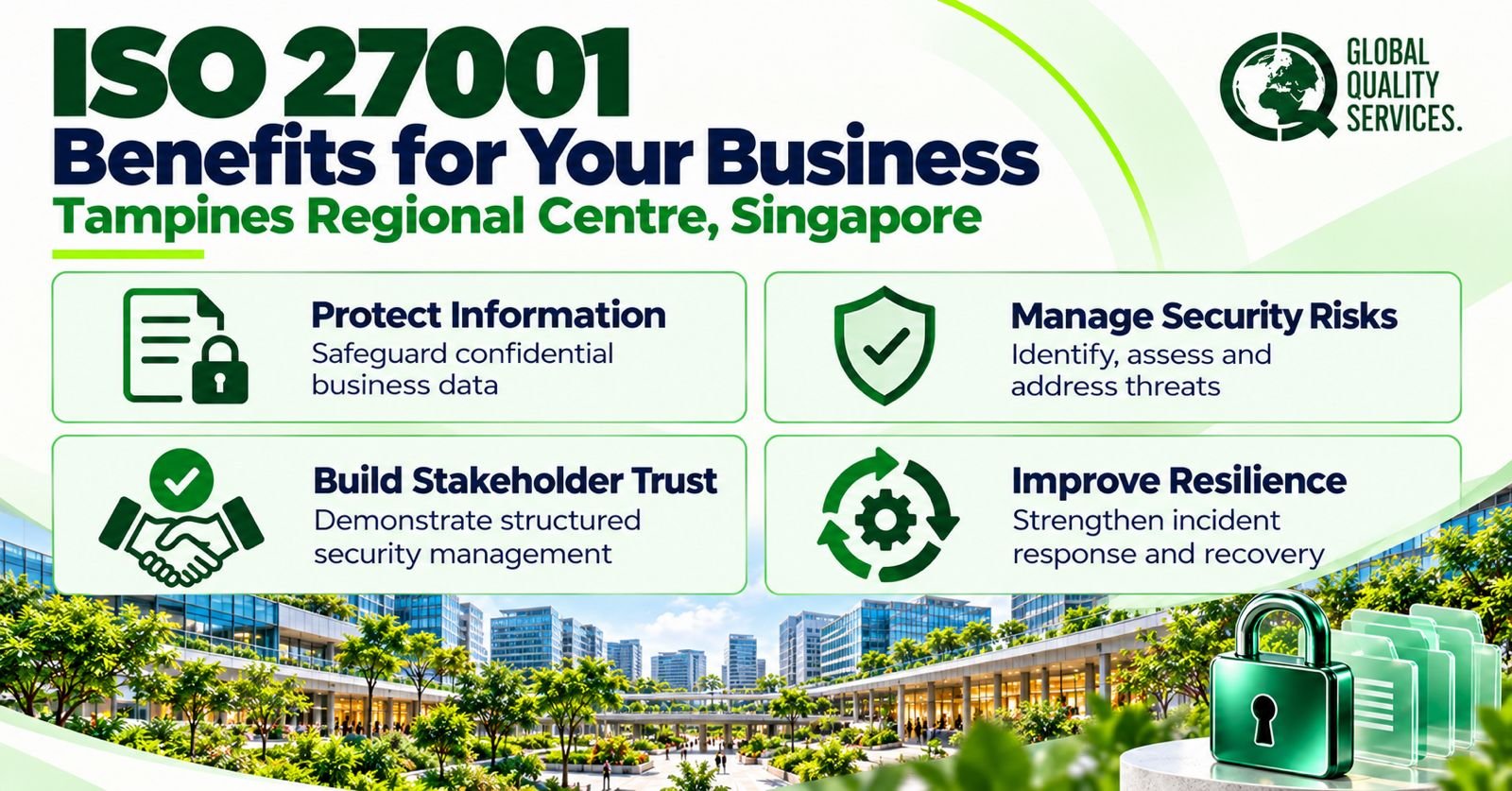
Information security is not limited to preventing cyberattacks. It also involves controlling access to business records, ensuring information remains accurate, and making sure essential data is available when needed.
For businesses serving customers and partners across Singapore, inconsistent information handling can disrupt operations, create contractual issues, and erode trust. ISO 27001 certification provides a structured way to identify these weaknesses and address them through risk-based controls.
An effective ISMS can help your organisation:
- Identify information security risks before they cause significant disruption.
- Protect customer records, commercial documents, employee information, and internal business data.
- Establish clear responsibilities for employees and external service providers.
- Demonstrate a structured approach to information security during customer and supplier evaluations.
- Regularly review security controls as business operations and technology change.
The value lies in maintaining a system that reflects your actual business risks, rather than relying on policies that exist only on paper.
ISO 27001 Certification for Tampines’ Commercial Environment
Tampines Regional Centre is recognised in Singapore’s planning framework as an important regional business node. The Urban Redevelopment Authority’s Master Plan 2025 identifies opportunities to rejuvenate the centre with more workplaces, commercial activity, and community facilities. This wider business environment makes reliable information management relevant to organisations serving customers, employees, and partners across the eastern region. Read the URA’s East Region plans.
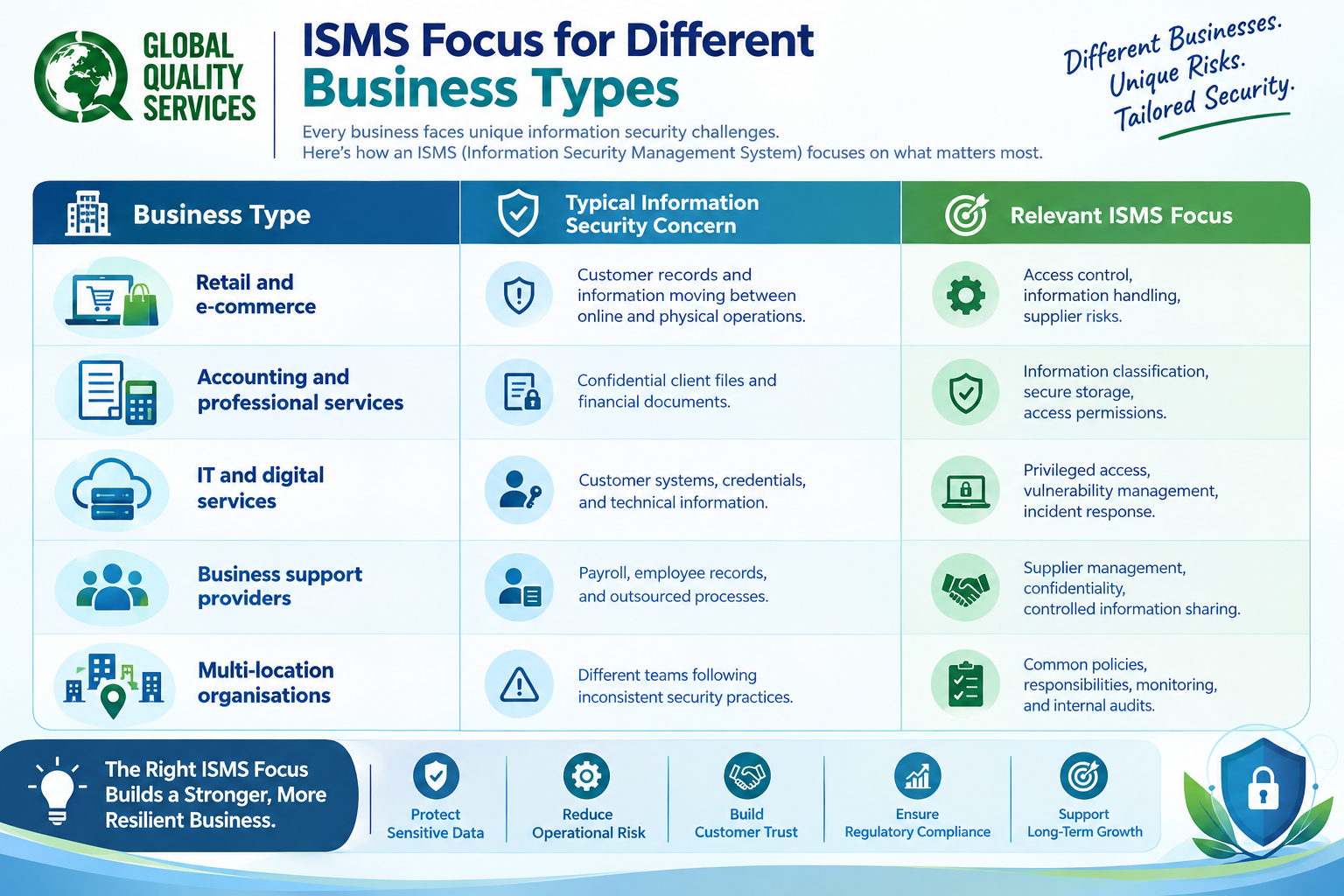
The controls selected for certification should depend on the organisation’s risk assessment, the information it handles, and the scope of its ISMS. Not every business needs the same technical measures.
Which ISO 27001 Standard Should Businesses Follow?
Organisations preparing for certification should use ISO/IEC 27001:2022, the standard’s current published edition. The previous 2013 edition has been withdrawn.
ISO also published Amendment 1:2024, Climate Action Changes, which applies to ISO/IEC 27001:2022. It requires organisations to determine whether climate change is relevant in their organisational context and to recognise that interested parties may have relevant climate-related requirements.
The amendment does not create a separate certification. Organisations should consider its applicability within their existing management system arrangements.
For the authoritative reference, consult the official ISO/IEC 27001 publication.
What Does an Organisation Need to Implement for ISO 27001?
ISO 27001 requires more than a set of cybersecurity tools. It establishes management system requirements that connect business objectives, risk assessment, security controls, employee responsibilities, and performance review.
Information Security Risk Assessment
The organisation needs a consistent method to identify and evaluate risks to its information. This includes understanding the potential consequences of unauthorised access, information loss, system disruption, and other relevant threats.
Risk Treatment and Control Selection
After assessing risks, the organisation determines how to treat them and selects suitable controls. The Statement of Applicability records the controls considered necessary, whether they are included or excluded, and their implementation status.
Policies and Documented Information
Relevant policies and procedures should explain how the organisation classifies, accesses, handles, and protects information. The documentation must reflect the organisation’s actual processes and support consistent implementation.
Employee Responsibilities and Awareness
Employees need to understand the security requirements relevant to their roles. Depending on the organisation’s risks, this may include recognising suspicious messages, handling confidential documents correctly, protecting credentials, and reporting security incidents.
Supplier and Technology Management
External IT providers, cloud platforms, software vendors, and other suppliers can introduce information security risks. The organisation should establish suitable arrangements to assess suppliers, control access, and manage information shared outside the business.
Internal Audit and Management Review
The ISMS must be evaluated at planned intervals. Internal audits and management reviews help determine whether the system meets applicable requirements, whether controls are effective, and what improvements are needed.
How Does ISO 27001 Certification Work in Tampines Regional Centre?
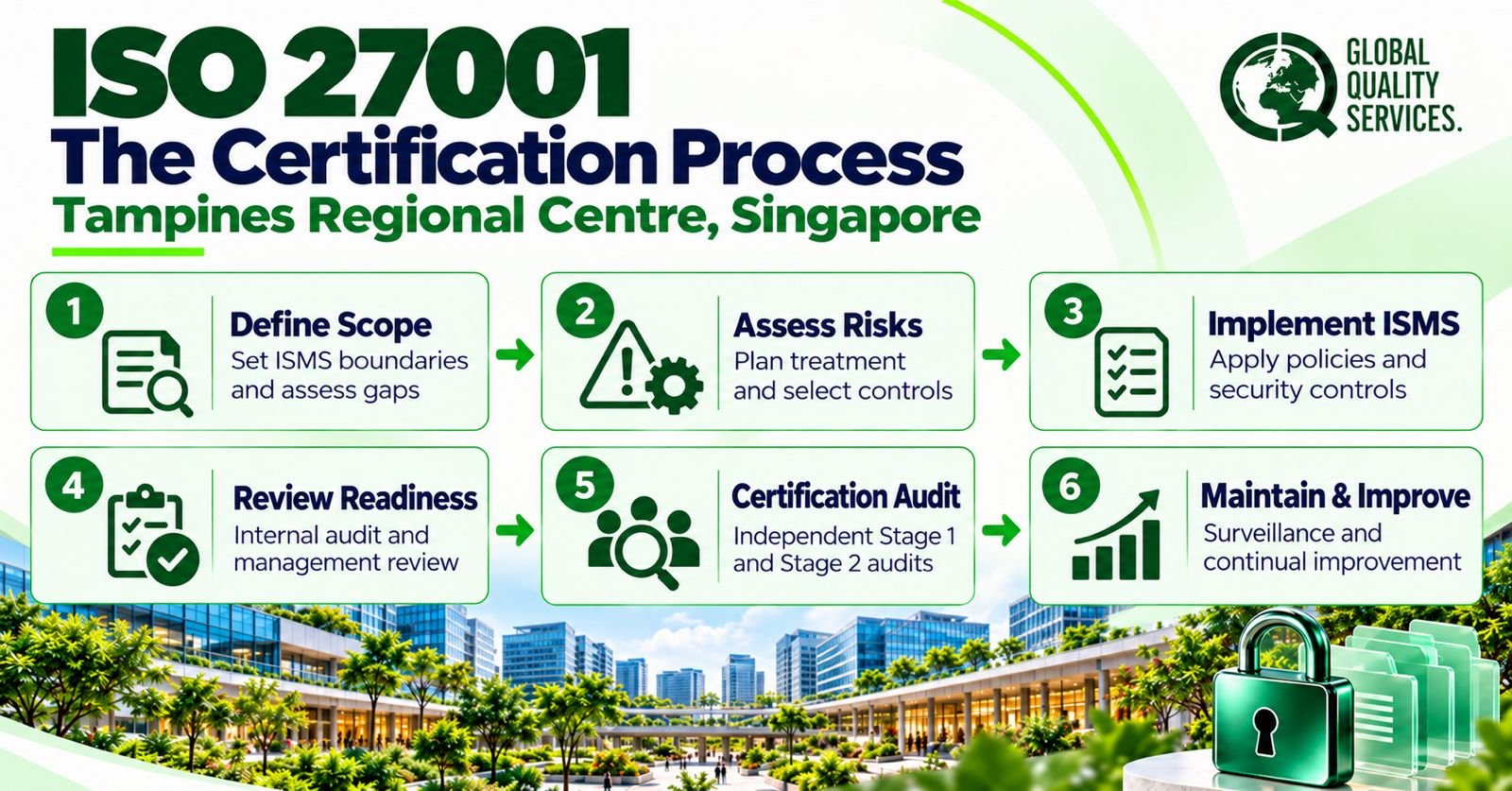
Base the preparation process on the organisation’s current practices, rather than starting with generic documentation. GQS Singapore can help identify gaps and establish a practical implementation plan.
1. Establish the Scope
Identify the business activities, locations, systems, services, and information assets to be included. The scope should be clear enough to determine which risks and controls the ISMS needs to address.
2. Review Existing Arrangements
A gap assessment compares existing policies, procedures, risk management practices, and security controls with the standard’s requirements. This helps identify missing processes and areas where existing measures need improvement.
3. Assess Risks and Plan Treatment
Evaluate relevant information security risks and determine which require treatment. Document the selected measures, responsibilities, and decisions within the ISMS.
4. Implement the Management System
Develop or improve the necessary policies, procedures, and controls. Employees should understand their responsibilities, and the organisation should retain appropriate evidence that the system is being followed.
5. Evaluate Readiness
Conduct an internal audit and management review, address identified nonconformities, and check whether the ISMS is operating as intended.
6. Undergo Independent Certification
The certification body generally conducts a Stage 1 audit to review Readiness and documented arrangements, followed by a Stage 2 audit to evaluate implementation and effectiveness. Any nonconformities must be addressed through the certification body’s process.
GQS Singapore provides consultancy and readiness support. The independent certification body conducts the certification audit and makes the certification decision.
How Long Does ISO 27001 Certification Take?
The timeline depends on the ISMS scope, the organisation’s existing security practices, and the effort required to close gaps. A business with established processes may need less preparation than one building its management system from scratch.
Internal staff availability, completion of risk assessments, implementation of controls, and resolution of audit findings can all affect the schedule. An initial gap assessment helps establish a realistic plan instead of relying on a generic timeline.
What Determines the Cost of ISO 27001 Certification in Tampines?
The cost depends on the organisation’s size, the complexity of its operations, the scope of certification, the maturity of existing controls, and the work required to implement the ISMS.
The budget may include consultancy, internal staff time, technology or security improvements, employee awareness activities, and external certification audit fees. These expenses should be considered separately because consultancy and independent certification are different services.
A well-defined scope and early gap identification can help the business plan resources more effectively.
How Global Quality Services Supports Your ISO 27001 Journey
Global Quality Services supports organisations preparing for ISO 27001 certification through consultancy and readiness activities tailored to their business operations.
With 26 years of experience, GQS helps organisations establish and improve management systems.
For organisations in Tampines Regional Centre, our approach can be tailored to the business model, the information being protected, and the intended certification scope. Contact GQS Singapore to discuss your requirements and plan your certification readiness activities.
Frequently Asked Questions
1. What should a business do with old customer records it no longer needs?
The organisation should establish retention and disposal rules that account for applicable legal, contractual, and business requirements. Securely dispose of or anonymise information that is no longer required, while keeping necessary records protected for the required period. These decisions should be documented and applied consistently.
2. Can a company include more than one office in a single ISO 27001 certification scope?
Yes, multiple offices may be included when they fall within the defined ISMS scope and are covered by the organisation’s management system. The organisation needs to account for the activities, information assets, risks, and controls at each location. The certification body determines the applicable audit arrangements based on the scope and relevant certification requirements.
3. What should a business do when an employee reports that a confidential file was sent to the wrong recipient?
The organisation should assess what information was disclosed, who received it, and the potential impact. It should follow its incident response process, contain the exposure, document the incident, and determine whether contractual or legal notification obligations apply. Corrective action should address the cause and reduce the likelihood of recurrence.
4. How can a company check whether its information security policies are actually being followed?
Policies should be supported by evidence of implementation, not just employee acknowledgement. Depending on the control, evidence may include access reviews, training records, audit findings, incident logs, approval records, and monitoring results. Internal audits and management reviews help determine whether procedures work in practice and identify areas needing improvement.
5. What happens to an organisation’s ISO 27001 status if its business activities change significantly?
The organisation should review whether the change affects its ISMS scope, risk assessment, controls, or ability to meet the standard’s requirements. It should update relevant documentation and controls and consult its certification body when the change may affect the certified scope or certification arrangements. Significant business changes should not be left out of the ISMS review.