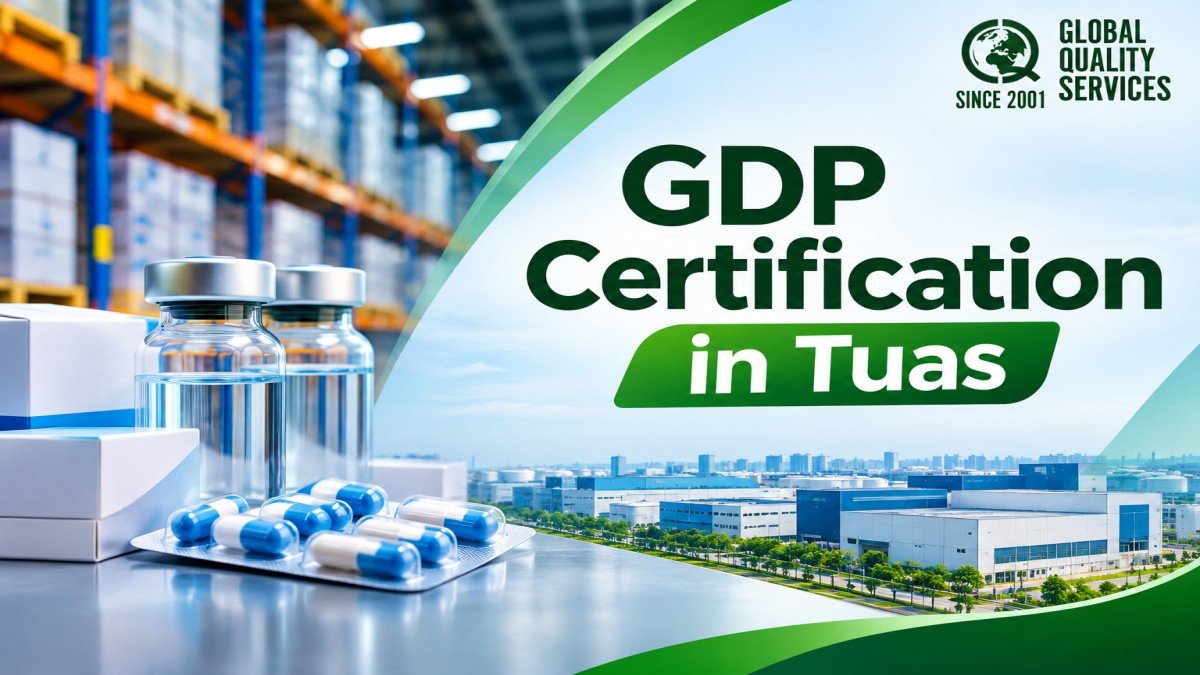
Tuas is home to major industrial, warehousing, and logistics operations that support Singapore’s pharmaceutical supply chain. For businesses handling medicines and other therapeutic products, even a small mistake in storage or transportation can affect product quality and safety. This makes GDP Certification in Tuas an important consideration for pharmaceutical importers, wholesalers, and logistics providers. According to the Singapore Economic Development Board (EDB), biopharmaceutical facilities in Singapore manufactured $12.1 billion worth of products in 2024 and employed more than 9,000 skilled workers.
With such a strong pharmaceutical industry, businesses must maintain reliable distribution practices to protect products and meet regulatory requirements. The Health Sciences Authority (HSA) requires applicable pharmaceutical importers and wholesalers to comply with its Good Distribution Practice standards.
Global Quality Services helps businesses prepare for these requirements through expert GDP consultancy. Find out how we can help your company achieve compliance and strengthen its pharmaceutical distribution operations.
What is GDP Certification
Good Distribution Practice (GDP) establishes quality requirements for storing, handling, and distributing pharmaceutical products. It ensures that businesses maintain suitable conditions throughout the supply chain and protect products from damage, contamination, and improper handling. GDP covers several aspects of pharmaceutical distribution, including:
- Warehouse conditions and storage management.
- Temperature monitoring and control.
- Product handling and inventory management.
- Supplier and customer qualification.
- Transportation and distribution records.
- Product complaints, returns, and recalls.
- Employee responsibilities and training.
- Quality management and documentation.
Which Businesses in Tuas Need GDP Compliance?
GDP requirements depend on the products your company handles and the activities it performs. The following businesses should assess their applicable compliance obligations:
- Pharmaceutical Importers
- Pharmaceutical Wholesalers
- Pharmaceutical Warehouses
- Third-Party Logistics Companies
- Active Pharmaceutical Ingredient Distributors
- Chinese Proprietary Medicine Distributors
- Cell, Tissue and Gene Therapy Product Businesses
Key Requirements for GDP Certification in Tuas
Your company must establish suitable controls for every activity that can affect pharmaceutical product quality. Global Quality Services helps businesses address the following areas.
1. Quality Management
Establish a documented quality management system with defined responsibilities, approved procedures, and controls for handling quality issues.
2. Warehouse Management
Maintain suitable storage areas, stock segregation, inventory controls, and warehouse conditions according to product requirements.
3. Temperature Control
Monitor temperature-sensitive storage and transportation conditions. Maintain monitoring, calibration, and excursion records to protect product integrity.
4. Documentation and Traceability
Maintain accurate records of product receipts, storage, dispatch, returns, and distribution. Ensure employees follow approved procedures.
5. Supplier and Customer Qualification
Assess suppliers, customers, and outsourced service providers. Define responsibilities and maintain appropriate agreements.
6. Complaints and Product Recalls
Establish clear procedures to investigate complaints, identify affected products, manage returns, and coordinate recalls.
7. Employee Training
Train employees on GDP responsibilities, product handling, documentation, and the procedures relevant to their roles.
GDP Certification Process for Businesses in Tuas
Global Quality Services follows a structured consultancy approach to help your business prepare for the applicable GDP requirements:
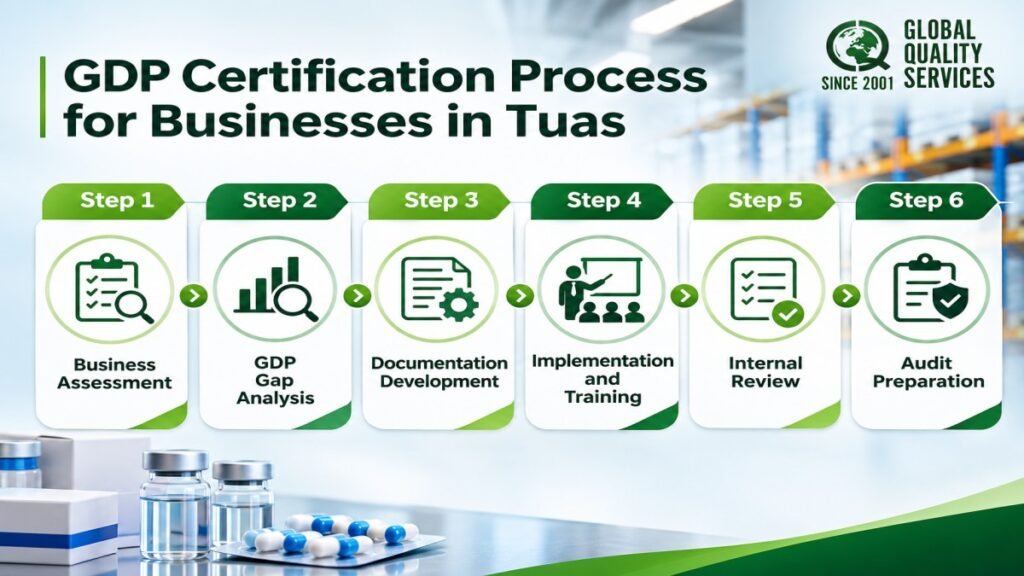
Step 1: Business Assessment
We review your business activities, product categories, facilities, and existing quality controls to understand your compliance needs.
Step 2: GDP Gap Analysis
Our consultants compare your current practices with applicable HSA requirements and identify areas that need improvement.
Step 3: Documentation Development
We help prepare the required GDP documentation, including Standard Operating Procedures, quality records, and the Site Master File.
Step 4: Implementation and Training
We guide your employees on the new procedures and help your team apply the required quality controls in daily operations.
Step 5: Internal Review
We assess your documentation and implementation, identify outstanding gaps, and recommend corrective actions.
Step 6: Audit Preparation
We help your company prepare for the applicable HSA audit and understand how to respond to audit findings.
Common GDP Compliance Problems in Pharmaceutical Businesses
Businesses often struggle to maintain consistent quality controls across different departments and distribution activities. Some common problems include:
- Temperature monitoring gaps in warehouses and delivery vehicles.
- Incomplete stock movement and distribution records.
- Inadequate supplier evaluation procedures.
- Poor control over outsourced storage and transportation.
- Unclear responsibilities for quality-related activities.
- Inconsistent handling of damaged or returned products.
- Missing records for equipment maintenance and calibration.
How Global Quality Services Helps You with GDP Certification in Tuas
Selecting an experienced consultant gives your business access to the right technical guidance and practical compliance support. Global Quality Services brings 26 years of management consultancy experience and serves businesses across Singapore and international markets.
As a reputed consultant, we understand that pharmaceutical importers, wholesalers, and logistics providers have different operational requirements. We develop our consultancy approach around your business activities, existing quality systems, and regulatory obligations.
Why Choose Global Quality Services?
- 26 years of management consultancy experience.
- Established consultancy presence in Singapore and international markets.
- Experienced consultants in quality management and regulatory compliance.
- Industry-specific consultancy for different business operations.
- Customized GDP documentation and implementation support.
- Practical employee training and audit preparation.
- Expertise across multiple international management system standards.
- Dedicated guidance throughout the consultancy engagement.
Our experience with ISO 9001 and other quality management frameworks also helps us support businesses that want to strengthen their existing quality systems.
Get Professional GDP Certification Consultancy in Tuas, Singapore
Build a reliable pharmaceutical distribution system with expert consultancy from Global Quality Services. We help businesses understand HSA requirements, strengthen quality controls, prepare essential documentation, and get ready for the applicable GDP assessment.
Whether you manage a pharmaceutical warehouse, import business, wholesale operation, or third-party logistics facility in Tuas, our consultants can help you identify the right compliance requirements and plan your next steps.
Contact Global Quality Services today through our website to discuss your GDP certification requirements. Get expert guidance, close compliance gaps, and prepare your business for a successful GDP assessment in Singapore.
Frequently Asked Questions
1. What is the difference between GDP and GMP certification?
GDP focuses on the storage, handling, transportation, and distribution of pharmaceutical products. GMP focuses on manufacturing practices and the controls that ensure consistent product quality during production. Both standards support pharmaceutical quality but address different stages of the supply chain.
2. Can a company apply for GDP certification if it operates from multiple warehouses?
Yes. A business with multiple facilities should assess the activities and compliance requirements at each location. The application and assessment scope should accurately reflect the facilities and operations covered.
3. Does GDP certification help pharmaceutical companies work with international suppliers?
GDP compliance can strengthen supplier confidence by demonstrating that your company follows recognized distribution practices. However, individual suppliers may have additional qualification and contractual requirements.
4. Can a newly established pharmaceutical distribution company pursue GDP compliance?
Yes. A new business can develop its quality system before starting regulated distribution activities. It should first identify its licensing obligations, establish the required controls, and prepare its facilities and employees.
5. Can a company lose its GDP certification?
Yes. Regulatory non-compliance, unresolved quality issues, or failure to maintain applicable requirements can affect a company’s regulatory standing. Businesses must continue monitoring their quality systems and address compliance issues promptly.