
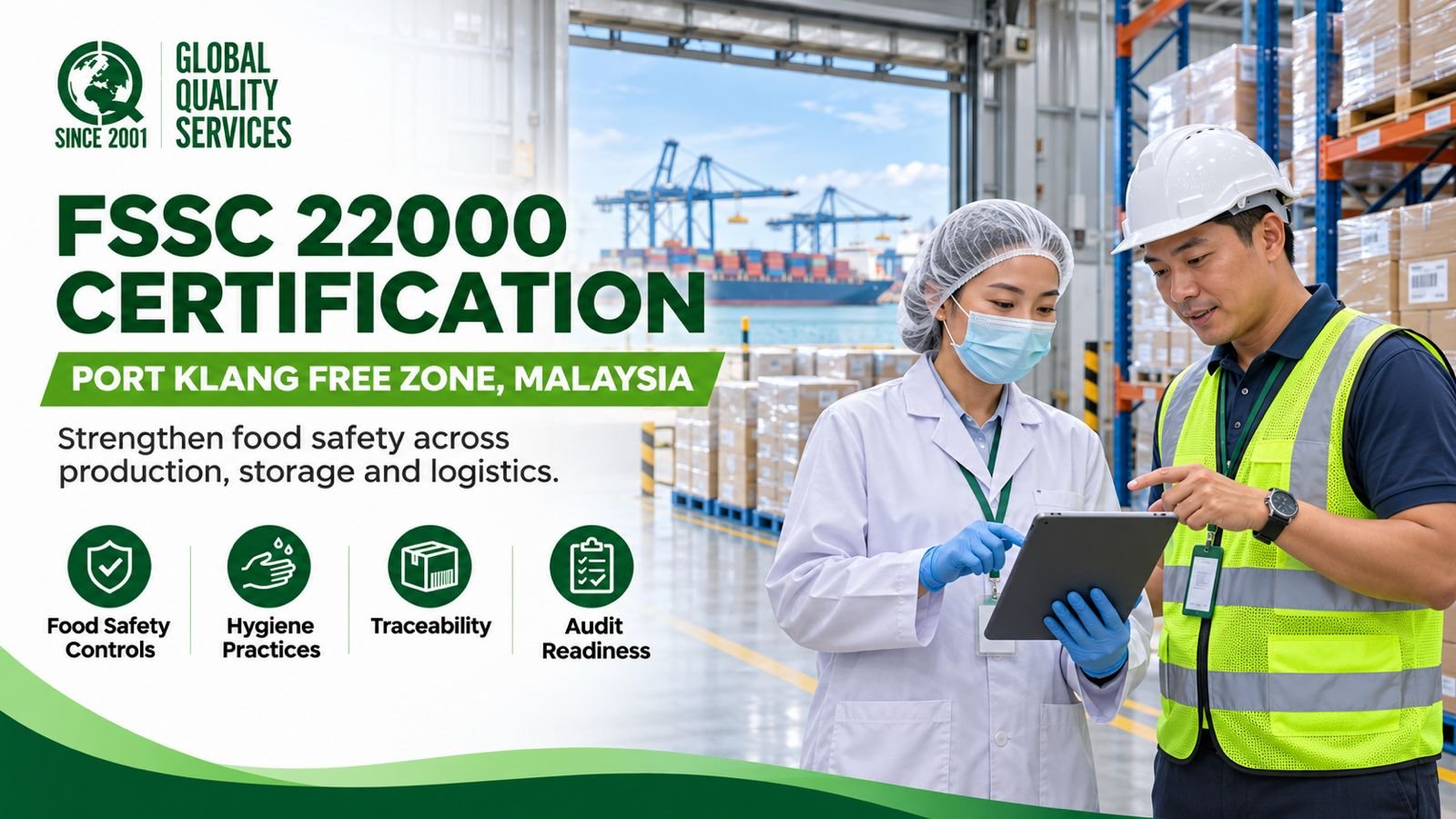
FSSC 22000 certification helps food chain organizations demonstrate that their food safety management system meets the requirements of the FSSC 22000 Certification Scheme. It combines ISO 22000, applicable prerequisite programs, and additional FSSC requirements to address food safety risks across eligible sectors.
Port Klang Free Zone (PKFZ), located in Pulau Indah, Selangor, is an integrated commercial and industrial zone that supports international cargo distribution, consolidation, logistics , and manufacturing activities. Businesses involved in food handling, processing, packaging, storage or related supply chain operations may need a structured food safety management system to control risks and meet customer requirements.
GQS provides certification-related services for organizations seeking to establish or maintain compliance with applicable food safety management system requirements. The relevant certification scope depends on the organization’s activities, food chain category, and operational boundaries.
What Is FSSC 22000 Certification?
FSSC 22000 is a food safety management system certification scheme recognized across eligible sectors of the food supply chain. It is based on three core elements:
- ISO 22000: Requirements for a food safety management system.
- Prerequisite programs (PRPs): Sector-specific hygiene and operational requirements under the applicable ISO 22002 series.
- FSSC additional requirements: Scheme requirements that address additional food safety and management controls.
The scheme is intended for eligible organizations across the food chain, including relevant food manufacturing and packaging activities. The certification scope must reflect the actual processes and activities carried out by the organization.
Why Is FSSC 22000 Relevant to Businesses in Port Klang Free Zone?
Businesses operating in and around PKFZ may participate in import and export, food distribution, warehousing, processing, packaging or other supply chain activities. Where these activities fall within the FSSC 22000 scheme’s eligible categories, a food safety management system can provide a structured approach to identifying hazards, managing operational controls and maintaining records.
FSSC 22000 may be relevant to:
- Food manufacturers and processors.
- Manufacturers of food packaging materials.
- Organizations handling eligible food ingredients or products.
- Businesses involved in food storage and distribution, where their activities fall within the scheme’s scope.
- Food chain suppliers required by customers to maintain recognized food safety certification.
- Eligible organizations supplying products to domestic and international markets.
Not every logistics or trading company automatically qualifies for FSSC 22000 certification. Eligibility depends on the activities performed and the applicable food chain category. Organizations should confirm the appropriate certification scope before beginning the process.
Benefits of FSSC 22000 Certification
Strengthen Food Safety Controls
FSSC 22000 provides a structured framework for identifying food safety hazards, establishing controls and monitoring processes that may affect product safety.
Improve Operational Consistency
Documented procedures, defined responsibilities, and monitoring activities help organizations maintain consistent food safety practices across relevant operations.
Address Customer Requirements
Food manufacturers, packaging suppliers and other eligible businesses may need recognized food safety certification to meet customer or supply chain requirements.
Improve Traceability and Recordkeeping
A documented food safety management system supports maintaining relevant records and traceability arrangements, helping organizations investigate issues and identify affected products where necessary.
Support Risk-Based Decision-Making
Hazard analysis and operational controls help organizations evaluate food safety risks and determine appropriate preventive measures.
Establish a Basis for Continual Improvement
Internal audits, performance monitoring, corrective actions, and management reviews provide a structured way to identify weaknesses and improve the food safety management system.
Key Requirements for FSSC 22000 Certification
1. Food Safety Management System
The organization must establish and maintain a food safety management system that meets applicable ISO 22000 requirements. This includes defining the system’s scope, responsibilities, processes, and performance monitoring arrangements.
2. Hazard Analysis and Control Measures
The organization must identify and evaluate food safety hazards and establish appropriate control measures based on its products and processes.
3. Prerequisite Programs
Applicable prerequisite programs address operational conditions such as hygiene, cleaning, pest control, equipment maintenance and contamination prevention. The exact requirements depend on the relevant sector and activities.
4. FSSC Additional Requirements
Organizations must meet the additional requirements specified by the applicable FSSC 22000 scheme version. These may cover areas such as food defense, food fraud mitigation, allergen management, environmental monitoring and food safety culture, where relevant.
5. Monitoring and Documentation
Organizations need appropriate records to demonstrate that the food safety management system is implemented, monitored, and maintained.
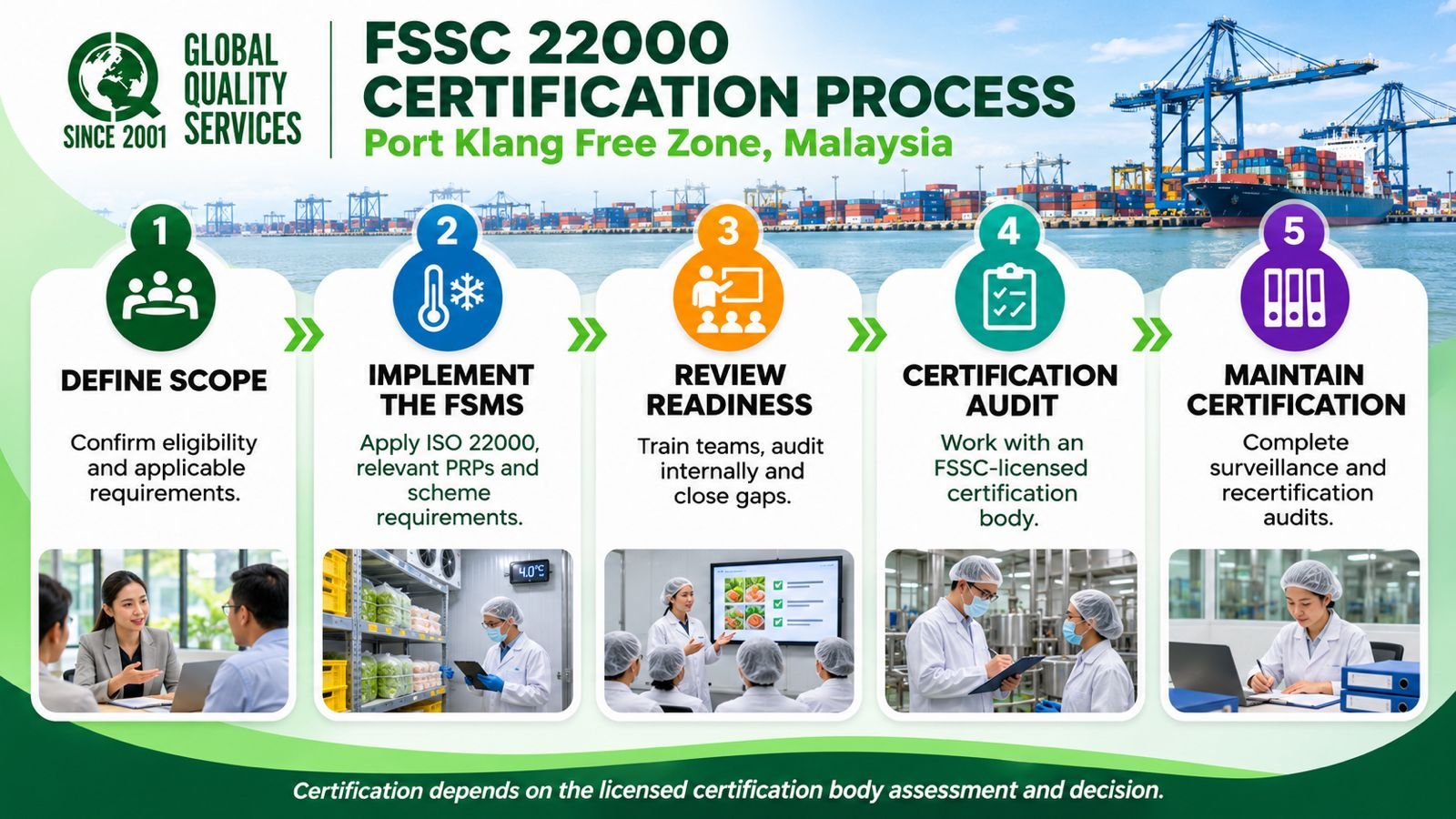
FSSC 22000 Certification Process in Port Klang Free Zone
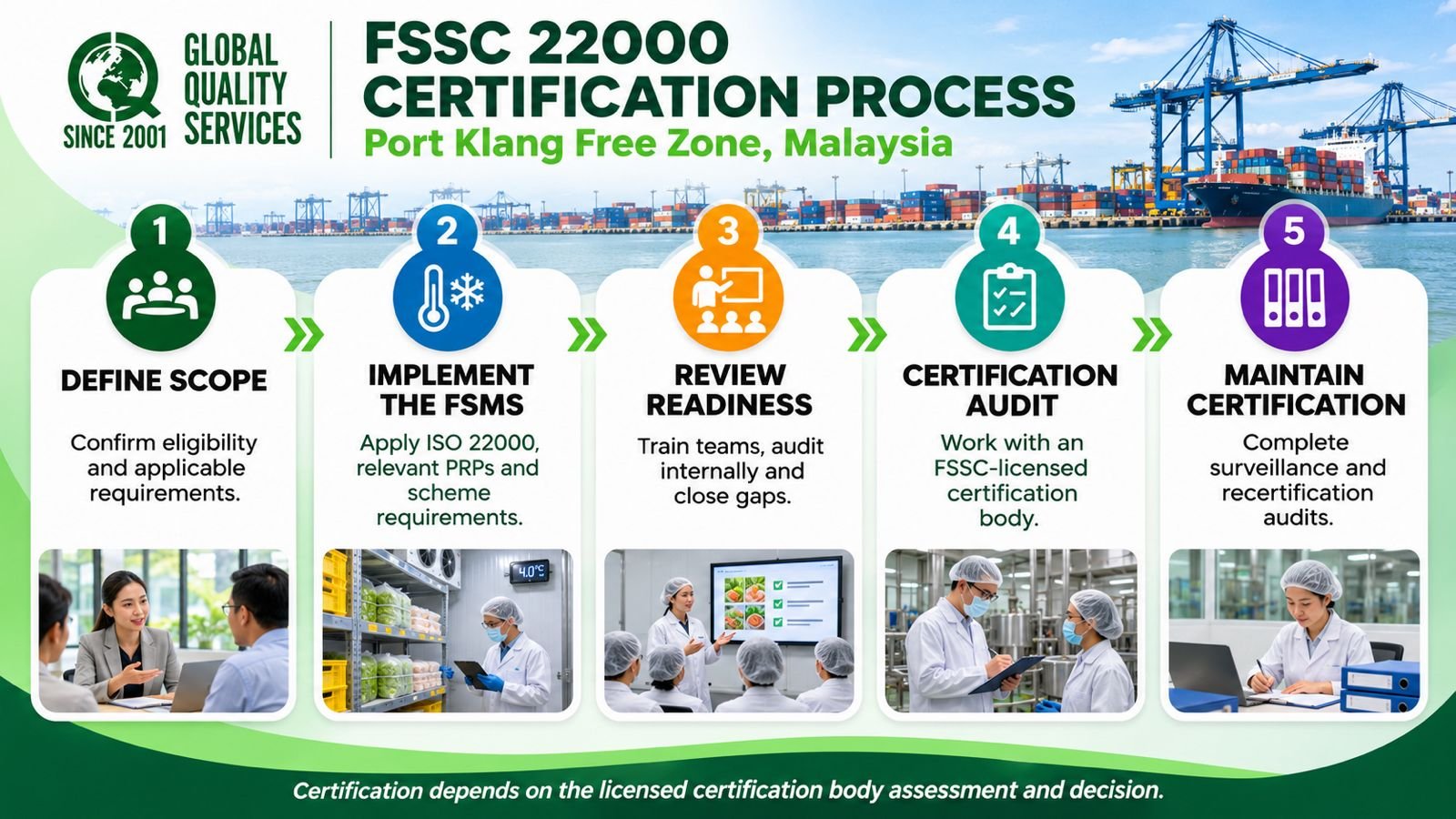
Step 1: Define the Certification Scope
Identify the products, processes, facilities and activities to be included in the food safety management system.
Step 2: Review Applicable Requirements
Determine the applicable ISO 22000 requirements, prerequisite programs, and FSSC additional requirements for the organization’s food chain category.
Step 3: Conduct a Gap Assessment
Review existing food safety practices, documentation and operational controls to identify areas that need to be addressed before the certification audit.
Step 4: Implement the Management System
Establish or update relevant procedures, hazard controls, monitoring activities, responsibilities ,and records.
Step 5: Conduct Internal Audit and Management Review
Evaluate the system’s implementation, identify nonconformities, and review performance before the external certification audit.
Step 6: Complete the Certification Audit
The organization undergoes the applicable certification audit through a certification body licensed for the FSSC 22000 scheme. The audit evaluates conformity with the applicable scheme requirements.
Step 7: Address Nonconformities
Where nonconformities are identified, the organization must address them in accordance with the certification body’s requirements and applicable scheme rules.
Step 8: Certification Decision and Maintenance
Certification is granted only after the certification body completes its review and makes a positive certification decision. Ongoing surveillance and recertification activities are then required according to the applicable certification cycle.
FSSC 22000 Version 7: What Businesses Need to Know
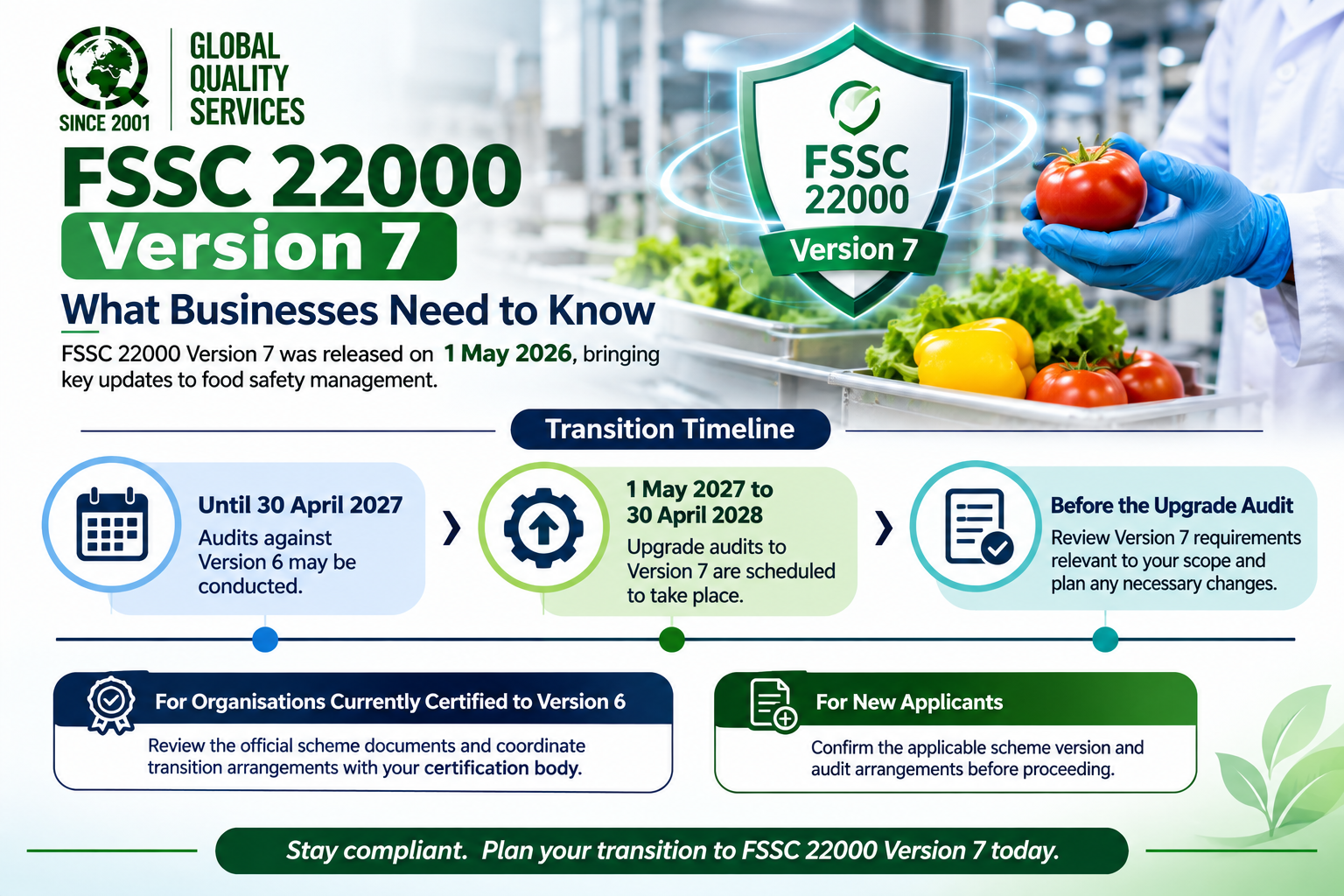
FSSC 22000 Version 7 was released on 1 May 2026. The update incorporates the ISO 22002-x:2025 prerequisite program series, aligns the scheme with the Global Food Safety Initiative (GFSI) Benchmarking Requirements 2024, and updates the structure of food chain categories. It also strengthens requirements connected with sustainability objectives.
The published transition timeline is:
- Until 30 April 2027: Audits against Version 6 may be conducted.
- 1 May 2027 to 30 April 2028: Upgrade audits to Version 7 are scheduled to take place.
- Before the applicable upgrade audit, certified organizations should review the Version 7 requirements relevant to their scope and plan any necessary changes.
Organizations currently certified to Version 6 should review the official scheme documents and coordinate transition arrangements with their certification body. New applicants should confirm the applicable scheme version and audit arrangements before proceeding.
Why Choose Global Quality Services for FSSC 22000 Certification Services?
Global Quality Services provides certification-related services for organizations seeking to meet applicable food safety management system requirements. For businesses in Port Klang Free Zone, the process should begin with a clear understanding of the organization’s products, activities, operational controls, and intended certification scope.
The relevant scheme requirements and food chain category must be established before the certification audit. Certification itself is granted by a certification body licensed for the FSSC 22000 scheme after the required audit and certification decision.
Is your food-related business in Port Klang Free Zone preparing for FSSC 22000 certification or planning its transition to Version 7? Contact GQS to discuss your organization’s activities, intended certification scope, and applicable requirements.
A review of your current food safety management system can help identify the requirements that need attention before the certification or transition audit.
Frequently Asked Questions
1. Can a food warehouse in Port Klang Free Zone obtain FSSC 22000 certification?
Eligibility depends on the activities performed, the applicable food chain category, and the scheme requirements. A warehouse performing only general storage or logistics may not automatically qualify. Confirm the intended scope with a certification body licensed for FSSC 22000.
2. Is FSSC 22000 suitable for food packaging manufacturers?
Manufacturers of food packaging materials may be eligible for FSSC 22000 certification. The applicable prerequisite programs and additional requirements depend on the packaging activities and the organization’s defined scope.
3. What is the difference between ISO 22000 and FSSC 22000?
ISO 22000 specifies requirements for a food safety management system. FSSC 22000 builds on ISO 22000 by incorporating applicable prerequisite programs and additional scheme requirements.
4. Do businesses certified to FSSC 22000 Version 6 need to upgrade to Version 7?
Certified organizations should plan for the Version 7 transition according to the published scheme timeline. Version 6 audits are permitted through 30 April 2027, and Version 7 upgrade audits are scheduled from 1 May 2027 to 30 April 2028.
5. Who issues the FSSC 22000 certificate?
An organization must be audited by a certification body licensed for the FSSC 22000 scheme. The certification body reviews the audit results and grants certification only after the applicable requirements for a positive certification decision have been met.