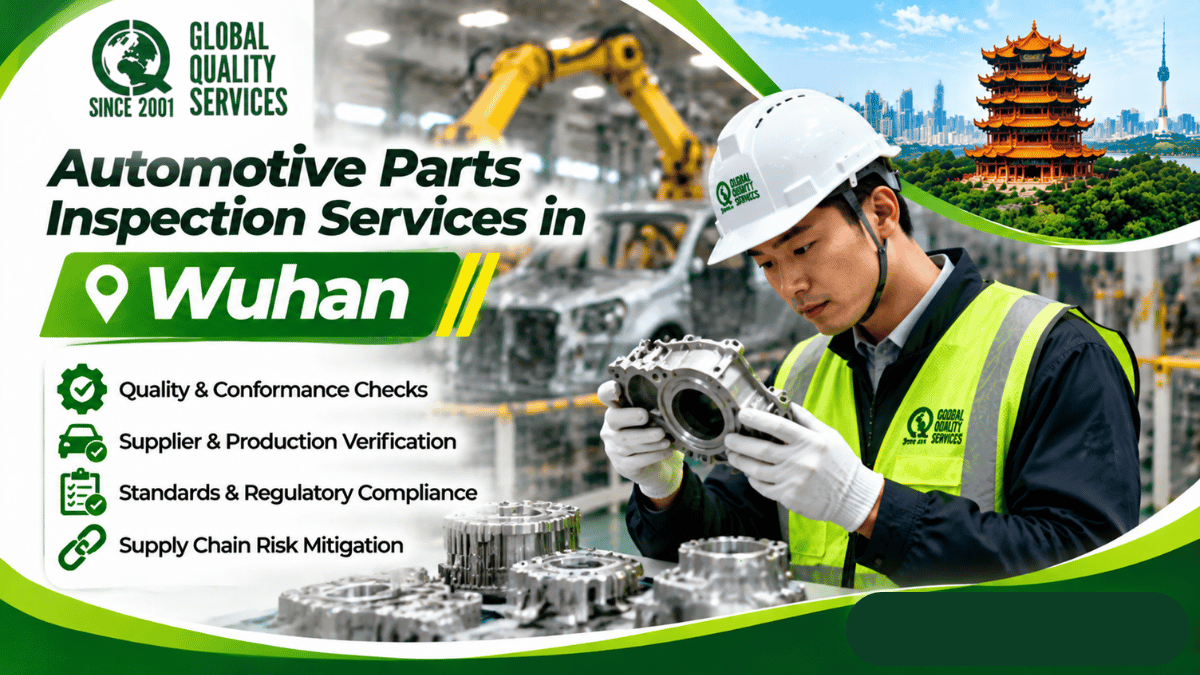
Wuhan is developing a large automotive manufacturing ecosystem that connects vehicle assembly plants with component manufacturers, technology suppliers and new energy vehicle businesses. In 2025, the Wuhan Economic and Technological Development Zone (WEDZ) produced approximately 495,000 vehicles, with new energy vehicles accounting for 54.4% of its output. The zone also exported around 200,000 vehicles during the year. At the city level, automotive manufacturing value added increased by 11.7% in 2025, according to the Wuhan Municipal Bureau of Statistics.
This industrial expansion places greater importance on the quality of components supplied to vehicle manufacturers. Body panels, chassis structures, seating systems, battery enclosures and precision assemblies must match approved drawings and fit the intended vehicle configuration. Even a small deviation in mounting dimensions, fastening points or component alignment can create difficulties during vehicle assembly.
Global Quality Services provides independent automotive parts inspection services in Wuhan, China, for automotive buyers, manufacturers, importers and suppliers. The inspection scope can be developed around individual components or assembled modules, with checks covering dimensions, physical condition, manufacturing workmanship, identification, assembly features, quantity and packaging.
Automotive Parts Inspection for Wuhan’s Manufacturing Supply Chain
Wuhan’s automotive ecosystem includes vehicle manufacturers, component suppliers and businesses involved in intelligent connected and electric vehicle production. The local supply chain includes parts used in vehicle structures, interiors, electrical systems and powertrain assemblies.
For suppliers operating in this environment, inspection is not limited to identifying visible defects. It also involves checking whether the delivered components correspond to the correct vehicle model, technical revision and assembly requirements.
Automotive parts inspection can be arranged for:
- Body and structural components: Door panels, stamped metal parts, chassis structures, brackets, cross-members and fabricated assemblies.
- Seating and interior systems: Seat frames, adjustment mechanisms, molded panels, trim assemblies and dashboard components.
- New energy vehicle components: Battery enclosures, motor housings, mounting structures and related electrical assemblies.
- Mechanical assemblies: Transmission components, shafts, gears, housings and precision-machined parts.
- Electrical components: Wiring harnesses, connectors, control-unit enclosures, sensors and switches.
- Exterior and molded parts: Bumpers, plastic panels, covers, trims and injection-molded components.
The inspection checklist is based on the buyer’s specifications, drawings, reference samples and agreed acceptance requirements.
Areas Covered in Wuhan, China
Automotive parts inspection can be arranged at supplier factories, manufacturing facilities and warehouses across Wuhan, subject to availability and scheduling.
Coverage may include:
- Wuhan Economic and Technological Development Zone (WEDZ)
- Intelligent Connected and Electric Vehicle Industrial Park
- Hannan
- Zhuankou
- Caidian District
- Dongxihu District
- Jiangxia District
- Huangpi District
- Qingshan District
- East Lake High-Tech Development Zone
The inspection location, product category and required scope should be confirmed before scheduling.
Inspection of Automotive Body Panels and Structural Components
Body panels and structural parts need consistent dimensions and accurate mounting features to fit the intended vehicle assembly. Differences in stamping, forming, welding or finishing can affect alignment and downstream installation.
Stamped Metal Parts and Body Panels
Inspection can cover doors, brackets, reinforcement panels, floor sections, support structures and other stamped components.
The checks may include:
- Length, width, thickness and specified profile dimensions.
- Hole positions, spacing and mounting points.
- Bending, forming and edge conditions.
- Surface scratches, dents, cracks and deformation.
- Burrs, sharp edges and visible stamping defects.
- Coating, paint and corrosion-related surface conditions.
Measurements are compared with the latest approved drawings and specified tolerances.
Welded Structures and Fabricated Assemblies
For welded components, the inspection can review weld appearance, visible discontinuities, joint positioning, assembly alignment and the presence of required fasteners.
The scope may include visual examination of chassis structures, brackets, frames and reinforcement assemblies. Weld strength, internal defects and structural load capacity require appropriate non-destructive or destructive testing by qualified facilities.
Inspection of Automotive Seating and Interior Assemblies
Seating systems and interior modules combine multiple parts, materials and mechanical features. Their inspection needs to consider assembly completeness, surface finish and the operation of specified mechanisms.
Seat Frames and Adjustment Mechanisms
Inspection can cover seat frames, rails, brackets, recliner mechanisms and adjustment assemblies. Checks may include:
- Frame condition and visible deformation.
- Rail alignment and mounting-hole positions.
- Fastener presence and assembly condition.
- Movement of specified adjustment mechanisms.
- Part identification and model compatibility.
Basic movement checks can be performed where suitable. Crashworthiness, restraint-system performance and statutory seat safety testing are separate specialist activities.
Dashboard, Door Panels and Interior Trim
For molded and assembled interior parts, inspection can assess surface finish, color consistency, molding quality, visible scratches, sink marks, cracks and deformation.
Where multiple pieces form a module, the inspection may also review visible gaps, alignment, clips, connectors and assembly completeness against approved references.
Inspection of EV Battery Enclosures and Electric Drive Components
Wuhan’s expanding new energy vehicle production makes component conformity particularly relevant for battery-related and electric drive assemblies. These components can have specific dimensional, mounting and identification requirements.
Battery Enclosures and Structural Housings
Inspection may cover the external condition and dimensions of battery boxes, covers, housings, support structures and mounting brackets.
Typical checkpoints include:
- Housing dimensions and mounting-hole locations.
- Visible deformation, cracks or surface damage.
- Weld appearance and joint positioning.
- Fastener locations and assembly completeness.
- Coating and visible corrosion protection.
- Part numbers, revision details and identification markings.
Electric Motor and Powertrain Housings
Motor casings, transmission housings and related mechanical components can be examined for machining condition, visible surface defects, dimensions, threaded holes and mounting interfaces.
The inspection may also review the presence of specified accessories and assembly features. Electrical performance, insulation resistance, battery cell condition, thermal testing and high-voltage safety validation require specialized equipment and testing arrangements.
Inspection of Automotive Components Before Assembly or Delivery
A component can pass an appearance check and still create problems if its interfaces do not match the intended assembly. For this reason, buyers may include fit-related checkpoints in the inspection plan.
Interface and Mounting Verification
Selected dimensions, mounting holes, slots, connectors and fastening points can be compared with the approved drawings. Where a reference fixture or mating component is available, basic fitment checks may be included.
Part and Revision Matching
Automotive suppliers may manufacture similar components for different vehicle models or production revisions. Inspectors can compare part numbers, labels, revision codes and configuration details with the order documentation.
Assembly Completeness
For modules and subassemblies, the inspection can check whether the required brackets, clips, fasteners, connectors, covers and other specified parts are present.
These checks help identify incorrect variants and incomplete assemblies before delivery to the buyer.
Quality Standards and AQL Sampling for Automotive Components
The inspection method should reflect the component’s intended use, production lot and agreed quality requirements. For large batches, Acceptance Quality Limit (AQL) sampling can provide a structured method for selecting samples and assessing observed defects.
China’s GB/T 2828.1-2012 is the current national standard for sampling procedures by attributes using AQL-indexed sampling plans for lot-by-lot inspection. The standard was reviewed in May 2025, with the conclusion that it should continue in force.
Before inspection, the buyer and supplier should agree on:
- Inspection level and sample size.
- AQL values for critical, major and minor defects, where applicable.
- Defect classification and acceptance or rejection criteria.
- Product drawings, technical specifications and reference samples.
- Critical dimensions and required functional checks.
- Batch identification and traceability requirements.
AQL sampling is not a 100% inspection method and does not guarantee that every component in the lot is defect-free. Where a specific safety-critical characteristic requires additional verification, the buyer should define a suitable inspection or testing method.
Benefits of Automotive Parts Inspection in Wuhan
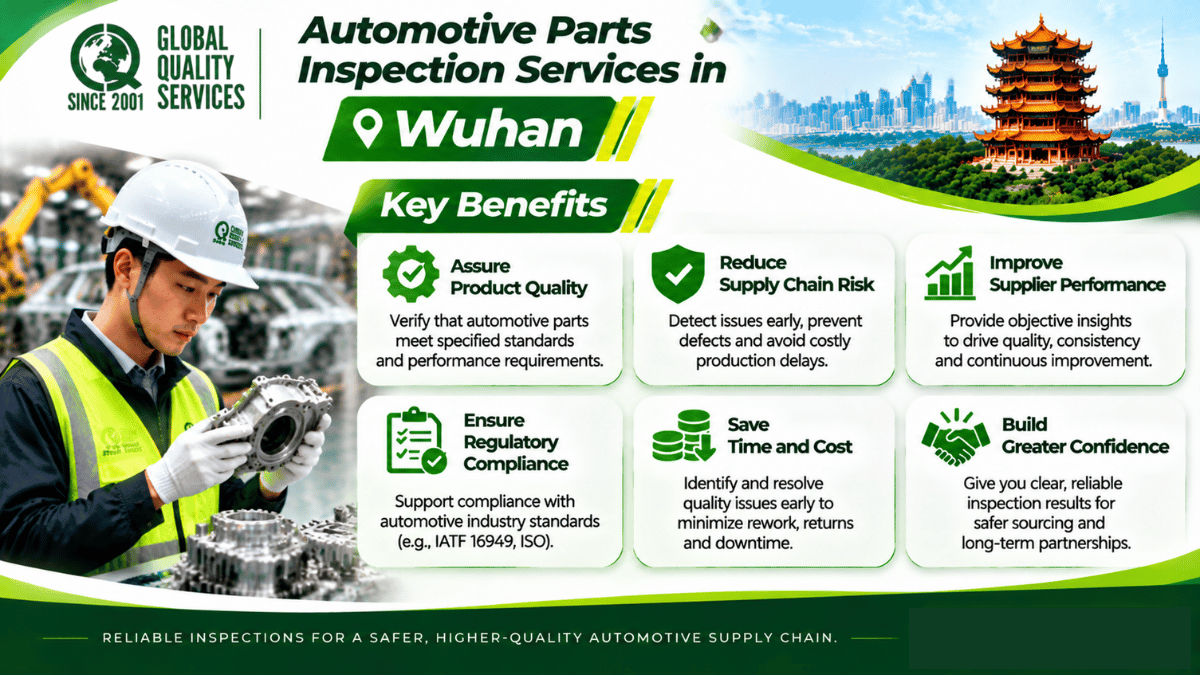
Independent inspection provides buyers with a separate assessment of components and assemblies against agreed product requirements. It can be useful when sourcing from multiple suppliers or receiving parts intended for different vehicle models.
Identify Fitment and Dimensional Problems
Checking critical dimensions, mounting points and component interfaces can reveal deviations that may affect assembly compatibility. This is particularly relevant for structural parts, seat frames, battery enclosures and other vehicle modules.
Check Consistency Across Production Batches
Inspection can identify visible differences in finish, assembly, dimensions, identification and configuration across sampled units. This gives buyers a clearer picture of the inspected production lot.
Verify Component Configuration
Part numbers, revision codes, model references and included accessories can be checked against the purchase order. This helps identify incorrect variants before components are accepted.
Review Workmanship and Assembly Completeness
An inspection can highlight visible welding defects, incomplete fastening, molding issues, surface damage and missing assembly elements. The findings can be shared with suppliers for review and corrective action.
Maintain Independent Quality Records
Inspection reports provide documented observations, photographs and measurement results where applicable. Buyers can refer to these records during supplier discussions, incoming quality reviews and shipment decisions.
Our Automotive Parts Inspection Process in Wuhan
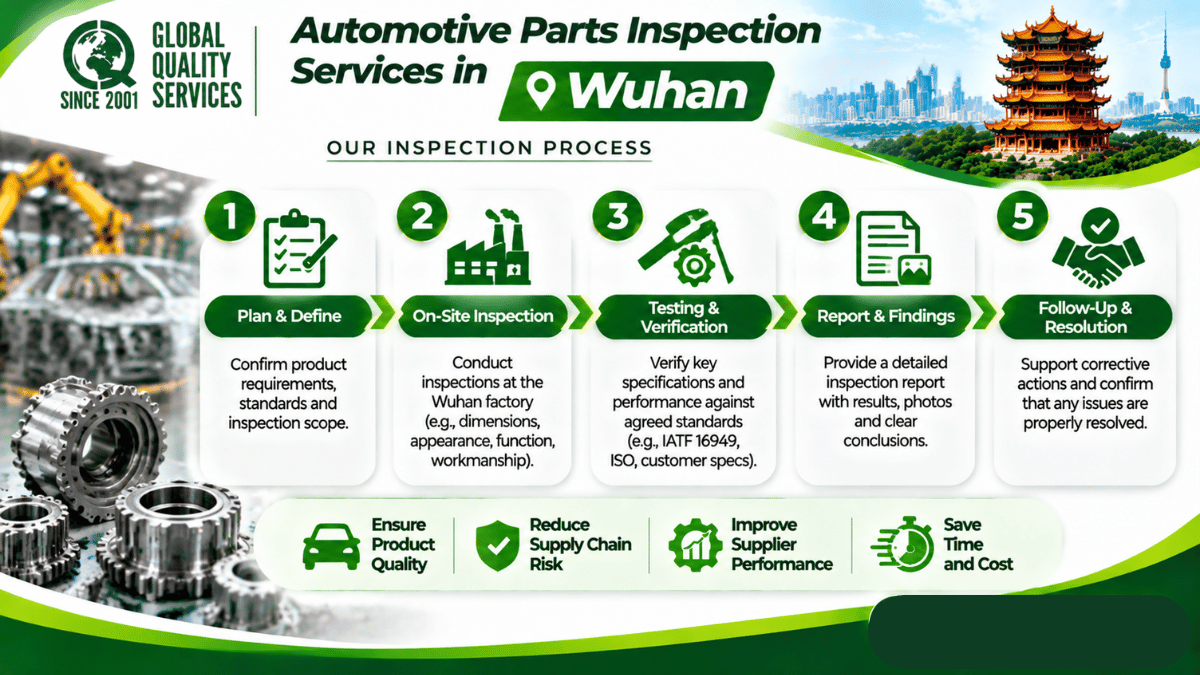
Global Quality Services plans each inspection around the component category, manufacturing stage and acceptance requirements supplied by the client.
1. Technical Document Review
The process begins with reviewing the purchase order, product drawings, specifications, revision details, reference samples and inspection checklist. The buyer identifies critical dimensions, visual standards and any required functional or fitment checks.
2. Inspection Scope and Sampling Plan
An inspection plan is prepared according to the lot size, component type and inspection objectives. Where sampling is required, the sample size, AQL values, defect categories and acceptance criteria are confirmed in advance.
3. Component Identification and Physical Examination
Selected parts are checked for product identity, model details, revision markings, visible condition and manufacturing workmanship. The inspection may cover stamping, molding, machining, welding, finishing and assembly features, depending on the product.
4. Dimensional and Interface Checks
Specified dimensions are measured using suitable instruments. Mounting points, hole positions, thicknesses, profiles and other critical features are compared with the approved drawings. Basic fitment checks may be included where the necessary fixtures or reference parts are available.
5. Functional, Quantity and Packaging Review
Specified basic operational checks are performed where the inspection scope allows. The process also includes agreed quantity verification, batch identification, packaging condition, internal protection and shipping-label checks.
6. Inspection Report and Observations
The findings are compiled into an inspection report with relevant observations, defect details, photographs and measurement results where applicable. The client can use the report to review the inspected lot and decide on the next steps with the supplier.
Why Choose Global Quality Services?
Global Quality Services provides independent third-party inspection services for businesses involved in automotive manufacturing, sourcing and international trade. Each inspection is planned around the actual component, its technical documentation and the buyer’s acceptance requirements.
Our approach focuses on practical product verification, including dimensional checks, visible workmanship, component identification, assembly completeness and specified functional characteristics. Inspection findings are documented to give buyers a clearer understanding of the products examined.
Whether the requirement involves stamped body components, seating assemblies, battery enclosures, electrical parts or precision-machined items, the inspection scope can be adapted to the order and product category.
The service does not replace manufacturer quality controls, automotive homologation, accredited laboratory testing, destructive material analysis or statutory safety approvals. These activities require separate qualified facilities or competent authorities.
Frequently Asked Questions
1. Can automotive parts inspection be conducted at supplier factories in Wuhan?
Yes. Inspection can be arranged at supplier manufacturing facilities and warehouses across Wuhan, subject to site access, product availability and scheduling. The inspection scope is confirmed before the visit.
2. Can the inspection cover complete automotive modules rather than individual parts?
Yes. The scope can include assembled modules such as seating systems, interior assemblies, structural units and selected electric vehicle components. Checks can cover assembly completeness, visible workmanship, identification and specified interfaces.
3. What should buyers provide before arranging an automotive parts inspection?
Buyers should provide the purchase order, latest approved drawings, product specifications, revision details, inspection checklist and agreed acceptance criteria. Reference samples, measurement requirements and functional test procedures should also be provided where applicable.
4. Can Global Quality Services inspect automotive parts for dimensional accuracy?
Yes. Selected dimensions can be measured using suitable instruments and compared with the tolerances in approved technical drawings. Critical dimensions and measurement methods should be identified before inspection.
5. Does automotive parts inspection include vehicle safety certification?
No. Independent component inspection does not constitute vehicle homologation, regulatory approval or safety certification. It can document the results of agreed product checks, while formal testing and approvals must be handled by the relevant qualified organizations.