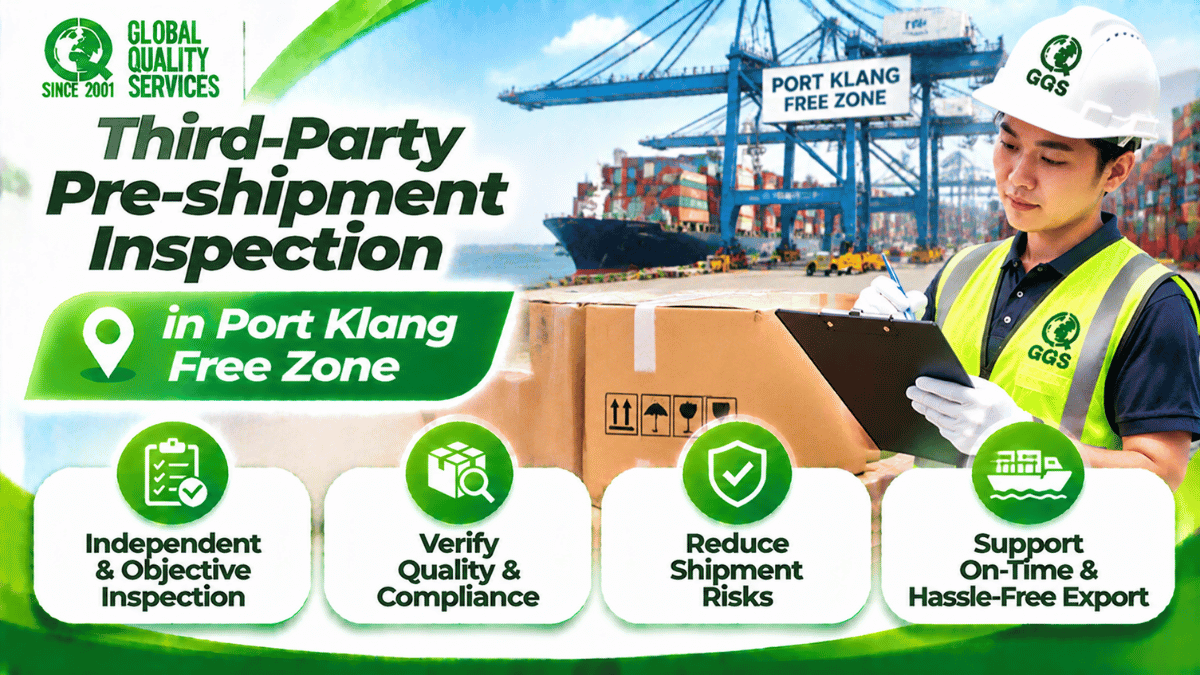
Before goods leave a supplier’s facility for international shipment, buyers need to know whether the consignment matches the agreed order. Third-party pre-shipment inspection in Port Klang Free Zone (PKFZ), Malaysia, provides an independent assessment of product quality, quantity, specifications, packaging, labeling and shipment readiness before dispatch.
Located on Pulau Indah near Port Klang, PKFZ is an integrated 1,000-acre commercial area and industrial zone developed for international cargo distribution, consolidation and related business activities. Its location near major port facilities makes it relevant to importers, exporters, manufacturers, trading companies and logistics businesses handling goods for regional and international markets.
Global Quality Services provides independent third-party pre-shipment inspection in Port Klang Free Zone Malaysia to help buyers identify product discrepancies before shipment. The inspection is conducted against the purchase order, approved specifications, samples and acceptance criteria agreed with the client.
What Is Third-Party Pre-Shipment Inspection?
Third-party pre-shipment inspection is an independent quality check carried out when an order is substantially complete and ready for dispatch. It allows the buyer to review the condition and conformity of goods before they leave the supplier’s premises or an agreed inspection location.
Unlike an internal supplier quality check, a third-party inspection provides findings from an independent inspection team. The report records the products examined, inspection methods, observations and any deviations identified against the agreed requirements.
For shipments handled through Port Klang Free Zone, this can be particularly useful when goods are consolidated from different production batches, prepared for export or transferred between warehouses and logistics facilities.
Pre-Shipment Inspection for Businesses in Port Klang Free Zone
PKFZ serves businesses involved in international cargo distribution, consolidation, industrial activity and logistics. The nature of the goods being shipped determines which inspection checks deserve the most attention.
Consolidated Export Shipments
When goods from multiple orders or product lines are combined into a shipment, quantity and identification checks become important. Inspection can verify the individual product categories, carton counts, batch references and packing-list details to help identify mixing or omission errors.
Industrial and Engineering Products
Industrial components, machinery parts, tools and engineering products may require checks against drawings, dimensions, materials, surface condition and assembly requirements. The inspection can also record missing fittings, incorrect model references or visible damage before the goods are dispatched.
Electrical and Electronic Goods
Electrical and electronic products may require verification of model numbers, product configuration, accessories, connectors, visible assembly quality, labeling and basic functions. Where the buyer specifies a particular version or component arrangement, these details can be included in the inspection checklist.
Consumer Goods and Retail Products
For consumer products, inspection may cover appearance, color, size, workmanship, product variations, labels, accessories and retail packaging. The checks can help buyers identify inconsistent finishing or incorrect product combinations across a shipment.
Packaged and Palletized Goods
Goods prepared for containerized export may need additional attention to carton condition, pallet integrity, stacking patterns, wrapping and shipping marks. Where wooden packaging is used, the buyer should specify applicable treatment and marking requirements. A visual pre-shipment inspection does not certify compliance with ISPM 15 or replace authorized treatment and phytosanitary procedures.
Benefits of Third-Party Pre-Shipment Inspection
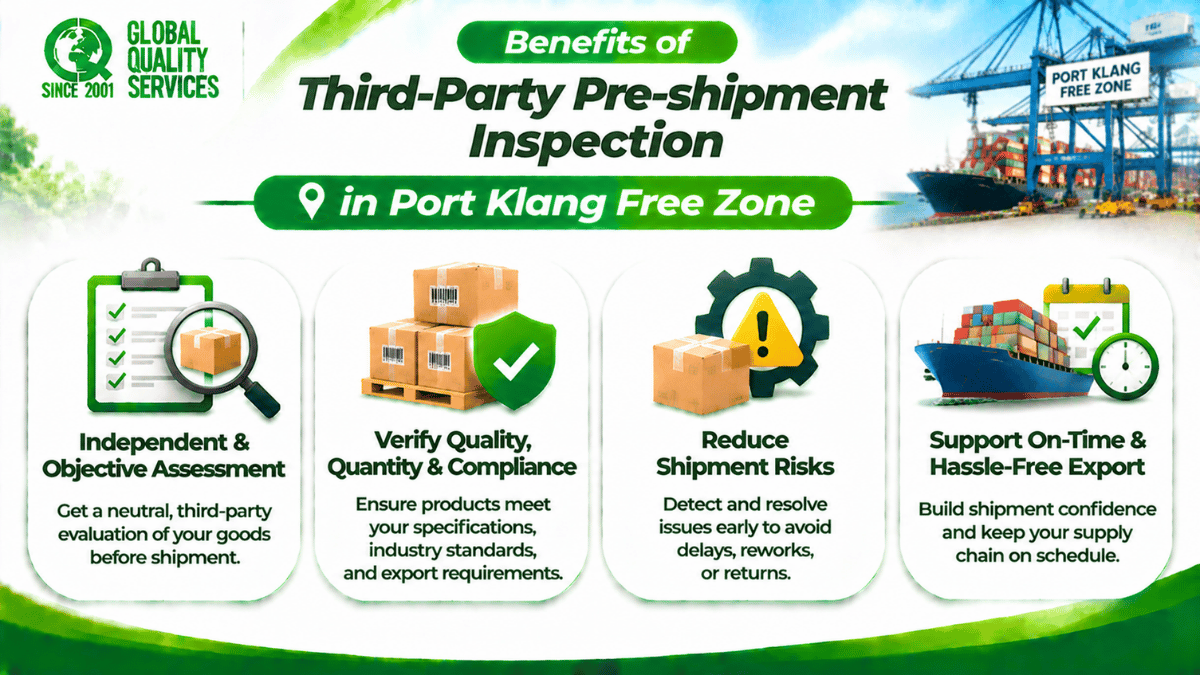
An independent pre-shipment inspection gives buyers a clearer picture of the goods before dispatch and provides documented findings for supplier discussions.
Identify Nonconforming Products Before Shipment
Inspection can reveal visible defects, incorrect specifications, missing components and quantity discrepancies while the goods are still accessible to the supplier. This gives the buyer an opportunity to review the findings before authorizing dispatch.
Reduce Shipment and Receiving Disputes
A documented inspection record helps establish the observed condition and quantity of the inspected goods at the time of inspection. This can be useful when discussing product discrepancies with suppliers or comparing inspection findings with receiving records.
Check Export Packaging and Identification
Verifying carton condition, product labels and shipping marks can help reduce avoidable errors during handling, storage and distribution. It also gives buyers an opportunity to identify packaging concerns before cargo enters the shipping process.
Support Consistent Quality Across Orders
A defined checklist and sampling plan can be used across repeated orders to maintain consistent inspection criteria. This is especially useful for buyers sourcing similar products from the same supplier over multiple shipments.
Improve Supplier Accountability
An independent report provides a shared record of observed defects, missing items and deviations. Buyers can use these findings to request corrective action or clarify unresolved issues before shipment.
Our Third-Party Pre-Shipment Inspection Process
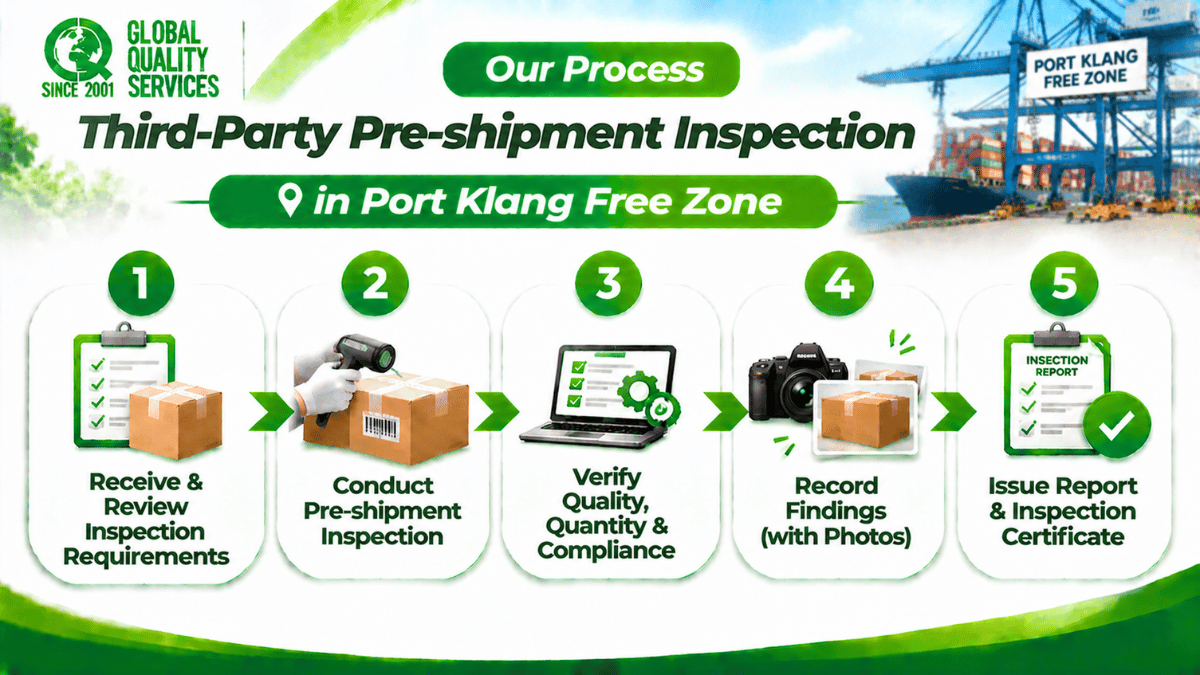
Global Quality Services follows a defined inspection process based on the product, shipment requirements and agreed acceptance criteria.
1. Review of Purchase and Product Requirements
The process begins with a review of the purchase order, approved samples, technical specifications, drawings, packaging instructions and other relevant documents. The inspection scope and acceptance criteria are established before the inspection visit.
2. Inspection Planning and Sampling
The inspection checklist is prepared according to the product category and buyer’s requirements. Where AQL sampling is required, the inspection level, sample size, defect classifications and acceptance criteria are agreed in advance.
3. Confirmation of Goods Readiness
The supplier confirms that the goods are available for inspection at the agreed location. The required production quantity, packing status, access arrangements and availability of documents are checked before the scheduled visit.
4. Product Inspection and Testing
The inspector selects the required samples and examines product specifications, workmanship, quantity, appearance and other agreed characteristics. Basic functional checks are performed where applicable and included in the scope.
5. Packaging and Shipping Verification
The inspection covers packaging condition, carton markings, product labels, accessories and packing-list details. Palletization and container-loading observations can be added where specifically requested.
6. Recording and Classification of Findings
Observed defects and discrepancies are documented according to the agreed classification. Photographs and relevant inspection details are included to provide a clear record of the findings.
7. Inspection Reporting
The final report presents the inspection scope, sampling details where applicable, observations, defect records and supporting photographs. The buyer can review the findings and decide whether to authorize shipment, request corrective action or arrange a follow-up inspection.
Why Choose Global Quality Services for Pre-Shipment Inspection in Port Klang Free Zone?
Global Quality Services provides independent third-party inspection services for buyers, importers, exporters, manufacturers and trading companies. Inspection activities are based on the agreed product requirements and are recorded through objective findings.
The inspection scope can be arranged for finished products, industrial components, electrical goods, consumer products, packaged cargo and consolidated shipments. Buyers can specify the required checks, sampling method, defect classification and reporting expectations before the inspection is scheduled.
Global Quality Services provides inspection findings for the buyer’s review. The inspection report does not constitute customs clearance, product certification, statutory approval or a guarantee of future product performance.
Frequently Asked Questions
1. When should third-party pre-shipment inspection be conducted?
It is generally conducted when production is substantially complete and the goods are ready for inspection before dispatch. Some buyers use the guideline that around 80% of the order should be completed and 80% packed or ready for packing. However, the actual inspection stage should follow the purchase agreement and buyer’s instructions.
2. Does pre-shipment inspection include AQL sampling?
Yes. AQL sampling can be included when specified by the buyer. The sampling standard, inspection level, AQL values, defect classifications and acceptance criteria should be agreed before the inspection.
3. Can Global Quality Services inspect consolidated shipments in Port Klang Free Zone?
Yes. Inspection can cover different product lines or batches within a consolidated shipment. The buyer should provide the relevant purchase orders, product identification details, packing lists and inspection requirements so that the scope can be planned correctly.
4. Does pre-shipment inspection include container loading supervision?
Not automatically. Product inspection and container-loading supervision are distinct activities. Container condition checks, loading observations, cargo arrangement and securing checks can be included when specifically requested and agreed before the assignment.
5. Does a pre-shipment inspection report replace customs clearance?
No. A third-party inspection report records product and shipment observations against the agreed inspection scope. It does not replace customs declarations, permits, export documentation, regulatory approvals or other procedures required by Malaysian authorities.