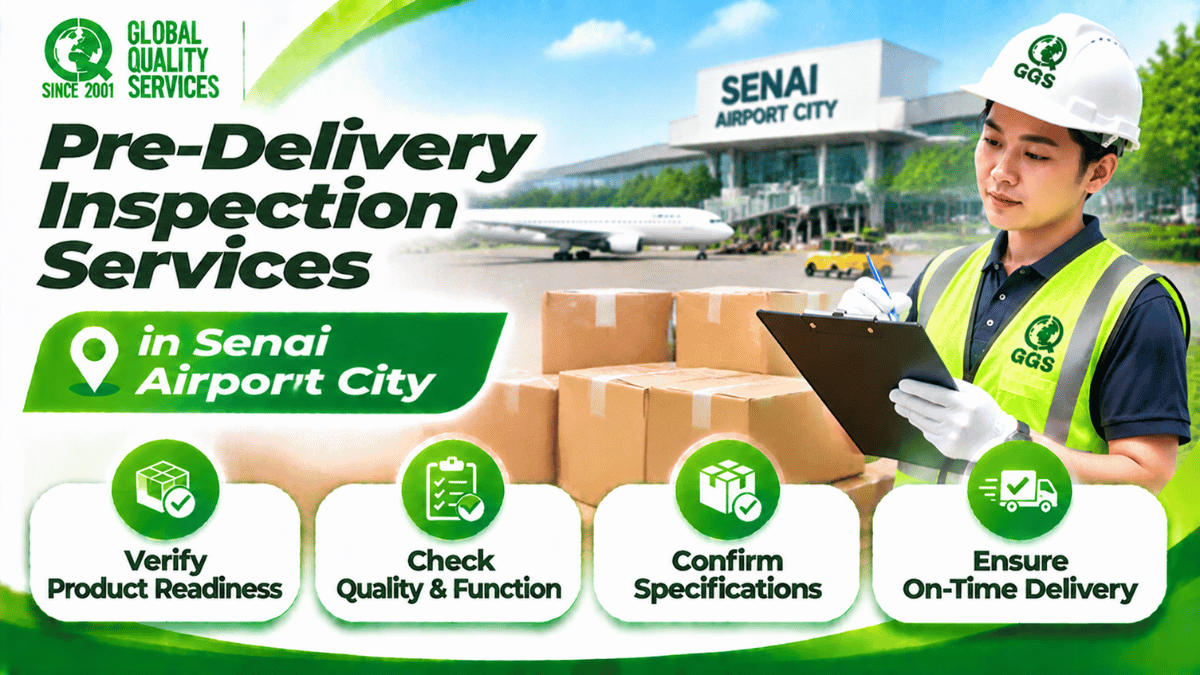
Equipment delivered to a manufacturing plant, warehouse or technology facility must meet the agreed specifications before it is accepted. Pre-Delivery Inspection (PDI) services in Senai Airport City, Malaysia, help buyers verify the condition, configuration, quantity, and basic functionality of machinery, electrical equipment, and other industrial products before delivery or handover.
Senai Airport City has developed as an industrial and logistics hub serving businesses in advanced electrical and electronics, high-tech manufacturing, automotive, medical technology, consumer goods and regional distribution. These operations may depend on equipment that must arrive with the correct configuration, accessories and supporting documents. An independent PDI provides a documented assessment of the equipment against the buyer’s purchase order and agreed acceptance criteria.
Global Quality Services conducts Pre-Delivery Inspection Services in Senai Airport City Malaysia, to record the condition and conformity of equipment at the agreed inspection stage. The inspection scope is based on the product, purchase requirements and checks that can reasonably be performed at the supplier’s premises.
What Does Pre-Delivery Inspection Services in Senai Airport City Malaysia Cover?
Pre-delivery inspection checks whether equipment is consistent with the agreed purchase requirements and is in an acceptable condition before it leaves the supplier’s facility. The inspection plan varies according to the equipment type, technical complexity and intended application.
Equipment Identification and Order Verification
The inspector checks the equipment nameplate, model number, serial number, manufacturer details and other identification marks against the purchase order and approved specifications. The quantity and configuration of supplied units are also verified.
For imported machinery or equipment intended for a new production line, this check helps identify model substitutions, missing units or differences between the ordered and supplied configuration.
Physical Condition and Workmanship
The equipment is examined for visible damage, corrosion, dents, cracks, loose components, poor finishing and other observable defects. The inspection may also cover assembly quality, exposed connections, fasteners, protective covers and general workmanship.
For equipment transported through multiple handling stages, visible packaging damage and signs of mishandling may also be recorded.
Electrical and Electronic Components
Electrical and electronic equipment requires checks that reflect its intended use. Depending on the agreed scope, inspection may cover control panels, wiring, connectors, switches, indicators, displays, terminals, labels and visible component installation.
For electronic and semiconductor-related equipment, the inspection can include model and configuration verification, enclosure condition, interface identification and the presence of specified modules or accessories. Specialist calibration, electrical safety testing or electronic performance validation must be arranged separately where required.
Mechanical Assembly and Moving Parts
For industrial machinery, conveyors, material-handling systems and production equipment, the inspector examines accessible mechanical assemblies. Checks may include mounting arrangements, guards, fasteners, visible drive components, alignment indicators and lubrication points.
Any unusual noise, vibration or movement observed during an agreed functional check can be recorded. Detailed engineering measurements or internal examinations are outside a standard visual inspection unless specifically included.
Functional and Operational Checks
Where the equipment can be safely operated and the supplier has the necessary facilities, basic functional checks may be performed against the agreed inspection checklist.
These may include start-up and shutdown observations, control response, display operation, movement of accessible components, indicator functions and selected operating modes. The inspection records the functions demonstrated during the visit; it does not automatically establish long-term reliability or performance under full production conditions.
Accessories, Packaging and Documentation
The inspector verifies whether the supplied accessories, cables, tools, spare parts, manuals and other listed items are present. Packaging may be checked for suitability, visible damage, protection and consistency with the agreed shipping requirements.
Documents can include equipment manuals, technical datasheets, inspection records, test reports, warranty documents and packing lists. The inspection confirms the presence and apparent consistency of the documents reviewed, not the validity of every technical or regulatory claim they contain.
PDI Requirements for Senai Airport City’s Industrial Sectors
The inspection checklist from MIDA says your process should reflect the equipment’s intended application. Senai Airport City’s manufacturing and logistics environment includes several types of equipment with different acceptance priorities.
Advanced Electrical and Electronics Manufacturing
Production equipment used in electronics manufacturing may contain control units, electrical assemblies, precision components and specialized interfaces. PDI can verify equipment identity, specified modules, visible assembly condition, cable connections, control-panel configuration and supplied accessories.
Where the buyer has specified a particular configuration or software version, the relevant identification and records can be checked against the approved order documents.
Semiconductor and High-Tech Equipment
High-tech manufacturing equipment may require close attention to model configuration, component identification, enclosure condition, connection points and handling protection. Inspection can also record the condition of sensitive external components and whether the specified accessories and documentation have been supplied.
Cleanroom qualification, particle testing, process validation and precision performance measurements require specialist procedures and should not be treated as completed through a routine PDI.
Aerospace and Maintenance Equipment
Equipment used in aerospace maintenance, repair and overhaul activities may include workshop machinery, lifting equipment, tooling, inspection devices and ground-support equipment. PDI can verify identification, visible condition, specified accessories, safety guards and available maintenance or operating documents.
Calibration status and technical certification should be checked against the relevant records and acceptance requirements. A visual inspection alone does not establish airworthiness or regulatory approval.
Automotive and Electric Vehicle Manufacturing
Equipment supplied for automotive and EV-related operations may include assembly-line machinery, conveyors, testing equipment, electrical systems and material-handling units. Checks can focus on configuration, mechanical assembly, control functions, safety guards and the presence of specified components.
Where equipment is intended to integrate with an existing production line, the buyer should provide interface and compatibility requirements before inspection.
Warehousing and Regional Distribution
Warehouses and distribution facilities may receive conveyors, dock equipment, racking components, forklifts, pallet-handling systems and packaging machinery. PDI can examine visible condition, identification, accessories, assembly and basic functions within the agreed scope.
Load testing, statutory certification and specialist safety examinations for lifting or material-handling equipment are separate activities where applicable.
Benefits of Pre-Delivery Inspection Before Equipment Acceptance?
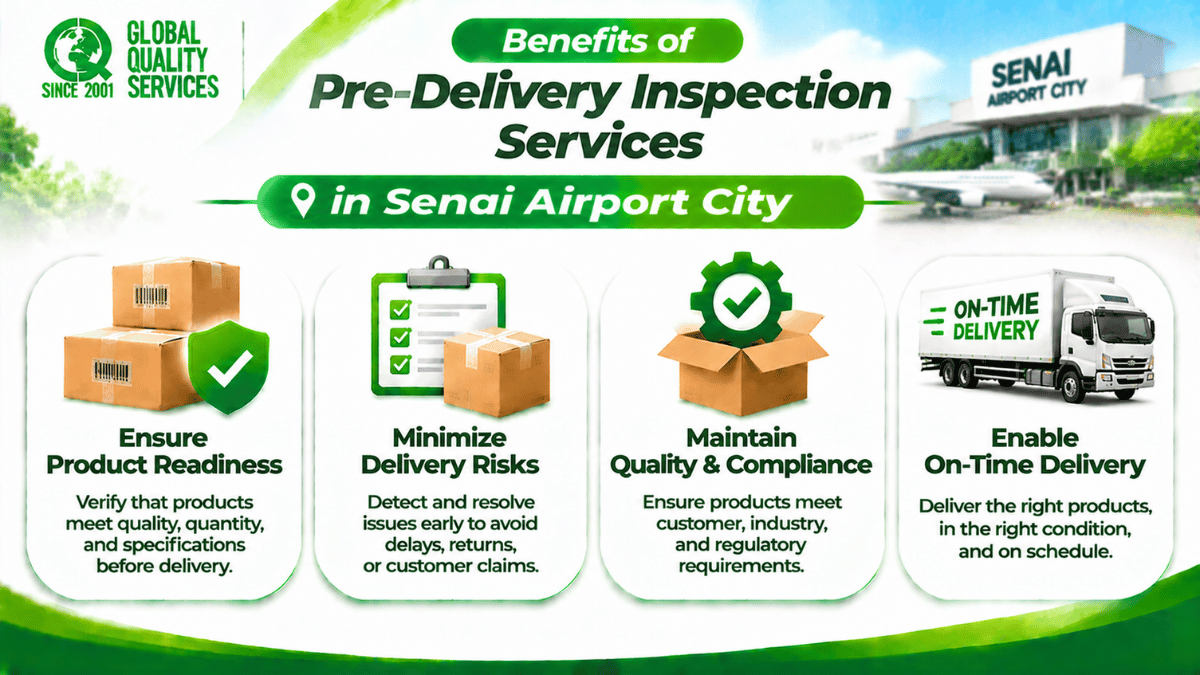
A pre-delivery inspection gives buyers a documented view of the equipment’s condition and conformity at an important point in the purchasing process. It can help identify discrepancies while the supplier still has access to the equipment.
Identify Differences Before Dispatch
An inspection can reveal incorrect models, missing accessories, incomplete assemblies or visible defects before the equipment is shipped. Buyers can review these findings with the supplier and decide whether corrective action is needed before dispatch.
Reduce Equipment Installation Delays
Missing components, incorrect connections or incomplete documentation can delay installation. Checking the supplied configuration and listed accessories before delivery helps buyers identify these issues earlier.
Maintain a Record of Equipment Condition
Photographs and inspection findings provide a record of the equipment’s observed condition at the time of inspection. This can be useful when reviewing delivery discrepancies or discussing damage with a supplier or logistics provider.
Check Compliance With Purchase Requirements
Comparing the supplied equipment with the purchase order, approved drawings and technical specifications helps identify deviations that may otherwise be noticed only after delivery.
Improve Supplier and Delivery Accountability
A third-party inspection report gives the buyer and supplier a common record of the observations made during the inspection. It can support discussions about nonconformities, pending items and corrective actions before handover.
Areas Covered Around Senai Airport City
Inspection assignments can be arranged in Senai Airport City and nearby industrial and commercial locations in the Senai and Kulai area, subject to scheduling and access.
- Senai Airport City: Manufacturing facilities, industrial units, logistics operations and equipment suppliers within the development.
- i-Park @ Senai Airport City: Industrial and manufacturing premises within this industrial precinct.
- Senai Industrial Area: Businesses involved in manufacturing, engineering and related industrial activities.
- Senai International Airport vicinity: Facilities and businesses associated with air cargo, logistics and airport-linked operations.
- Kulai Industrial Areas: Manufacturing and distribution facilities in the wider Kulai industrial area.
- Indahpura, Kulai: Industrial and commercial facilities serving manufacturing and logistics businesses.
Our Pre-Delivery Inspection Process
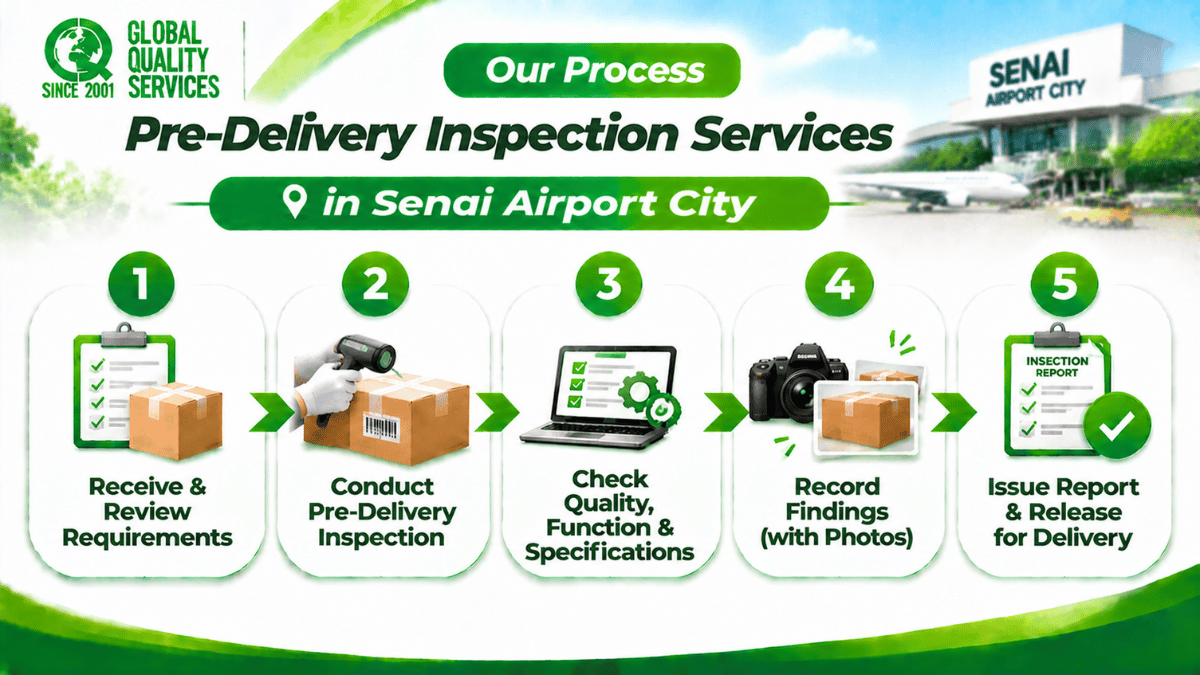
Global Quality Services follows an inspection process based on the equipment type, buyer’s requirements and agreed inspection scope.
1. Review of Purchase and Technical Documents
The process begins with a review of the purchase order, technical datasheets, approved drawings, equipment specifications and other relevant documents. The inspection requirements and acceptance criteria are identified before the visit.
2. Preparation of the Inspection Checklist
A checklist is prepared around the equipment’s identification, quantity, physical condition, assembly, electrical or mechanical features, functional checks and documentation. Product-specific requirements are included where they have been provided by the buyer.
3. Supplier Coordination and Inspection Readiness
The inspection schedule is coordinated with the supplier. Equipment availability, inspection location, access arrangements, operating facilities and the availability of relevant documents are confirmed.
4. Physical Inspection and Verification
The inspector examines the equipment and compares its identification, configuration, visible condition and supplied components with the agreed requirements. Observations are recorded, with photographs where permitted.
5. Functional Checks and Test Observation
If included in the agreed scope, selected functions are observed under the conditions made available by the supplier. The results are recorded against the specified checks. Tests requiring specialist facilities or certification are not represented as completed unless separately arranged.
6. Recording of Findings
Any observed discrepancy is documented with relevant details, such as equipment identification, location of the issue, description and supporting photographs. Findings are recorded objectively rather than treated as accepted or rejected without reference to the agreed criteria.
7. Inspection Report and Follow-Up
The inspection report presents the scope, inspection observations, available test results and identified deviations. Where corrective action or reinspection is requested, the follow-up scope can be agreed with the buyer.
Why Choose Global Quality Services for PDI in Senai Airport City?
Global Quality Services provides independent third-party inspection services for buyers, importers, manufacturers and businesses procuring industrial equipment. Inspection requirements are established around the purchase documents, equipment type and agreed acceptance criteria.
The inspection focuses on observable evidence and documented findings. Buyers receive a report that helps them review equipment condition, identify deviations and discuss unresolved issues with the supplier before accepting delivery.
The scope can be arranged for individual machines, equipment batches, production-line components, electrical systems and warehouse equipment. Inspection arrangements depend on product availability, access, safety requirements and the checks agreed in advance.
Frequently Asked Questions
1. When should a pre-delivery inspection be arranged?
PDI is generally arranged when the equipment is ready for inspection but before dispatch or final handover. The exact timing depends on the purchase agreement and whether the buyer needs to witness testing, verify packing or review outstanding work before shipment.
2. Can Global Quality Services inspect machinery and electronic equipment in Senai Airport City?
Yes. Inspection arrangements can cover industrial machinery, electrical and electronic equipment, production-line components, material-handling systems and other equipment. The checklist is prepared according to the product and agreed inspection requirements.
3. Does a PDI include equipment performance testing?
It can include selected functional checks when the equipment is ready, safe to operate and the required facilities are available. Detailed performance validation, calibration, load testing and specialist laboratory tests are separate unless specifically included in the agreed scope.
4. What documents are required before a PDI?
Buyers should provide the purchase order, technical specifications, approved drawings, equipment datasheets and acceptance criteria. Packing lists, accessory lists, test records and other relevant documents can also be shared for verification.
5. Does a PDI certificate guarantee that equipment will operate without problems?
No. A PDI records the equipment’s condition and the results of checks performed at a particular time. It does not guarantee future performance, establish long-term reliability or replace commissioning, statutory inspections, regulatory approvals or specialist testing.