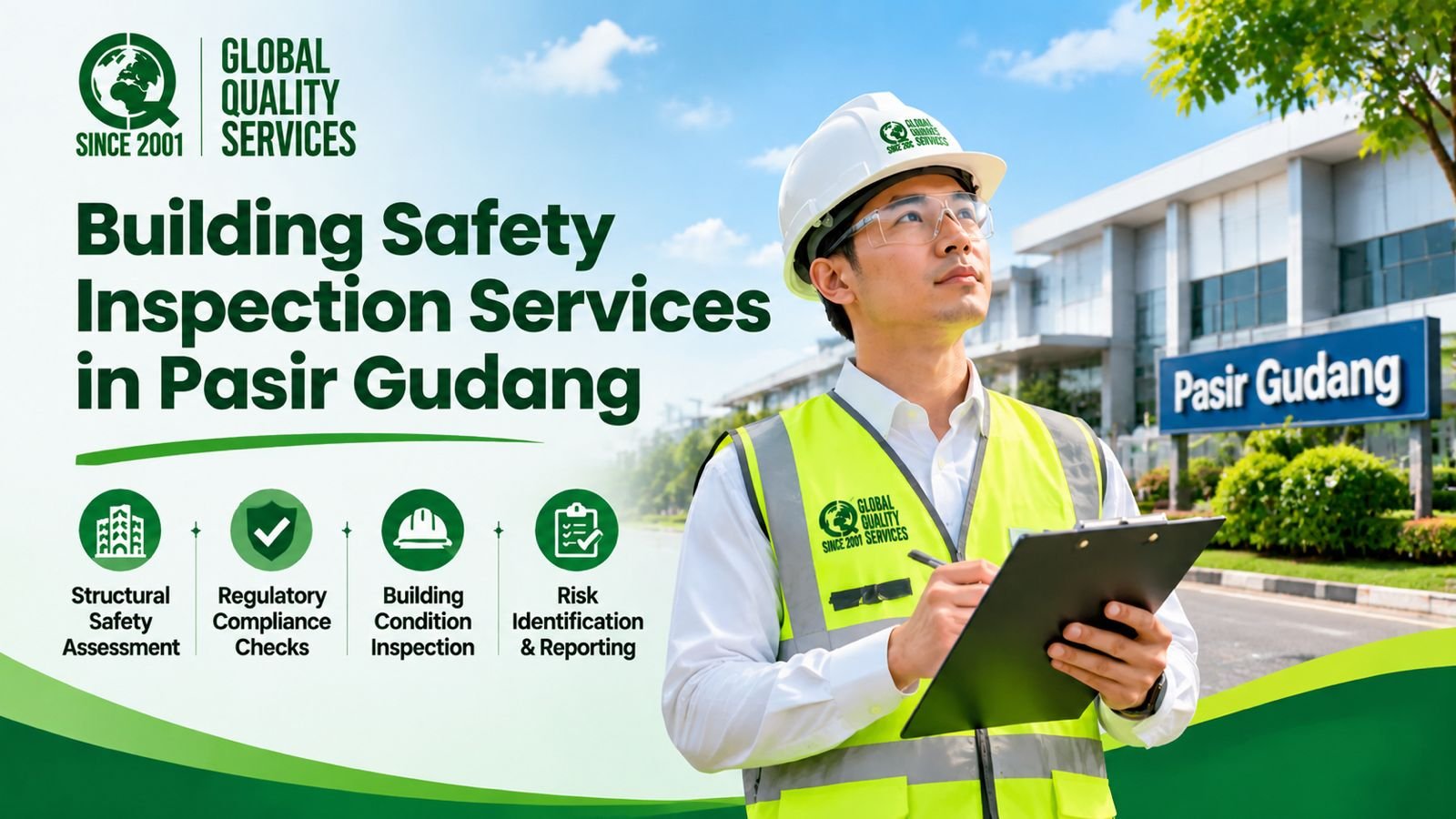
Pasir Gudang is one of Johor’s established industrial and port-related centres, with facilities supporting petrochemicals, manufacturing, bulk storage, logistics and other heavy industries. Its industrial ecosystem continues to attract investment. In 2025, the chemical and petrochemical cluster covering Pasir Gudang, Tanjung Langsat and Pengerang recorded RM8 billion in approved investments across 13 projects, according to the Malaysian Investment Development Authority (MIDA).
As industrial activity expands, maintaining the physical condition and safety of buildings becomes increasingly important. Ageing structures, roof deterioration, water ingress, corrosion, damaged concrete and poorly maintained access areas can affect building performance and occupant safety.
Global Quality Services provides Building Safety Inspection Services in Pasir Gudang, Malaysia, to help property owners, facility managers, manufacturers and building management teams assess visible building conditions and identify defects that may require further investigation or corrective action.
What Are Building Safety Inspection Services?
Building safety inspection is a systematic assessment of a property’s visible condition, construction elements and accessible safety-related features. It helps identify deterioration, defects, maintenance concerns and conditions that could affect the safe use of a building.
The inspection can cover industrial buildings, factories, warehouses, commercial premises, offices, institutional facilities and residential properties.
Depending on the property’s design and inspection requirements, the assessment may include:
- Structural elements such as columns, beams, slabs and accessible foundations.
- External walls, facades, roofs and waterproofing systems.
- Floors, ceilings, staircases, balconies and access routes.
- Visible building services and selected safety-related installations.
- External areas, drainage conditions and building surroundings.
The inspection scope is established according to the building type, accessibility, available documentation and the client’s requirements.
Why Building Safety Inspections Matter in Pasir Gudang
Buildings in Pasir Gudang serve different operational purposes, from manufacturing and warehousing to offices, storage facilities and port-related activities. Their inspection requirements can vary according to building age, construction materials, occupancy and surrounding environmental conditions.
Exposure to Corrosion and Industrial Environments
Industrial properties may experience exposure to moisture, airborne contaminants and corrosive substances, depending on their location and operations. Over time, these conditions can contribute to corrosion of exposed steelwork, deterioration of protective coatings and damage to building components.
Inspections can identify visible corrosion, coating failure, damaged cladding and other signs of deterioration that require maintenance or specialist assessment.
Structural Deterioration in Older Buildings
Older factories and warehouses may have experienced years of heavy use, equipment movement, alterations and repeated maintenance work. Cracks, concrete spalling, exposed reinforcement, deflection and damaged structural connections can indicate potential concerns.
Identifying these conditions early helps property owners determine whether maintenance, engineering assessment or more detailed investigation is necessary.
Roof Leakage and Water Ingress
Large industrial roofs, warehouses and production facilities can develop leaks due to damaged waterproofing, deteriorated joints, blocked drainage outlets or ageing roof materials.
Water ingress can damage ceilings, electrical installations, stored materials and internal finishes. Inspections help identify visible signs of leakage and the areas that may need further examination.
Safe Access and Occupancy
Damaged staircases, loose handrails, uneven flooring, deteriorated walkways and defective external access areas can create risks for employees, visitors and contractors.
Regular inspections help facility managers identify these conditions and prioritise appropriate corrective work.
Benefits of Regular Building Safety Inspections
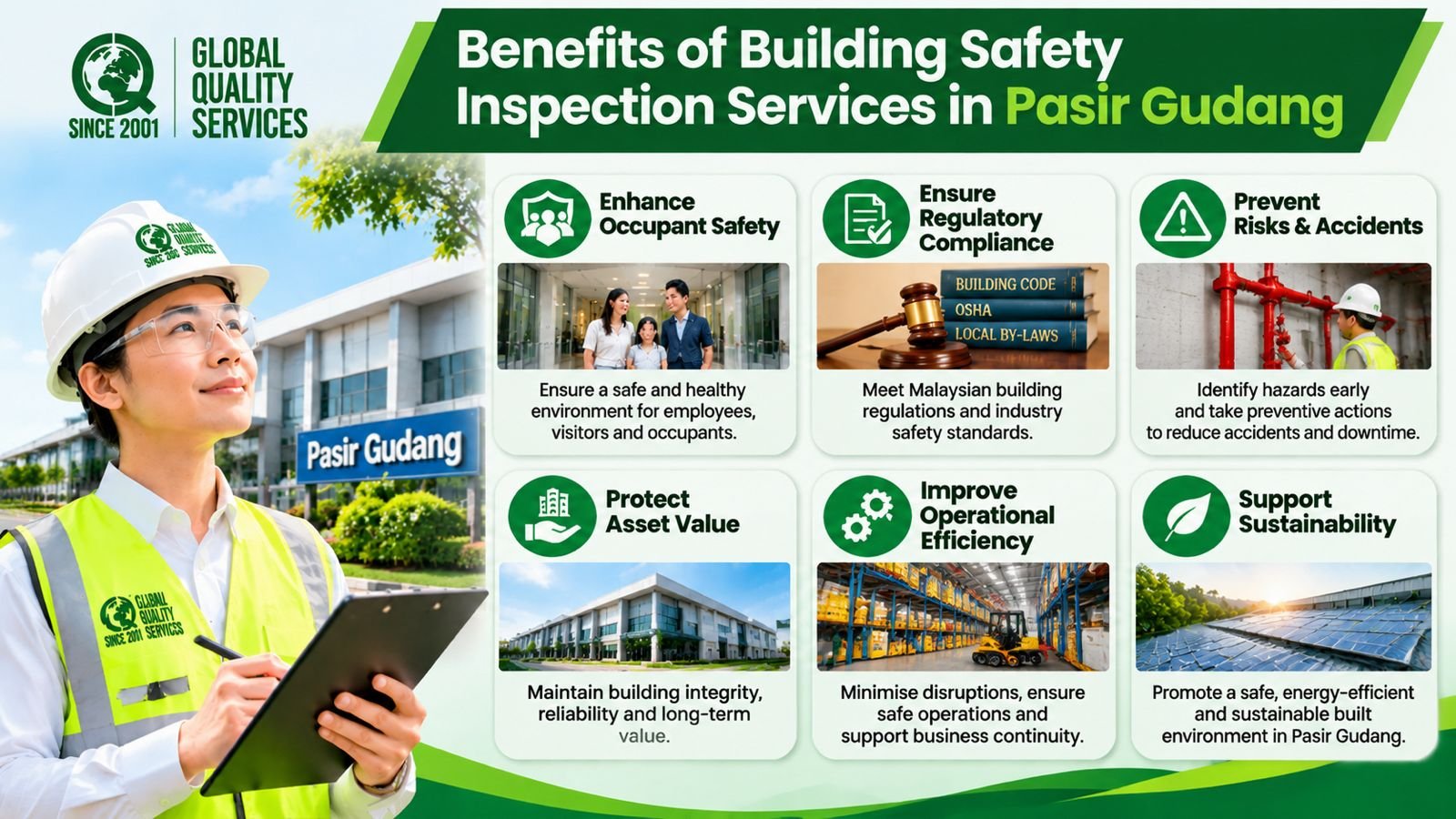
A planned inspection programme gives property owners and facility managers a clearer understanding of building conditions. It can help them:
- Identify defects earlier: Detect visible deterioration before it develops into more extensive damage.
- Prioritise maintenance: Understand which building components need attention and which conditions require specialist evaluation.
- Improve occupant safety: Identify damaged access routes, deteriorated components and visible safety concerns.
- Support asset management: Maintain inspection records that help track recurring defects and building condition changes.
- Plan maintenance budgets: Use documented findings to support repair planning and maintenance decisions.
- Strengthen property oversight: Give owners and management teams a structured record of the inspected areas and identified concerns.
What Does a Building Safety Inspection Cover?
The inspection scope is adjusted to suit the property. For industrial and commercial buildings in Pasir Gudang, the assessment may include the following areas.
Structural Components
Accessible structural elements are examined for visible signs of distress or deterioration. These may include reinforced concrete columns and beams, floor slabs, structural walls, steel members and accessible connections.
Inspectors look for cracks, concrete spalling, exposed reinforcement, corrosion, deformation and other visible abnormalities. Where a defect may affect structural capacity, a suitably qualified Professional Engineer may need to conduct a separate engineering assessment.
Roofs and Building Envelope
Roofing systems, external walls, facades, cladding, windows, doors and accessible waterproofing details are checked for visible defects.
The assessment may identify damaged roof sheets, deteriorated sealants, loose external components, water stains, leakage points and damaged wall finishes. Particular attention may be given to large-span industrial roofs and warehouse structures.
Floors, Ceilings and Internal Areas
Internal spaces are examined for damaged flooring, uneven surfaces, ceiling deterioration, cracks, dampness and other visible defects.
In factories and warehouses, the assessment may also consider the condition of accessible floors in areas exposed to regular equipment movement or material handling.
Staircases, Balconies and Access Routes
Staircases, landings, balconies, corridors, handrails and accessible walkways are checked for visible damage and unsafe conditions.
The inspection can identify loose handrails, cracked steps, damaged floor finishes, obstructions and deterioration affecting normal access.
Drainage and External Areas
External inspection may cover visible surface drainage, accessible inspection chambers, paved areas, boundary walls, retaining structures and the immediate building surroundings.
Poor drainage, standing water, settlement and damaged external surfaces may indicate maintenance concerns or conditions requiring further investigation.
Visible Building Services and Safety Features
Where included in the agreed scope, inspectors may visually examine accessible building services and selected safety-related features. This can include visible electrical distribution components, service routes, emergency exits, exit signage and accessible fire safety installations.
This is a visual condition assessment, not a substitute for specialist electrical testing, fire system certification, lift inspection or mechanical engineering assessment.
Common Building Defects Identified During Inspections
The following defects may be identified during building safety inspections in Pasir Gudang:
- Cracks in concrete walls, beams, columns and floor slabs.
- Concrete spalling and exposed reinforcement.
- Corrosion of steel structures, connections and exposed metal components.
- Roof leakage, damaged waterproofing and deteriorated sealants.
- Loose cladding, damaged external finishes and wall deterioration.
- Uneven floors, settlement and damaged access routes.
- Blocked drainage outlets and water accumulation.
- Damaged ceilings, staircases, handrails and other accessible building components.
Not every crack or surface defect indicates structural failure. Its significance depends on its location, pattern, size, progression and the building’s overall condition. Further technical evaluation may be necessary before determining the cause and severity.
Section 85A: Periodic Building Inspection Requirements in Malaysia
Malaysia’s Street, Drainage and Building Act 1974 (Act 133) includes provisions for periodic inspection of certain buildings and slopes under Section 85A.
The section applies to buildings exceeding five storeys, including qualifying lower-ground storeys. It allows the local authority to issue a written notice requiring inspection after the tenth year from the date the Certificate of Completion and Compliance (CCC) was issued. Subsequent inspections may be required at intervals not exceeding ten years from the completion of the previous inspection.
The section also covers qualifying slopes with a gradient exceeding 25 degrees and a total vertical height exceeding 10 metres, subject to separate inspection provisions.
Where a notice is issued under Section 85A, the owner must arrange the required inspection through a Professional Engineer registered under the Registration of Engineers Act 1967. A general visual building inspection does not automatically fulfil this statutory requirement.
For property owners and building managers in Pasir Gudang, it is important to understand the applicable requirements and coordinate with the relevant local authority when statutory inspection obligations arise.
Our Building Safety Inspection Process
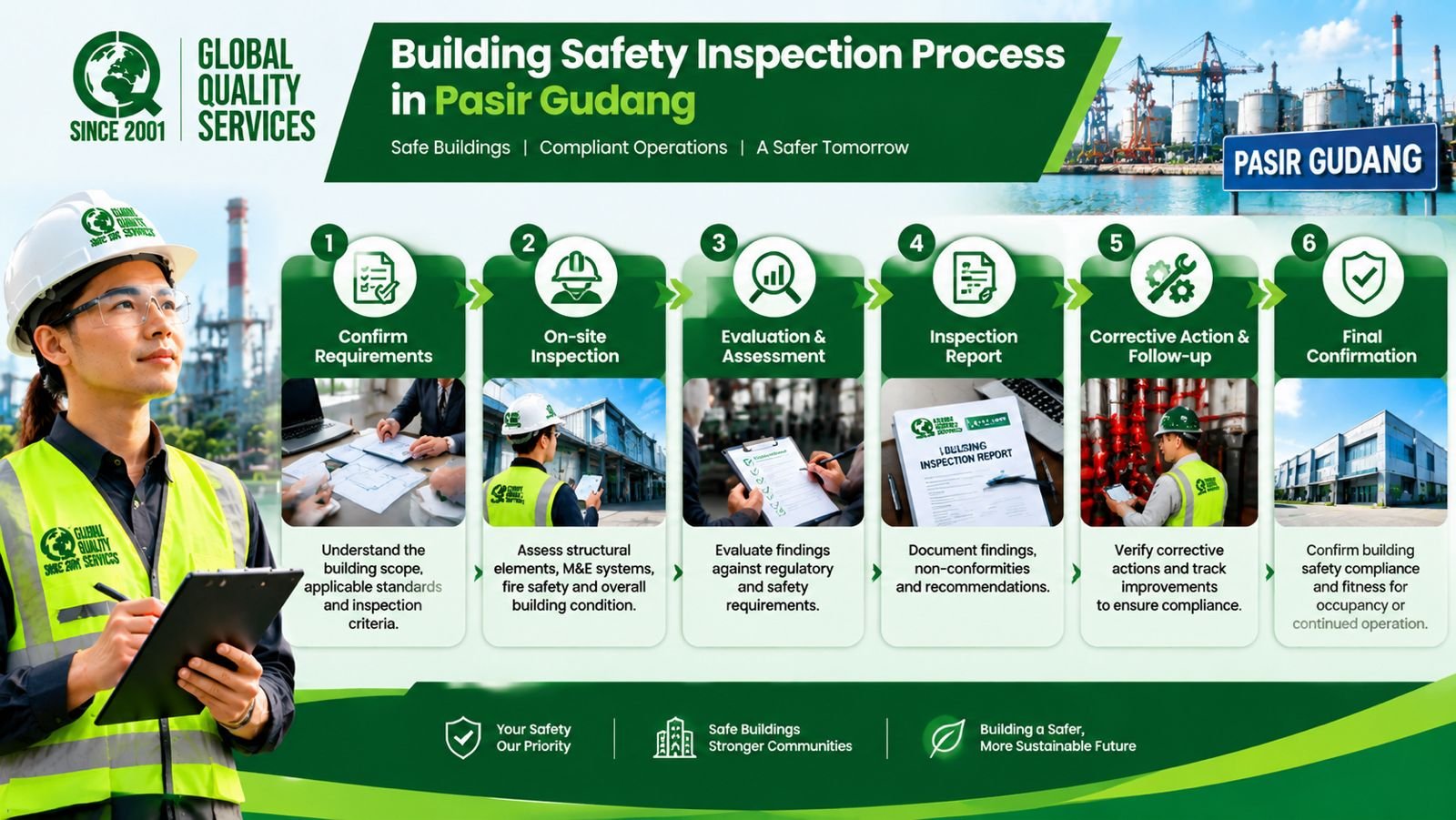
Global Quality Services follows a structured inspection process based on the agreed scope and property requirements.
1. Initial Requirement Review
The inspection begins with a review of the building type, location, age, intended use and inspection objectives. Available drawings, maintenance records, previous inspection reports and relevant building information may also be reviewed.
2. Inspection Scope and Planning
The inspection areas, access arrangements, site requirements and reporting expectations are established. For operational industrial facilities, the inspection schedule is coordinated with site representatives to account for access restrictions and ongoing activities.
3. On-Site Building Inspection
The inspection team examines the agreed accessible areas and building components. Visible defects, deterioration, maintenance concerns and safety-related observations are documented through appropriate inspection records and photographs where permitted.
4. Findings and Documentation
Observations are organised into an inspection report describing the inspected areas, identified defects and relevant supporting evidence. Findings may be classified according to their observed condition and the agreed reporting criteria.
5. Reporting and Further Action
The report provides property owners and management teams with a record of inspection findings. Where observations indicate a possible structural, electrical, mechanical or fire safety concern, further assessment by the appropriately qualified specialist may be recommended.
Why Choose Global Quality Services?
Global Quality Services provides structured inspection services for organisations that require an objective assessment of building conditions. The inspection approach focuses on documenting visible defects, recording relevant observations and presenting findings in a clear and organised format.
For industrial and commercial properties in Pasir Gudang, the inspection scope can be aligned with the building’s use, physical characteristics and operational environment.
Our approach emphasises:
- Inspection planning based on the property’s requirements.
- Systematic examination of agreed building components.
- Clear documentation of visible defects and observations.
- Photographic evidence where appropriate and permitted.
- Structured reporting to support maintenance and further evaluation.
The inspection report is based on the agreed scope and accessible conditions at the time of inspection. It does not replace statutory approvals, specialist testing or engineering certification.
Contact Global Quality Services to discuss Building Safety Inspection Services in Pasir Gudang, Malaysia. Share your property type, location and inspection requirements so that an appropriate scope can be established.
Frequently Asked Questions
1. Which buildings require safety inspections in Pasir Gudang?
Building safety inspections may be relevant to factories, warehouses, commercial premises, offices, residential buildings and industrial facilities. The inspection scope depends on the property’s condition, age, use and applicable regulatory requirements.
2. Is building safety inspection mandatory in Malaysia?
Certain buildings and slopes are subject to periodic inspection provisions under Section 85A of the Street, Drainage and Building Act 1974. For qualifying buildings, the local authority may issue a written notice requiring inspection. The statutory inspection must be carried out by a registered Professional Engineer.
3. What defects can be identified during a building safety inspection?
An inspection may identify visible cracks, concrete spalling, exposed reinforcement, corrosion, roof leakage, damaged waterproofing, deteriorated cladding, uneven floors, defective handrails and drainage concerns. Further investigation may be required to establish the cause and severity of certain defects.
4. Does a building safety inspection include structural testing?
A standard visual inspection does not automatically include structural testing, load testing, material sampling or engineering calculations. These activities require a separately defined scope and appropriately qualified professionals.
5. How often should a building be inspected?
Inspection frequency depends on the building’s age, construction, condition, usage, maintenance history and applicable requirements. Property owners should establish a suitable inspection and maintenance programme. Where Section 85A applies, the statutory inspection schedule and any written notice from the local authority must be followed.