The responsible management of used electronic equipment is important for businesses involved in electronics recovery, refurbishment, repair, and recycling. These activities require controls for environmental protection, worker safety, data security, and material handling throughout the recycling chain.
R2v3 certification is based on the Responsible Recycling Standard developed by Sustainable Electronics Recycling International (SERI). It establishes requirements for facilities that manage used electronics and related materials, providing a framework for responsible reuse, refurbishment, and recycling practices.
Batu Kawan Industrial Park in Penang is home to businesses operating in semiconductor manufacturing, electronics, data storage, medical devices, and other advanced manufacturing sectors. This industrial environment creates potential relevance for organizations managing used electronic equipment, production-related electronic assets, and end-of-life materials.
GQS provides R2v3 certification-related services for eligible facilities in Batu Kawan Industrial Park, Malaysia. The certification scope is determined according to the facility’s activities and the applicable requirements of the R2v3 Standard.
What Is R2V3 Certification in Batu Kawan Industrial Park Malaysia?
R2v3 is the third version of SERI’s Responsible Recycling Standard. It applies to facilities that manage used electronics and related materials.
The standard is organized into two main groups:
- Core Requirements: These apply to every R2-certified facility and address areas such as environmental, health and safety management, legal compliance, data security, downstream vendor management, and responsible material handling.
- Process Requirements: These apply according to the specialized activities performed by the facility. They cover processes such as data sanitization, testing and repair, materials recovery, and other defined electronics management activities.
This structure allows facilities to establish a certification scope that reflects their actual capabilities. The certified activities are identified within the facility’s certification scope.
Why Is R2v3 Certification Important in Batu Kawan Malaysia?
Batu Kawan Industrial Park has attracted electronics manufacturers, semiconductor companies, engineering businesses, and medical device producers. Organizations in these sectors may generate obsolete equipment, electronic components, returned products, and other materials that require proper management.
Businesses that collect, test, repair, refurbish, or recycle used electronics need defined procedures to manage these materials responsibly.
R2v3 certification is particularly relevant to:
- Electronics recycling and recovery facilities.
- IT asset disposition (ITAD) companies.
- Used computer and electronic equipment refurbishers.
- Electronics repair and testing facilities.
- Businesses recovering reusable components and materials.
- Organizations handling end-of-life electronic equipment.
Certification can provide customers and business partners with evidence that a specific facility has been independently assessed against the applicable R2v3 requirements.
Key Requirements of R2v3 Certification in Malaysia
1. Environmental, Health, and Safety Management
Facilities must establish appropriate environmental, health, and safety controls for their operations. These include identifying workplace hazards, managing environmental risks, and maintaining safe procedures for handling electronic equipment and materials.
2. Legal and Regulatory Compliance
Organizations must identify applicable legal requirements and maintain processes to evaluate compliance. These may relate to environmental protection, waste management, occupational safety, and the handling or movement of regulated materials.
3. Data Security and Sanitization
Used electronic equipment may contain confidential business information and personal data. Facilities performing data sanitization must establish appropriate procedures for secure data handling and sanitization activities.
4. Downstream Vendor Management
Facilities transferring equipment or recovered materials to external processors must maintain appropriate oversight of downstream vendors. This includes vendor qualification, documentation, and verification of relevant management practices.
5. Responsible Reuse and Recovery
Facilities must establish processes for handling equipment intended for reuse, refurbishment, repair, or recycling. The applicable requirements depend on the operations performed and the relevant Process Requirement appendices.
6. Material Tracking and Documentation
Records must support the identification and tracking of equipment and materials received, processed, reused, transferred, or sent for further recovery.
7. Employee Training and Competence
Employees must understand the procedures and responsibilities relevant to their work. Training should address safe handling, environmental controls, data security, and other applicable operational requirements.
Benefits of R2v3 Certification
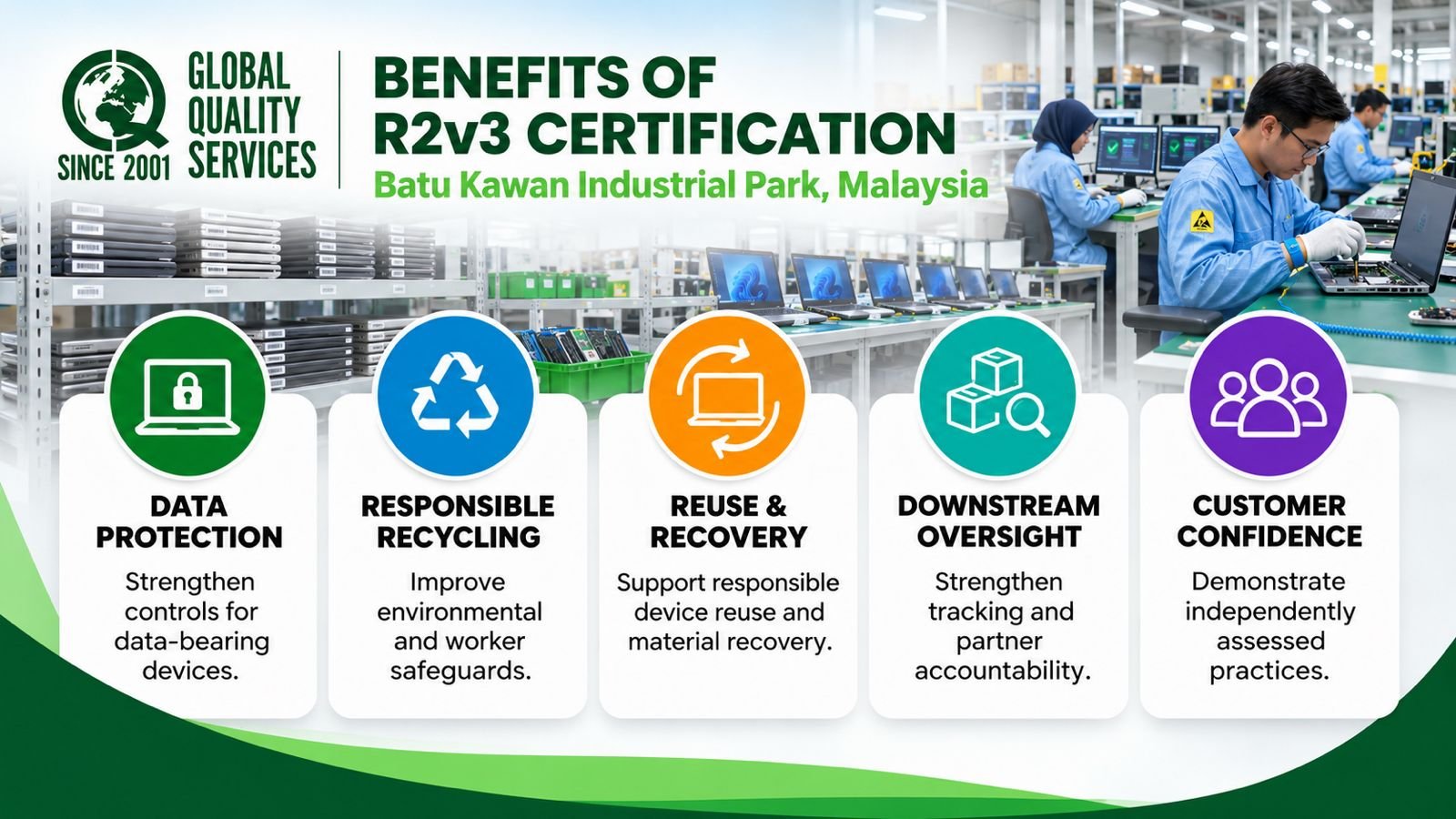
Demonstrate Responsible Electronics Management
Certification provides independent evidence that the facility has been assessed against applicable requirements for responsible electronics reuse and recycling.
Strengthen Data Security Practices
Defined procedures for handling data-bearing devices help organizations manage the risks associated with used computers, storage media, and other electronic equipment.
Improve Environmental and Workplace Controls
The standard encourages structured environmental and occupational health and safety practices for facilities involved in electronics processing.
Improve Downstream Vendor Accountability
Documented vendor qualification and monitoring help organizations maintain oversight of where equipment and recovered materials are transferred.
Build Customer Confidence
R2v3 certification can help demonstrate responsible operating practices to customers, electronics manufacturers, and business partners seeking qualified recycling and recovery facilities.
Establish Clear Facility Capabilities
The certification scope identifies the processes assessed at the facility. This helps customers understand whether a provider is certified for activities such as data sanitization, testing, repair, or materials recovery.
R2v3 Process Requirements: Which Appendices Apply?
Not every facility performs all electronics processing activities. R2v3 therefore includes specialized Process Requirements that apply only when a facility carries out the corresponding operations.
- Appendix A – Downstream Recycling Chain: Covers qualification and management of downstream vendors.
- Appendix B – Data Sanitization: Applies to facilities performing data sanitization activities.
- Appendix C – Test and Repair: Covers testing, repair, and preparation of electronic equipment for reuse.
- Appendix D – Specialty Electronics Reuse: Addresses applicable specialized electronics reuse activities.
- Appendix E – Materials Recovery: Applies to facilities undertaking materials recovery processes.
- Appendix F – Brokering: Covers relevant brokering activities.
- Appendix G – Photovoltaic Modules: Applies to facilities handling photovoltaic modules within the scope of the requirements.
The applicable appendices are determined by the facility’s actual processes. Any R2-related activities undertaken at the facility must be included in the certification scope.
R2v3 Certification Process in Batu Kawan Industrial Park
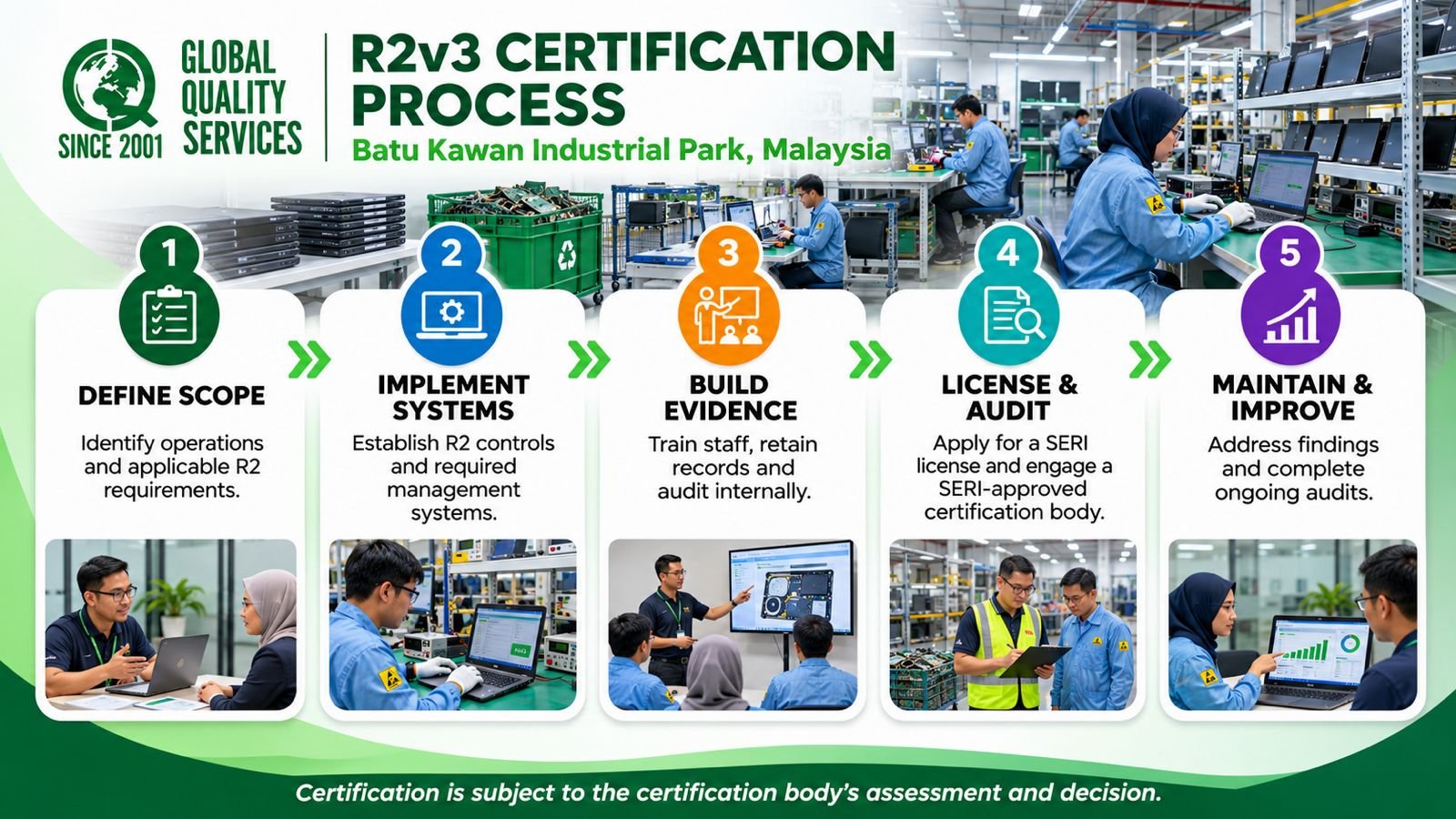
Step 1: Review Facility Operations
The organization’s activities are examined to determine whether they fall within the R2v3 scope. This includes reviewing equipment handling, refurbishment, data sanitization, and recycling processes.
Step 2: Identify Applicable Requirements
The relevant Core Requirements and Process Requirement appendices are determined according to the facility’s operations and material streams.
Step 3: Conduct a Gap Assessment
Existing environmental, health, and safety procedures, data security controls, downstream vendor records, and operational practices are evaluated against the standard.
Step 4: Establish and Implement Controls
The facility develops or updates its procedures, responsibilities, records, and operational controls to address applicable requirements.
Step 5: Conduct Internal Audits
Internal audits evaluate whether the R2v3 requirements are implemented across the defined scope. Identified nonconformities must be addressed through corrective actions.
Step 6: Complete Certification Prerequisites
The organization completes the applicable SERI licensing and program requirements, including the relevant management system and compliance prerequisites.
Step 7: Undergo the Certification Audit
A SERI-authorized certification body conducts the audit. The assessment includes reviewing documentation, facility operations, employee responsibilities, and evidence of implementation.
Step 8: Certification Decision
The certification body evaluates the audit findings and determines whether the facility meets the applicable requirements. Certification is granted only after the required review and approval.
Why Choose Global Quality Services for R2v3 Certification?
Global Quality Services provides certification services for organizations seeking to establish responsible electronics management practices aligned with R2v3 requirements.
For facilities in Batu Kawan Industrial Park, the certification approach considers the nature of the operations, materials handled, data security arrangements, environmental controls, and applicable Process Requirements.
The objective is to clarify the standard’s requirements, assess system readiness, and prepare the facility for an independent certification assessment. R2v3 certificates are issued by SERI-authorized certification bodies following the required audit and certification decision.
If your organization operates an electronics refurbishment, ITAD, repair, or recycling facility in Batu Kawan Industrial Park, contact GQS to discuss the applicable R2v3 requirements. Share your facility activities, processing capabilities, and existing management system certifications to establish the appropriate certification scope.
Frequently Asked Questions
1. Is R2v3 certification relevant to electronics manufacturers in Batu Kawan?
It may be relevant where a facility also handles used electronics through activities such as refurbishment, repair, data sanitization, or recycling. Manufacturing new electronic products alone does not automatically make a facility eligible for R2v3 certification.
2. Can an IT asset disposition company obtain R2v3 certification?
Yes. ITAD facilities may be eligible depending on their activities. The certification scope should identify applicable processes such as data sanitization, testing, repair, resale, and downstream material management.
3. Does a facility need every R2v3 appendix to become certified?
No. All certified facilities must meet the Core Requirements, but Process Requirements apply according to the specialized activities performed. The relevant appendices must be included in the certification scope.
4. Can R2v3 certification cover multiple activities at one facility?
Yes. Multiple eligible activities can be included where the facility performs them and can demonstrate conformity with the relevant requirements. The certification scope must accurately identify the activities assessed.
5. Who is authorized to issue an R2v3 certificate?
SERI-authorized certification bodies conduct the certification audits and make certification decisions. SERI administers the R2 program and its licensing requirements but does not issue individual facility certificates.