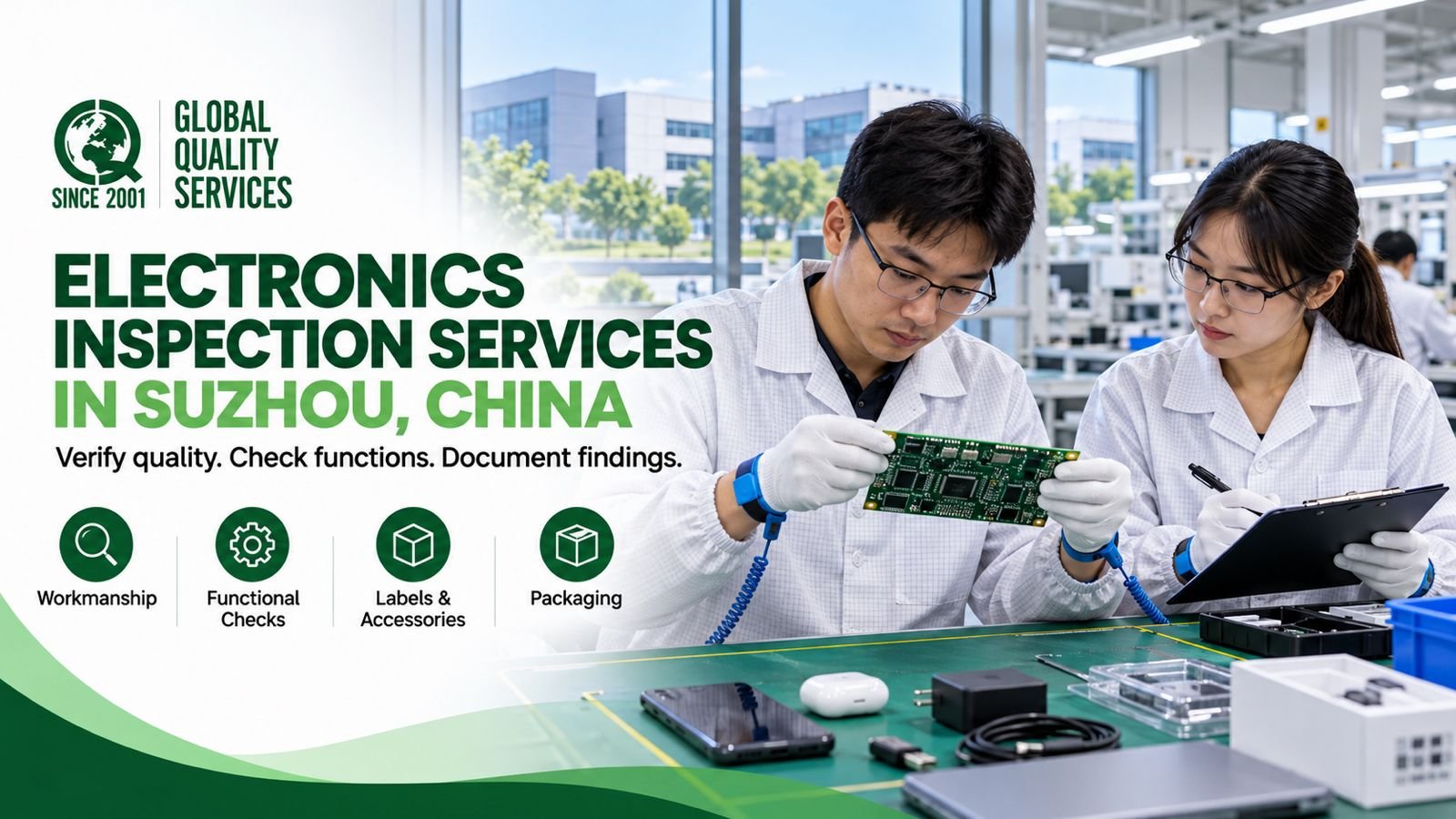
Electronics inspection services in Suzhou, China, help buyers and manufacturers check electronic products, components, assembly quality, functionality and packaging against agreed specifications before shipment or delivery.
Suzhou has a substantial electronics and advanced manufacturing base. In 2025, the city’s electronic information industry recorded output growth of 5.1%, while electronic and communications equipment manufacturing remained an important part of its industrial sector. This makes product quality checks relevant to businesses sourcing electronic components, electrical products and assembled devices from local suppliers.
GQS provides inspection services to assess products against defined requirements at suitable production or pre-shipment stages. The inspection scope depends on the product type, approved samples, technical specifications and checks agreed with the client.
Why Are Electronics Inspection Services Important in Suzhou?
Electronic products can contain multiple components, circuit boards, connectors and assembled parts. A defect in one component or an assembly issue can affect the performance, reliability or usability of the finished product.
An inspection helps buyers identify visible defects, component discrepancies, labelling errors and agreed functional issues before goods are dispatched. It also provides a documented record of the inspected products and any findings.
Electronics inspection can be particularly useful when purchasing from a new supplier, introducing a new product, managing large orders or verifying that production matches an approved sample.
What Do Electronics Inspection Services Cover?
The inspection checklist is tailored to the product and the client’s requirements. Common inspection areas include:
1. Product Specifications and Identification
Inspectors compare product models, part numbers, ratings, markings and other identifiable characteristics against purchase orders, approved samples or technical documents.
2. Electronic Components and Assembly
Checks may cover visible component placement, assembly condition, connectors, wiring and solder joints where accessible. Any specialised component-level examination should be agreed in advance.
3. PCB and Workmanship Inspection
Printed circuit boards and assembled electronic units can be checked for visible damage, contamination, loose parts, workmanship defects and other observable issues. Microscopic examination or automated testing requires specific equipment and must be confirmed separately.
4. Physical Appearance and Construction
The inspection can identify scratches, cracks, dents, loose fittings, damaged housings, uneven finishes and other visible defects that do not meet the agreed acceptance criteria.
5. Functional Checks
Where suitable test procedures and equipment are available, inspectors can perform agreed basic functional checks to determine whether the product operates as specified. These checks do not automatically establish long-term reliability or full technical compliance.
6. Accessories and Labelling
Inspectors verify the presence of specified accessories, cables, adapters, manuals and other supplied items. Product labels, model numbers, warning information and shipping marks can also be checked against approved requirements.
7. Packaging and Shipment Readiness
Packaging inspection covers carton condition, protective materials, product arrangement, quantity, shipping labels and other agreed packing requirements. This helps identify issues that could affect handling or delivery.
Benefits of Electronics Inspection Services
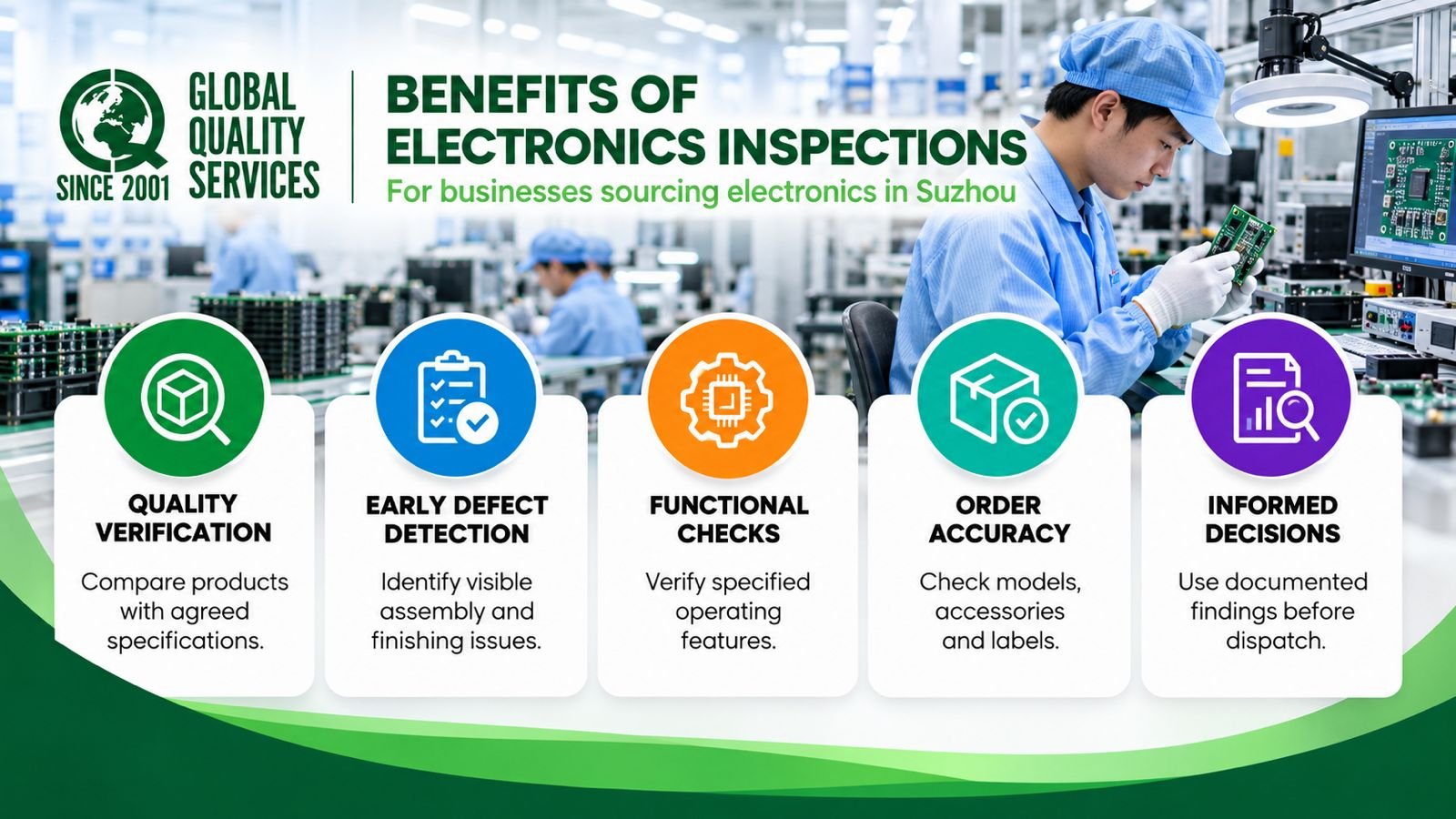
Identify Product Defects Before Shipment
Inspection can reveal visible workmanship issues, damaged components, incorrect assembly and other deviations before goods leave the supplier’s facility.
Verify Compliance With Agreed Specifications
Comparing products with approved samples, technical requirements and purchase orders helps buyers identify discrepancies before accepting an order.
Reduce the Risk of Returns and Rework
Detecting defects before dispatch gives suppliers an opportunity to investigate and correct issues, potentially reducing replacement shipments, returns and avoidable logistics costs.
Improve Supplier Quality Monitoring
Consistent inspection criteria and documented findings provide a common basis for discussing defects, corrective actions and recurring quality concerns with suppliers.
Check Order Completeness
Quantity, accessories, labelling and packaging checks help identify missing items or shipment discrepancies before delivery.
Support Informed Purchasing Decisions
An inspection report records the condition of the sampled products at the time of inspection. Buyers can use the findings to decide whether to accept the results, request corrective action or arrange further evaluation.
Electronics Inspection Process in Suzhou
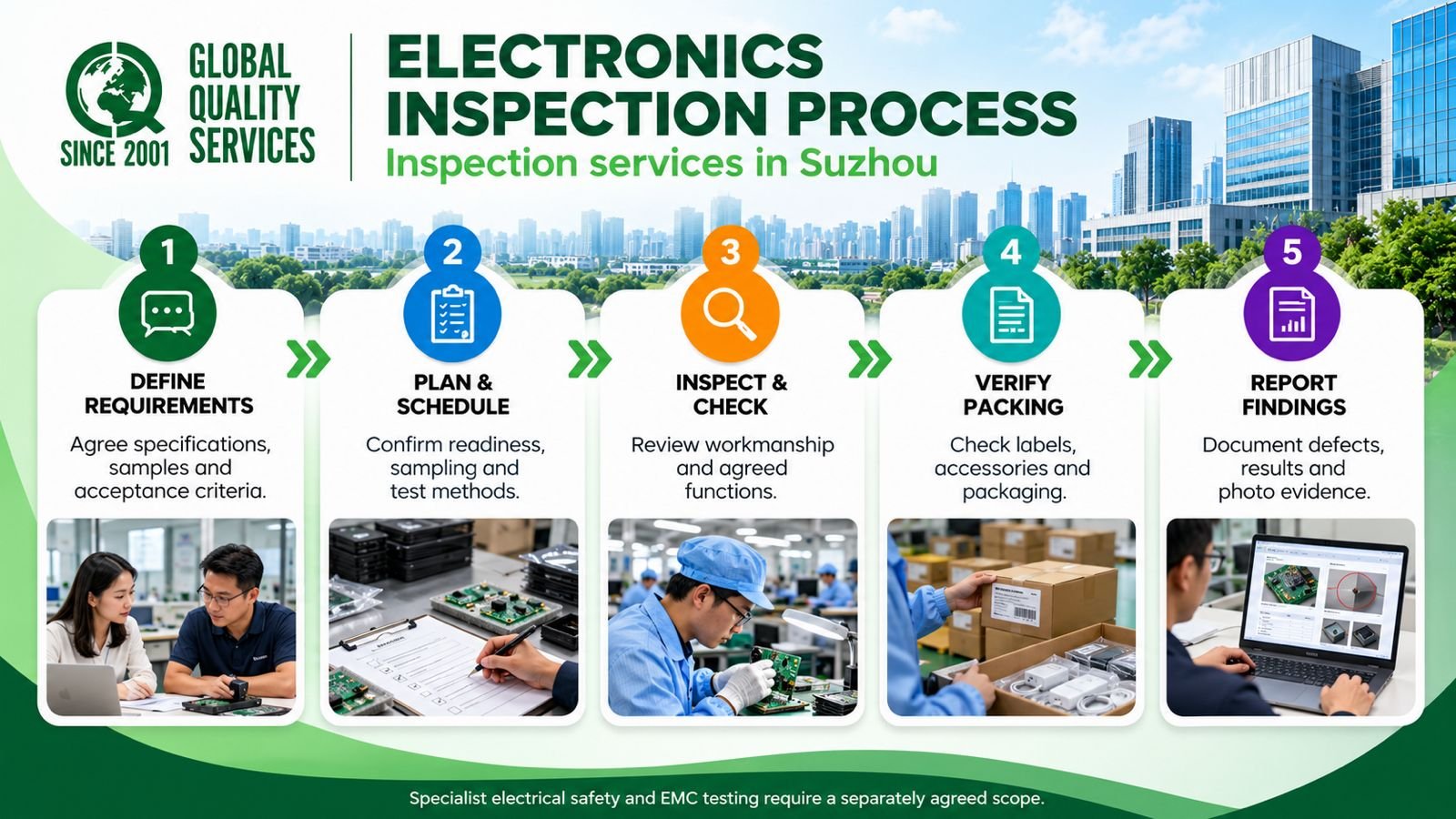
Step 1: Review Product Requirements
The inspection begins with the product specifications, purchase order, approved samples, drawings and any relevant acceptance criteria supplied by the client.
Step 2: Define the Inspection Scope
The parties agree on the inspection location, product quantity, sampling approach, checklist and required functional checks. Specialised testing must be confirmed separately.
Step 3: Examine Product Condition
Inspectors check product identification, visible workmanship, assembly, accessories and other agreed characteristics.
Step 4: Conduct Agreed Functional Checks
Where appropriate equipment and procedures are available, selected products are checked against the agreed operating criteria.
Step 5: Verify Packaging and Documentation
The inspection covers applicable labels, manuals, packaging, quantities and shipping information.
Step 6: Record Findings
Results are documented, including observed defects, discrepancies and relevant photographs where included in the agreed scope.
Step 7: Review Results and Next Actions
The client reviews the inspection report and determines whether corrective action, reinspection or further testing is needed before shipment or acceptance.
Which Products Can Be Inspected?
Depending on the agreed scope and available inspection capabilities, electronics inspection may cover:
- Printed circuit boards and assembled electronic units
- Electronic components and connectors
- Consumer electronics and accessories
- Electrical and electronic control devices
- Computer peripherals and office electronics
- Communication equipment
- Electronic assemblies for industrial machinery
- Power supplies, cables and adapters
- Electronic products prepared for export
The availability of specialised testing depends on the product, test method, equipment and technical requirements.
When Should You Arrange Electronics Inspection?
Businesses may arrange inspection at different stages of production and delivery, including:
- During production: To identify workmanship or assembly issues while manufacturing is in progress.
- Before shipment: To check finished goods against agreed specifications and packaging requirements.
- Before supplier approval: To assess sample products or an initial production batch.
- After corrective action: To verify whether previously identified issues have been addressed.
- Before accepting a large order: To obtain documented findings from an agreed sample of finished products.
The most suitable stage depends on product complexity, order size, supplier history and the potential consequences of defects.
Why Choose Global Quality Services for Electronics Inspection in Suzhou?
Global Quality Services can define an inspection scope around the client’s product requirements, acceptance criteria and shipment needs. A clearly documented checklist helps keep the inspection focused on relevant product characteristics and provides a consistent record of findings.
Before arranging an inspection, confirm the required technical checks, sampling method, location and reporting scope. Electronics inspection should not be presented as a substitute for laboratory testing, electrical safety certification or regulatory conformity assessment unless those services are specifically included and appropriately qualified.
Frequently Asked Questions
1. Should I inspect an electronics supplier before placing a bulk order?
Yes, evaluating sample products or an initial production batch can help you assess whether a supplier’s output meets your expectations before committing to a larger order. The appropriate checks depend on the product’s complexity, your quality requirements and the risks associated with defects.
2. What should I do if an inspection reveals defects in my electronic products?
Review the inspection findings against your agreed acceptance criteria and ask the supplier to investigate the identified issues. Depending on their severity, you may need corrective action, a follow-up inspection or additional technical testing before deciding whether to approve the goods.
3. Can I request an inspection based on my own product quality checklist?
Yes. Buyers can provide their product specifications, approved samples, drawings and quality requirements when defining the inspection scope. Discuss the checklist with the inspection provider beforehand to confirm which checks can be performed and how the results will be documented.
4. Can electronics inspection help me evaluate a new supplier in Suzhou?
An inspection can provide evidence about the condition and conformity of the products examined. This information can support supplier evaluation, but it should be considered alongside other factors, such as production capability, delivery performance, quality management practices, and previous order results.
5. What happens if the supplier is not ready for inspection on the scheduled date?
Contact the supplier and inspection provider as soon as possible to confirm production status and product availability. The inspection may need to be rescheduled if the agreed quantity is incomplete, products are not accessible or the required inspection conditions are not in place. Confirm any rescheduling arrangements and additional charges in advance.