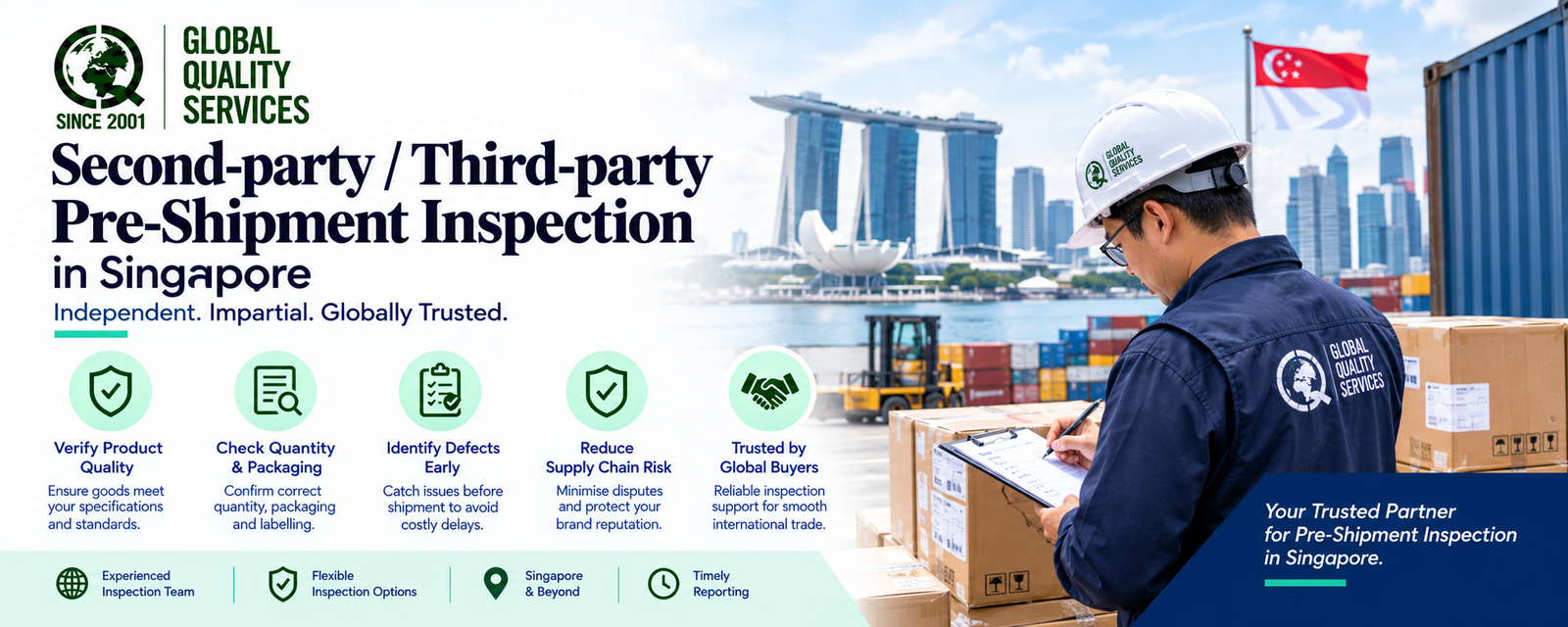
Products can meet production targets yet still fall short of a buyer’s requirements when they ship. Incorrect specifications, inconsistent workmanship, missing components, damaged packaging, and documentation errors can lead to rejected consignments, disputes, and delivery delays. Pre-shipment inspection provides a final opportunity to identify these issues before goods leave the supplier’s facility.
Global Quality Services (GQS) provides second-party and third-party inspection services to verify products against agreed specifications, purchase orders, technical documents, and acceptance criteria. Depending on the arrangement, inspections may be conducted by or on behalf of the purchaser, or by an independent inspection provider. The scope depends on the product, order requirements, and intended use.
What Is Second-Party / Third-Party Pre-Shipment Inspection?
Second-party and third-party pre-shipment inspections are quality verification activities performed before finished goods are shipped to the buyer or end customer. Both approaches assess whether the shipment meets specified requirements, but they differ in the inspector’s relationship to the parties involved.
Second-party pre-shipment inspection is performed by the purchaser, the purchaser’s quality team, or an appointed representative acting on the buyer’s behalf. The inspection focuses on the buyer’s contractual requirements, approved samples, product specifications, and delivery conditions.
Third-party pre-shipment inspection is conducted by an inspection provider independent of the buyer and supplier. It offers an objective assessment of the goods against the agreed inspection criteria and records the findings in an inspection report.
The appropriate model depends on the buyer’s quality assurance arrangements, contractual obligations, product risks, and need for independent verification.
What Do Pre-Shipment Inspection Services Cover?
The inspection scope is agreed before the visit so the assessment reflects the requirements of the specific order. Depending on the product and inspection plan, the following checks may be included.
Product Specifications and Workmanship
Inspectors examine selected products for visible defects, finishing issues, incorrect assembly, damage, and deviations from approved samples or technical drawings. The assessment may also cover product dimensions, materials, construction, and other specified characteristics.
Quantity and Order Completeness
The inspected quantity is compared with the purchase order, packing list, and agreed shipment details. Checks may identify shortages, excess quantities, missing accessories, incomplete sets, or incorrect product variants.
Functional and Performance Checks
Where applicable, selected products are tested against defined operating or performance requirements. These checks may include basic functionality, measurements, electrical operation, or other product-specific tests. Specialised testing is included only where it forms part of the agreed scope and suitable facilities are available.
Packaging and Product Protection
Packaging is examined to determine whether it is suitable for the product and the planned handling and transportation conditions. The inspection may cover inner packaging, protective materials, carton strength and condition, sealing, packing methods, and signs of damage.
Labels, Markings, and Identification
Inspectors verify product labels, model numbers, batch or serial numbers, barcodes, shipping marks, and other identification details against the approved requirements. Country-of-origin information or regulatory markings may also be checked when included in the inspection criteria.
Documents and Traceability
Relevant shipment and quality records may be reviewed for consistency with the order. Depending on the product, these can include packing lists, test reports, material records, batch details, certificates, and other documents specified by the buyer.
Why Is Pre-Shipment Inspection Important for Buyers and Suppliers?
A pre-shipment inspection creates a documented view of product conformity at a defined stage before dispatch. It allows the parties to address identified discrepancies while the goods remain at the manufacturing or storage facility.
Key reasons to arrange an inspection include:
- Reducing shipment-related risk: Identify visible defects, shortages, and specification mismatches before dispatch.
- Checking purchase order compliance: Compare finished goods with agreed requirements instead of relying only on production updates.
- Improving packaging readiness: Detect damaged cartons, inadequate protection, and incorrect shipping marks before transportation.
- Clarifying supplier performance: Maintain documented findings that can be discussed with the manufacturer or vendor.
- Supporting shipment decisions: Give relevant stakeholders inspection evidence to consider alongside contractual requirements and other release conditions.
- Maintaining consistent quality checks: Apply defined acceptance criteria across orders, production batches, and supplier locations.
Inspection findings do not guarantee that every item in a shipment is defect-free, particularly when sampling is used. Results should be interpreted according to the agreed inspection plan, sampling method, and acceptance criteria.
How Does the Pre-Shipment Inspection Process Work?
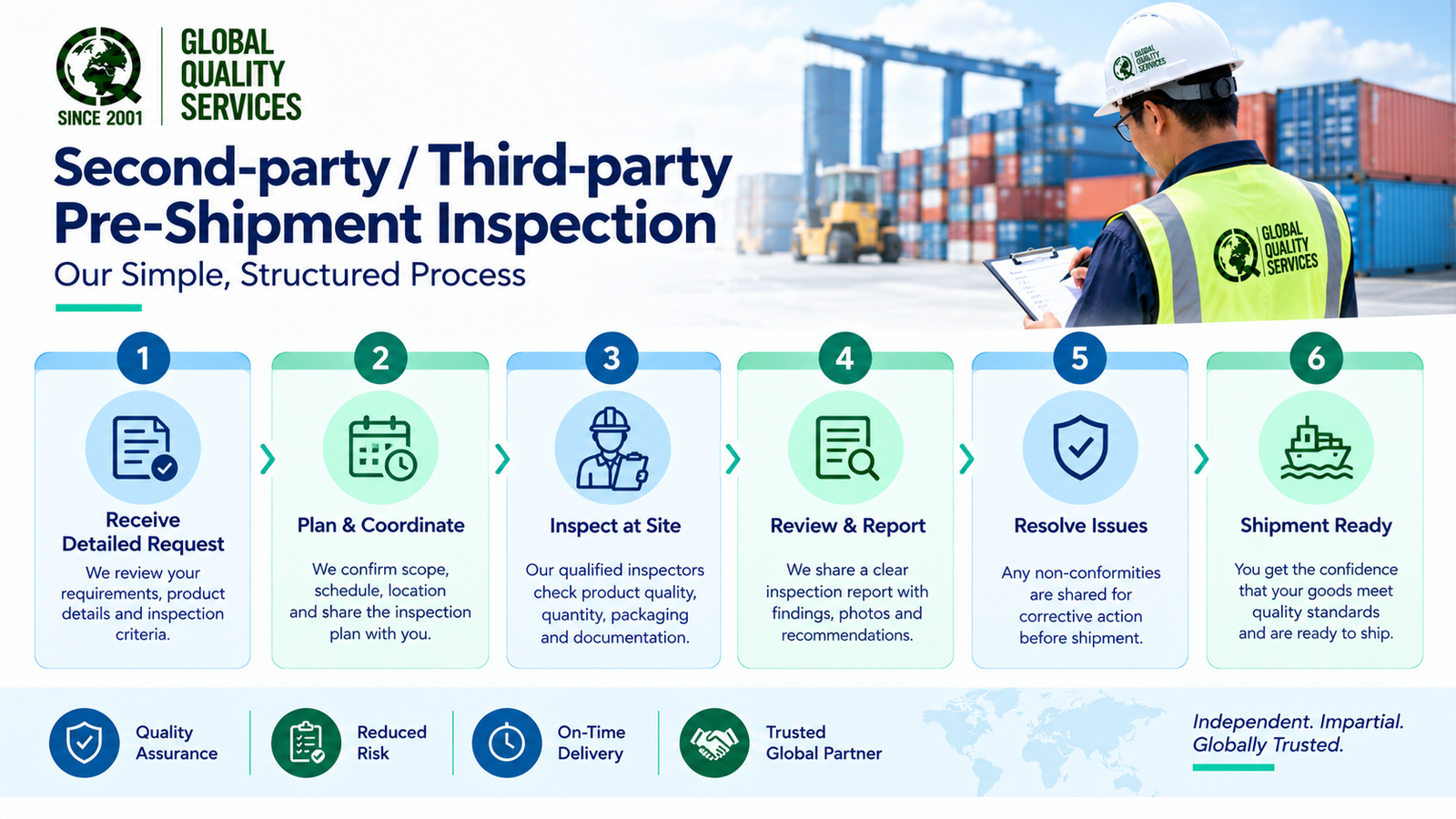
GQS follows an inspection process based on the agreed requirements and the nature of the products being assessed. Clear criteria and reporting expectations help ensure that the findings are relevant to the buyer’s order.
Step 1: Review the Order and Technical Requirements
The inspection begins with a review of the purchase order, product specifications, drawings, approved samples, quality requirements, packaging instructions, and relevant shipment documents. Any required testing, sampling, or acceptance criteria are identified before the inspection.
Step 2: Define the Inspection Plan
The inspection scope is set based on the product type, shipment size, risk level, and buyer requirements. The plan identifies the items to be checked, the sampling approach (where applicable), the inspection location, required tests, and the reporting format.
Step 3: Examine the Goods Before Dispatch
When the goods are ready for inspection, the inspector verifies the available shipment against the agreed criteria. Checks may cover product appearance, workmanship, dimensions, quantity, functionality, packaging, labelling, and documentation, depending on the scope.
Step 4: Record Findings and Non-Conformities
Observations are documented with relevant details and photographs where appropriate. Record identified discrepancies against the applicable requirement so the buyer and supplier can understand the nature and extent of the issue.
Step 5: Issue the Inspection Report
The inspection report summarises the inspection scope, goods examined, checks performed, findings, and any identified non-conformities. The report provides evidence for review by the relevant parties; it does not replace contractual acceptance or regulatory approval unless the applicable arrangement specifically provides for that outcome.
Step 6: Review Corrective Action and Re-Inspection
If the findings require corrective action, the buyer and supplier determine the next steps under their agreement. Rework, replacement, additional checks, or a follow-up inspection may be arranged where required.
Second-Party vs. Third-Party Pre-Shipment Inspection
Although both approaches verify products before dispatch, the main difference is who conducts the inspection and the level of independence built into the arrangement.
| Comparison | Second-Party Inspection | Third-Party Inspection |
|---|---|---|
| Who conducts it? | Buyer, buyer’s quality team, or appointed representative | Independent inspection provider |
| Primary relationship | Directly represents the purchaser’s requirements | Separate from both buyer and supplier |
| Main purpose | Confirm compliance with the buyer’s order and specifications | Provide an independent assessment against agreed criteria |
| Typical use | Supplier oversight and buyer-specific quality checks | Independent verification, contractual requirements, or additional assurance |
| Reporting | Shared according to the buyer’s inspection arrangement | Findings documented by the independent inspection provider |
The choice should reflect the inspection requirement rather than the label alone. The buyer may commission a third-party inspection or, in some arrangements, the supplier or another stakeholder. The inspection provider’s role, independence, scope, and reporting responsibilities should be agreed before work begins.
Benefits of Second-Party and Third-Party Pre-Shipment Inspection
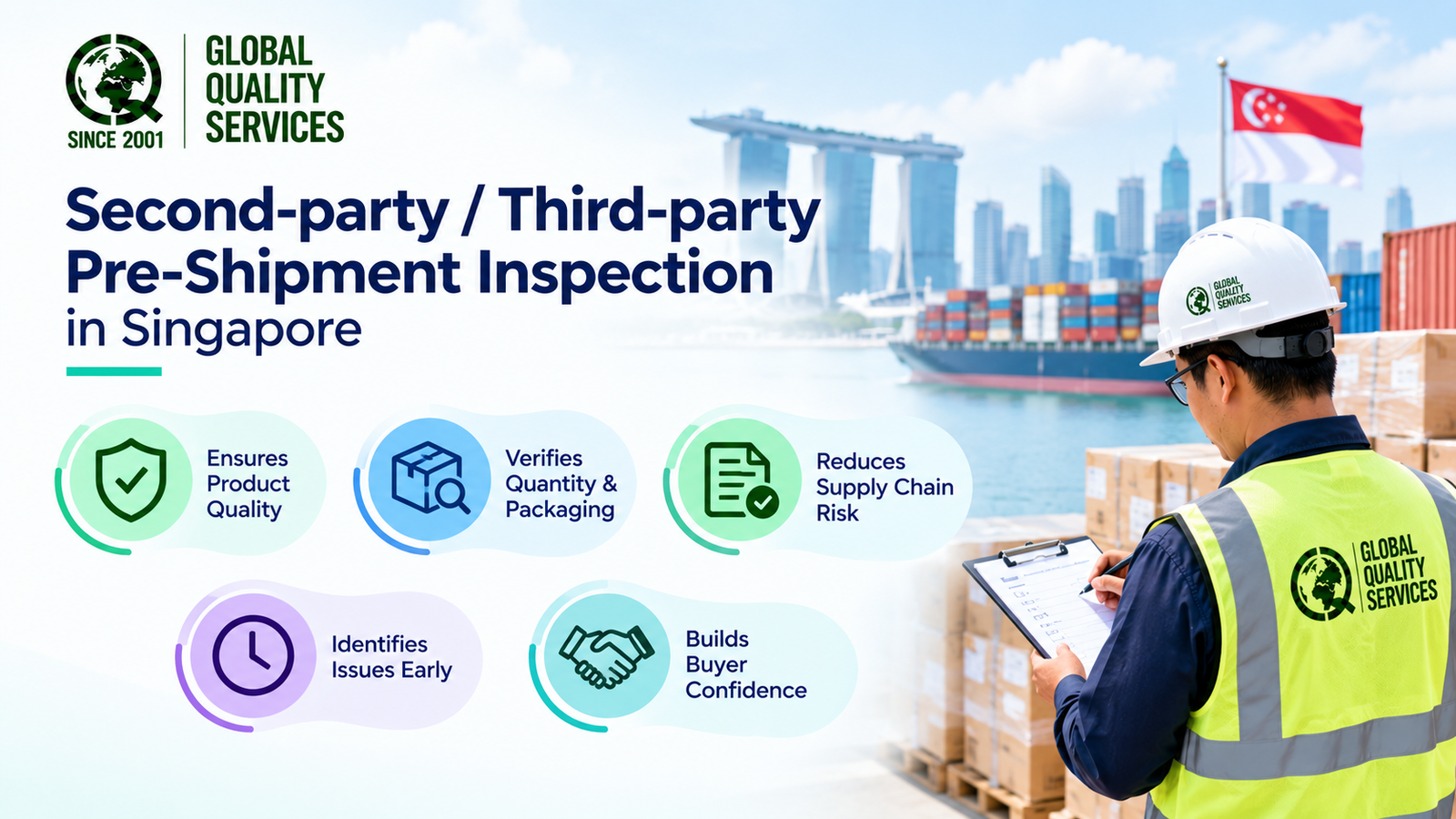
Second-party and third-party pre-shipment inspections help buyers assess product quality, verify order requirements, and identify potential issues before goods leave the supplier’s facility. Conducting an inspection before dispatch provides greater visibility into the finished order and helps businesses make informed decisions about shipment approval.
1. Verify Product Quality Before Dispatch
Inspection checks help confirm whether finished products meet the agreed specifications, approved samples, workmanship standards, and purchase order requirements before shipment.
2. Identify Defects and Non-Conformities Early
Inspectors can identify visible defects, incorrect components, quantity discrepancies, packaging issues, and other deviations while the goods are still at the supplier’s premises. This gives the supplier an opportunity to address findings before dispatch.
3. Reduce the Risk of Costly Returns and Rework
Finding quality or order-related issues before shipment can reduce the likelihood of returns, replacement shipments, rework, and additional logistics expenses after goods reach their destination.
4. Confirm Order Quantity and Packaging
Pre-shipment inspection verifies the quantity of finished goods, packaging condition, product labelling, and shipping marks against the agreed order requirements. This helps reduce discrepancies during delivery and receiving.
5. Improve Supplier Accountability
Documented inspection findings give buyers and suppliers a common reference for discussing quality concerns and corrective actions. This creates a clearer record of whether the inspected goods meet the agreed acceptance criteria.
6. Support Informed Shipment Decisions
An inspection report provides information about the condition and conformity of the inspected goods at the time of inspection. Buyers can use these findings to decide whether to approve dispatch, request corrections, or arrange further checks.
7. Provide Independent Quality Assessment
A third-party inspection offers an assessment by an independent inspection provider, while a second-party inspection is conducted by the buyer or someone representing the buyer’s interests. Both approaches give buyers a structured way to evaluate goods before shipment.
8. Maintain Inspection Records and Traceability
Inspection reports, photographs, measurements, and recorded findings provide documentation of the inspection results. These records can support supplier reviews, internal quality management, and future purchasing decisions.
Which Industries Can Benefit from Pre-Shipment Inspection?
Pre-shipment inspection can be applied to a wide range of manufactured goods and industrial supplies. Inspection criteria vary by product, intended use, and the risks associated with transport or installation.
Industries that may require these services include:
- Electronics and electrical equipment: Product identification, assembly quality, functionality, accessories, and packaging.
- Engineering and industrial machinery: Dimensions, components, workmanship, identification, and specified operational checks.
- Automotive components: Part numbers, visible condition, dimensions, packaging, and traceability records.
- Furniture and home products: Construction, finish, dimensions, assembly, fittings, and protection during transport.
- Textiles and apparel: Size, colour, stitching, material quality, labels, quantity, and packing.
- Consumer goods and household products: Appearance, product variants, completeness, packaging, and labelling.
- Building materials and fabricated products: Dimensions, visible workmanship, markings, quantity, and required records.
For products requiring specialised laboratory analysis, regulatory testing, or mandatory approvals, confirm the necessary arrangements separately and include them in the inspection scope where applicable.
What Factors Affect the Cost of Pre-Shipment Inspection?
The cost of an inspection depends on the work required rather than shipment value alone. GQS can establish the scope and scheduling requirements before confirming an assignment.
Factors that may affect the inspection cost include:
- Product type and technical complexity: Machinery and technically complex equipment may require more specialised checks than simple finished goods.
- Shipment quantity and sampling requirements: The number of products and the agreed sampling plan influence inspection time.
- Inspection location: Travel, access, and the location of the manufacturing or storage facility may affect scheduling and cost.
- Testing requirements: Functional tests, measurements, or additional technical checks may require extra time or equipment.
- Inspection duration: The number of product lines, lots, and checkpoints can influence the time needed on-site.
- Reporting and documentation: Detailed reports, specific client formats, and document reviews may affect the scope of work.
- Re-inspection requirements: Additional visits may be needed after corrective actions or when goods were not ready during the original visit.
Providing the product details, supplier location, order quantity, and required inspection criteria helps establish a suitable scope for quotation.
Why Choose Global Quality Services for Pre-Shipment Inspection?
Global Quality Services provides second-party and third-party inspection services designed around client requirements, product specifications, and supply chain risks. Our inspection approach focuses on verifying conformity against agreed criteria, documenting observations, and communicating findings clearly. Depending on the assignment, the scope can include product checks, quantity verification, workmanship, measurements, functional checks, packaging, labelling, and relevant records. The inspection model and reporting arrangements are established before the assignment to clarify the inspector’s role and the intended use of the findings.
A final inspection can help identify discrepancies while goods are still at the supplier’s premises, giving the relevant parties an opportunity to review the findings before dispatch. Contact Global Quality Services to discuss your second-party or third-party pre-shipment inspection requirements, including the product type, inspection location, shipment quantity, and applicable specifications.
Frequently Asked Questions
1. When should a pre-shipment inspection be scheduled?
It is generally scheduled when production is sufficiently complete and the goods are available for the required checks. The exact timing depends on the inspection plan, sampling requirements, and whether packaging and shipment documents must also be verified.
2. Can a pre-shipment inspection be conducted before all goods are packed?
Yes, if the agreed inspection scope allows it. However, the inspection plan should specify which products and packaging stages will be checked. If the assessment must verify final packing, carton markings, or shipment quantities, the relevant goods and packaging should be ready for inspection.
3. Does a pre-shipment inspection examine every product in an order?
Not necessarily. Many inspections use a defined sampling plan rather than checking every unit. A full inspection may be agreed for certain orders, but the coverage, method, and acceptance criteria should be confirmed in advance.
4. What happens if a shipment does not meet the inspection criteria?
The report records the observed non-conformities. The buyer and supplier then determine the appropriate action under their agreement, which may involve rework, replacement, additional verification, or re-inspection before dispatch.
5. Is second-party inspection the same as third-party inspection?
No. A second-party inspection is conducted by the buyer or someone appointed to represent the buyer. A third-party inspection is performed by an independent inspection provider. Both can check products against agreed specifications, but their relationship to the buyer and supplier differs.