Good Distribution Practice for Medical Devices (GDPMDS) is Singapore’s recognised standard for organisations involved in the distribution and handling of medical devices. If your company operates in Marina Bay or anywhere in Singapore and is responsible for importing, storing, distributing, transporting, installing, or servicing medical devices, SS 620 plays a critical role in demonstrating regulatory readiness and operational control.
In a tightly regulated healthcare environment, medical device businesses are expected to show that product quality, safety, and traceability are maintained throughout the supply chain. SS 620 provides the framework to achieve this in line with local regulatory expectations.
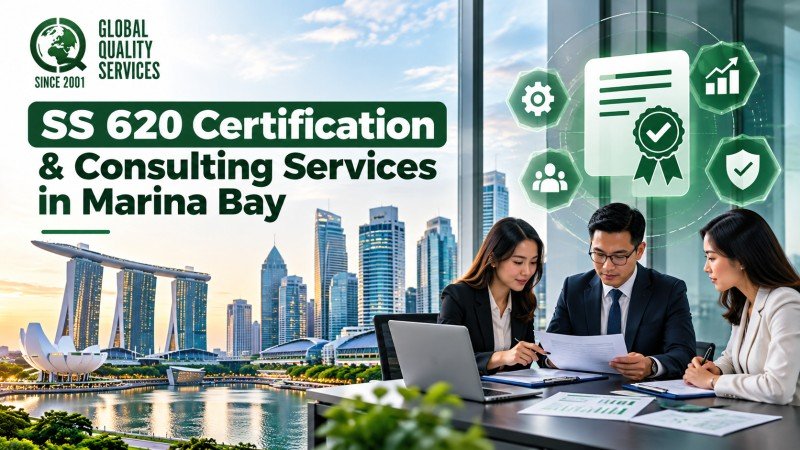
Global Quality Services offers end-to-end SS 620 consulting and certification support for organisations in Marina Bay, helping businesses meet compliance requirements efficiently and with confidence.
What is SS 620 Certification
SS 620 is a Singapore Standard titled Good Distribution Practice for Medical Devices: Requirements. It establishes quality management requirements for businesses that handle medical devices throughout the distribution process.
The standard helps organisations maintain product quality and integrity during storage, handling, transportation, and other relevant activities. It also covers in vitro diagnostic medical devices.
In Singapore, the Health Sciences Authority (HSA) recognises an appropriate SS 620 certification document as part of the requirements for relevant medical device dealer licences. Businesses should confirm the applicable licence category and current regulatory requirements before starting the process.
For companies in Marina Bay, understanding these requirements early can make compliance easier to manage. Instead of rushing to correct problems before an audit, your team can build suitable procedures into everyday operations.
Who Needs SS 620 Certification in Marina Bay?
SS 620 certification is particularly relevant to businesses involved in the commercial distribution of medical devices in Singapore.
The following organisations may need to assess their certification requirements:
1. Medical Device Importers
Companies importing medical devices into Singapore need appropriate controls for receiving, storing, and distributing products. SS 620 helps them establish documented processes and maintain records throughout their operations.
2. Medical Device Wholesalers
Wholesalers handle products that may pass through several stages before reaching healthcare providers. Certification supports consistent inventory management, product traceability, complaint handling, and distribution practices.
3. Medical Device Distributors
Distributors coordinate product movement between manufacturers, importers, retailers, and healthcare facilities. SS 620 helps them maintain suitable procedures for product handling and delivery.
4. Warehousing and Logistics Providers
Third-party logistics companies that store or transport medical devices need appropriate controls for the activities within their responsibility. These controls help protect products against damage, unsuitable storage conditions, and handling errors.
5. In Vitro Diagnostic Device Suppliers
Businesses that distribute diagnostic test kits, laboratory equipment, and other relevant in vitro diagnostic devices may also need to meet applicable SS 620 requirements.
Your exact obligations depend on your business activities, licence category, and the products you handle. Review the relevant HSA requirements before deciding on your certification scope.
Why is SS 620 Certification Important for Businesses in Marina Bay?
Marina Bay is a prominent business district in Singapore, and companies operating here often work with regional and international partners. For businesses in the medical device supply chain, quality management can influence customer relationships, operational performance, and regulatory readiness.
Here is how SS 620 certification can support your business.
1. Improve Medical Device Quality Control
SS 620 encourages businesses to establish clear procedures for receiving, storing, handling, and distributing medical devices. These controls help your team maintain product quality throughout the supply chain.
2. Support Regulatory Compliance
Medical device businesses must understand the regulatory requirements that apply to their activities. SS 620 certification can support the quality management documentation required for relevant HSA dealer licence applications.
3. Strengthen Customer Confidence
Healthcare providers and business partners want dependable suppliers. Certification demonstrates that your organisation follows defined distribution practices and takes product quality seriously.
4. Improve Inventory Management
Clear inventory procedures help employees track product movements, maintain records, and identify discrepancies. Better controls also help your team respond more effectively when a product requires investigation or recall.
5. Build Stronger Supplier Relationships
Manufacturers and international partners often look for reliable distribution practices before selecting local partners. SS 620 certification can strengthen your business credentials when pursuing new commercial opportunities.
6. Reduce Operational Errors
Documented procedures and employee training help staff perform their responsibilities consistently. This can reduce avoidable handling mistakes, missing records, and confusion during routine distribution activities.
What Do SS 620 Consulting Services in Marina Bay Include?
Working with an SS 620 consultant can make the certification process easier to understand and manage. Rather than navigating every requirement independently, your team receives practical guidance based on its existing operations.
Typical consulting services include the following.
Gap Assessment
A consultant reviews your existing processes against the applicable SS 620 requirements. This assessment identifies missing procedures, documentation gaps, training needs, and operational weaknesses that require attention before the audit.
Quality Management System Documentation
Your business needs documented procedures that reflect its actual activities. A consultant can help develop or update quality manuals, standard operating procedures, work instructions, forms, and relevant records.
Risk Assessment and Process Improvement
A consultant reviews potential risks associated with storage, transportation, product handling, and distribution. Your team can then introduce suitable controls based on the products and services it manages.
Employee Training
Employees need to understand how their responsibilities affect medical device quality. Consultants can arrange training on applicable procedures, recordkeeping, product traceability, complaint management, and other relevant requirements.
Internal Audit Support
An internal audit helps your organisation identify problems before the formal certification assessment. Consultants can help prepare the audit plan, review findings, and guide your team through corrective actions.
Certification Audit Preparation
Consultants help organise relevant documents, prepare employees for auditor questions, and review operational readiness. They can also help your team address identified gaps before the certification body conducts its assessment.
Consulting supports preparation, but it does not guarantee certification. The certification decision rests with the relevant certification body.
Step-by-Step Process for SS 620 Certification in Marina Bay
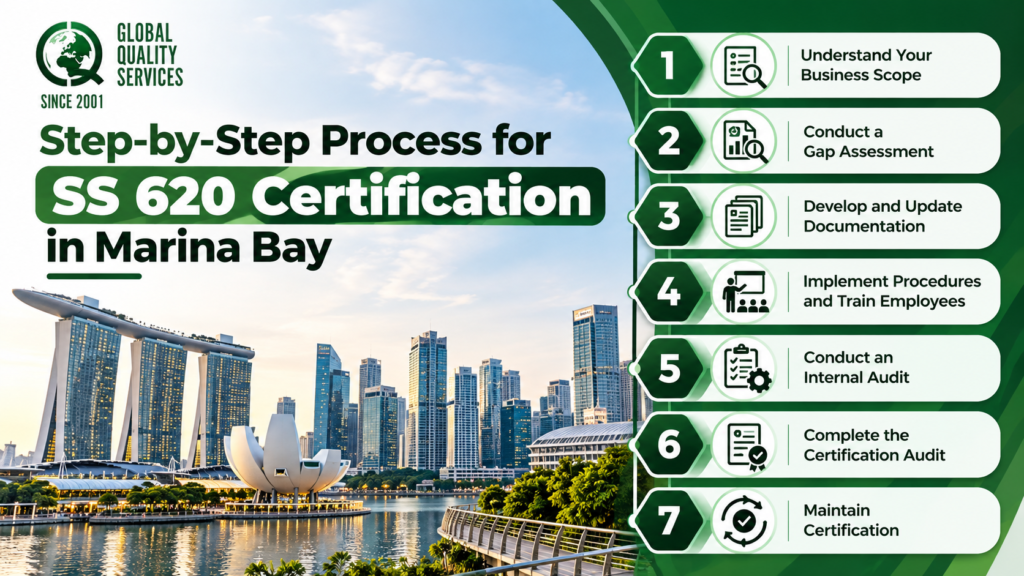
Understanding the certification process helps your team plan resources, assign responsibilities, and avoid unnecessary delays.
Step 1: Understand Your Business Scope
Identify the medical devices you handle and the activities your business performs. Define the relevant sites, processes, and responsibilities before beginning the certification process.
Step 2: Conduct a Gap Assessment
Compare your current practices with SS 620 requirements. Record missing procedures, operational weaknesses, training needs, and improvements that your organisation must address.
Step 3: Develop and Update Documentation
Prepare the required procedures, forms, records, and work instructions. Make sure these documents reflect how your employees actually receive, store, handle, and distribute medical devices.
Step 4: Implement Procedures and Train Employees
Put the documented procedures into practice. Train employees on their responsibilities and maintain records that demonstrate consistent implementation across relevant business activities.
Step 5: Conduct an Internal Audit
Evaluate whether your quality management system meets applicable requirements. Document audit findings, assign corrective actions, and verify that your team has addressed identified issues.
Step 6: Complete the Certification Audit
The certification body reviews your management system and relevant operations. Your organisation must address any nonconformities raised during the assessment before the certification body can make its decision.
Step 7: Maintain Certification
Continue following approved procedures, reviewing performance, training employees, and completing required surveillance audits. Regular reviews help your organisation maintain compliance as its operations change.
The exact process and audit arrangements depend on your organisation’s scope and the certification body’s requirements.
How Long Does SS 620 Certification Take in Marina Bay?
The time required for SS 620 certification depends on your organisation’s size, operational complexity, documentation, and existing quality management practices.
A business with established procedures may need less preparation than one building its quality management system from the beginning.
Your timeline generally includes:
- Initial assessment: Review existing processes and identify compliance gaps.
- System development: Prepare documents and update operational procedures.
- Implementation: Train employees and maintain evidence of compliance.
- Internal audit: Check whether the system meets applicable requirements.
- Certification audit: Complete the formal assessment and address any nonconformities.
There is no single timeline that applies to every business. Ask your consultant and certification body to estimate the duration after reviewing your operations.
What Factors Affect the Cost of SS 620 Certification?
SS 620 certification costs vary according to the nature of your business and the amount of work required before the audit.
Consider these key factors when preparing your budget.
- Business size: Organisations with more employees, departments, and processes may require additional preparation and audit time.
- Number of locations: Multiple warehouses or operating sites can increase assessment and coordination requirements.
- Documentation gaps: Businesses without established quality procedures may need more consulting and implementation support.
- Training requirements: Employee training needs depend on existing competence and the responsibilities covered by the quality management system.
- Audit fees: Certification body fees depend on the agreed scope, audit duration, and applicable assessment arrangements.
For an accurate estimate, request a customised quotation that separates consulting fees, certification charges, training costs, and any additional expenses.
Why Choose Global Quality Services for SS 620 Certification in Marina Bay?
Preparing for SS 620 certification becomes easier when you have experienced guidance and a clear action plan. Global Quality Services can support your business with gap assessments, documentation assistance, employee training, internal audit preparation, and certification readiness activities.
The objective is to help your team understand the requirements and apply them in daily operations, rather than treating certification as a paperwork exercise.
With the right preparation, your business can improve distribution controls, strengthen recordkeeping, and address compliance gaps before the formal audit.
If your organisation operates in Marina Bay, Singapore, and handles medical devices, discuss your business activities and certification requirements with Global Quality Services. A preliminary assessment can help identify the next steps for your organisation.
Frequently Asked Questions
1. Can a foreign medical device manufacturer use its overseas quality certification instead of SS 620?
Not automatically. Overseas certifications may support your quality system, but Singapore’s applicable dealer licensing requirements determine whether your documentation meets the required SS 620 or other accepted criteria.
2. Does SS 620 certification cover medical device product registration?
No. SS 620 addresses distribution quality management, while product registration follows separate HSA requirements. Businesses must assess both obligations according to their products and intended activities.
3. What happens if an employee discovers a damaged medical device shipment?
Your team should follow documented procedures to identify, segregate, record, and assess affected products. Appropriate personnel should investigate the incident and decide the necessary corrective action.
4. Can a business outsource its medical device warehousing operations after certification?
Yes, outsourcing may be possible, but your organisation must assess the arrangement, define responsibilities, and maintain appropriate controls over outsourced activities within its certification and regulatory scope.
5. How should a company prepare for an SS 620 surveillance audit?
Review previous audit findings, update quality records, check employee training, assess supplier performance, and verify corrective actions. Keep current evidence available to demonstrate ongoing compliance with applicable requirements.