A product that looks correct in a sample may not necessarily meet the same requirements when manufactured in bulk. Differences in materials, dimensions, workmanship, functionality, labeling, and packaging can affect the quality of an entire shipment.
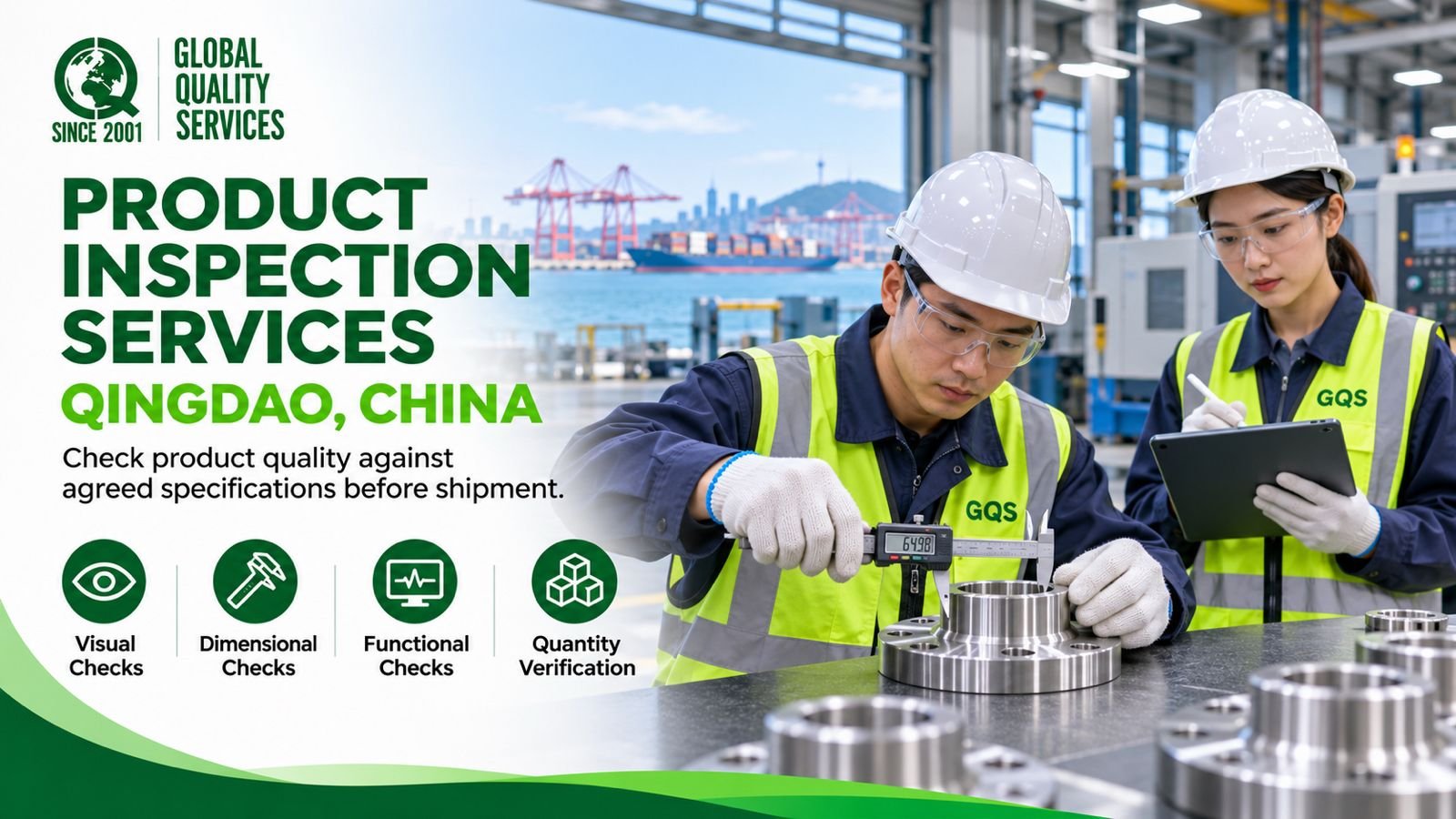
Product Inspection Services in Qingdao, China, provide buyers and businesses with an independent way to examine goods against agreed specifications at different stages of manufacturing and dispatch. The inspection can identify visible defects, verify product characteristics, check quantities, and record deviations before goods move further through the supply chain.
For businesses sourcing from Qingdao, product inspection is particularly useful when managing overseas suppliers, approving production lots, or checking finished goods before shipment. It gives buyers documented information about the products inspected and helps them make more informed decisions about acceptance, corrective action, or further verification.
Why Product Quality Checks Matter Before Shipment For Qingdao Businesses
Product quality should not be assessed only when an order is ready to leave the factory. Some manufacturing issues become harder and more expensive to correct once production is complete or goods have been packed.
Qingdao has a diverse manufacturing base, including machinery, industrial equipment, electrical and electronic products, metal components, marine-related equipment, and consumer goods. The inspection requirements for these product categories can vary considerably.
For example, a metal component may require dimensional and surface checks, while an electrical product may need specific functional checks. Packaged consumer goods may require attention to appearance, labeling, accessories, and packaging condition.
A suitable inspection plan should therefore be based on the product’s intended use, technical specifications, applicable acceptance criteria, and buyer requirements.
What Do Product Inspection Services Cover?
The inspection checklist is prepared according to the product category and the purpose of the assessment. Depending on the agreed scope, the following areas may be examined.
Product Appearance and Workmanship
Visual inspection helps identify defects that can affect a product’s finish, usability, or overall presentation.
Typical checkpoints include:
- Scratches, dents, cracks, stains, and surface damage
- Uneven finishing, discoloration, or coating defects
- Loose components and poor assembly
- Visible manufacturing inconsistencies
- Sharp edges, burrs, or other observable workmanship issues
- Differences in color, shape, or appearance from approved samples
Dimensions and Product Specifications
Measurements are compared with the drawings, specifications, or tolerances provided by the buyer.
Checks may include:
- Product length, width, height, and thickness
- Weight and other specified physical characteristics
- Component dimensions and assembly alignment
- Material identification, where verifiable within the agreed scope
- Product markings and model identification
- Compliance with specified tolerances
Measurement methods and instruments should suit the product and the required level of accuracy.
Functionality and Operational Checks
Where the product and inspection facilities permit, selected functions can be checked against agreed acceptance criteria.
Examples include:
- Opening, closing, locking, and movement mechanisms
- Switches, buttons, and basic operating functions
- Assembly and fit of moving components
- Power-on or basic electrical checks, where included in scope
- Operation of selected product features
- Performance checks against specified test procedures
Specialized electrical, mechanical, chemical, or safety testing should be separately defined. It may require appropriate equipment or an accredited laboratory.
Quantity and Product Identification
Quantity verification helps confirm whether the inspected goods match the order details.
The inspection may cover:
- Total quantity presented for inspection
- Carton and package counts
- Product model and variant identification
- SKU, batch, or serial number markings
- Accessories and components supplied with each unit
- Differences between order documents and actual goods
Packaging and Labeling
Packaging should be examined to determine whether it provides the agreed level of protection and carries the required product and shipping information.
Relevant checkpoints include:
- Inner and outer packaging condition
- Carton strength and visible damage
- Protective inserts and cushioning materials
- Product labels and identification details
- Barcodes, batch numbers, and shipping marks
- User manuals, inserts, and accessories
- Packing method and carton arrangement
Product Safety and Special Requirements
Certain products require additional checks based on their intended application, buyer specifications, or destination-market requirements.
Depending on the product and agreed scope, these may involve:
- Observable safety-related defects
- Sharp edges and exposed components
- Stability and assembly checks
- Specified warning labels and product markings
- Particular material or component requirements
- Selected tests prescribed in the inspection checklist
A visual inspection alone cannot establish full compliance with every product safety regulation or technical standard. Where formal conformity evidence is required, suitable testing and certification arrangements may also be necessary.
Choose the Inspection Type According to Your Production Stage
Different inspection stages serve different quality control objectives. Buyers can select an inspection based on when they need information and what they want to verify.
| Inspection type | When it is conducted | Main purpose |
|---|---|---|
| Pre-Production Inspection (PPI) | Before mass production | Review raw materials, approved samples, components, and production readiness. |
| During Production Inspection (DUPRO) | While manufacturing is underway | Identify quality issues in partially completed production and examine manufacturing consistency. |
| Pre-Shipment Inspection (PSI) | After production is substantially or fully completed | Examine finished goods, workmanship, specifications, quantity, and packaging before dispatch. |
| Final Random Inspection (FRI) | When the goods are ready for final evaluation | Assess a selected sample of finished products against the agreed acceptance criteria. |
| 100% Product Inspection | When every unit must be examined | Check individual products for specified defects or characteristics rather than relying on a sample. |
The appropriate inspection method depends on the order size, product complexity, risk level, and buyer’s acceptance requirements. Sampling inspections should use a clearly agreed sampling plan, including the applicable acceptance criteria.
Industries and Products That May Require Inspection in Qingdao
Product inspection can be arranged for a range of manufactured goods. The scope must match each product’s characteristics rather than applying an identical checklist across industries.
Some examples include:
- Machinery and industrial equipment: Visual condition, dimensions, component assembly, identification plates, and specified operational checks.
- Electrical and electronic products: Appearance, accessories, labeling, assembly, and agreed basic functional checks.
- Metal components and fabricated products: Dimensions, surface condition, weld appearance where included, and specified material identification checks.
- Marine equipment and related components: Product condition, identification, dimensions, and agreed inspection or test requirements.
- Consumer goods: Appearance, workmanship, color, size, accessories, and packaging.
- Furniture and home products: Assembly, dimensions, surface finishing, stability checks, and packaging.
- Plastic and rubber products: Physical appearance, dimensions, molding defects, and specified product characteristics.
- Textiles and apparel: Fabric appearance, stitching, measurements, color, labeling, and packaging.
For specialized industrial products, the inspection plan may need technical drawings, inspection and test plans, material specifications, or relevant industry standards.
Why Use Independent Product Inspection?
When products are manufactured overseas, buyers may not be able to observe production or examine the goods in person. An independent inspection provides an additional source of information before you accept or release a shipment.
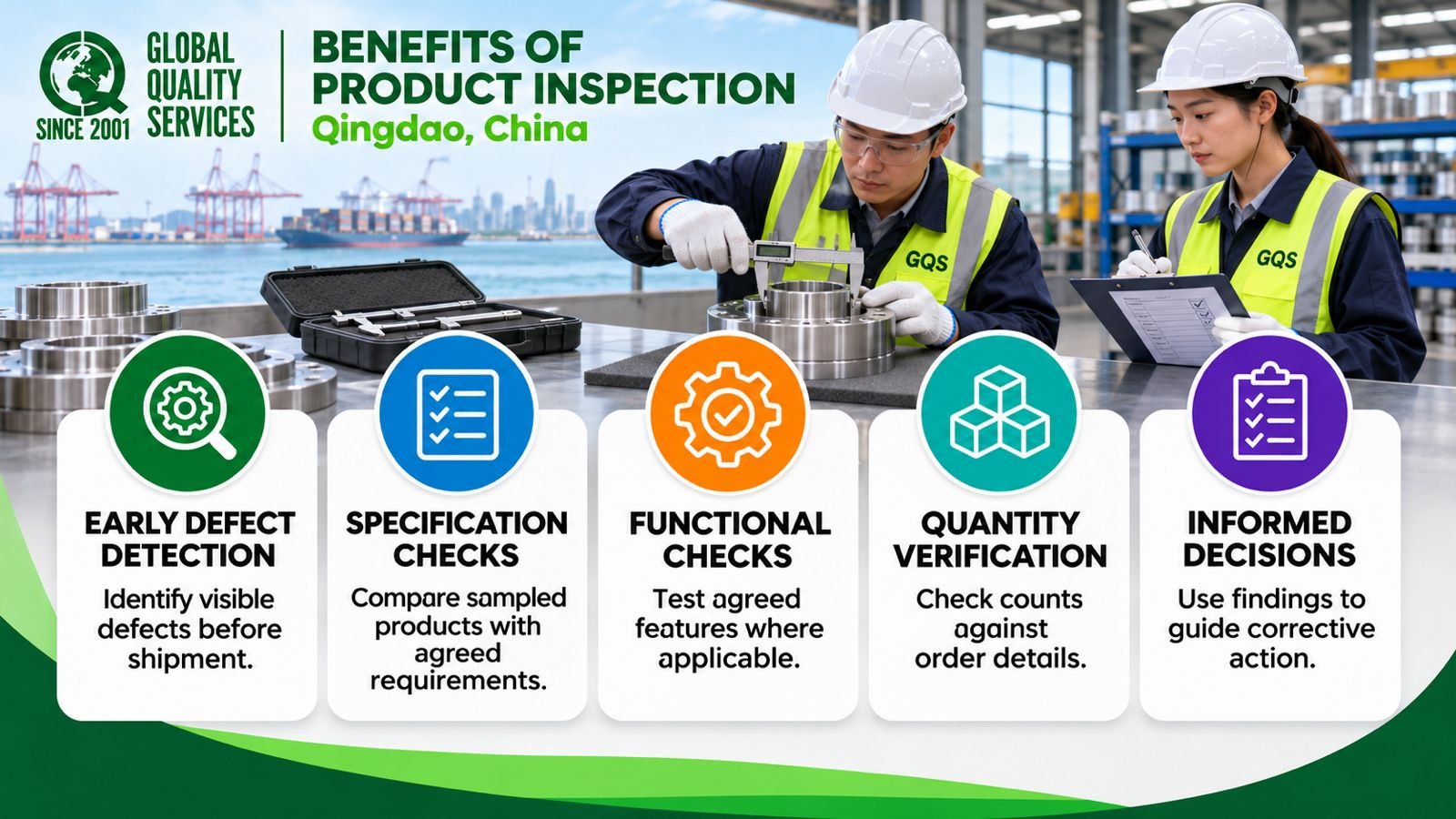
The main advantages include:
- Earlier identification of defects: Inspection during production can reveal recurring issues while corrective action may still be possible.
- Verification against buyer specifications: Products are examined using the agreed drawings, samples, tolerances, and acceptance criteria.
- Better shipment decisions: Inspection findings help buyers evaluate whether the presented goods meet the agreed requirements before dispatch.
- Reduced uncertainty in overseas sourcing: Buyers receive documented observations rather than depending entirely on supplier updates.
- More consistent quality monitoring: Repeated inspections can provide a record of product quality across different production batches.
- Evidence for supplier discussions: Photographs, measurements, and recorded discrepancies can help clarify quality concerns with the manufacturer.
Inspection does not eliminate every quality risk. Its effectiveness depends on the inspection timing, sampling plan, product coverage, acceptance criteria, and the reliability of the observations recorded.
How Global Quality Services Carries Out Product Inspection in Qingdao
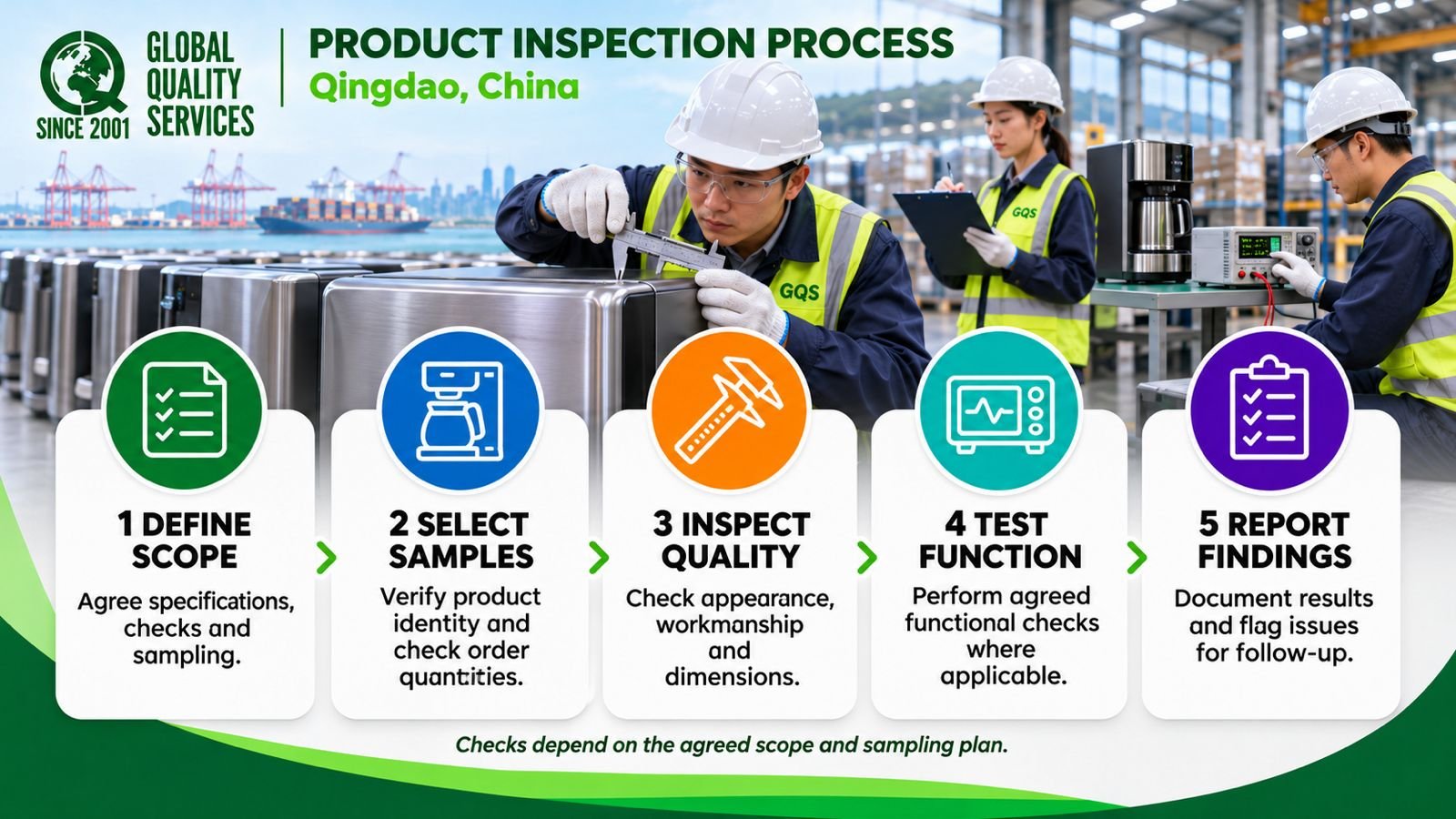
An effective inspection begins with a clear understanding of what the buyer needs to verify. GQS follows an agreed inspection scope to keep the assessment focused on the product and its specified requirements.
1. Review Product and Order Information
The buyer provides relevant product details, order information, specifications, drawings, approved samples, and any special inspection instructions. These details establish the reference points for the assessment.
2. Prepare the Inspection Checklist
The inspection criteria are defined according to the product category and inspection stage. The checklist may include appearance, workmanship, dimensions, functionality, quantity, labeling, and packaging.
3. Conduct the Inspection
The inspector examines the presented goods at the agreed manufacturing or storage location in Qingdao. Checks are performed according to the approved scope and applicable sampling or testing arrangements.
4. Document Defects and Deviations
Identified issues are recorded with relevant descriptions and photographs where appropriate. Measurements and test observations are included when these form part of the agreed inspection.
5. Compile the Inspection Report
The findings are organized into a report covering the inspected products, scope, observations, and identified discrepancies. The report provides the buyer with a reference for reviewing the shipment.
6. Review the Results Before Dispatch
The buyer can assess the findings and determine whether to accept the goods, request corrective action, arrange re-inspection, or seek further technical verification.
Information Required to Arrange an Inspection
Providing complete product information helps establish a relevant inspection checklist and avoids uncertainty during the site visit.
Before arranging product inspection services in Qingdao, buyers should prepare:
- Product name, model, and description
- Supplier or factory name and inspection address
- Purchase order and production quantity
- Product specifications and technical drawings
- Approved sample or reference photographs, where available
- Required inspection stage and proposed date
- Defect classification and acceptance criteria
- Packaging, labeling, and shipping requirements
- Any specific functional or technical checks
If the buyer requires sampling inspection, the sampling method and acceptance limits should be agreed upon before the inspection begins.
Product Inspection Services in Qingdao With Global Quality Services
Maintaining product consistency across overseas manufacturing orders requires clear specifications and reliable inspection records. An independent assessment can provide useful information about the condition of goods before they move to the next stage of the supply chain.
Global Quality Services (GQS) provides inspection-related services for businesses seeking third-party evaluation of products and manufacturing operations. With 26 years of experience in quality and inspection-related services, GQS works with organizations across different industrial sectors.
For product inspection requirements in Qingdao, the proposed scope can be based on the product type, order stage, buyer’s specifications, and required reporting details.
Contact Global Quality Services to discuss your product inspection requirements in Qingdao, China, and establish an inspection scope aligned with your order specifications.
Frequently Asked Questions
1. At what stage should product inspection be arranged in Qingdao?
Inspection can take place before production, during manufacturing, or after finished goods are ready for shipment. The right stage depends on the risk the buyer wants to assess. During-production inspection helps identify manufacturing issues early, while pre-shipment inspection focuses on finished goods.
2. Can product inspection be conducted for machinery and industrial equipment?
Yes, subject to the inspector’s technical competence and the agreed scope. Checks may include dimensions, visual condition, assembly, identification, and specified operational tests. Specialized testing, non-destructive testing, or performance verification may require qualified personnel and suitable equipment.
3. Does pre-shipment inspection guarantee that the entire shipment is defect-free?
No. A sampling-based pre-shipment inspection examines selected units rather than every product in the shipment. Its findings provide an indication of the quality of the inspected lot based on the agreed sampling plan and acceptance criteria. A 100% inspection is a separate arrangement.
4. What is the difference between product inspection and product testing?
Product inspection generally involves examining goods against specified criteria through visual checks, measurements, and agreed functional checks. Product testing uses defined test methods and equipment to evaluate particular characteristics, such as electrical safety, chemical composition, or mechanical performance. Laboratory testing may be required for specialized verification.
5. Can GQS inspect products before they are shipped from Qingdao?
Product inspection can be scheduled at an agreed stage before dispatch, subject to location, availability, and the confirmed service scope. Buyers should share the production status, product details, inspection checklist, and expected shipment date when making an inquiry.