Batu Kawan Industrial Park has become a key manufacturing destination in Penang, Malaysia, attracting businesses in semiconductors, electronics, medical devices, automotive components, and precision engineering. As manufacturing activities expand, companies in this industrial hub must meet growing expectations for ethical business practices, employee welfare, workplace safety, and environmental responsibility.
RBA Certification in Batu Kawan Industrial Park is relevant to manufacturers and suppliers seeking to demonstrate their commitment to responsible business practices and meet international supply chain expectations. The Responsible Business Alliance (RBA) provides a recognized Code of Conduct that establishes requirements for labor rights, health and safety, environmental protection, business ethics and management systems.
For businesses supplying multinational companies and international brands, RBA compliance can play an important role in supplier evaluations and responsible sourcing programs. Global Quality Services helps organizations understand applicable RBA requirements, identify compliance gaps, and prepare for relevant assessments through structured compliance preparation services.
Whether you operate an electronics manufacturing facility, a semiconductor production unit or an automotive component manufacturing business, our team can help you understand the requirements and strengthen your readiness for RBA assessments.
Understanding RBA Certification and Its Importance
The Responsible Business Alliance (RBA) is a global industry coalition committed to promoting responsible business practices throughout supply chains. Its Code of Conduct sets expectations for organizations on worker treatment, workplace conditions, environmental management, and ethical business operations.
Although people often search for RBA certification, the program is not a conventional ISO-style certification scheme. Instead, it uses assessment mechanisms, including the Validated Assessment Program (VAP), to evaluate how effectively businesses implement the applicable Code of Conduct requirements.
What Does the RBA Code of Conduct Cover?
The RBA Code of Conduct covers five major areas: labor, health and safety, environment, ethics, and management systems. These requirements encourage businesses to establish fair employment practices, provide safe working environments, manage environmental impacts and maintain transparent business operations.
For manufacturers in Batu Kawan, implementing these requirements involves more than maintaining policies and documentation. Businesses must demonstrate that responsible practices are followed throughout their facilities and that employees understand their rights and responsibilities.
Why Is RBA Relevant to Malaysian Manufacturers?
Malaysian manufacturers are increasingly connected to international supply chains, particularly in electronics, semiconductor production, and medical technology. International customers may evaluate suppliers based on labor practices, environmental performance, and ethical business conduct alongside product quality and delivery capabilities.
RBA provides a common framework for addressing these expectations. Establishing compliance can help manufacturers demonstrate responsible operations, meet customer requirements, and strengthen their position as suppliers to international businesses.
Why Businesses in Batu Kawan Industrial Park Need RBA Compliance
Batu Kawan Industrial Park is part of Penang’s expanding manufacturing ecosystem. Its industrial landscape includes multinational companies and local suppliers involved in advanced manufacturing, electronics, and medical technology.
Businesses operating in this environment may face rising customer expectations for responsible sourcing and supply chain transparency. RBA compliance provides a structured approach to addressing these expectations.
Meet International Supply Chain Requirements
Manufacturers supplying multinational brands may be asked to complete RBA self-assessment questionnaires, provide compliance documentation, or undergo facility-level assessments. Having an established RBA compliance framework helps businesses respond to these requirements more effectively.
It also shows that the organization recognizes its responsibilities to employees, customers,s and other supply chain stakeholders.
Improve Employee Welfare and Labor Practices
Manufacturing facilities often employ permanent employees, contract workers and migrant workers across different production activities. Maintaining fair recruitment practices, appropriate working hours, transparent wages ,and effective grievance mechanisms is essential to protect workers’ rights.
RBA compliance encourages businesses to review their employment practices and address risks associated with forcedlabor, childllabor discrimination ,and unfair treatment.
Strengthen Occupational Health and Safety
Factories involved in semiconductor manufacturing, electronics assembly and precision engineering may have workplace hazards associated with machinery, chemicals, electrical equipment and material handling.
RBA requirements encourage businesses to identify these risks and establish suitable workplace safety controls. This includes emergency preparedness, employee awareness, machine safety and occupational health arrangements.
Establish Better Environmental Controls
Manufacturing activities can generate industrial waste, wastewater, emissions and chemical-related risks. Businesses must understand their environmental responsibilities and maintain appropriate controls to minimize their operational impact.
RBA compliance encourages organizations to strengthen waste management, chemical handling, pollution prevention and resource management practices.
Industries That Can Benefit from RBA Certification in Batu Kawan
RBA requirements are especially relevant to organizations operating in manufacturing and technology supply chains. Businesses in Batu Kawan Industrial Park can evaluate their compliance needs based on their activities, customer expectations and position within the supply chain.
Semiconductor and Electronics Manufacturing
Semiconductor and electronics manufacturers operate in complex production environments involving specialized equipment, chemicals, controlled processes and large workforces. Responsible labor practices, workplace safety and environmental management are important considerations for these businesses.
RBA compliance helps such organizations establish systematic controls and demonstrate their commitment to responsible manufacturing practices.
Medical Device and Healthcare Manufacturing
Medical device manufacturers must maintain controlled production processes and meet demanding customer and regulatory expectations. Alongside product quality, businesses must address employee welfare, workplace safety, ethical conduct, and environmental responsibilities.
An effective RBA framework can complement their existing management systems and responsible sourcing practices.
Automotive and Precision Engineering
Automotive component manufacturers and precision engineering companies often supply international brands and established automotive supply chains. These customers may expect suppliers to demonstrate responsible employment practices, safe production environments, and transparent business operations.
RBA compliance provides a structured approach to managing these expectations and improving supply chain accountability.
Electrical Equipment and Industrial Manufacturing
Businesses involved in electrical equipment, industrial machinery, and component manufacturing may face risks associated with production equipment, hazardous materials, and industrial waste.
Implementing relevant RBA requirements helps organizations strengthen their operational controls while maintaining responsible workplace and environmental practices.
RBA Certification Requirements for Businesses in Batu Kawan
To establish RBA compliance, businesses must understand the applicable Code of Conduct requirements and evaluate their existing practices against the assessment criteria.
The RBA Code of Conduct Version 8.0 became effective on 1 January 2024. Organizations should refer to the latest applicable RBA program documents and assessment criteria when preparing for an assessment.
Labor and Human Rights Requirements
Businesses must maintain fair employment practices and protect workers from forced labor, child labor, discrimination, and harassment. Employment contracts, wage records, working-hour registers and recruitment arrangements should reflect applicable legal requirements and RBA expectations.
Health and Safety Requirements
Organizations must identify workplace hazards and establish controls to protect employees. This includes maintaining emergency response arrangements, providing suitable protective equipment, monitoring occupational health risks and ensuring that machinery and production areas are safe.
Environmental and Ethical Requirements
Companies must manage environmental permits, waste disposal, wastewater, emissions, and chemical handling in accordance with applicable requirements. They must also establish ethical business practices that address anti-corruption, privacy, responsible disclosure, and fair business dealings.
Management System Requirements
A documented management system helps organizations implement and monitor RBA requirements consistently. Management must establish clear responsibilities, conduct risk assessments, maintain records, communicate policies, and review corrective actions to support ongoing compliance.
RBA Assessment and Compliance Preparation Process
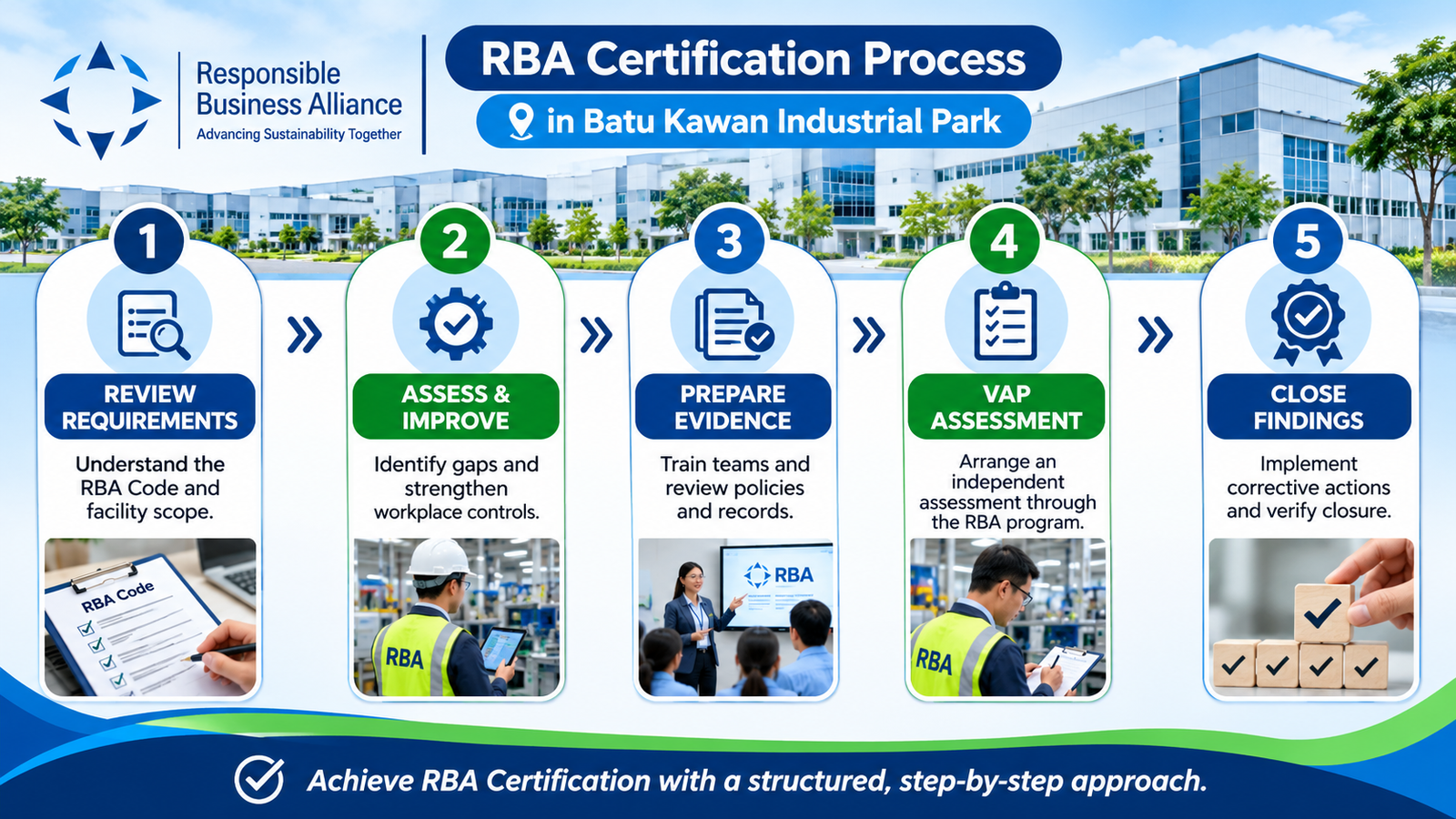
Preparing for an RBA assessment requires organizations to evaluate their existing operations and ensure that relevant requirements are implemented in practice. Global Quality Services helps businesses follow a structured preparation approach.
Initial RBA Requirements Review
The process begins by understanding the organization’s activities, workforce, customer expectations,, and applicable RBA requirements. This helps determine the areas that need to be evaluated before an assessment.
RBA Gap Assessment
An initial gap assessment compares existing policies, procedures, and workplace practices against applicable requirements. It helps identify shortcomings in areas such as employment records, worker welfare, occupational safety, and environmental management.
Documentation and Implementation Review
Businesses must ensure that their documented procedures reflect actual workplace practices. Relevant employment records, safety assessments, environmental documents and training records are reviewed to identify inconsistencies and missing information.
Corrective Action Planning
Identified gaps must be addressed through appropriate corrective actions. Depending on the findings, this may involve improving recruitment procedures, strengthening safety arrangements, reviewing working-hour practices or updating environmental controls.
RBA Assessment Readiness
Before the assessment, businesses should verify that corrective actions have been implemented and supporting evidence is available. Employees and management should understand the relevant requirements, while the facility should be prepared for document reviews, workplace observations and worker interviews.
Assessment and Continued Compliance
The applicable assessment is conducted through the relevant RB program arrangements. Where a VAP assessment is required, businesses undergo an independent evaluation by an authorized assessment firm. Any identified findings must be addressed according to the applicable program requirements.
How Global Quality Services Helps with RBA Certification in Batu Kawan
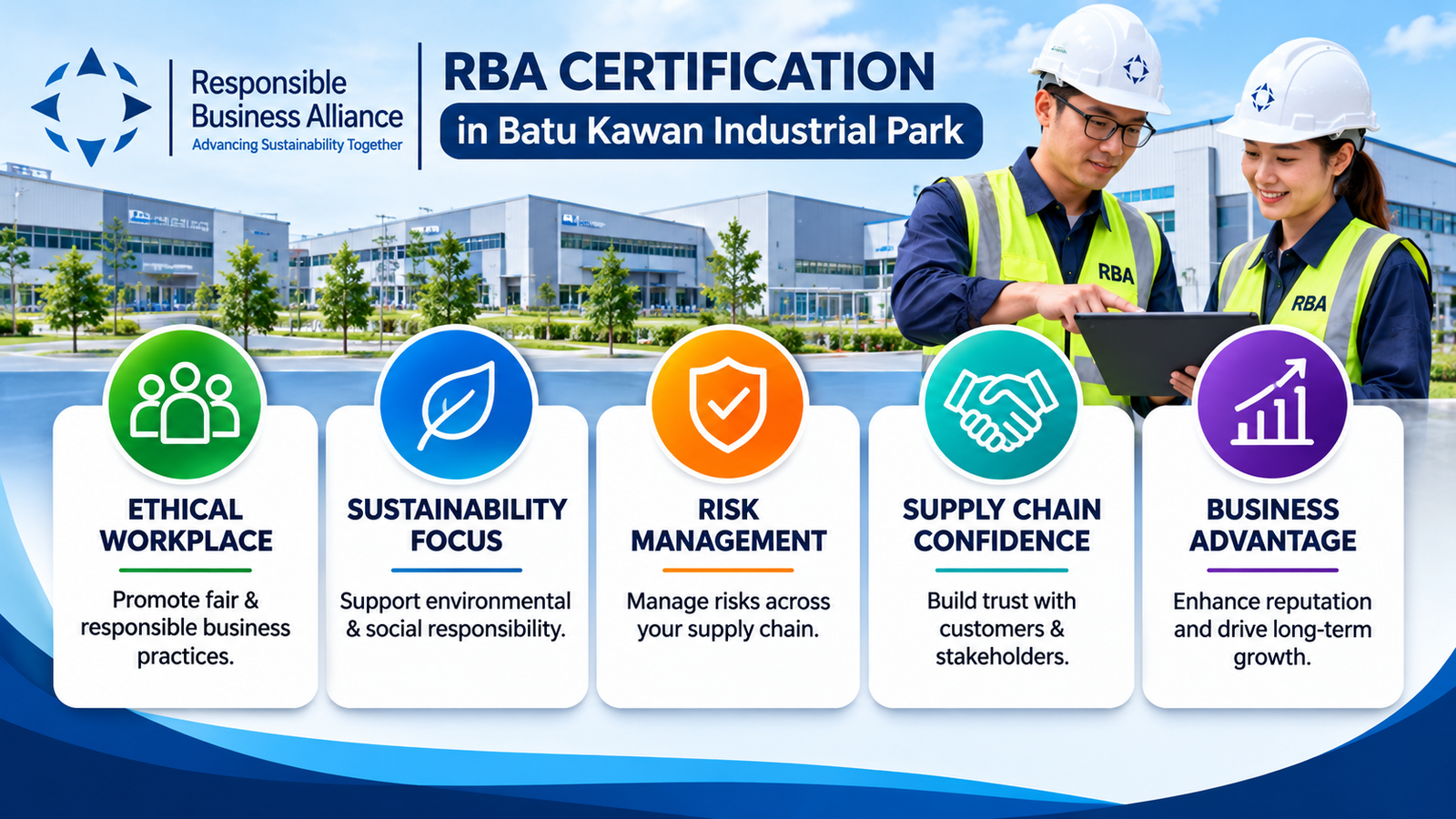
Global Quality Services works with manufacturing organizations to understand RBA requirements and prepare for relevant compliance assessments. Our approach focuses on evaluating existing practices, identifying areas for improvement, and helping businesses establish effective compliance arrangements.
RBA Compliance Gap Analysis
We review existing business practices against applicable RBA requirements to identify potential compliance gaps. This helps organizations understand where improvements are needed before undergoing an assessment.
RBA Documentation Review
Our team reviews relevant policies, procedures and supporting records to evaluate their alignment with applicable requirements. This includes documentation related to employment, worker welfare, workplace safety, environmental management and ethical practices.
Workplace and Labour Compliance Review
We help organisations evaluate employment practices, recruitment arrangements, wage records, working hours and employee grievance mechanisms. This review helps identify areas that may require improvement to meet RBA expectations.
Environmental and Safety Compliance Review
We review relevant environmental and occupational safety arrangements, including chemical management, waste disposal, hazard identification and emergency preparedness. This helps businesses evaluate the effectiveness of their existing operational controls.
Corrective Action and Assessment Preparation
We help organisations understand identified gaps and plan suitable corrective actions. Our preparation services also cover documentation reviews and readiness evaluations before the applicable RBA assessment.
RBA VAP assessments are conducted through the RBA’s designated programme and qualified assessment firms. Global Quality Services’ compliance preparation services are distinct from independent VAP assessment and the issuance of any RBA certification or assessment outcome.
RBA Certification Services Across Batu Kawan and Penang with Global Quality Services
Global Quality Services caters to businesses seeking RBA compliance and assessment preparation services in Batu Kawan Industrial Park and surrounding manufacturing locations in Penang.
Our services are relevant to organisations operating in Batu Kawan, Bandar Cassia, Simpang Ampat, Valdor Industrial Area, Bukit Minyak, Juru, Bukit Tengah and Perai.
With manufacturing activities spread across these industrial locations, businesses can evaluate their RBA requirements based on their workforce, production activities and customer expectations. Whether you are a component manufacturer, an electronics supplier or a medical device producer, establishing responsible business practices can help strengthen your supply chain relationships.
Contact Global Quality Services to discuss RBA certification and compliance preparation services in Batu Kawan Industrial Park, Malaysia.
Frequently Asked Questions About RBA Certification in Batu Kawan Industrial Park
1. Is RBA certification compulsory for manufacturers in Batu Kawan Industrial Park?
RBA compliance is not a blanket statutory requirement for every manufacturing business in Batu Kawan. However, multinational customers and RBA member companies may require their suppliers to follow the RBA Code of Conduct or undergo relevant assessments. Manufacturers should check their individual customer agreements and supplier qualification requirements to determine whether an RBA assessment is necessary.
2. What is the difference between an RBA Self-Assessment Questionnaire and a VAP assessment?
An RBA Self-Assessment Questionnaire (SAQ) is used by businesses to evaluate their practices against relevant RBA expectations and identify potential risks. A Validated Assessment Program (VAP) assessment is an independent, third-party facility assessment involving document reviews, workplace observations and employee interviews. The SAQ helps identify areas of concern, while the VAP provides a more detailed evaluation of facility-level conformance.
3. Can a small manufacturing company apply for RBA compliance in Malaysia?
Yes. RBA requirements can be relevant to small and medium-sized manufacturers as well as large multinational facilities. The applicable assessment route depends on the company’s business activities, customer requirements and programme scope. Smaller manufacturers can begin by reviewing their employment practices, workplace safety arrangements, environmental controls and existing management documentation.
4. How often does a manufacturing facility need to undergo an RBA VAP assessment?
The assessment frequency depends on the applicable RBA programme rules, facility risk profile and assessment results. RBA VAP assessments generally have a defined validity period, and follow-up or reassessment requirements may apply. Businesses should verify their assessment status and applicable validity requirements through the relevant RBA programme arrangements rather than assuming that one assessment provides permanent recognition.
5. What happens if a facility receives non-conformities during an RBA assessment?
If an assessment identifies non-conformities, the facility must address the findings through appropriate corrective action plans. The actions required depend on the nature and severity of the findings and the applicable RBA programme requirements. The organisation may need to provide supporting evidence, implement operational changes and undergo follow-up verification to demonstrate that the issues have been resolved.