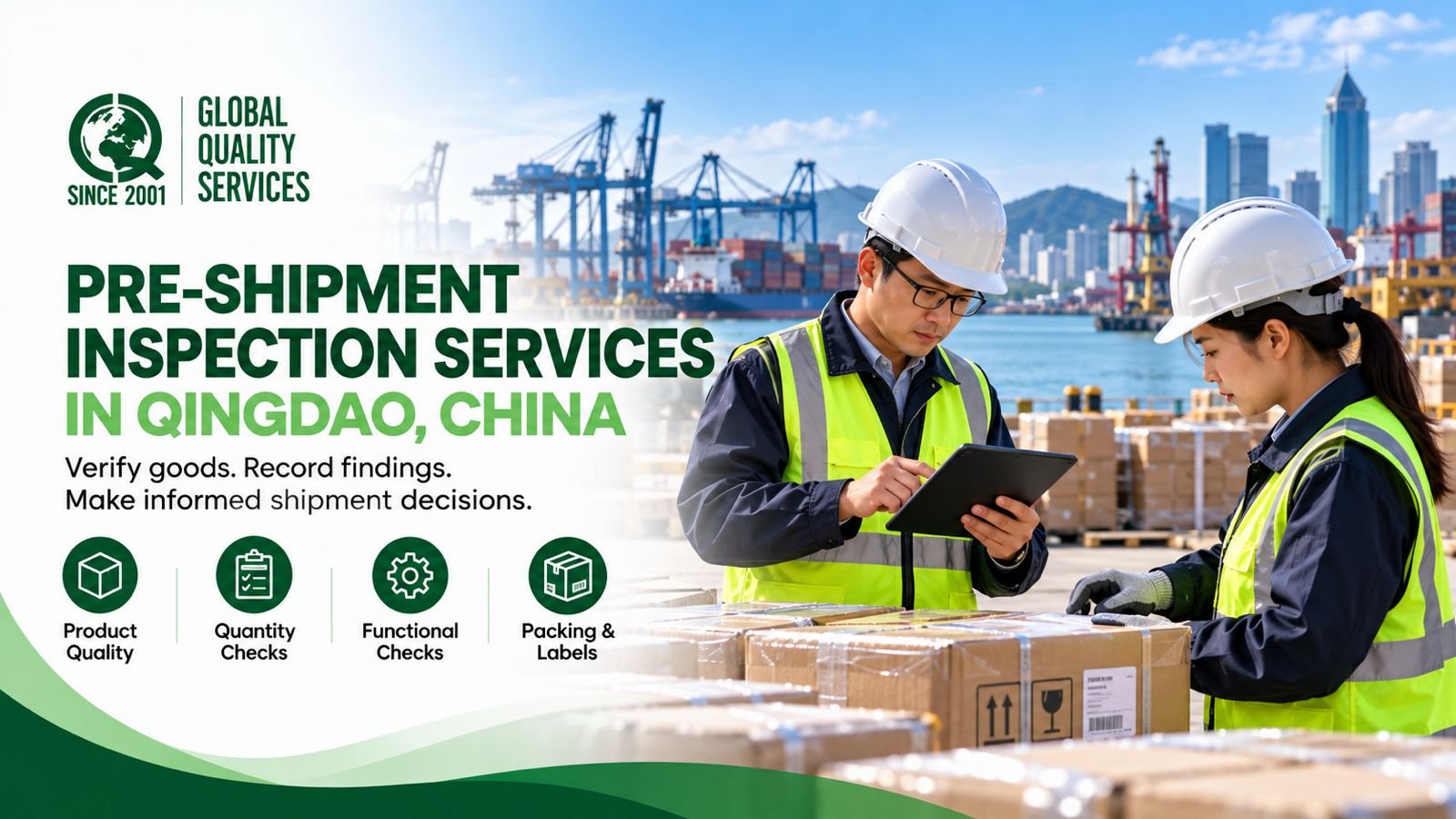
Pre-shipment inspection services in Qingdao, China, help buyers verify finished goods against agreed specifications, purchase orders, and quality requirements before products are dispatched. Inspections typically cover product quality, quantity, workmanship, labeling, packaging, and other order-specific characteristics.
Qingdao is an important international trade and port city in Shandong Province, connecting manufacturers, exporters and buyers through international shipping networks. Businesses sourcing products from Qingdao and surrounding manufacturing areas can use pre-shipment inspection to evaluate finished orders before shipment and identify discrepancies that may require attention.
GQS provides inspection services based on defined client requirements and agreed acceptance criteria. The inspection scope depends on the product category, order specifications, sampling plan and checks required before dispatch.
Why Is Pre-Shipment Inspection Important in Qingdao?
When purchasing goods from suppliers in China, buyers may not be able to examine every product personally before shipment. Once an order has been dispatched, addressing defects, incorrect quantities or packaging problems can become more complicated and expensive.
Pre-shipment inspection provides a documented assessment of selected goods before they leave the supplier’s premises. It allows buyers to compare finished products with agreed requirements and review any findings before making a shipment decision.
For businesses sourcing through Qingdao’s export and logistics network, inspection can be particularly useful when:
- Placing a first order with a new supplier.
- Purchasing large quantities of finished products.
- Verifying goods against approved samples.
- Checking products before releasing a balance payment, where contractually applicable.
- Confirming packaging and shipping marks before dispatch.
- Reviewing corrective actions after an earlier inspection identified defects.
A commercial pre-shipment inspection is separate from any government-mandated export inspection, customs examination or regulatory approval that may apply to particular goods.
What Do Pre-Shipment Inspection Services Cover?
The inspection checklist is developed around the product type, purchase order and agreed acceptance criteria. Common inspection areas include the following.
1. Product Specifications and Quality
Inspectors compare selected products with the approved sample, product description, technical specifications or other agreed references. Checks may include model numbers, dimensions, materials, colours and other identifiable characteristics.
2. Workmanship and Visible Defects
Products are examined for visible damage, scratches, cracks, incorrect assembly, finishing problems and other defects relevant to the product category. Findings are recorded against the agreed quality criteria.
3. Quantity Verification
The inspection checks the available order quantity and, where included in the scope, verifies quantities within cartons or individual packages. This helps identify shortages, incorrect counts or discrepancies between the order and prepared shipment.
4. Functional Checks
Where suitable procedures and equipment are available, selected products may undergo agreed basic functional checks. The scope should specify what will be tested and what constitutes an acceptable result. Specialist laboratory testing is not automatically included.
5. Labelling and Product Identification
Product labels, model numbers, barcodes, warning information and other specified markings can be checked against approved requirements. This is particularly relevant when goods must meet buyer-specific labelling or packaging instructions.
6. Packaging and Carton Markings
Inspectors examine packaging condition, protective materials, carton labels, shipping marks and packing arrangements. These checks help identify packaging discrepancies before goods are handed over for transportation.
7. Supporting Documentation
Where included in the agreed scope, relevant product documents, manuals, packing lists and other records can be checked for consistency with the order requirements. This does not replace customs documentation review or statutory certification.
Benefits of Pre-Shipment Inspection Services in Qingdao China
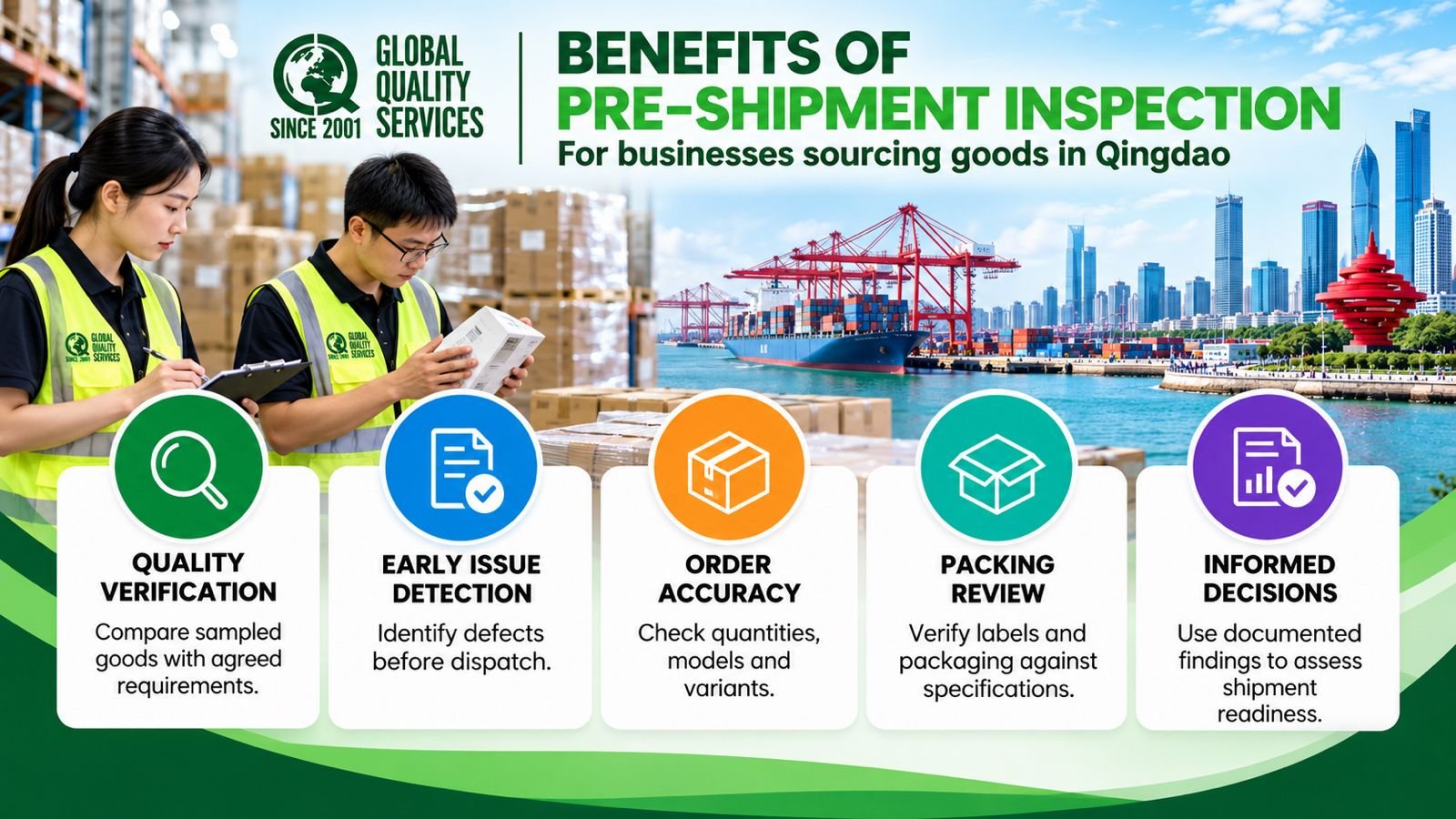
Identify Quality Issues Before Dispatch
Inspection can reveal visible defects, workmanship problems and specification discrepancies while the goods remain at the supplier’s premises, allowing the buyer to discuss corrective action before shipment.
Verify Order Conformity
Comparing products with agreed specifications, approved samples and purchase orders gives buyers a clearer picture of whether the inspected goods meet the stated requirements.
Reduce Avoidable Shipment Disputes
A documented report provides a common reference for buyers and suppliers when discussing product defects, quantity discrepancies or packaging issues.
Check Packaging and Shipment Readiness
Verifying carton markings, packaging condition and order quantities helps buyers identify inconsistencies that could complicate receiving, distribution or inventory management.
Improve Supplier Monitoring
Consistent inspection criteria and recorded findings help businesses evaluate supplier performance across orders and identify recurring quality issues.
Support Informed Shipment Decisions
Inspection results provide evidence about the condition of the sampled goods at the time of inspection. Buyers can use the findings to decide whether to accept the results, request corrections or arrange additional checks.
Pre-Shipment Inspection Process in Qingdao
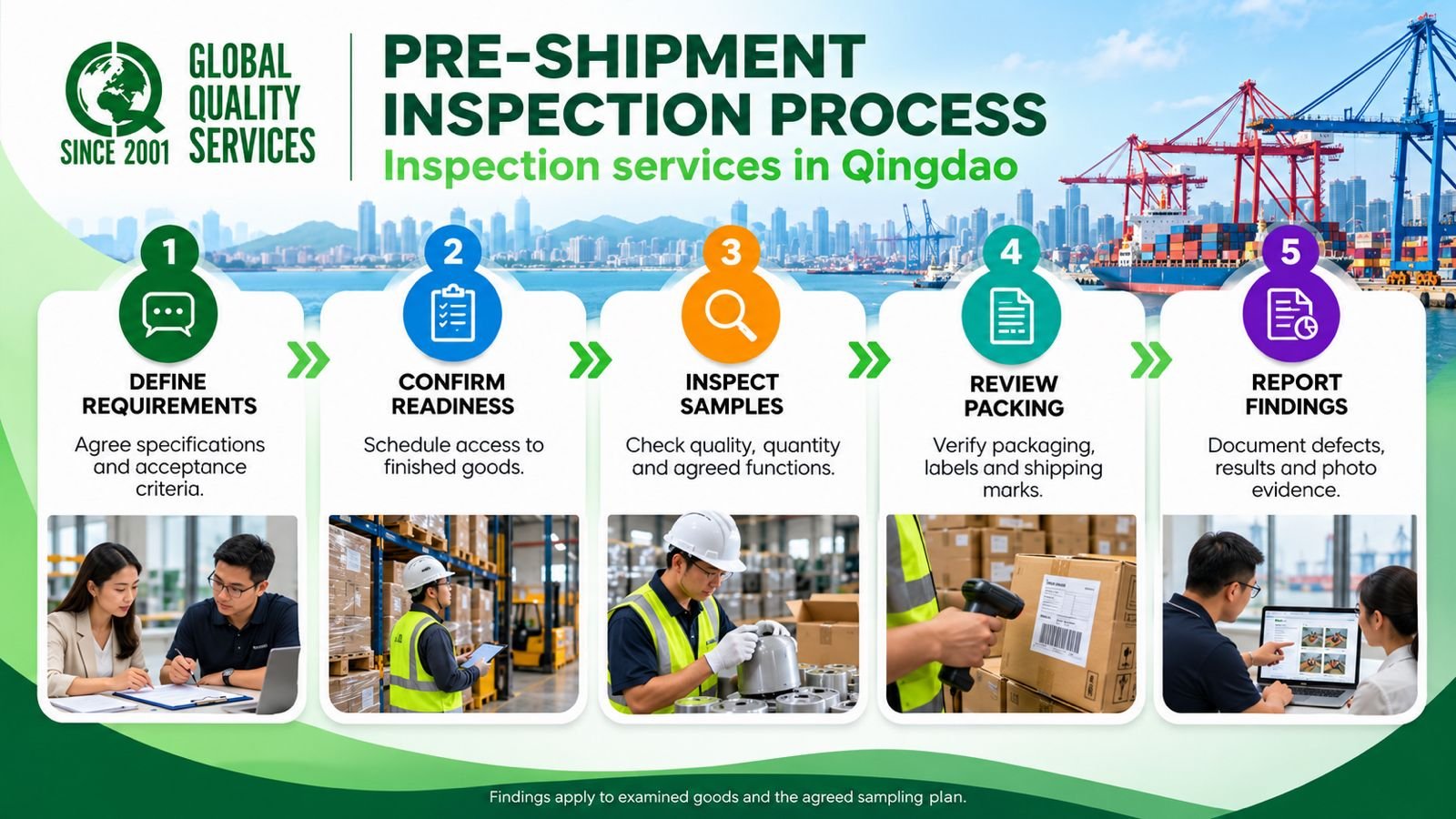
Step 1: Review the Purchase Order
The process begins with the purchase order, product specifications, approved samples, packaging requirements and other documents relevant to the goods.
Step 2: Define the Inspection Scope
The inspection criteria, sampling method, acceptable defect limits and required checks are agreed in advance. Any specialised testing should be confirmed separately.
Step 3: Confirm Product Availability
The supplier confirms that the goods are sufficiently complete and available for inspection. Inspecting too early may leave later production or packing issues undiscovered.
Step 4: Inspect the Products
Inspectors examine the selected products according to the agreed checklist. Depending on the product, this may include workmanship, measurements, quantity, labelling and functional checks.
Step 5: Check Packaging and Documentation
The inspection covers applicable packaging requirements, carton markings, shipping information and agreed supporting documents.
Step 6: Record Findings
Inspection findings are documented in a report, with photographs or other evidence where included in the agreed scope. Defects and discrepancies are recorded against the applicable acceptance criteria.
Step 7: Review Results and Determine Next Steps
The buyer reviews the report and decides whether to accept the findings, request corrective action or arrange reinspection. The shipment decision remains subject to the purchase contract and applicable requirements.
Which Products Can Be Inspected in Qingdao?
Pre-shipment inspection may be suitable for a wide range of products, depending on the agreed scope and available inspection capabilities.
Examples include:
- Consumer goods and household products.
- Electronics and electrical products.
- Machinery and industrial equipment.
- Textiles, garments and sportswear.
- Furniture and home furnishings.
- Metal products and manufactured components.
- Packaging materials and accessories.
- General merchandise prepared for export.
Products requiring specialised testing, regulated inspections or technical conformity assessments may need additional arrangements with appropriately qualified providers.
Factors Affecting Pre-Shipment Inspection Costs
Inspection costs depend on the product, location and work required. Factors that may affect the quotation include:
- Product type and technical complexity.
- Order size and number of product variants.
- Inspection duration and sampling requirements.
- Supplier location and access arrangements.
- Functional checks or specialised equipment required.
- Reporting requirements and supporting evidence.
- Additional visits or reinspections after corrective action.
Providing complete order information and a clear inspection checklist helps establish a suitable scope before the inspection is scheduled.
Why Choose Global Quality Services for Pre-Shipment Inspection in Qingdao?
Global Quality Services provides inspection services based on agreed product requirements and acceptance criteria. A defined scope helps establish which characteristics will be checked, how findings will be recorded, and what information the buyer will receive before shipment.
For buyers sourcing goods from Qingdao, the inspection arrangement should be tailored to the supplier’s location, product category, shipment schedule and required checks. Service availability and specialized testing requirements should be confirmed before booking.
Planning to ship goods from Qingdao, China? Contact GQS to discuss your product type, supplier location, order quantity and inspection requirements. A clearly defined inspection scope can help you review product quality, identify discrepancies, and make a more informed decision before your goods are dispatched.
Frequently Asked Questions
1. When should I book a pre-shipment inspection to avoid delaying my shipment?
Contact the inspection provider before production is due to finish and confirm the expected inspection-ready date with your supplier. Leave sufficient time for the inspection, report review and any necessary corrections before the shipping deadline.
2. Can I use the inspection report when discussing a quality dispute with my supplier?
Yes. The report can provide evidence of observed conditions, discrepancies and defects at the time of inspection. Its usefulness depends on the agreed checklist, sampling method, photographs and contractual acceptance criteria.
3. What if my supplier says the goods are ready, but some cartons are still being packed?
Discuss the shipment status before proceeding. If the inspection is intended to cover the finished order and final packaging, incomplete packing may prevent a complete assessment. Rescheduling or defining a limited inspection scope may be necessary.
4. Can the inspection be based on my company’s own quality standards rather than the supplier’s checklist?
Yes, the buyer’s requirements can form the basis of the inspection checklist, provided the criteria are clear and can be checked within the agreed scope. Share specifications, approved samples and defect acceptance rules before the inspection date.
5. Does a passed pre-shipment inspection mean my entire shipment is defect-free?
No. Inspection findings apply to the checks performed and the products examined. When sampling is used, defects may remain in units that were not inspected, so the report should be interpreted according to its sampling plan and scope.