Bayan Lepas Free Industrial Zone (FIZ) is one of Penang’s most established manufacturing hubs, with a strong presence of semiconductor, electrical and electronics, electronics manufacturing services (EMS), LED, and high-technology industries. Manufacturing facilities in this industrial zone depend on energy-intensive production equipment, automated systems, cleanroom environments, testing facilities, and specialized industrial processes. Managing energy consumption efficiently is therefore an important consideration for operational performance, cost control and environmental responsibility.
ISO 50001 Certification in Bayan Lepas Free Industrial Zone helps organizations establish a systematic approach to managing energy consumption and improving energy performance. The internationally recognized standard sets out requirements for developing, implementing, and continually improving an Energy Management System (EnMS). It enables businesses to understand their energy use, identify significant energy-consuming activities, and set measurable improvement objectives.
For manufacturers operating in Bayan Lepas FIZ, an effective energy management system can help monitor electricity consumption, improve equipment efficiency, reduce energy waste, and strengthen sustainability initiatives. Global Quality Services provides ISO 50001 certification support to organizations seeking to establish an energy management framework and prepare for certification audits.
Whether your organization operates a semiconductor manufacturing facility, an electronics assembly plant, or a precision engineering unit, ISO 50001 can help you better control energy-related activities and improve overall energy performance.
What Is ISO 50001 Certification?
ISO 50001:2018 is an international standard developed by the International Organization for Standardization (ISO) for Energy Management Systems. It provides a structured framework that enables organizations to establish policies, processes, and controls to manage energy use and improve energy performance.
The standard applies to organizations of different sizes and industries, regardless of the type or quantity of energy they consume. It follows the Plan-Do-Check-Act (PDCA) approach, encouraging businesses to establish energy objectives, implement improvement measures, monitor results and continually enhance their energy management systems.
Understanding ISO 50001:2018 and Amendment 1:2024
The current standard is ISO 50001:2018, including Amendment 1:2024, titled Climate Action Changes. The amendment introduces climate change considerations into the management system context and relevant interested-party requirements.
Organizations must consider whether climate change is a relevant issue affecting their ability to achieve the intended outcomes of their energy management system. For manufacturing facilities, this can include evaluating energy-related climate risks, resource availability and changing environmental expectations.
What Is an Energy Management System?
An Energy Management System (EnMS) is a structured framework for controlling and improving how an organization uses energy. It involves identifying energy consumption patterns, establishing energy performance indicators, setting improvement targets, and monitoring the effectiveness of implemented measures.
For a manufacturing facility, this may include monitoring electricity consumption in production machinery, compressed air systems, HVAC equipment, lighting, chillers, and other significant energy users.
Why Do Manufacturers in Bayan Lepas FIZ Need ISO 50001 Certification?
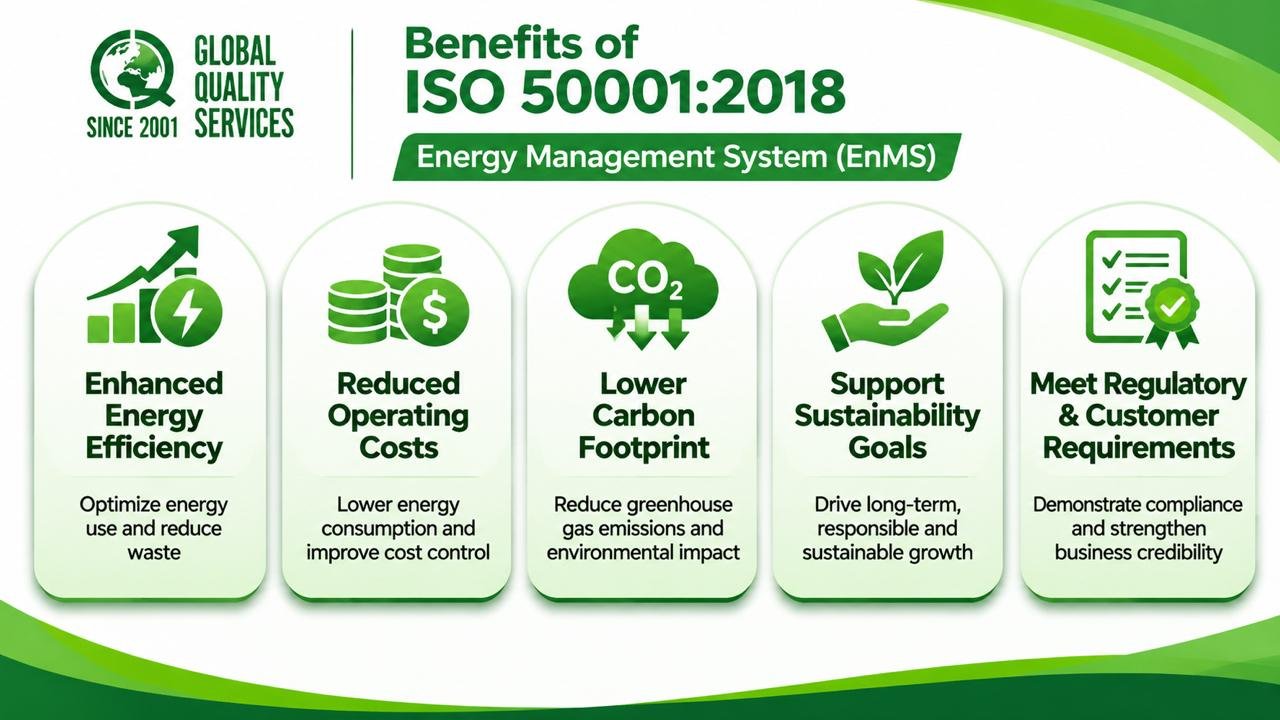
Bayan Lepas Free Industrial Zone has a well-established presence in semiconductor manufacturing, electronics production, and high-technology industries. Companies operating in these sectors often depend on continuous production processes and specialized equipment that require substantial energy inputs.
ISO 50001 helps organizations establish a systematic approach to managing these requirements while improving operational efficiency.
Control Industrial Energy Consumption
Manufacturing facilities often use significant amounts of electricity to operate production machinery, ventilation systems, compressors, cooling equipment, and testing infrastructure. Without effective monitoring, energy waste can remain unnoticed across different operational processes.
ISO 50001 encourages businesses to identify significant energy uses and monitor their consumption through measurable performance indicators.
Reduce Energy-Related Operating Costs
Electricity is an important operating expense for energy-intensive manufacturers. Inefficient equipment, excessive compressed air consumption, poor insulation, and inappropriate operating schedules can increase energy costs.
An effective energy management system helps organizations identify these inefficiencies and implement appropriate improvement measures.
Improve Environmental Performance
Energy consumption is closely connected to an organization’s environmental footprint, particularly where electricity generation involves fossil fuels. Improving energy efficiency can help businesses reduce energy-related greenhouse gas emissions and strengthen their environmental performance.
ISO 50001 provides a structured framework for incorporating energy efficiency into broader sustainability initiatives.
Meet Customer and Supply Chain Expectations
International manufacturers increasingly evaluate suppliers on their environmental performance, resource efficiency and sustainability practices. ISO 50001 certification can demonstrate that an organization follows a recognized framework for managing energy consumption and pursuing continual improvement.
This can strengthen supplier credibility and support customer sustainability requirements.
Industries That Need ISO 50001 Certification in Bayan Lepas Free Industrial Zone
ISO 50001 is relevant to organizations whose activities involve energy consumption and energy performance management. Its application is particularly valuable across the manufacturing industries established in Bayan Lepas FIZ.
Semiconductor Manufacturing
Semiconductor manufacturing facilities depend on specialized production equipment, cleanrooms, ventilation systems, temperature controls, and precision testing processes. These operations can require continuous, carefully controlled energy use.
ISO 50001 helps semiconductor manufacturers identify significant energy uses, establish performance indicators, and monitor opportunities to improve energy efficiency without compromising production requirements.
Electrical and Electronics Manufacturing
Electronics manufacturers use automated assembly lines, soldering equipment, testing systems, compressors, and industrial cooling facilities. Energy management can help these businesses identify inefficient processes and improve equipment operating practices.
An ISO 50001 framework also supports systematic monitoring of electricity consumption across different production activities.
Electronics Manufacturing Services (EMS)
EMS companies often operate multiple production lines involving surface-mount technology, component assembly, inspection and testing. Their energy requirements can vary with production volumes, equipment utilization, and operating schedules.
ISO 50001 helps EMS facilities establish energy baselines and evaluate performance changes across their manufacturing operations.
LED and Electrical Equipment Manufacturing
LED and electrical equipment manufacturers use production machinery, testing equipment, controlled work environments, and supporting utilities. Monitoring the energy consumption of these activities helps organizations identify opportunities to improve efficiency and control operational costs.
Precision Engineering and Industrial Manufacturing
Precision engineering facilities use CNC machinery, compressors, cooling systems, and other energy-consuming equipment. ISO 50001 helps businesses understand how these processes affect overall energy performance and establish appropriate operational controls.
ISO 50001 Certification Requirements for Manufacturing Companies
Organizations seeking ISO 50001 certification must establish an Energy Management System that meets the requirements of ISO 50001:2018, including applicable Amendment 1:2024 considerations.
The standard follows a structured approach covering organizational context, leadership, planning, support, operation, performance evaluation, and continual improvement.
Energy Policy and Leadership Commitment
Top management must establish an energy policy that reflects the organization’s commitment to improving energy performance. Management must also assign responsibilities, provide necessary resources and ensure that energy objectives are incorporated into relevant business activities.
Energy Review and Energy Baseline
An energy review helps organizations analyze energy consumption, identify significant energy uses, and understand the factors affecting energy performance. The organization must also establish an energy baseline to provide a reference point for evaluating future improvements.
Energy Performance Indicators (EnPIs)
Energy Performance Indicators are measurable values used to monitor and evaluate energy performance. These may include electricity consumption per unit produced, energy consumption per operating hou,r or energy usage per production area, depending on the organization’s activities.
Energy Objectives and Action Plans
Businesses must establish measurable energy objectives and develop action plans to achieve them. These plans should identify improvement opportunities, responsibilities, resources and appropriate monitoring arrangements.
Monitoring and Measurement
Organizations must establish processes to monitor energy consumption and evaluate the performance of significant energy uses. Relevant data should be collected, analyzed, and maintained to support informed energy management decisions.
Internal Audits and Management Reviews
Internal audits help determine whether the EnMS conforms to ISO 50001 requirements and is effectively implemented. Management reviews evaluate system performance, achievement of energy objectives, and opportunities for continual improvement.
Important ISO 50001 Clauses for Energy Management Systems
The following clauses provide the foundation for implementing an effective energy management system.
| ISO 50001 Clause | Requirement |
|---|---|
| Clause 4 | Context of the organization |
| Clause 5 | Leadership and commitment |
| Clause 6 | Planning, energy review and objectives |
| Clause 7 | Support, resources and competence |
| Clause 8 | Operational planning and control |
| Clause 9 | Monitoring, measurement, analysis and evaluation |
| Clause 10 | Nonconformity, corrective action and continual improvement |
These clauses work together to establish a structured energy management framework. Organizations must demonstrate that their EnMS is implemented, monitored, and continually improved rather than treating certification as a documentation exercise.
ISO 50001 Certification Process in Bayan Lepas Free Industrial Zone
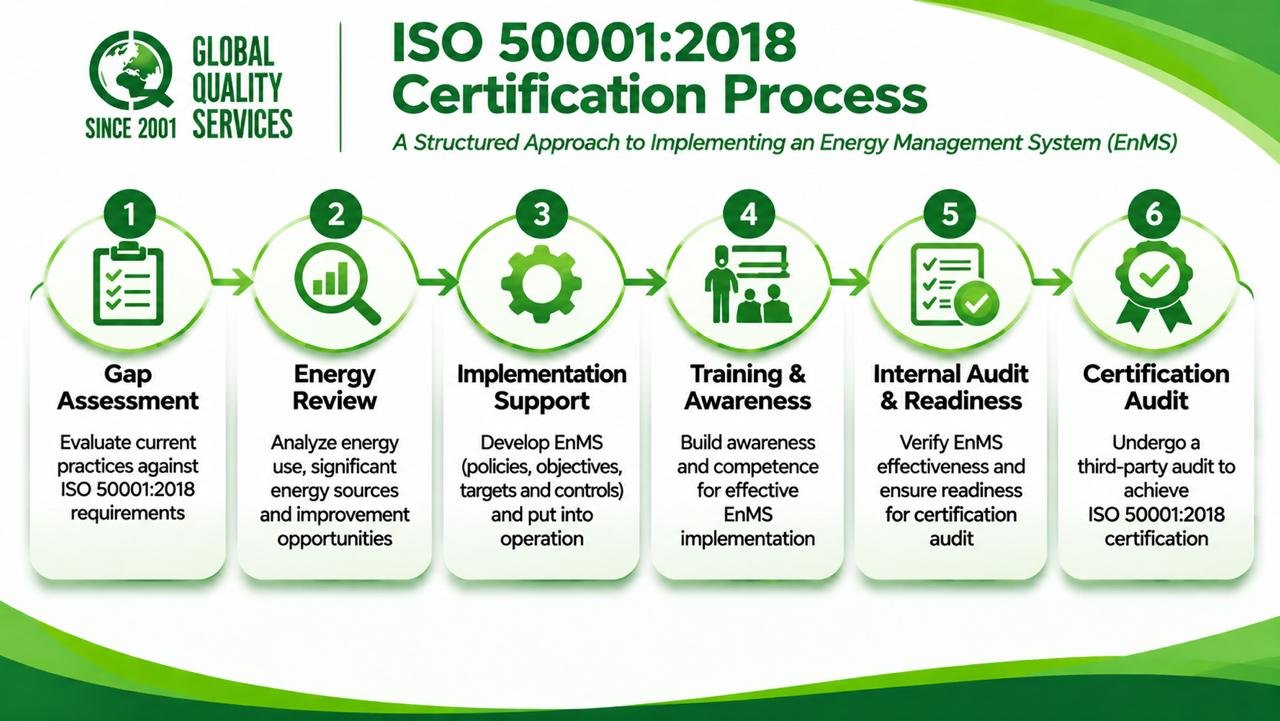
Obtaining ISO 50001 certification involves establishing an energy management system, implementing its requirements and undergoing an independent certification audit. Global Quality Services helps organizations understand the requirements and prepare for the certification process.
Initial Assessment and Gap Analysis
The process begins with reviewing existing energy management practices, operational activities, and available energy consumption data. A gap analysis identifies areas where existing arrangements do not meet ISO 50001 requirements.
Energy Review and Baseline Development
The organization evaluates its energy sources, consumption patterns, ns and significant energy uses. An energy baseline is established to provide a reference for measuring improvements over time.
Documentation and EnMS Implementation
Relevant energy policies, procedures, objectives, operational controls and monitoring arrangements are established. The system must reflect actual operational practices and clearly define responsibilities for energy management.
Employee Awareness and Competence
Employees involved in energy-related activities must understand their responsibilities and the impact of their work on energy performance. Appropriate awareness and competence arrangements help ensure that energy management requirements are followed consistently.
Internal Audit and Management Review
Before the external certification audit, the organization conducts an internal audit to evaluate conformity with ISO 50001 requirements. Management reviews the results and determines whether further corrective actions or improvements are necessary.
Certification Audit and Continued Improvement
An independent certification body evaluates the implemented Energy Management System through the applicable certification audit process. After completing the certification process, the organization receives certification from the certification body. Continued surveillance audits and ongoing system improvement are required to maintain certification.
ISO 50001 Certification Services Across Bayan Lepas and Penang with Global Quality Services
Global Quality Services supports organizations seeking ISO 50001 certification in the Bayan Lepas Free Industrial Zone and surrounding industrial areas in Penang.
Our service coverage includes Bayan Lepas FIZ Phase 1, Phase 2, Phase 3, and Phase 4; Bayan Lepas Industrial Park; Bayan Baru; Batu Maung; Bukit Jambul; and other nearby manufacturing and commercial areas.
Businesses involved in semiconductor manufacturing, electronics assembly, EMS, LED production, precision engineering,g and electrical equipment manufacturing can benefit from establishing structured energy management practices.
Global Quality Services helps organizations understand ISO 50001 requirements, identify gaps in existing energy management arrangements, and prepare for certification audits. Our approach focuses on developing a practical Energy Management System that reflects the organization’s operational requirements and supports continual improvement.
Contact Global Quality Services today to discuss ISO 50001 certification support in Bayan Lepas Free Industrial Zone, Malaysia.
Frequently Asked Questions About ISO 50001 Certification in Bayan Lepas Free Industrial Zone
1. Is ISO 50001 certification mandatory for manufacturing companies in Malaysia?
ISO 50001 certification is not universally mandatory for every manufacturing company in Malaysia. However, the Energy Efficiency and Conservation Act 2024 (EECA 2024), which came into effect on 1 January 2025, establishes specific energy management obligations for qualifying energy consumers. Organizations meeting the prescribed consumption threshold may need to appoint a Registered Energy Manager and implement an Energy Management System under the applicable regulations. ISO 50001 certification is a separate voluntary international certification route unless specifically required by a customer or other applicable obligation.
2. How is an energy baseline different from an energy performance indicator?
An energy baseline is a reference value representing an organization’s energy performance over a defined period. It is used to compare energy performance over time. An Energy Performance Indicator (EnPI), on the other hand, is a measurable value used to evaluate energy performance, such as electricity consumed per unit of production. Both are important for measuring and demonstrating improvements under ISO 50001.
3. Can ISO 50001 be integrated with ISO 14001 and ISO 9001?
Yes. ISO 50001 can be integrated with ISO 14001 and ISO 9001 because the standards follow a compatible management system structure. Organizations can align documentation, internal audits, management reviews, corrective actions, and leadership responsibilities across these systems. Integration can reduce duplication and make management system administration more efficient.
4. Does ISO 50001 require companies to install renewable energy systems?
No. ISO 50001 does not mandate installing solar panels, renewable energy equipment, or any specific energy-saving technology. Instead, it requires organizations to systematically evaluate energy consumption, establish improvement objectives, and demonstrate continual improvement in energy performance. Businesses can select suitable improvement measures according to their operational needs and energy review findings.
5. How long does ISO 50001 certification take for a manufacturing facility?
The implementation period depends on the organization’s size, operational complexity, existing energy management practices, and availability of energy consumption data. A manufacturing facility with established monitoring arrangements may require less preparation than one developing an EnMS from the beginning. The time needed for certification also depends on completing internal audits, management reviews, and the certification body’s audit schedule.