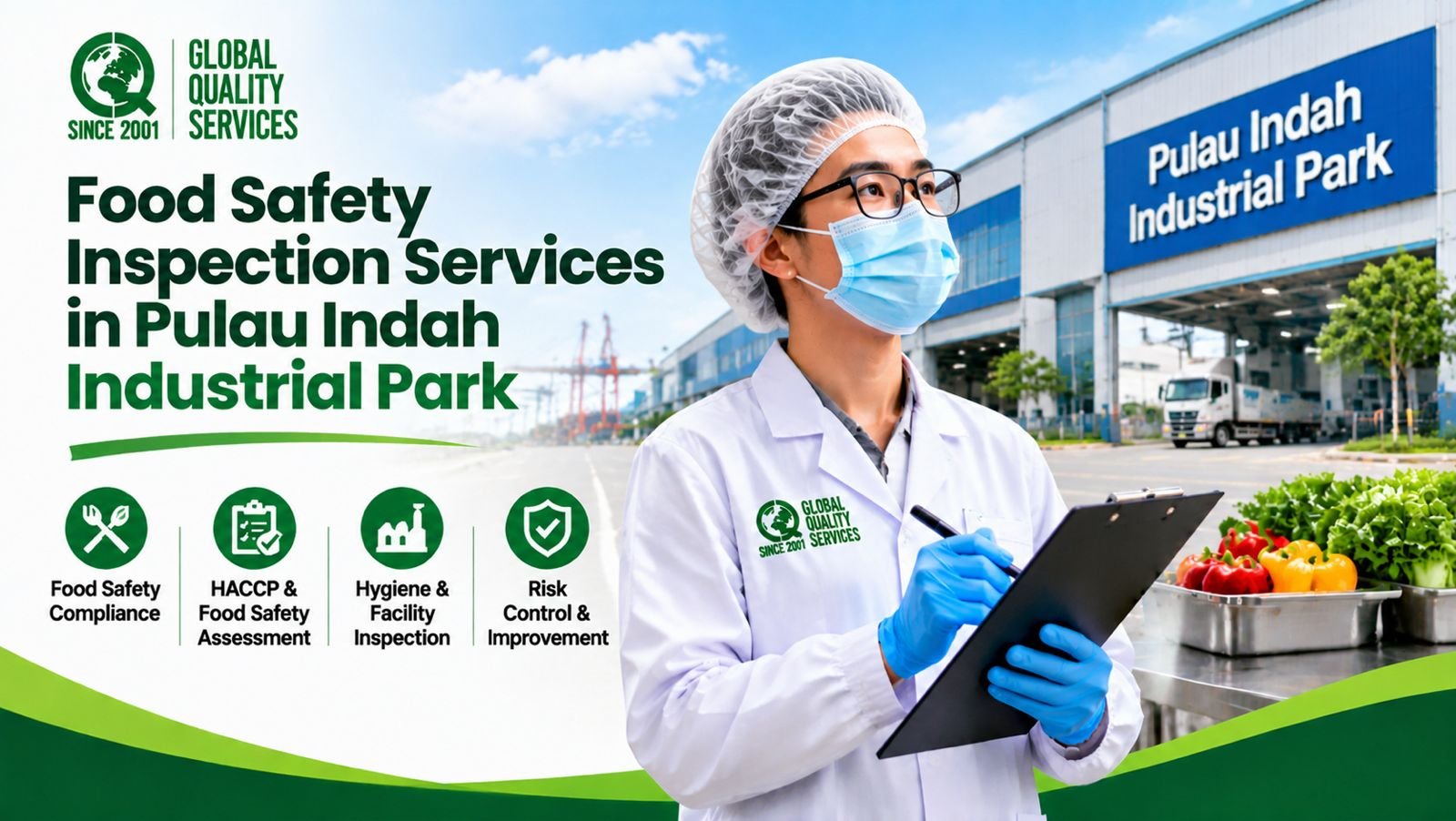
Pulau Indah Industrial Park (PIIP) in Selangor is an established industrial location supporting manufacturing, food and beverage production, logistics, warehousing and other industrial activities. Its proximity to Port Klang and Westports gives businesses access to key domestic and international supply chain routes.
The industrial park has attracted companies from different sectors, including food-related manufacturing and packaging. Businesses operating in this environment need effective controls over raw materials, processing areas, storage conditions, packaging operations and finished product handling.
Food safety risks can develop at any stage of production or distribution. Contaminated raw materials, inadequate cleaning, pest activity, incorrect storage temperatures, damaged packaging and poor segregation can affect product safety and create supply chain problems.
Global Quality Services provides Food Safety Inspection Services in Pulau Indah Industrial Park, Malaysia, to help food manufacturers, processors, importers, distributors and warehouse operators assess food handling conditions, identify potential hazards and document inspection findings.
What Are Food Safety Inspection Services?
Food safety inspection is a systematic assessment of food-related facilities, products, handling practices and operational conditions to identify potential risks that may affect food safety and hygiene.
The inspection scope depends on the business activity, product category, facility layout and applicable requirements. It may include manufacturing premises, ingredient storage areas, food packaging operations, cold rooms, warehouses and distribution facilities.
A typical inspection may examine:
- Hygiene and sanitation conditions in production and storage areas.
- Raw material receiving, identification and storage.
- Food processing and handling practices.
- Temperature monitoring and cold storage arrangements.
- Packaging integrity and product labelling.
- Pest prevention and waste management.
- Cleaning procedures and food safety records.
- Product traceability and non-conformity management.
The objective is to document the condition of the inspected operations and identify areas requiring attention.
Why Food Safety Inspections Matter in Pulau Indah Industrial Park
Food-related businesses in PIIP may handle ingredients, processed foods, edible oils, packaged products and materials used in food manufacturing. Each activity has different contamination risks and operational controls.
Controlling Risks in Food Manufacturing
Food manufacturing involves multiple stages, including raw material receiving, preparation, processing, packaging and finished product storage. A weakness at one stage can affect subsequent operations.
Inspection can examine production area hygiene, equipment condition, material flow, product segregation and the handling of food-contact surfaces. It can also identify visible conditions that may introduce physical, chemical or biological contamination.
Maintaining Raw Material and Ingredient Quality
Raw materials may arrive from different suppliers and vary in packaging, condition and storage requirements. Poor receiving controls, damaged containers, moisture exposure or inadequate identification can create risks before production begins.
An inspection can review receiving practices, supplier documentation, batch identification, storage arrangements and the separation of accepted, rejected and quarantined materials.
Preventing Cross-Contamination
Food manufacturing facilities may handle several ingredients or product categories within the same premises. Without suitable segregation and cleaning controls, allergens, raw materials, chemicals or foreign matter may contaminate other products.
Inspection can assess production flow, equipment cleaning arrangements, storage segregation and the handling of materials with different contamination risks.
Protecting Products During Storage and Distribution
Processed food and ingredients may require specific temperature, humidity, packaging and handling conditions. Improper stacking, damaged cartons, moisture ingress and unsuitable storage arrangements can affect product condition.
Inspection helps identify visible storage problems and assess whether the documented handling arrangements are consistent with the agreed product requirements.
Benefits of Regular Food Safety Inspections
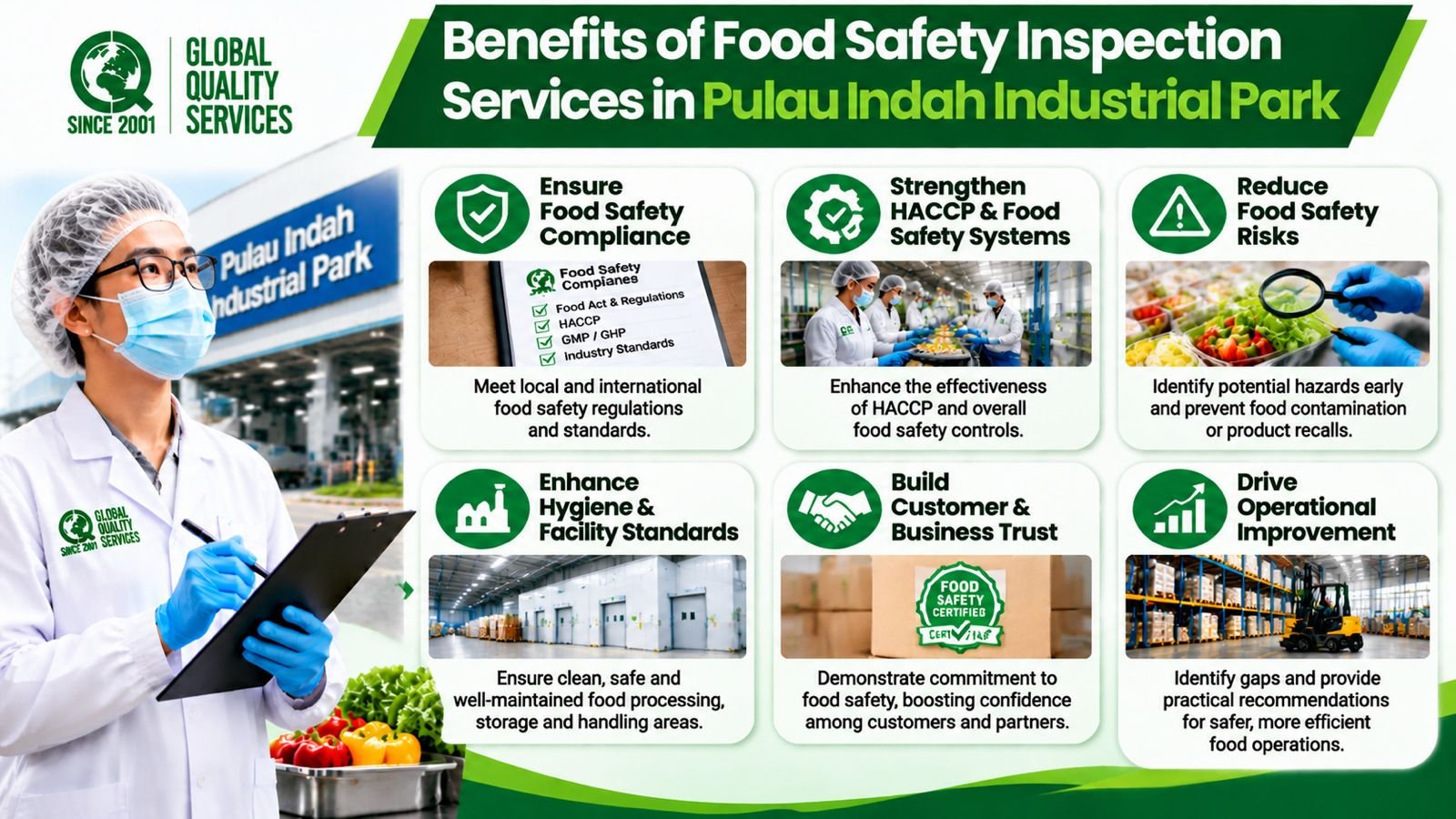
A planned inspection programme gives food businesses a clearer understanding of the condition of their facilities and operational controls.
It can help identify hygiene and contamination risks before they affect products, improve oversight of raw material and finished product storage, and highlight weaknesses in cleaning, pest control and temperature monitoring.
Inspection records can also support internal reviews, customer assessments, supplier evaluations and corrective action planning. For businesses handling imported food, reviewing supplier records and product traceability can help strengthen control across the supply chain.
What Does a Food Safety Inspection Cover?
Global Quality Services can establish an inspection scope based on the facility’s operations and the client’s requirements.
Production Areas and Food Processing Equipment
Production areas are examined for visible hygiene concerns, equipment condition, cleaning arrangements and potential sources of contamination.
The inspection may cover processing lines, preparation tables, food-contact surfaces, utensils, conveyors, filling equipment and other accessible machinery. Inspectors can also review whether production areas are maintained to prevent the accumulation of food residues and other contaminants.
Raw Material and Ingredient Storage
Storage areas are assessed for cleanliness, ventilation, pest activity, moisture exposure and suitable product segregation.
The inspection may review ingredient identification, batch details, packaging condition, stock rotation and storage records. Where applicable, FIFO (First In, First Out) and FEFO (First Expired, First Out) practices can be examined.
Temperature and Environmental Controls
Temperature-sensitive ingredients and finished products require appropriate storage and handling conditions. Inspection may cover refrigeration equipment, cold rooms, temperature monitoring devices, recorded readings and procedures for managing temperature deviations.
For products sensitive to moisture or humidity, the inspection can also examine the available environmental monitoring arrangements.
Packaging and Labelling
Packaging plays an important role in protecting food products from contamination and damage. Inspection may examine packaging materials, sealing arrangements, container condition and the suitability of product identification.
Relevant label details may include product name, ingredients, allergen declarations, batch or lot identification, date marking, storage instructions and other applicable information. Findings can be compared with the agreed specifications and relevant Malaysian requirements.
Cleaning, Sanitation and Personal Hygiene
The condition of production areas, equipment, utensils, handwashing facilities and sanitation arrangements is examined for visible hygiene concerns.
The inspection may also review cleaning schedules, sanitation records, staff hygiene practices, protective clothing and the availability of appropriate facilities for food handlers.
Pest Control and Waste Management
Food manufacturing and storage premises need effective controls to prevent pest entry and contamination. Inspection can examine visible pest activity, entry points, waste accumulation, monitoring stations and available pest control records.
Waste collection areas, disposal practices and the separation of waste from food handling operations may also be reviewed.
Traceability and Food Safety Documentation
Inspection may include a review of records supporting the identification and movement of food products through the facility.
Relevant documentation can include:
- Raw material receiving and supplier records.
- Batch production and processing records.
- Cleaning and sanitation schedules.
- Temperature monitoring logs.
- Pest control documentation.
- Product specifications and labelling records.
- Finished product inspection records.
- Non-conformity and corrective action reports.
- Product withdrawal and recall procedures.
These records help businesses demonstrate how food safety controls are maintained and how affected batches can be identified when a problem occurs.
Food Safety Regulations and Requirements in Malaysia
Food businesses operating in Pulau Indah Industrial Park must consider the applicable Malaysian food safety legislation.
The Food Act 1983 provides the principal legal framework for food safety and quality. The Food Regulations 1985 establish requirements for food standards, composition, additives and labelling. The Food Hygiene Regulations 2009 cover hygiene requirements for food premises, owners and food handlers, including food preparation, handling, storage, packaging and transportation.
The Ministry of Health Malaysia’s Food Safety and Quality Programme oversees food safety monitoring and enforcement across the supply chain, including food manufacturing premises and imported food at points of entry.
Imported Food Controls and FoSIM
Businesses importing ingredients or finished food products into Malaysia should understand the Food Safety Information System of Malaysia (FoSIM).
The Ministry of Health uses a risk-based system for imported food controls. Depending on the consignment’s assigned inspection level, the process may involve document examination, physical inspection, sampling, laboratory analysis, detention or rejection.
Importers and forwarding agents must meet the relevant FoSIM registration and documentation requirements. Certain products may also require health certificates, certificates of analysis, licences or approvals from other government agencies.
An independent inspection report does not replace official import clearance or decisions made by the Ministry of Health and other competent authorities.
Upcoming Imported Food Safety Assurance Requirement in 2027
An important regulatory development for food importers is the Food (Amendment) (No. 3) Regulations 2026, published as P.U. (A) 298/2026.
The amendment introduces Regulation 3B into the Food Regulations 1985, establishing a food safety assurance programme requirement for certain imported food. It is scheduled to take effect on 1 March 2027.
Under the new provision, imported food covered by the requirement must be prepared at food premises operating a food safety assurance programme recognised by the Ministry of Health’s Food Safety and Quality Programme.
Food manufacturers, importers and businesses sourcing prepared food from overseas should review their supplier arrangements and determine whether the products and premises fall within the provision’s scope. The relevant Ministry of Health guidance and implementation requirements should be checked before the effective date.
For businesses in Pulau Indah Industrial Park that import ingredients or finished products, this development makes supplier food safety documentation and upstream controls particularly important.
Food Safety Inspection Priorities for Different Businesses
Different food-related operations require different inspection priorities.
- Food and beverage manufacturers need to maintain suitable production hygiene, equipment sanitation, ingredient controls, allergen management and finished product handling.
- Edible oil and food ingredient businesses need controls over raw material quality, storage conditions, product identification, contamination prevention and suitable packaging.
- Food packaging manufacturers need to maintain clean production areas, suitable material storage, product specifications and controls over foreign matter and contamination.
- Food warehouses and distribution centres need to maintain appropriate storage conditions, pest control, product segregation, stock rotation and traceability records.
- Importers and exporters need to maintain supplier documentation, product identification, consignment records and applicable food safety and labelling information.
Our Food Safety Inspection Process
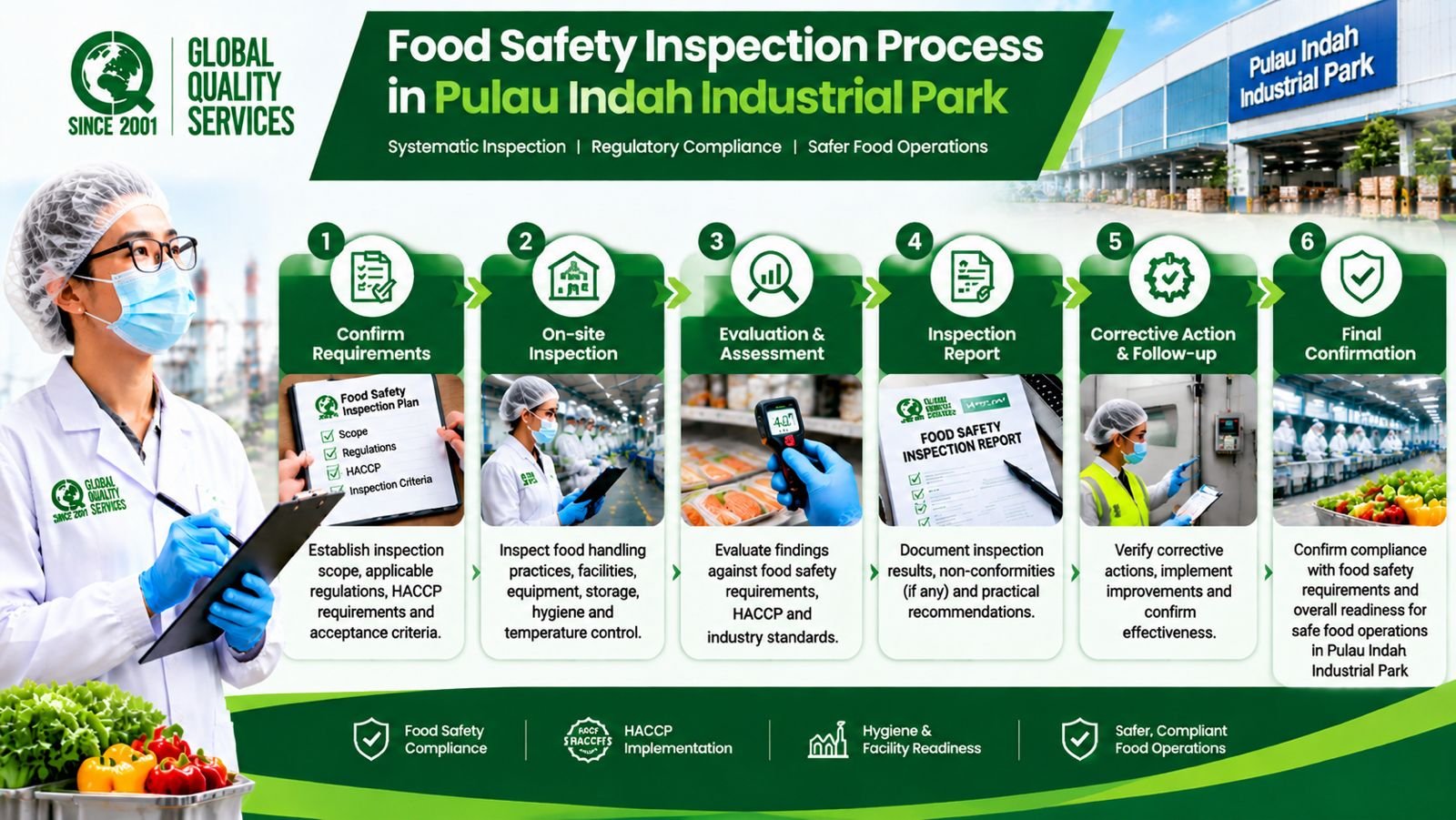
Global Quality Services follows a structured inspection process based on the facility type, food category and agreed inspection requirements.
1. Initial Requirement Review
The process begins with an understanding of the business activity, product categories, facility layout and inspection objectives. Available food safety procedures, product specifications, previous reports and relevant records may be reviewed.
2. Inspection Planning
The inspection areas, operational activities, access arrangements and reporting criteria are established. Where temperature checks, product sampling or specific document reviews are required, these activities are defined separately within the agreed scope.
3. On-Site Inspection
The inspection team examines the agreed production, storage, packaging and handling areas. Visible hygiene conditions, equipment, product storage, pest prevention and relevant documentation are assessed.
Observations are recorded using suitable inspection checklists and photographs where permitted.
4. Findings and Reporting
Inspection findings are compiled into a structured report describing the inspected areas, identified concerns and supporting evidence. Any observed non-conformities are documented against the agreed inspection criteria.
Where microbiological testing, chemical analysis or specialist product testing is necessary, it should be arranged through an appropriately qualified laboratory under a separate scope.
5. Corrective Action Follow-Up
The inspection report provides a basis for the responsible business to review findings, assign corrective actions and monitor improvements. Follow-up inspections can be arranged where required to verify the condition of selected areas.
Why Choose Global Quality Services?
Global Quality Services provides structured inspection services for businesses that require an objective assessment of food handling, manufacturing, storage and distribution conditions.
For facilities in Pulau Indah Industrial Park, the inspection scope can be adapted to the type of products handled, production activities and operational risks.
Our approach focuses on systematic examination, clear documentation and practical reporting. This gives businesses a better understanding of the conditions observed during inspection and the areas that may require corrective action.
Inspection findings are limited to the agreed scope and conditions observed at the time of assessment. They do not replace statutory food inspections, regulatory approvals, product certification or official import clearance.
Contact Global Quality Services to discuss Food Safety Inspection Services in Pulau Indah Industrial Park, Malaysia. Share your facility type, food products and inspection requirements to establish an appropriate inspection scope.
Frequently Asked Questions
1. What types of facilities can undergo food safety inspections in Pulau Indah Industrial Park?
Food safety inspections may be conducted for food manufacturing facilities, ingredient processing units, packaging operations, warehouses, cold storage facilities and food distribution centres. The inspection scope depends on the products handled and the activities performed at the premises.
2. What is checked during a food manufacturing inspection?
An inspection may cover production hygiene, equipment condition, raw material storage, food handling, cleaning procedures, pest control, packaging, temperature monitoring and traceability records. Additional checks can be included according to the facility’s requirements.
3. Are food businesses in Malaysia required to comply with the Food Hygiene Regulations 2009?
Yes. The Food Hygiene Regulations 2009 establish hygiene requirements for applicable food premises, owners and food handlers. Requirements cover areas such as food preparation, handling, storage, packaging and transportation.
4. What is the new imported food safety assurance requirement taking effect in March 2027?
Regulation 3B, introduced through the Food (Amendment) (No. 3) Regulations 2026, establishes a food safety assurance programme requirement for imported food within its scope. From 1 March 2027, covered imported food must be prepared at premises operating a programme recognised by the Ministry of Health’s Food Safety and Quality Programme.
5. Does a food safety inspection include laboratory testing?
Not automatically. A standard inspection focuses on the agreed facility conditions, handling practices, records and visible product-related concerns. Microbiological, chemical or other laboratory tests can be arranged as separate activities through an appropriately qualified laboratory.