Pasir Gudang is one of Johor’s key industrial and port centers, with a strong presence of petrochemical plants, chemical manufacturers, oil and gas businesses, logistics facilities, and heavy industries. These operations depend on energy-intensive processes, making effective energy management essential for controlling costs and improving operational efficiency.
ISO 50001 Certification in Pasir Gudang, Malaysia provides businesses with a structured framework to monitor energy consumption, identify inefficiencies, and improve energy performance. Global Quality Services (GQS) supports organizations in establishing and preparing their Energy Management Systems (EnMS) for certification.
What Is ISO 50001 Certification?
ISO 50001:2018 is an international standard for Energy Management Systems. It helps organizations establish processes to monitor, control, and continually improve energy performance.
The standard applies to electricity, fuel, steam, compressed air and other forms of energy used across business operations. It requires organizations to set energy objectives, measure consumption, and identify improvement opportunities. ISO 50001 can be implemented by businesses of different sizes and across various industries.
Important ISO 50001 Clauses
| Clause | Requirement |
|---|---|
| Clause 4 | Context of the organization |
| Clause 5 | Leadership and energy policy |
| Clause 6 | Planning and energy review |
| Clause 7 | Support and resources |
| Clause 8 | Operation and operational control |
| Clause 9 | Performance evaluation and internal audit |
| Clause 10 | Improvement and corrective action |
Latest ISO 50001 and Energy Efficiency Updates in 2026
As of November 2026, ISO 50001:2018 remains the current edition. Its 2024 climate action amendment requires organizations to consider whether climate change is relevant to their organizational context.
Malaysia has also updated several EECA-related guidelines during 2026. The Energy Commission issued revised guidance on Registered Energy Managers and energy management systems in August, followed by updated guidance on energy-using products in October.
Businesses should review these updates alongside their existing energy management procedures.
ISO 50001 and Malaysia’s EECA 2024
Malaysia’s Energy Efficiency and Conservation Act 2024 (EECA 2024) came into force on 1 January 2025 in Peninsular Malaysia and Labuan.
Energy consumers using at least 21,600 GJ over 12 consecutive months are subject to specific obligations after receiving the relevant notice from the Energy Commission. These include appointing a Registered Energy Manager, implementing an EnMS, submitting energy efficiency reports and arranging energy audits.
ISO 50001 certification and EECA compliance are separate matters. Businesses should assess their statutory obligations independently while using an effective EnMS to strengthen energy management.
Why Do Businesses in Pasir Gudang Need ISO 50001?
Industrial facilities in Pasir Gudang often operate boilers, compressors, cooling systems, pumps, production machinery, and material-handling equipment. Poor energy control can increase operating expenses and affect production efficiency.
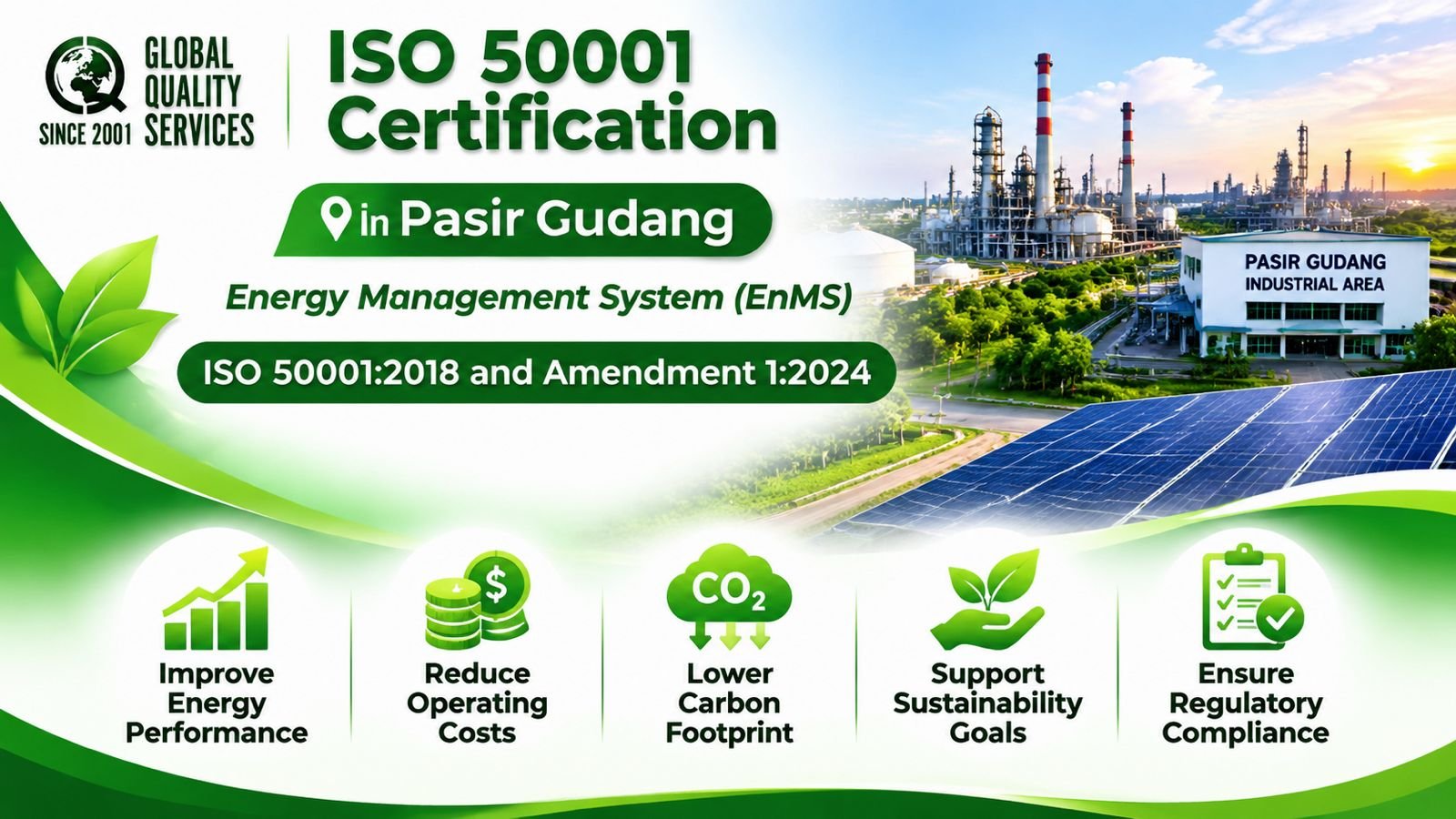
ISO 50001 certification helps businesses:
- Control energy costs: Identify excessive consumption and opportunities to reduce energy waste.
- Improve operational efficiency: Monitor energy-intensive equipment and production processes.
- Strengthen regulatory awareness: Establish processes to identify and manage applicable energy-related obligations.
- Track energy performance: Use measurable indicators and energy baselines to assess improvements.
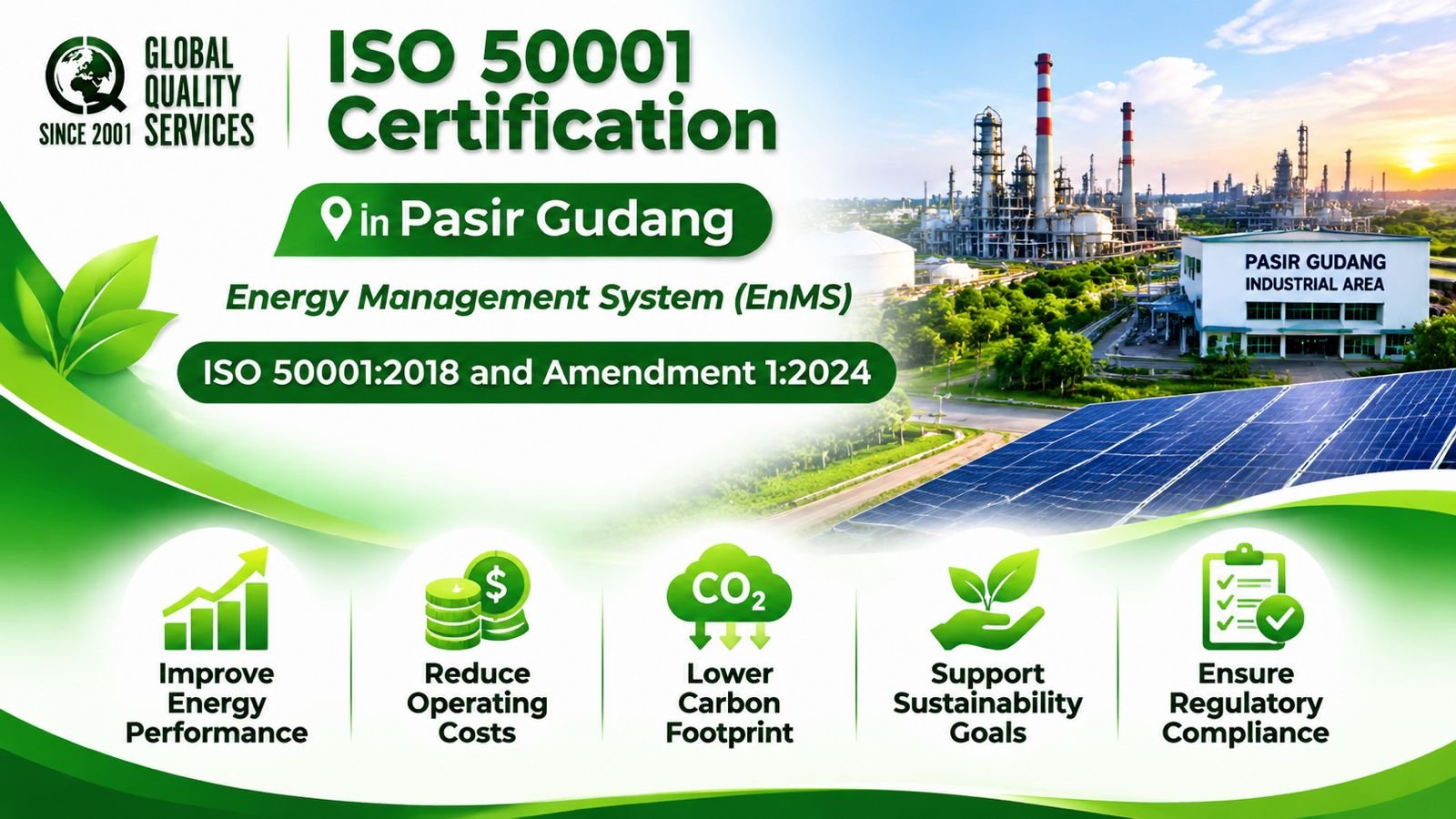
- Support sustainability goals: Improve energy use and contribute to wider environmental objectives.
- Build customer confidence: Demonstrate a structured approach to energy management to customers and business partners.
Industries That Need ISO 50001 Certification in Pasir Gudang
Pasir Gudang’s industrial environment makes energy management relevant across several sectors.
Petrochemical and Chemical Manufacturing
Petrochemical facilities use significant energy for heating, cooling, distillation, compression, and chemical processing. ISO 50001 helps these businesses monitor energy-intensive operations and identify opportunities to improve equipment performance.
Oil and Gas and Bulk Storage
Oil and gas facilities, tank farms and storage terminals rely on pumps, transfer systems, utilities and supporting infrastructure. An EnMS helps operators track consumption and manage energy use across these activities.
Oleochemical and Food Processing
Processing facilities require energy for heating, refrigeration, mixing, drying and packaging. Monitoring these processes can help businesses identify avoidable consumption and improve production efficiency.
Heavy Engineering and Manufacturing
Metal fabrication, machinery production and industrial manufacturing use electricity, compressed air and fuel across production activities. ISO 50001 provides a consistent method for measuring and improving energy performance.
Warehousing, Ports and Logistics
Port-related facilities and warehouses use energy for lighting, material handling, refrigeration and equipment operation. An energy management system helps businesses understand consumption patterns and improve control.
ISO 50001 Certification Requirements
To implement ISO 50001, an organization must establish an Energy Management System that addresses its activities, energy use, and operational requirements.
Key requirements include:
- Energy policy: Define management’s commitment to improving energy performance.
- Energy review: Identify significant energy uses and assess consumption patterns.
- Energy baseline: Establish a reference point for measuring energy performance.
- Energy performance indicators: Select measurable indicators to track consumption and efficiency.
- Objectives and targets: Set realistic energy improvement goals.
- Operational controls: Establish controls for processes and equipment affecting energy performance.
- Monitoring and measurement: Maintain reliable energy data and regularly review performance.
- Internal audits: Evaluate whether the EnMS meets ISO 50001 requirements.
- Management review: Assess system performance and identify further improvements.
ISO 50001 Certification Process in Pasir Gudang
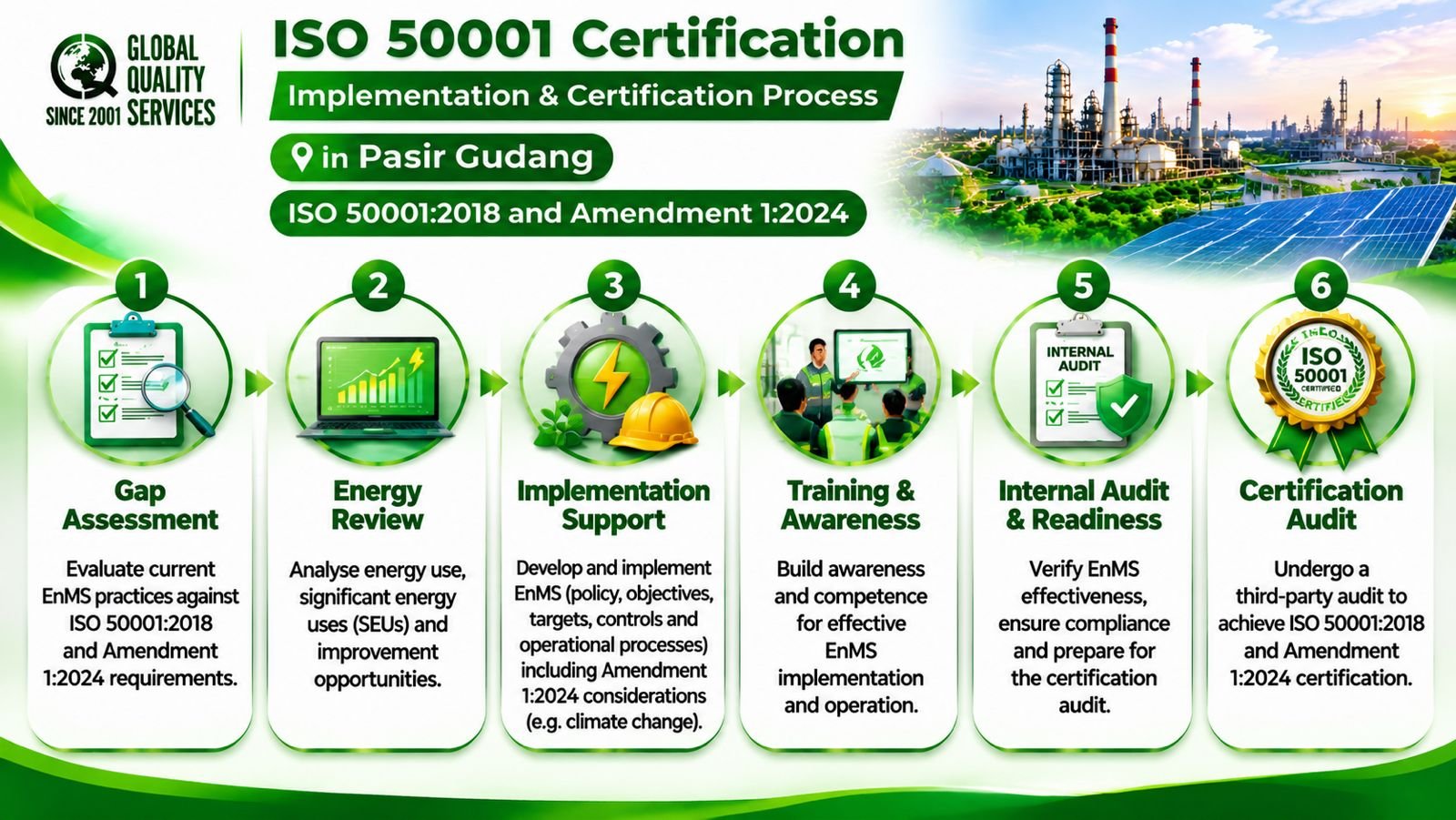
The certification process involves establishing the EnMS, checking its effectiveness, and undergoing an independent certification audit.
1. Initial Gap Assessment
Review existing energy management practices and identify gaps against ISO 50001 requirements.
2. Energy Review and Planning
Analyze energy consumption, identify significant energy uses, and establish baselines, indicators, and improvement objectives.
3. Documentation and Implementation
Develop the required policies, procedures and records. Implement operational controls and assign responsibilities to relevant personnel.
4. Internal Audit and Management Review
Evaluate the EnMS through internal audits and management reviews. Address identified nonconformities before the certification audit.
5. Certification Audit
An independent certification body evaluates the management system against ISO 50001 requirements. Certification is granted when the organization meets the applicable requirements.
6. Surveillance Audits
After certification, surveillance audits assess whether the organization continues to maintain and improve its EnMS.
Areas We Serve Around Pasir Gudang Malaysia
Our ISO 50001 certification support is relevant to businesses operating in:
- Pasir Gudang Industrial Estate
- Johor Port and surrounding industrial areas
- Tanjung Langsat Industrial Complex
- Tanjung Langsat Port
- Kota Masai
- Plentong
- Masai
- Seri Alam
How Consultants Supports ISO 50001 Certification in Pasir Gudang Malaysia
Global Quality Services supports businesses preparing for ISO 50001 certification. Our services focus on understanding existing energy practices and developing a management system aligned with the standard.
Our support includes:
- ISO 50001 gap assessment and readiness review.
- Energy management system documentation.
- Review of energy objectives, baselines and performance indicators.
- Implementation and operational control review.
- Internal audit and management review readiness.
- Preparation for the independent certification audit.
GQS works with organizations to establish a practical EnMS that reflects their operational activities and energy management requirements.
Get ISO 50001 Certification Support in Pasir Gudang with Global Quality Services
Managing energy consumption is important for industrial businesses facing rising operating costs and increasing efficiency expectations. ISO 50001 provides a systematic approach to measuring energy performance and driving continual improvement. Contact Global Quality Services to discuss your organization’s ISO 50001 certification requirements in Pasir Gudang, Malaysia.
Frequently Asked Questions
1. Is ISO 50001 certification mandatory in Pasir Gudang?
ISO 50001 certification is generally voluntary. However, certain energy consumers must meet specific EnMS and other obligations under Malaysia’s EECA 2024, depending on their energy consumption and applicable notices.
2. Can petrochemical companies in Pasir Gudang implement ISO 50001?
Yes. Petrochemical and chemical manufacturers can implement ISO 50001 to monitor energy-intensive processes, establish performance indicators, and improve energy management.
3. Does ISO 50001 help reduce electricity and fuel costs?
ISO 50001 helps businesses identify inefficient energy use and establish improvement measures. Actual savings depend on theorganization’ss operations and the effectiveness of the measures implemented.
4. How long does ISO 50001 certification take?
The timeline depends on the organization’s size, operational complexity, existing energy management practices, and readiness. Businesses with established monitoring and documentation systems may require less preparation.
5. Does ISO 50001 certification fulfill all EECA 2024 requirements?
No. ISO 50001 certification does not automatically establish compliance with every EECA 2024 obligation. Organizations separately assess the applicable statutory requirements and reporting responsibilities.