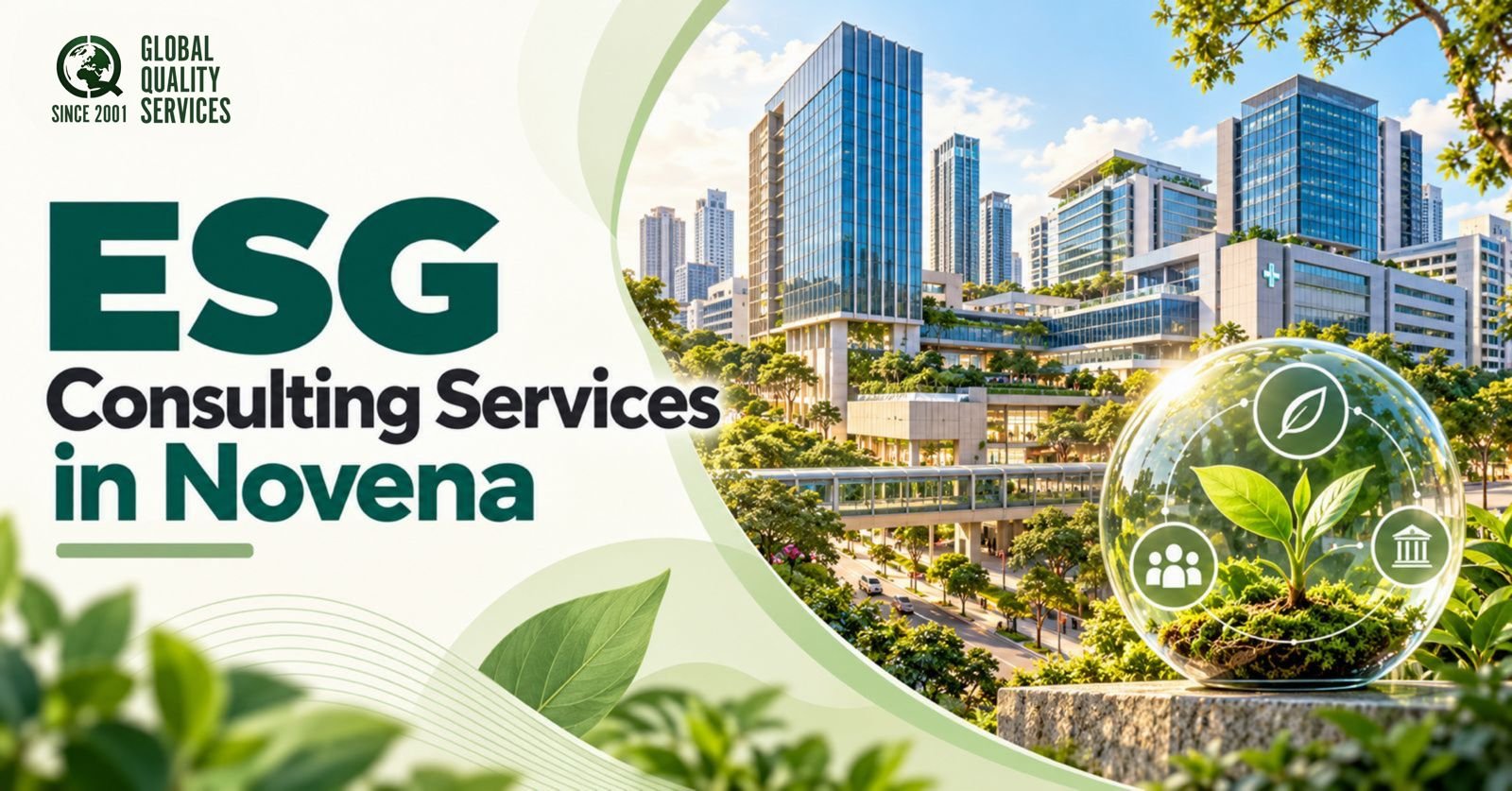
Organizations in Novena operate across healthcare, medical education, professional services, retail, and commercial activities. Each sector has different environmental, social, and governance (ESG) priorities, from managing energy use and operational waste to supporting employees, evaluating suppliers, and maintaining responsible business practices.
Global Quality Services provides ESG consulting services in Novena to help organizations assess their existing sustainability practices, identify areas for improvement, and develop practical action plans. Our approach focuses on the issues relevant to each business, with clear priorities and measurable objectives.
Whether you manage a healthcare-related business, an educational institution, a professional services firm, or a commercial facility, an ESG assessment can help you understand where your current practices stand and what needs attention.
ESG Priorities for Organizations in Novena
Novena has a well-established healthcare presence. The Health City Novena development brings together healthcare services, research, education, and community facilities, creating a diverse environment for organizations with different operational requirements. The Ministry of Health’s overview of Health City Novena provides background on this integrated healthcare development.
This local business environment raises several ESG considerations.
- Environmental performance: Healthcare facilities, offices, educational institutions, and commercial properties may need to review electricity consumption, water use, waste management, and resource efficiency.
- Social responsibility: Employee well-being, workplace safety, accessibility, professional development, and responsible engagement with stakeholders may be relevant depending on the organization’s activities.
- Governance and accountability: Documented policies, ethical business practices, supplier oversight, defined responsibilities, and reliable sustainability information help organizations manage their ESG commitments.
These priorities should not be treated as a standard checklist for every business. The appropriate focus depends on the organization’s operations, material risks, stakeholder expectations, and applicable requirements.
What Can ESG Consulting Help Your Organization Address?
Global Quality Services can help organizations examine their existing practices and determine where changes may be needed. The scope of consulting depends on the business and its sustainability objectives.
Environmental Performance and Resource Use
Energy, water, materials, and waste are practical starting points for many organizations. Reviewing these areas can help identify inefficient processes, inconsistent records, and opportunities to improve resource management.
For organizations with several facilities, a consistent approach to collecting environmental data can also make it easier to compare performance across locations.
Responsible Waste Management
Waste management can be particularly relevant to healthcare-related operations, laboratories, offices, and commercial facilities. The types of waste, handling procedures, and applicable requirements vary by activity.
An ESG assessment can examine relevant waste policies, segregation practices, contractor arrangements, and documentation. Where specialized or regulated waste is involved, the organization must follow the applicable requirements rather than rely solely on general ESG recommendations.
Employee Well-Being and Workplace Practices
The social component of ESG considers how an organization manages its responsibilities toward employees and other relevant stakeholders.
Depending on the business, an assessment may cover workplace safety policies, employee development, equal opportunity, grievance procedures, staff engagement, and working conditions. The objective is to identify gaps in existing practices and clarify how responsibilities and performance are monitored.
Supplier Responsibility and Procurement
Suppliers can influence an organization’s environmental performance, labor practices, product quality, and business conduct. Procurement processes that consider relevant ESG factors can help organizations make more informed purchasing decisions.
Consulting may involve reviewing supplier selection criteria, codes of conduct, evaluation procedures, and the records used to monitor supplier performance. The level of assessment should be proportionate to the supplier’s role and the risks involved.
ESG Governance and Documentation
An ESG program needs clear ownership and documented processes. Without defined responsibilities, sustainability information can become inconsistent, and agreed actions may not be completed.
Global Quality Services can help organizations review relevant policies, assign responsibilities, establish monitoring procedures, and identify the records needed to demonstrate progress.
How ESG Requirements May Differ Across Novena Businesses
A healthcare provider and a professional services firm may operate in the same neighborhood but have very different ESG priorities. A tailored assessment helps avoid unnecessary requirements and keeps the focus on issues relevant to the business.
| Business type | ESG areas to consider | Possible assessment focus |
|---|---|---|
| Healthcare facilities and related businesses | Resource use, waste management, workforce practices, procurement | Environmental procedures and operational controls |
| Medical education and research organizations | Resource consumption, workplace practices, responsible governance | Policies, data management, and accountability |
| Professional services firms | Energy use, employee well-being, ethics, supplier practices | ESG policies and performance tracking |
| Retail and commercial businesses | Packaging, waste, energy consumption, sourcing | Resource efficiency and supplier evaluation |
| Property and facility management | Energy, water, waste, maintenance practices | Environmental performance and operational records |
These are examples of potential priorities, not mandatory requirements for every organization. The final scope should reflect the organization’s activities and applicable regulations.
What Does an ESG Assessment Typically Review?
An ESG assessment examines the systems and information an organization uses to manage sustainability-related issues. Its purpose is to identify gaps and establish a practical basis for improvement.
The review may include:
- Existing ESG policies, commitments, and assigned responsibilities.
- Environmental information, such as energy consumption, water use, and relevant waste records.
- Social policies covering employees, workplace practices, and stakeholder engagement.
- Governance procedures, including ethics, accountability, and supplier oversight.
- Sustainability data collection, recordkeeping, and reporting methods.
- Existing targets, performance indicators, and arrangements for reviewing progress.
The assessment should distinguish between practices that are already established, areas where evidence is incomplete, and improvements that require further action.
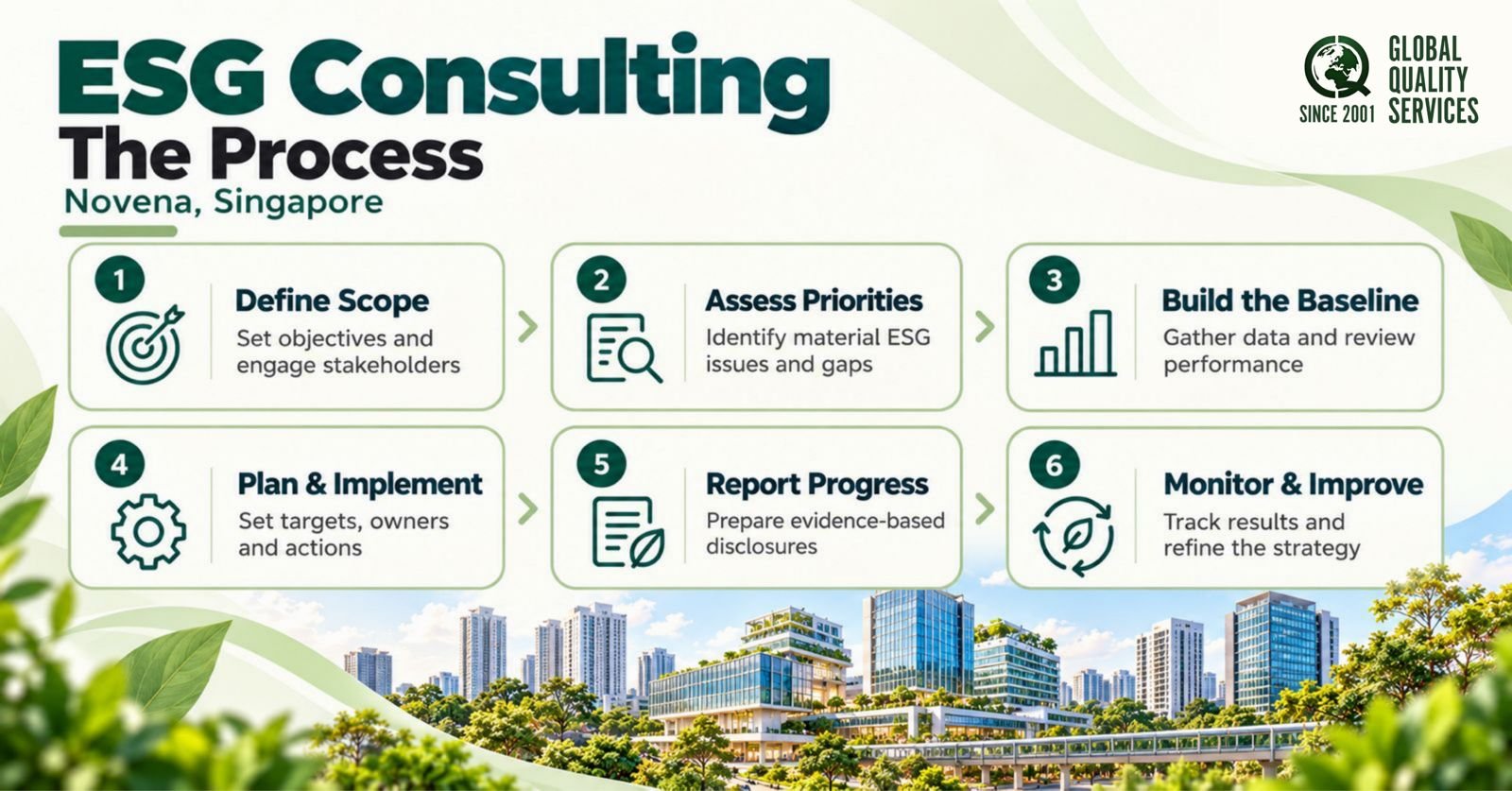
ESG Consulting Services in Novena Process
An ESG assessment is most useful when its findings lead to clear decisions. Global Quality Services can help organizations structure the next steps around their priorities and available resources.
Establish the Baseline
Review existing policies, procedures, records, and performance information to understand current practices. Where information is missing, document the gap and identify what needs to be collected.
Prioritize the Issues
Evaluate the significance of each issue in relation to business activities, operational risks, stakeholder expectations, and applicable requirements. This helps management decide which actions need attention first.
Define Responsibilities and Targets
Identify who is responsible for each action, set realistic timelines, and select suitable indicators to measure progress. Targets should be supported by a defined baseline and a consistent measurement method.
Track Implementation
Set a review schedule to monitor completed actions, outstanding issues, and performance changes. This helps management determine whether the selected measures are producing the intended results.
Update the Approach When Needed
Business operations, supplier arrangements, reporting expectations, and sustainability risks can change. Periodic reviews help keep the ESG program relevant as the organization develops.
ESG Reporting Requirements in Singapore
Not every organization in Novena has the same sustainability reporting obligations. Requirements depend on factors such as listing status, market capitalization, company size, financial year, and applicable exemptions.
The Accounting and Corporate Regulatory Authority (ACRA) publishes Singapore’s current sustainability reporting and assurance requirements.
Under the current phased roadmap, all companies listed on the Singapore Exchange must report Scope 1 and Scope 2 greenhouse gas emissions from financial years beginning on or after January 1, 2025. Other climate-related disclosures and Scope 3 reporting have different implementation timelines depending on the company’s category.
Qualifying large non-listed companies that meet both the annual revenue threshold of S$1 billion and the total asset threshold of S$500 million are scheduled to begin ISSB-based climate-related reporting from FY2030, subject to applicable exemptions.
Organizations should check the latest official guidance to determine which requirements apply. Global Quality Services can help review existing arrangements and identify areas where reporting processes may need improvement. Consulting support does not replace statutory obligations or independent assurance where required.
Benefits of ESG Consulting for Novena Organizations
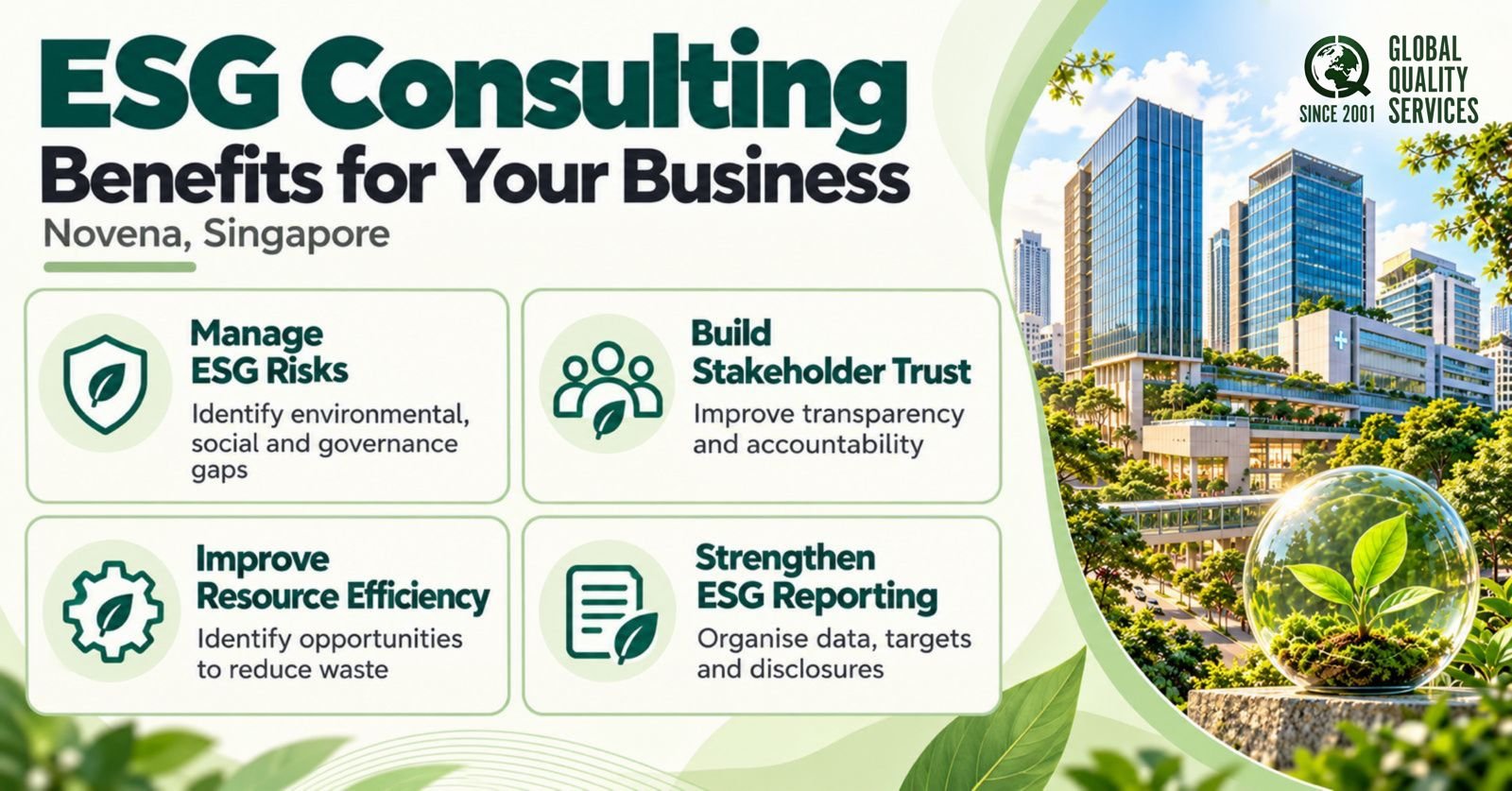
A structured ESG program helps organizations connect sustainability objectives with everyday operations.
- More informed resource management: Reviewing environmental information can help identify opportunities to improve energy, water, and material use.
- Clearer operational responsibilities: Defined ownership makes it easier to manage ESG activities and monitor whether agreed actions are completed.
- Better supplier oversight: Relevant assessment criteria and documentation can support more consistent supplier evaluations.
- Stronger internal accountability: Established policies and review procedures help management understand how ESG commitments are being managed.
- More reliable sustainability information: Consistent data collection and recordkeeping provide a stronger basis for internal decisions and relevant disclosures.
The results depend on the quality of the assessment, the suitability of the selected actions, and the organization’s commitment to implementation.
Why Choose Global Quality Services for ESG Consulting in Novena?
Global Quality Services brings 26 years of experience in quality, compliance, and management-related services. We recognize that organizations need an ESG approach that reflects their actual operations rather than a generic set of recommendations.
Our consulting approach reviews current practices, identifies relevant gaps, and develops practical recommendations organizations can use to improve their processes.
For businesses in Novena, this provides a structured starting point for reviewing sustainability priorities, strengthening governance, and planning measurable improvements.
Discuss ESG Consulting Services in Novena
If your organization wants to assess its current ESG practices, improve environmental performance, or prepare for relevant reporting requirements, Global Quality Services can help you identify a suitable starting point.
Contact Global Quality Services to discuss your ESG consulting requirements in Novena and develop an approach suited to your business activities and objectives.
Frequently Asked Questions
1. How can a healthcare-related business include ESG considerations in procurement decisions?
A healthcare-related business can review relevant supplier criteria covering environmental practices, ethical conduct, labor conditions, packaging, and product-related requirements. The criteria should reflect the type of goods or services purchased and the risks associated with each supplier. Any purchasing decisions must also remain consistent with applicable safety, quality, and regulatory requirements.
2. What is the difference between an ESG policy and an ESG action plan?
An ESG policy sets out an organization’s commitments, principles, and responsibilities. An ESG action plan translates those commitments into specific tasks, timelines, assigned owners, and performance indicators. A policy sets direction, while the action plan explains how the organization will put that direction into practice.
3. How can an organization compare ESG performance across multiple facilities?
The organization should establish consistent definitions, measurement methods, reporting periods, and data ownership across its facilities. It should also account for differences in size, activities, and operating hours when comparing results. This helps management distinguish meaningful performance differences from variations caused by the way information is collected or reported.
4. Can a small business in Novena benefit from ESG consulting without publishing a sustainability report?
Yes. ESG consulting can help a small business improve resource use, review supplier practices, strengthen workplace policies, and clarify internal responsibilities even when it is not required to publish a formal sustainability report. The scope can match the business’s size, activities, and stakeholder expectations.
5. What should an organization review before making an environmental claim about its products or operations?
It should verify that the claim is specific, accurate, and supported by relevant evidence. The organization should define what the claim covers, retain supporting records, and avoid wording that suggests a broader environmental benefit than the available information demonstrates. Claims should also be reviewed against applicable advertising, consumer protection, and sector-specific requirements.