Food safety does not stop when products leave the manufacturing facility. Proper storage, warehouse hygiene, temperature control, and stock management are equally important in protecting food quality. In Singapore, the Singapore Food Agency (SFA) advises food storage warehouse operators to follow its Good Warehousing Practices (GWP) guidelines.
According to SFA’s Singapore Food Statistics 2025, Singapore imports more than 90% of its food from over 180 countries and regions. This makes proper food storage and handling essential for businesses managing imported food products. GWP provides practical guidelines for maintaining hygienic premises, controlling storage conditions, preventing pest contamination, and managing food stocks.
Global Quality Services offers professional GWP consultancy in Singapore to help food importers, warehouse operators, distributors, and cold storage businesses meet applicable requirements. Our consultants help you assess your existing practices, address compliance gaps, and establish effective warehouse controls.
What is GWP Certification
Good Warehousing Practices (GWP) refers to guidelines that help food storage businesses maintain hygienic premises and suitable storage conditions. These practices protect food products from contamination, spoilage, pests, and improper handling during storage and distribution.
In Singapore, the Singapore Food Agency (SFA) provides GWP guidelines for food storage warehouses. These guidelines cover:
- Warehouse premises and infrastructure
- Cleaning and sanitation
- Chiller and freezer management
- Food storage conditions
- Temperature monitoring
- Stock rotation and inventory control
- Transportation and cold chain management
- Employee hygiene
- Pest control
GWP helps businesses maintain consistent warehouse conditions and meet food safety expectations for their operations.
Who Needs GWP Compliance in Singapore?
GWP is relevant to businesses that store, handle, or distribute food products. These include:
- Food importers and distributors
- Food storage warehouse operators
- Cold storage facilities
- Chilled and frozen food storage businesses
- Dry food storage warehouses
- Food wholesalers and suppliers
- Supermarket distribution centers
- Third-party logistics providers handling food
- Food supply chain companies
Businesses operating in Tuas, Jurong, Changi, and other major industrial and logistics areas of Singapore should maintain appropriate warehouse controls based on their food storage activities.
Key GWP Requirements in Singapore
SFA’s Good Warehousing Practices guidelines cover several areas of warehouse operations. Businesses must maintain suitable facilities, hygiene controls, and storage procedures to protect food products.
1. Warehouse Premises and Infrastructure
Food storage warehouses must have suitable layouts, adequate space, proper ventilation, and cleanable surfaces. Floors, walls, ceilings, and doors must support hygienic storage operations and prevent contamination.
2. Cleaning and Sanitation
Businesses must maintain clean storage areas and follow suitable housekeeping procedures. Cleaning arrangements should prevent food contamination and keep warehouse facilities in sanitary condition.
3. Temperature Control
Chillers and freezers must maintain suitable temperatures for stored food products. SFA recommends:
- Chillers: 4°C or below
- Freezers: -18°C or below
Businesses must also maintain temperature records and suitable monitoring or alarm arrangements.
4. Food Storage and Stock Rotation
Food products must be stored separately from non-food items, kept off the floor, and protected from contamination. Businesses should follow First In, First Out (FIFO) or First Expire, First Out (FEFO) stock rotation procedures and maintain relevant records.
5. Transportation and Cold Chain Management
Businesses handling chilled and frozen food must prevent interruptions to the cold chain during transportation. Vehicles must provide suitable conditions to protect food products throughout delivery.
6. Employee Hygiene
Warehouse employees must follow appropriate personal hygiene practices. Businesses should prevent individuals with infectious diseases or open wounds from handling food where they may cause contamination.
7. Pest Control
Warehouses must have effective pest management arrangements to prevent the entry, breeding, and spread of pests. Storage areas should remain free from conditions that attract rodents, insects, and other pests.
Benefits of GWP Compliance for Food Businesses
Following Good Warehousing Practices helps businesses maintain food quality and control warehouse-related risks. Key benefits include:
- Better Food Safety: Reduces contamination risks during storage and handling.
- Improved Storage Conditions: Maintains suitable temperatures and hygienic warehouse environments.
- Regulatory Readiness: Helps businesses address applicable SFA food storage requirements.
- Reduced Product Loss: Proper stock rotation and temperature monitoring help prevent spoilage and wastage.
- Stronger Customer Confidence: Demonstrates responsible food storage and handling practices.
- Better Inventory Control: Establishes clear procedures for stock identification, storage, and movement.
- Improved Warehouse Operations: Defines responsibilities for cleaning, hygiene, storage, and pest management.
GWP Consultancy Services in Singapore
Global Quality Services provides GWP consultancy in Singapore for food importers, distributors, warehouse operators, and cold storage businesses. Our consultants assess your warehouse operations against the applicable SFA Good Warehousing Practices guidelines and help address areas that require improvement.
Our GWP consultancy services include:
- GWP applicability and requirements assessment
- Warehouse gap assessment
- Premises and infrastructure review
- Food storage and temperature control assessment
- Cleaning and sanitation procedure development
- Pest control management review
- Stock rotation and inventory control procedures
- Cold chain management assessment
- Employee hygiene training
- Documentation and record management
- Internal compliance audits
- Corrective action support
GWP Implementation Process in Singapore
Global Quality Services follows a practical approach to help businesses align their warehouse operations with GWP guidelines:
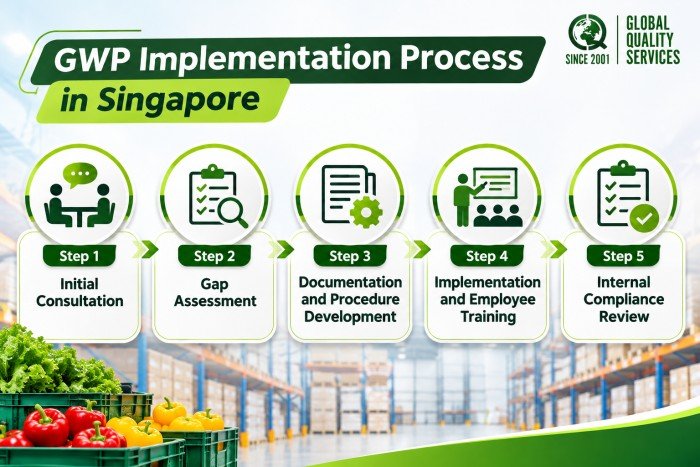
Step 1: Initial Consultation
We understand your food storage activities, warehouse facilities, product categories, and existing procedures.
Step 2: Gap Assessment
Our consultants review your premises, hygiene practices, temperature controls, stock management, and pest control arrangements against applicable GWP guidelines.
Step 3: Documentation and Procedure Development
We help prepare or improve cleaning schedules, temperature records, stock rotation procedures, pest control records, and other relevant documents.
Step 4: Implementation and Employee Training
We guide your team in applying the required warehouse controls and following appropriate food hygiene and storage practices.
Step 5: Internal Compliance Review
We review the implemented practices, identify outstanding gaps, and support corrective actions to improve compliance.
How Global Quality Services Experts Help You with GWP Compliance in Singapore
Global Quality Services is a reputed consultant with more than 21 years of experience in management system consultancy, certification support, and compliance services. We work with businesses across Singapore and international markets, providing practical guidance based on their industry and operational requirements.
Why Choose Global Quality Services?
- More than 21 years of consultancy experience
- Established presence across 17 locations
- Experience supporting more than 1,450 customers
- Experienced management system consultants
- Industry-specific food safety and warehouse consultancy
Our team focuses on helping businesses establish workable warehouse controls that meet applicable food safety requirements. From the initial assessment to implementation and internal review, we provide guidance based on your actual storage and distribution activities.
Get Professional GWP Consultancy in Singapore from Global Quality Services
Maintain hygienic warehouse conditions and improve food storage controls with professional GWP consultancy from Global Quality Services.
Our reputed consultants help you assess warehouse practices, address compliance gaps, prepare documentation, and train employees in applicable food safety requirements.
Contact Global Quality Services to discuss your GWP requirements and receive a consultancy proposal tailored to your warehouse operations.
Frequently Asked Questions
1. Which authority provides GWP guidelines in Singapore?
The Singapore Food Agency (SFA) provides Good Warehousing Practices guidelines for food storage warehouses and oversees the relevant food safety requirements.
2. What temperature should food warehouses maintain?
SFA recommends maintaining chillers at 4°C or below and freezers at -18°C or below. Businesses must use suitable monitoring arrangements and maintain temperature records.
3. What is the difference between GWP and ISO 22000?
GWP focuses on good food warehousing practices, including hygiene, storage conditions, and stock management. ISO 22000 establishes a broader food safety management system covering hazards and food safety controls throughout the supply chain.
4. How often should food warehouses conduct GWP inspections?
Food warehouses should conduct regular inspections covering hygiene, temperature control, pest activity, and storage conditions. Any issues should be recorded and corrected promptly.
5. What records should food warehouses maintain for GWP compliance?
Warehouses should maintain temperature logs, cleaning schedules, pest control records, stock movement records, equipment maintenance reports, and employee training records.