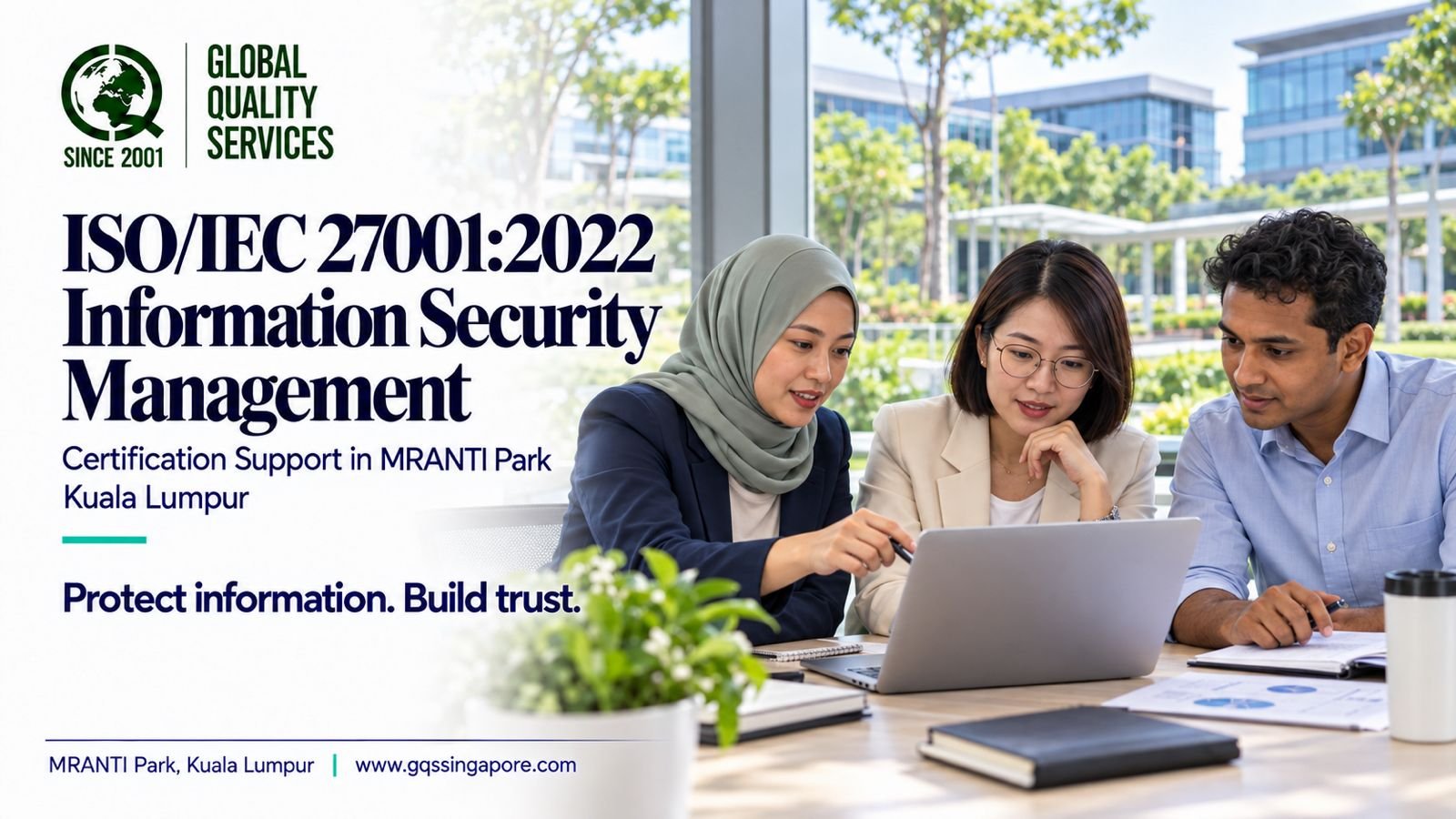
MRANTI Park in Bukit Jalil, Kuala Lumpur, brings together technology developers, research organizations, startups, and businesses working to commercialize new technologies. As these organizations develop digital products, exchange research data and collaborate with commercial partners, protecting confidential information and maintaining secure systems become important business priorities.
ISO 27001 Certification in MRANTI Park, Kuala Lumpur enables eligible organizations to demonstrate that their information security management system (ISMS) has been independently assessed against the requirements of ISO/IEC 27001:2022. The standard provides a structured framework for identifying information security risks, implementing appropriate controls and continually improving how information is protected.
For businesses operating in MRANTI Park’s innovation ecosystem, information security can affect intellectual property, research findings, customer records, software development environments and commercially sensitive project information. An effective ISMS establishes how these assets are identified, assessed and protected across relevant business processes.
Global Quality Services (GQS) provides certification-related services for organizations seeking ISO 27001 Certification in Malaysia. The certification scope is determined by the organization’s activities, information assets, locations, and applicable ISMS requirements.
Why ISO 27001 Certification Matters for Businesses in MRANTI Park
MRANTI Park’s technology and research environment includes activities involving advanced technology development, research and development, commercialization and collaboration between industry and academia. These activities may involve information that requires protection against unauthorized access, disclosure, alteration, or loss.
ISO 27001 gives organizations a systematic way to manage these risks rather than relying solely on individual cybersecurity tools or informal security procedures.
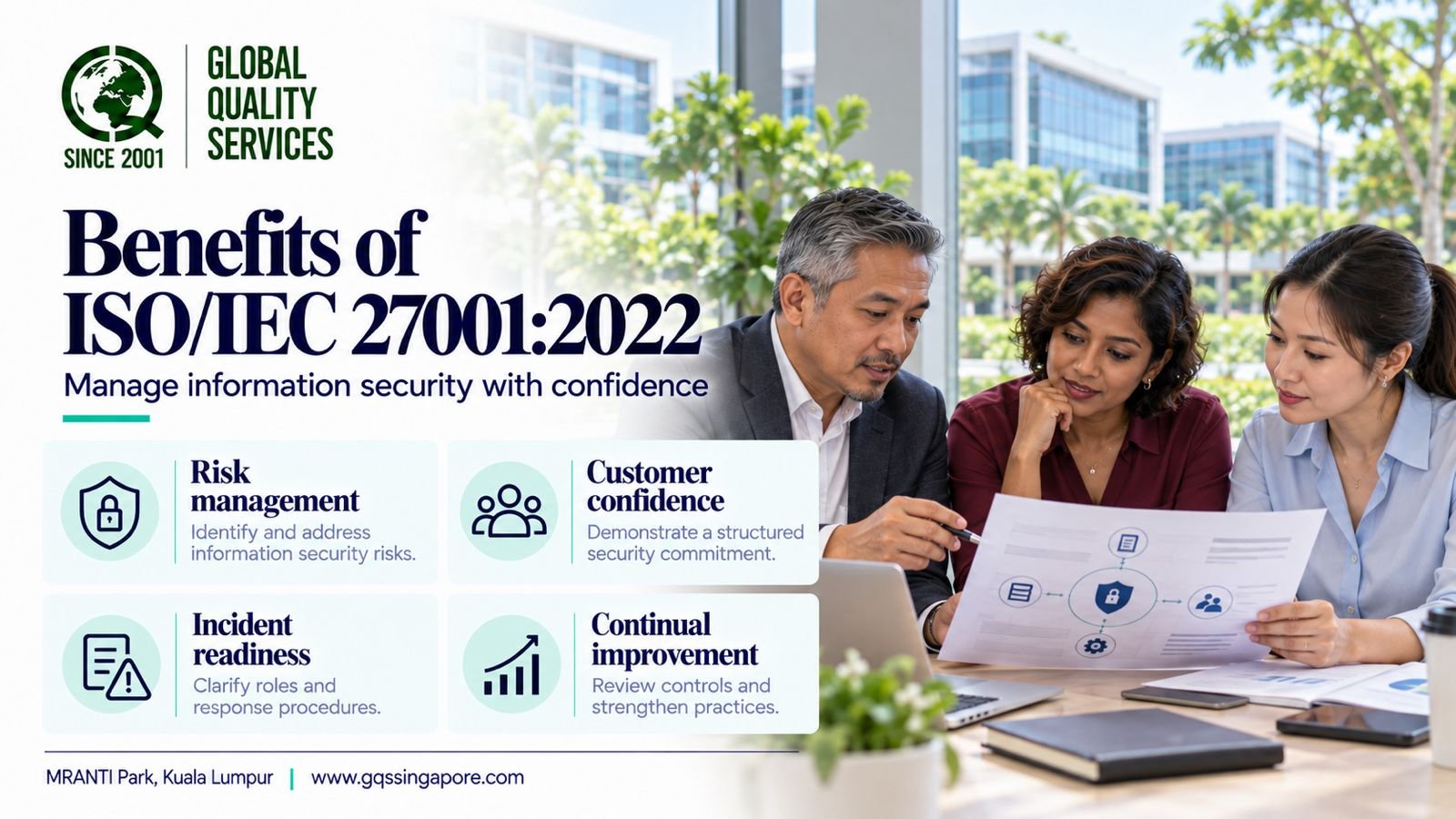
Protect Research Data and Intellectual Property
Technology companies and research teams may handle proprietary algorithms, product designs, experimental findings, source code and confidential commercial agreements. Unauthorized disclosure or loss of these assets can affect development timelines, commercial relationships, and intellectual property rights.
An ISO 27001-based ISMS establishes processes to identify information assets, evaluate threats, and apply controls appropriate to the risks.
Strengthen Cloud and Software Security
Software developers, SaaS providers and digital service companies may rely on cloud platforms, remote access, third-party applications and shared development environments.
An ISMS addresses information security risks associated with access management, system changes, supplier relationships, incident response and business continuity. The applicable controls are selected according to the organization’s risk assessment and treatment decisions.
Address Customer and Partner Security Requirements
Enterprise customers, technology partners and procurement teams may evaluate a supplier’s information security arrangements before sharing sensitive data or awarding contracts.
ISO 27001 Certification can provide independent evidence that the defined ISMS has been assessed against the standard. Whether certification is mandatory depends on the customer’s contractual, regulatory, or procurement requirements.
Establish Consistent Security Responsibilities
As startups expand and research projects move toward commercial deployment, information security responsibilities can spread across employees, developers, researchers, and external service providers.
An ISMS establishes documented responsibilities, risk assessment processes, security objectives and monitoring arrangements. This provides a consistent basis for managing information security as the organization grows.
Which Businesses in MRANTI Park Should Consider ISO 27001 Certification?
ISO 27001 applies to organizations of different sizes and across different industries. It is particularly relevant to businesses whose operations depend on the confidentiality, integrity, and availability of information.
Technology Startups and Software Companies
Startups developing applications, digital platforms, enterprise software or cloud-based products may need to protect source code, customer information, authentication credentials and product roadmaps.
ISO 27001 can provide a structured approach to managing these information assets and demonstrating security governance to prospective customers.
Research and DevelopmentOrganizationss
Research organizations may handle experimental data, unpublished findings, intellectual property, and information shared under collaboration agreements.
An ISMS helps define access permissions, information-handling practices, risk ownership, and controls to protect research information within the agreed certification scope.
Artificial Intelligence and Data-Driven Businesses
Companies developing AI solutions, analytics platforms and data-intensive applications may process proprietary datasets, business information and personal data.
Relevant ISO 27001 controls can address access restrictions, information classification, supplier security, incident management, and other risks associated with the organization’s information-processing activities.
ISO 27001 does not independently establish that an AI system is accurate, unbiased or compliant with every AI-specific regulatory requirement.
Biotechnology and Health Technology Companies
Health technology and biotechnology businesses may handle research records, clinical information, laboratory data or other sensitive information, depending on their activities.
Certification can establish a systematic approach to information security risks involving data access, storage, transfer, backup and third-party services. Applicable sector-specific requirements must also be considered separately.
Technology Testing and Innovation Service Providers. Organizations that operate testing environments, technology demonstration facilities, or shared research infrastructure may manage information for multiple customers and project partners.
An ISMS helps define security responsibilities, control access to systems and information, and address risks arising from shared facilities and external service providers.
What Does ISO 27001 Certification Cover?
ISO/IEC 27001:2022 specifies requirements for establishing, implementing, maintaining, and continually improving an information security management system. The standard is not limited to IT security. It considers information security across people, processes, technology, and relevant physical environments.
Information Security Risk Assessment
The organization identifies information assets, relevant threats and vulnerabilities, evaluates information security risks, and determines how those risks will be treated.
For a company in MRANTI Park, this could involve examining risks affecting research databases, cloud infrastructure, software repositories, customer information and third-party integrations.
Information Security Policies and Responsibilities
The ISMS establishes relevant policies, responsibilities and procedures for managing information security. These arrangements should reflect the organization’s operational context, leadership responsibilities and security objectives.
Access Control and Information Handling
Applicable controls address how access to information is granted, reviewed and withdrawn. Depending on the risk assessment, these may include user access management, authentication, information classification, secure information transfer and protection of sensitive records.
Supplier and Cloud Service Security
External providers can introduce risks through cloud hosting, software services, outsourced development and other dependencies.
The organization evaluates relevant supplier risks and establishes appropriate controls for its relationships, contracts and information exchanges.
Incident Management and Business Continuity
The ISMS addresses how the organization reports, assesses, and manages information security incidents. Relevant arrangements may include incident response procedures, backup management, recovery planning and measures to maintain important business activities.
Monitoring, Internal Audits and Continual Improvement
The organization monitors ISMS performance, evaluates compliance with applicable requirements, conducts internal audits and management reviews, and addresses identified nonconformities.
Certification is based on the overall conformity of the defined management system, not simply the presence of cybersecurity software or a collection of security policies.
ISO 27001 Certification Process in MRANTI Park, Kuala Lumpur, Malaysia
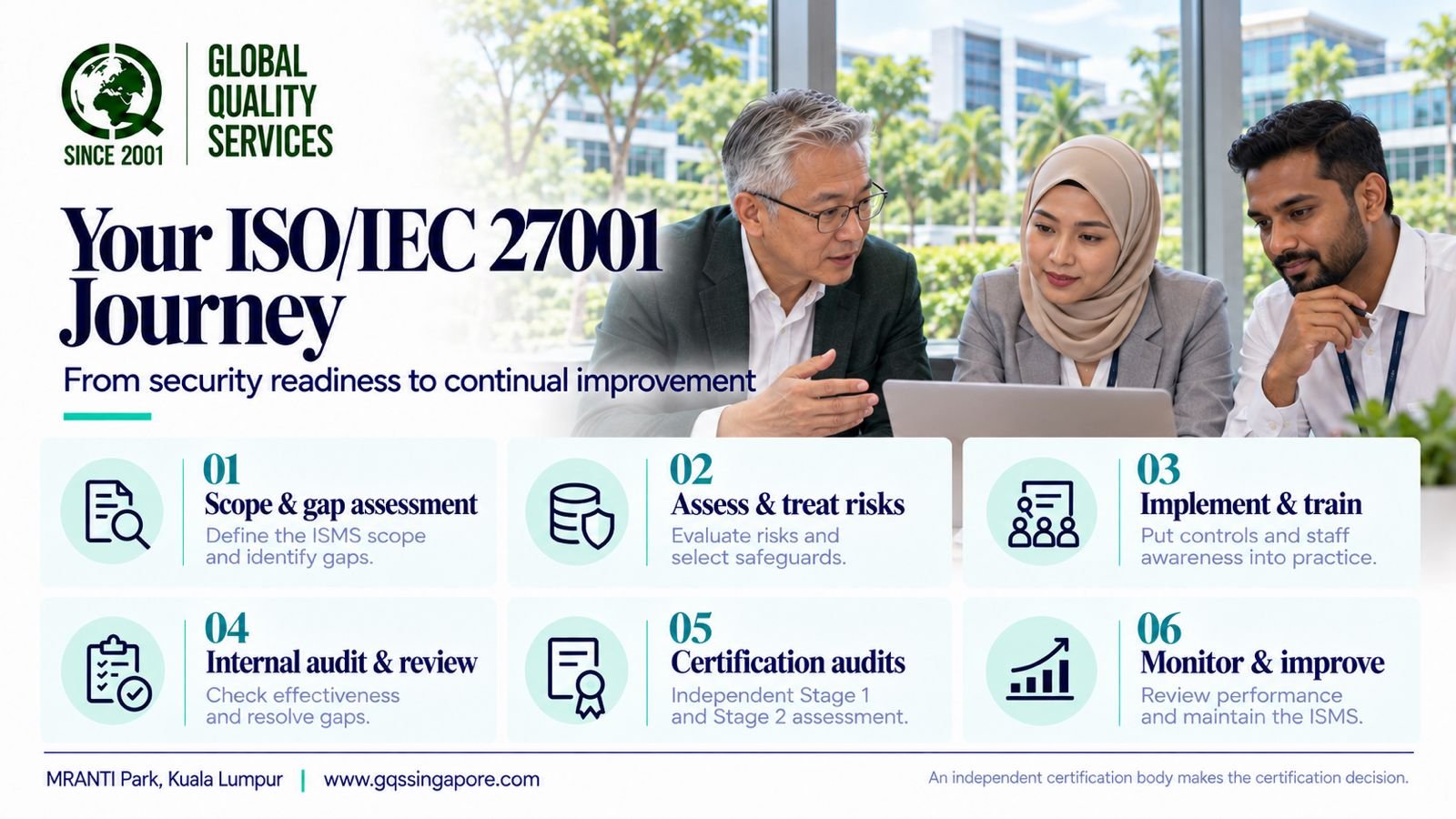
The certification process involves defining the ISMS scope, assessing the management system, and completing the required certification audits.
Step 1: Define the ISMS Scope
Identify the business functions, locations, information assets, systems, and activities the organization intends to include within its ISMS.
For example, a software company may define a scope covering software development, cloud-hosted services, and customer support, provided it accurately reflects the relevant activities and interfaces.
Step 2: Conduct an Information Security Risk Assessment
Identify relevant information security risks and evaluate their potential impact on business operations. The organization determines appropriate risk-treatment measures and documents the applicable controls.
The risk assessment should reflect actual operating conditions rather than use a generic list of cybersecurity threats.
Step 3: Establish and Implement the ISMS
Develop and maintain the policies, procedures, responsibilities and records required by the standard. Implement the controls selected through the risk treatment process and the applicable requirements of ISO 27001.
The organization must also establish arrangements to monitor the system and evaluate its effectiveness.
Step 4: Complete the Stage 1 Audit
The certification body reviews relevant documented information, the proposed ISMS scope, and the organization’s readiness for the next audit stage.
The review helps determine whether the management system is sufficiently prepared for the Stage 2 assessment.
Step 5: Complete the Stage 2 Audit
The certification body evaluates the implementation and effectiveness of the ISMS against ISO/IEC 27001 requirements.
Audit activities may include reviewing records, interviewing relevant personnel, and examining evidence of how the organization manages information security risks and applies its selected controls.
Step 6: Address Nonconformities and Certification Decision
Where nonconformities are identified, the organization must complete the required corrective actions and provide evidence for review according to the certification body’s procedures.
Certification is granted only after the required audit activities, technical review, and certification decision have been completed satisfactorily.
Step 7: Maintain Certification
After certification, the organization must maintain its ISMS and undergo required surveillance and recertification audits.
Changes to business operations, technology, suppliers, and information security risks should be evaluated as part of ongoing ISMS management.
ISO 27001 Certification and Malaysia’s Data Protection Requirements
Organizations operating in Malaysia may need to consider the Personal Data Protection Act 2010 (Act 709), as amended, alongside applicable sector-specific and contractual obligations.
The Personal Data Protection (Amendment) Act 2024 introduced changes to Malaysia’s personal data protection framework, with provisions commencing in stages during 2025. Businesses should assess which provisions apply to their activities and current obligations under Malaysian law.
ISO 27001 provides a framework for managing information security risks, but certification does not automatically establish compliance with every requirement of the Personal Data Protection Act or other Malaysian legislation.
For businesses in MRANTI Park that process personal data, the ISMS can address relevant risks involving access, information storage, data transfers, supplier relationships, and security incidents. Assess legal obligations separately against the organization’s specific activities.
Areas Covered Around MRANTI Park, Kuala Lumpur
MRANTI Park is located in Bukit Jalil, within Kuala Lumpur’s wider technology and commercial ecosystem. ISO 27001 Certification may also be relevant to organizations operating in nearby business and technology locations.
- Bukit Jalil: Technology companies, innovation-focused businesses and research-related operations.
- Technology Park Malaysia: Technology development, digital businesses and research activities.
- Sri Petaling: Commercial businesses and service providers managing customer or business information.
- Bangsar South: Technology companies, shared service operations and digital service providers.
- Cyberjaya: Software companies, digital service providers and technology businesses.
- Kuala Lumpur City Center: Corporate offices, financial services and organizations handling commercially sensitive information.
The certification scope should reflect the actual operations and locations included in the ISMS. Businesses with multiple offices, cloud environments or outsourced services should consider relevant interfaces when defining that scope.
Why Choose Global Quality Services for ISO 27001 Certification in MRANTI Park?
Choosing a certification service provider requires understanding the intended scope, applicable audit requirements, and the evidence needed to demonstrate conformity with ISO 27001.
Global Quality Services in Singapore provides certification-related services for organizations seeking ISO management system certifications, subject to the relevant service scope and certification arrangements.
- Scope-focused certification: The intended ISMS scope is considered in relation to the organization’s activities, information assets, and operating environment.
- Requirements-based audits: The certification assessment evaluates conformity with applicable ISO/IEC 27001 requirements.
- Documented audit findings: Audit results identify relevant conformity issues and nonconformities for action through the established certification process.
- Recognition of business context: The defined scope can reflect relevant functions, locations, and information security risks rather than assume every organization operates the same way.
- Ongoing certification requirements: Surveillance and recertification activities support continued assessment of the certified ISMS.
Certification is subject to satisfactory assessment and the applicable certification decision. Organizations should confirm the certification body’s accreditation, scope, and recognition requirements where these are specified by customers, regulators or procurement contracts.
Frequently Asked Questions
Is ISO 27001 Certification mandatory for technology startups in MRANTI Park?
ISO 27001 Certification is not automatically mandatory for every technology startup. It may be required by a customer contract, procurement process, or other business arrangement. Startups can also pursue certification to establish a structured information security management system and demonstrate their security practices to stakeholders.
Can a software startup obtain ISO 27001 Certification without owning a data center?
Yes. ISO 27001 does not require an organization to own or operate a data center. A startup using cloud infrastructure can include relevant cloud services, information assets, business processes, and supplier relationships within its risk assessment and ISMS scope.
What is the difference between ISO 27001 Certification and a cybersecurity audit?
ISO 27001 Certification assesses whether anorganization’ss defined information security management system conforms to the standard. A cybersecurity audit may focus on particular technical controls, vulnerabilities, systems, or security practices. A technical security assessment alone does not establish conformity of the complete ISMS.
Does ISO 27001 Certification demonstrate compliance with Malaysia’s PDPA?
No. ISO 27001 provides an information security management framework, but it does not automatically demonstrate compliance with all provisions of Malaysia’s Personal Data Protection Act. The organization must separately assess its legal obligations, including applicable amendments and sector-specific requirements.
How long does ISO 27001 Certification take for a company in MRANTI Park?
The timeframe depends on the organization’s size, ISMS scope, operational complexity, existing controls, readiness, and the availability of audit resources. The time needed to establish and implement the management system is separate from the certification audit schedule. A realistic timeline can be determined after reviewing the organization’s circumstances.