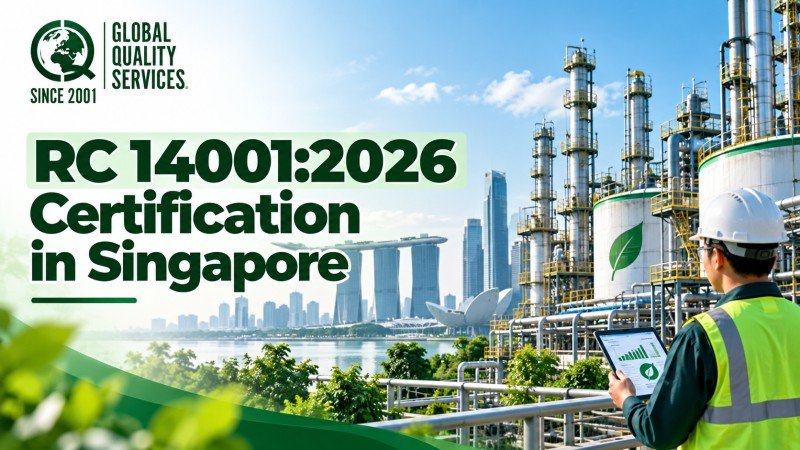
RC 14001:2026 Certification in Singapore helps chemical businesses strengthen environmental management, workplace safety, and responsible chemical handling. According to The Business Times, Singapore’s energy and chemicals sector contributes around 23% of total manufacturing output, highlighting its industrial significance.
Companies must review applicable requirements, improve operational controls, and maintain clear documentation. An experienced consultant like Global Quality Services can help identify compliance gaps, guide implementation, and prepare your team for the required assessment with greater confidence.
What is RC 14001:2026 Certification?
RC 14001 combines environmental management practices with Responsible Care principles. Responsible Care focuses on improving health, safety, environmental performance, security, and community engagement across the chemical industry’s operations.
For businesses in Singapore, this approach can help integrate environmental controls with broader chemical safety and product stewardship practices. Companies can review their operational risks, strengthen employee awareness, improve emergency preparedness, and demonstrate their commitment to responsible business conduct.
It is important to confirm the applicable RC 14001:2026 scheme requirements with the relevant Responsible Care authority or certification provider before beginning the process.
Transition Process for RC 14001:2026 Certification in Singapore
The transition process begins with reviewing the revised requirements and comparing them with your company’s existing management system. Businesses then identify gaps, update relevant procedures, strengthen employee training, and review their environmental and safety controls.
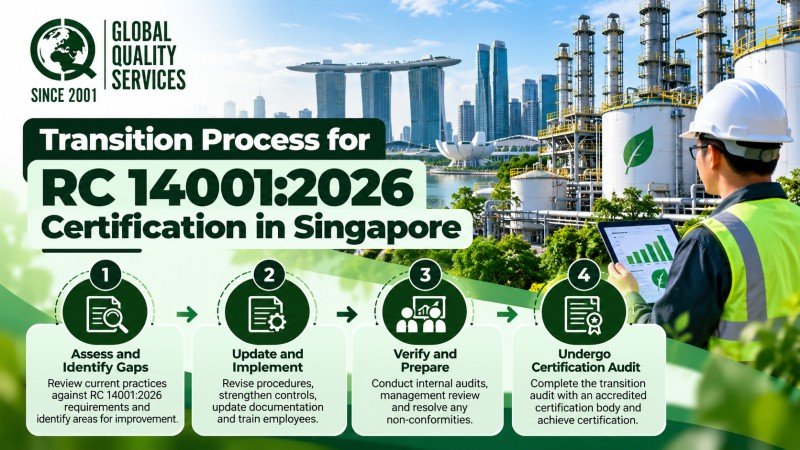
Your team should also update supporting records and conduct internal audits before arranging the required external assessment. An experienced consultant can help coordinate these activities, clarify documentation needs, and prepare your organization for the transition.
Deadline for RC 14001:2026 Transition
As of October 2026, the official transition deadline for RC 14001:2026 has not been confirmed in the available ACC guidance. Businesses in Singapore should monitor announcements from the American Chemistry Council (ACC), the relevant Responsible Care authority, and their certification provider.
Companies can prepare early by reviewing their current management systems, identifying potential gaps, and tracking official updates about transition requirements and deadlines.
Why RC 14001:2026 Certification Matters in Singapore
Singapore has an established energy and chemicals sector that supports manufacturing, storage, distribution, and international trade. The Singapore Chemical Industry Council (SCIC) administers the Responsible Care programme locally and promotes continuous improvements in health, safety, security, and environmental performance.
For chemical businesses operating in Singapore, Responsible Care principles can help address operational risks and strengthen stakeholder confidence. A well-managed system can help your company:
- Improve chemical handling and storage practices.
- Strengthen workplace health and safety.
- Improve emergency preparedness and community communication.
- Reduce pollution and environmental impacts.
- Support responsible chemical distribution and product stewardship.
- Demonstrate a commitment to continual improvement.
Key Benefits of RC 14001:2026 Certification
RC 14001 can help chemical businesses connect environmental management with broader responsibilities for process safety, product stewardship, employee health, and security. Here are some practical benefits for organizations in Singapore.
1. Stronger Environmental Management
A structured management system helps your team identify environmental impacts, control pollution risks, monitor performance, and improve resource use across relevant operations.
2. Better Process Safety
Clear procedures, risk assessments, and employee training help teams identify potential hazards before they cause incidents. Regular reviews also encourage employees to report concerns and follow established safety controls.
3. Improved Chemical Handling and Distribution
Responsible Care principles cover chemical management beyond manufacturing. Businesses can review storage, transportation, handling, and distribution practices to reduce risks to workers, customers, and surrounding communities.
4. Greater Emergency Preparedness
Companies can strengthen emergency plans, define employee responsibilities, and improve communication with relevant stakeholders. These measures help teams respond more effectively to incidents involving hazardous materials.
5. Increased Stakeholder Confidence
Customers, suppliers, regulators, and local communities increasingly value responsible business practices. Documented environmental, health, safety, and security controls help companies explain their approach and demonstrate continual improvement.
6. Better Management Coordination
An integrated approach connects environmental objectives with safety procedures, operational controls, training, and performance reviews. This helps management identify overlapping responsibilities and coordinate improvements across departments.
Step-by-Step Process to Get RC 14001:2026 Certification
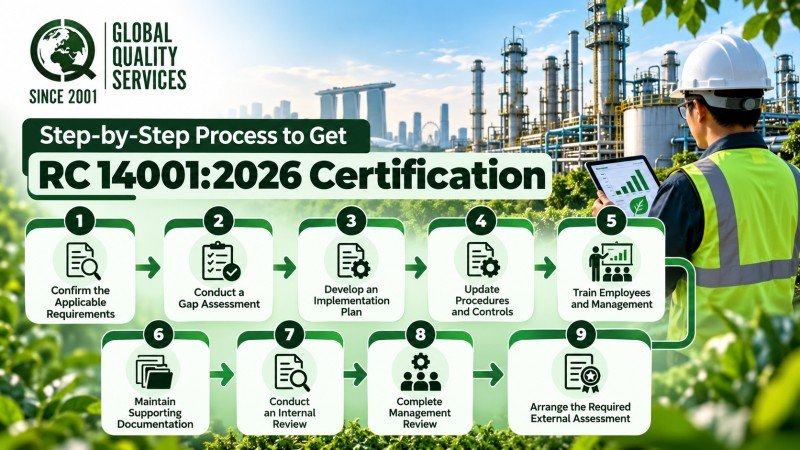
Preparing for RC 14001 certification requires a clear plan, suitable documentation, employee involvement, and a review of applicable scheme requirements. The following steps provide a general preparation guide for chemical businesses in Singapore.
Step 1: Confirm the Applicable Requirements
Identify the RC 14001 technical specification and Responsible Care programme requirements relevant to your company. Confirm the current certification route, eligibility criteria, and assessment arrangements with the appropriate programme authority.
Step 2: Conduct a Gap Assessment
Review your existing environmental, health, safety, and security practices against the applicable requirements. Record missing procedures, weak operational controls, training needs, and documentation gaps that require corrective action.
Step 3: Develop an Implementation Plan
Create a practical action plan that assigns responsibilities, deadlines, and resources to each identified gap. Involve department heads and employees so they understand their roles in improving compliance and operational performance.
Step 4: Update Procedures and Controls
Revise relevant procedures for chemical handling, pollution prevention, process safety, product stewardship, emergency response, distribution, and security. Match each procedure to your actual operations and applicable legal obligations.
Step 5: Train Employees and Management
Train employees on revised procedures, hazard reporting, emergency responsibilities, and safe chemical handling. Help managers understand their accountability for performance monitoring, resource allocation, and continual improvement.
Step 6: Maintain Supporting Documentation
Prepare environmental policies, risk assessments, operating procedures, training records, incident reports, emergency plans, and performance data. Keep records accurate, current, and accessible to the people responsible for implementation and assessment.
Step 7: Conduct an Internal Review
Evaluate whether employees follow the updated procedures and whether the system addresses the applicable requirements. Document findings, assign corrective actions, and verify that your team resolves identified issues.
Step 8: Complete Management Review
Present audit results, incident trends, performance indicators, compliance concerns, and improvement priorities to senior management. Record decisions and assign resources to address outstanding issues before the external assessment.
Step 9: Arrange the Required External Assessment
Contact the appropriate certification provider or programme authority to confirm the assessment process. Complete the required audit or verification activities, address any findings, and follow the applicable certification process.
Documents Required for RC 14001 Certification
Your documentation should reflect your company’s activities, risks, and applicable Responsible Care requirements. Prepare the relevant records before the assessment to help demonstrate that your procedures operate in practice.
Common documents may include:
- Environmental, health, safety, and security policies
- Responsible Care commitment and applicable programme records
- Legal and regulatory compliance register
- Environmental aspect and impact assessments
- Chemical hazard and operational risk assessments
- Process safety and operational control procedures
- Chemical storage and distribution procedures
- Employee training and competency records
- Incident investigation and corrective action records
- Emergency preparedness and response plans
- Internal audit and management review records
- Environmental, health, and safety performance indicators
The exact documentation list depends on the certification route, the technical specification, and the relevant Responsible Care codes.
How Long Does RC 14001 Certification Take?
The timeline depends on your company’s size, operational complexity, existing management systems, and readiness for assessment. Organizations with established environmental and safety procedures may need less preparation than companies building a system from the ground up.
Your team should allow time for the gap assessment, procedure updates, employee training, internal reviews, corrective actions, and external assessment. Ask the relevant certification provider for a project-specific estimate rather than relying on a fixed timeline.
Industries in Singapore That Can Benefit from RC 14001:2026
RC 14001 may be relevant to organizations that manufacture, store, distribute, or handle chemicals and related products. Its practical value depends on the company’s activities and the applicable programme requirements.
Relevant sectors include:
- Chemical and petrochemical manufacturing
- Specialty chemicals and industrial materials
- Chemical storage and terminal operations
- Chemical transportation and distribution
- Industrial manufacturing that handles chemicals
- Chemical trading and supply chain services
- Businesses involved in product stewardship and chemical management
Companies operating in Singapore’s energy and chemicals cluster can review their activities to determine which Responsible Care practices and management system requirements apply to them.
Partner with Global Quality Services for RC 14001:2026 Certification in Singapore
Preparing for RC 14001 certification can involve multiple departments, detailed documentation, operational reviews, and employee training. Global Quality Services can help your team assess existing practices, identify gaps, organize supporting records, and prepare for the applicable assessment. Our consultants work with your organization to clarify requirements and plan practical improvements. Contact Global Quality Services to discuss your RC 14001 certification needs in Singapore.
FAQ’s
1. Does a company need SCIC membership to participate in Responsible Care in Singapore?
Yes. SCIC states that company membership is a prerequisite for applying to become a Responsible Care member company. The application requires review and a signed commitment letter from the CEO or managing director.
2. What performance information must Responsible Care member companies submit annually?
SCIC member companies submit key performance indicators and self-evaluation forms covering the codes of practice relevant to their operations. These records help track environmental, health, safety, and operational performance.
3. Does Responsible Care cover chemical transportation and storage?
Yes. Responsible Care includes a Distribution Code that addresses risks associated with chemical storage, handling, and transportation. Companies should review the code’s applicable requirements and align their operating controls accordingly.
4. How can companies demonstrate continual improvement after implementation?
Companies can monitor performance indicators, review incidents, complete code self-evaluations, investigate gaps, and track corrective actions. Regular management reviews help teams evaluate progress and identify further improvements.
5. Who administers the Responsible Care programme in Singapore?
The Singapore Chemical Industry Council (SCIC) serves as the national administrator of the Responsible Care programme in Singapore. It oversees local programme participation and promotes continual improvement in chemical industry performance.