
ISO/SAE 21434 Certification in Singapore helps automotive businesses manage cybersecurity risks across connected vehicles and electronic systems. At the 2026 ITS Summit, Singapore’s Ministry of Transport highlighted cybersecurity risks linked to increasingly connected and automated transport systems.
The standard helps manufacturers address threats throughout vehicle development, production, operation, and maintenance. It also supports stronger cybersecurity practices across automotive supply chains. Hiring an experienced consultant helps your business assess gaps, develop processes, and prepare for certification more effectively.
What is ISO/SAE 21434?
ISO/SAE 21434:2021 is an international standard titled Road vehicles Cybersecurity engineering. ISO and SAE International jointly developed it to establish requirements for managing cybersecurity risks in automotive electrical and electronic systems.
The standard covers cybersecurity throughout the vehicle lifecycle. It helps organisations identify potential threats, assess their impact, define security requirements, and evaluate whether their controls address identified risks.
For example, a vehicle manufacturer may need to assess whether an attacker could exploit a wireless interface, compromise an electronic control unit, or gain unauthorised access to vehicle data. ISO/SAE 21434 helps engineering teams examine these risks and document appropriate responses.
The standard does not prescribe one specific cybersecurity technology. Instead, it focuses on risk management, engineering processes, responsibilities, and evidence that support sound cybersecurity decisions.
In Singapore, businesses can purchase the ISO/SAE 21434:2021 standard through the Singapore Standards eShop. Organisations should confirm the applicable edition and assessment requirements before beginning an implementation or certification project.
Why is ISO/SAE 21434 Important for Automotive Businesses in Singapore?
Singapore supports automotive technology, electronics, engineering, and mobility-related activities across a connected regional supply chain. Companies that develop or supply vehicle technologies need to consider cybersecurity alongside product performance and functional safety.
ISO/SAE 21434 gives these organisations a consistent approach to identifying and managing cybersecurity risks.
Here are some key benefits for businesses operating in Singapore.
1. Identify Cybersecurity Risks Earlier
Engineering teams can assess potential attacks during product design rather than waiting until testing or production. Early risk analysis helps teams address weaknesses before they become more expensive to correct.
2. Strengthen Product Development
The standard encourages organisations to integrate cybersecurity activities into their engineering processes. Teams can define security requirements, assign responsibilities, document decisions, and verify controls throughout development.
3. Support Automotive Supply Chain Requirements
Vehicle manufacturers often expect suppliers to demonstrate their approach to cybersecurity. A structured process aligned with ISO/SAE 21434 can help suppliers explain their risk assessments, engineering controls, and supporting evidence.
4. Improve Collaboration Between Teams
Automotive cybersecurity involves software developers, hardware engineers, system architects, testing teams, and management. Defined responsibilities help these teams share information and address risks without leaving critical gaps.
5. Support Regulatory and Customer Expectations
ISO/SAE 21434 can support cybersecurity engineering activities associated with automotive regulatory requirements, including UNECE Regulation No. 155 where applicable. However, following the standard alone does not automatically demonstrate compliance with every regulatory obligation.
6. Maintain Cybersecurity After Production
Cybersecurity risks can emerge after a vehicle reaches the market. The standard addresses activities beyond development, helping organisations manage vulnerabilities and review risks during operation and maintenance.
Who Needs ISO/SAE 21434 Certification in Singapore?
ISO/SAE 21434 is relevant to organisations involved in developing, supplying, testing, or maintaining electrical and electronic systems for road vehicles. It helps businesses integrate cybersecurity into their engineering activities and demonstrate their approach to managing product-related risks.
The following industries can benefit from ISO/SAE 21434 certification and consulting services in Singapore.
1. Automotive Manufacturers
Vehicle manufacturers can use the standard to integrate cybersecurity into vehicle architecture, engineering decisions, testing, and production. It helps teams assess risks associated with connected features and electronic vehicle systems.
2. Automotive Electronics Manufacturers
Companies developing electronic control units, sensors, gateways, and onboard communication systems can use ISO/SAE 21434 to identify vulnerabilities and establish suitable cybersecurity requirements.
3. Automotive Software Developers
Software developers working on embedded systems, infotainment platforms, vehicle connectivity, and control applications can apply the standard’s principles to manage cybersecurity risks during software development and maintenance.
4. Electric Vehicle Technology Companies
Electric vehicle technology suppliers can apply cybersecurity engineering practices to electronic systems, communication interfaces, and connected charging-related technologies when these fall within the standard’s scope.
5. Automotive Component Suppliers
Tier 1 and Tier 2 suppliers can use ISO/SAE 21434 to demonstrate how they identify and manage cybersecurity risks in components supplied to vehicle manufacturers.
6. Connected and Autonomous Vehicle Technology Providers
Businesses developing connected vehicle platforms, vehicle-to-everything communication technologies, and automated driving systems can use the standard to assess cybersecurity threats and document risk treatment decisions.
Key Requirements of ISO/SAE 21434
ISO/SAE 21434 requires organisations to address cybersecurity throughout the engineering lifecycle. Your team must establish appropriate processes, assign responsibilities, assess risks, and maintain evidence of its decisions.
Here are the main areas your organisation should address.
Cybersecurity Management
Establish clear responsibilities, policies, and processes for managing automotive cybersecurity. Your organisation should define who makes cybersecurity decisions, how teams communicate, and how management oversees cybersecurity activities.
Threat Analysis and Risk Assessment (TARA)
Identify potential threat scenarios, examine vulnerabilities, and evaluate their consequences. TARA helps engineering teams determine which risks require attention and select suitable treatment measures.
Cybersecurity Requirements
Translate identified risks into clear cybersecurity requirements for the relevant vehicle systems, components, and interfaces. Communicate these requirements to development teams and suppliers.
Secure Product Development
Integrate cybersecurity into system design, hardware development, software engineering, verification, and validation. Maintain evidence that the team has addressed applicable cybersecurity requirements throughout the development process.
Supplier and Supply Chain Management
Define how your organisation communicates cybersecurity requirements to suppliers. Review relevant supplier evidence and establish responsibilities for managing risks associated with externally developed components.
Cybersecurity Validation and Verification
Evaluate whether cybersecurity measures address the identified risks. Document test results, investigate failures, and confirm that the product meets its defined cybersecurity requirements.
Post-Development Activities
Continue managing cybersecurity risks after product development. Establish processes for monitoring relevant vulnerabilities, assessing new threats, responding to incidents, and reviewing whether existing security measures remain appropriate.
These activities should reflect your product, its intended use, and the risks identified through your engineering process.
ISO/SAE 21434 Certification Process in Singapore
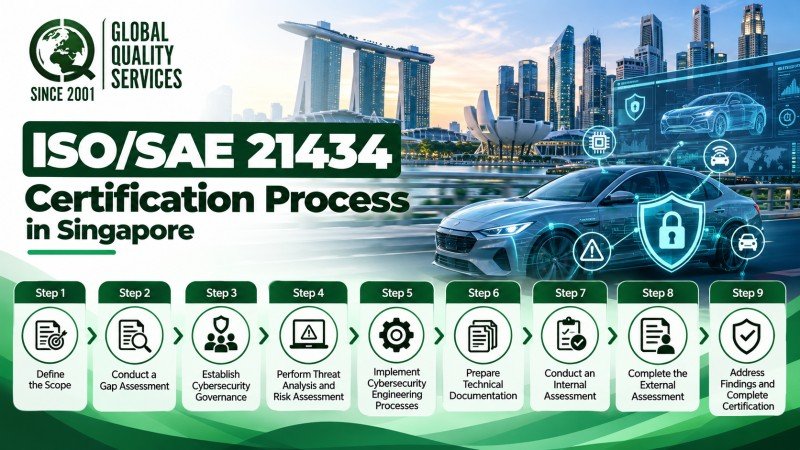
Preparing for ISO/SAE 21434 certification requires coordination between engineering, cybersecurity, quality, and management teams. The following steps can help your organisation prepare for an assessment.
Step 1: Define the Scope
Identify the vehicle systems, components, products, or organisational processes you want to include. Clarify whether you need an organisational cybersecurity management system assessment, product-related evaluation, or both.
Step 2: Conduct a Gap Assessment
Compare your existing engineering and cybersecurity practices with the standard’s requirements. Identify gaps in risk assessment, supplier controls, development processes, documentation, and post-development activities.
Step 3: Establish Cybersecurity Governance
Assign responsibilities for cybersecurity management and define how teams approve decisions, communicate risks, and escalate issues. Make sure relevant employees understand their roles.
Step 4: Perform Threat Analysis and Risk Assessment
Conduct TARA for the relevant vehicle items. Identify potential attack paths, evaluate their consequences, assess risk levels, and determine suitable cybersecurity measures.
Step 5: Implement Cybersecurity Engineering Processes
Integrate cybersecurity requirements into product design, software and hardware development, testing, validation, and production activities. Create procedures that match your actual engineering workflow.
Step 6: Prepare Technical Documentation
Maintain evidence of risk assessments, cybersecurity requirements, design decisions, verification results, and risk treatment activities. Organise these records so assessors can trace decisions back to identified threats and requirements.
Step 7: Conduct an Internal Assessment
Review whether your processes meet the applicable requirements and whether your team follows them consistently. Address identified gaps before engaging an independent assessment or certification body.
Step 8: Complete the External Assessment
Engage a suitable independent assessment or certification provider for your intended scope. The assessment may include process reviews, documentation checks, interviews, and product-related technical evaluations, depending on the certification scheme.
Step 9: Address Findings and Complete Certification
Resolve any nonconformities raised during the assessment. Submit supporting evidence and complete the remaining requirements before the certification provider makes its decision.
How Long Does ISO/SAE 21434 Certification Take?
The timeline depends on your organisation’s existing cybersecurity processes, product complexity, documentation, and assessment scope. A company with established automotive engineering controls may need less preparation than one building its cybersecurity processes from scratch.
Your project may involve:
- Gap assessment: Review existing processes and identify missing requirements.
- Implementation: Develop or improve cybersecurity procedures, governance, and engineering controls.
- Technical preparation: Complete TARA, define cybersecurity requirements, and prepare supporting evidence.
- Internal review: Evaluate implementation and address gaps.
- External assessment: Complete the selected certification or assessment process.
There is no universal timeline for every organisation. Request a project estimate from your consulting or certification provider after defining the scope and reviewing your current level of readiness.
ISO/SAE 21434 and UNECE Regulation No. 155
Automotive businesses often consider ISO/SAE 21434 alongside UNECE Regulation No. 155, which addresses vehicle cybersecurity and cybersecurity management systems.
The two have related but distinct purposes. ISO/SAE 21434 specifies cybersecurity engineering requirements, while UNECE Regulation No. 155 establishes regulatory requirements for vehicle cybersecurity management and relevant vehicle approval activities.
Implementing ISO/SAE 21434 can support relevant cybersecurity activities, but it does not automatically grant regulatory approval or establish compliance with every requirement of UNECE Regulation No. 155.
Singapore-based automotive suppliers working with international manufacturers should identify the regulations, customer requirements, and certification schemes that apply to their products and target markets.
Why Choose Global Quality Services for ISO/SAE 21434 Consulting in Singapore
Preparing for ISO/SAE 21434 requires more than cybersecurity documentation. Your organisation needs engineering processes that address real threats, support informed decisions, and produce reliable evidence.
Global Quality Services can help your team prepare through gap assessments, documentation support, process development, staff training, and certification readiness reviews.
Whether you develop automotive software, electronic components, or connected vehicle technologies, a structured approach can help you identify gaps and strengthen your cybersecurity engineering practices.
Looking to prepare for ISO/SAE 21434 certification in Singapore? Contact Global Quality Services to discuss your requirements, intended assessment scope, and implementation needs.
Frequently Asked Questions
1. How should automotive companies manage cybersecurity risks when a supplier changes a component?
Reassess affected interfaces, dependencies, and threat scenarios before approving the replacement. Document the impact, update relevant cybersecurity requirements, and validate controls where necessary.
2. Does ISO/SAE 21434 apply to vehicles already in production?
The standard addresses lifecycle cybersecurity, including operation and maintenance. Organisations should assess applicable risks and activities for existing products based on their scope and contractual obligations.
3. When should a company repeat its Threat Analysis and Risk Assessment?
Review TARA when product changes, newly discovered vulnerabilities, emerging attack methods, or updated assumptions materially affect cybersecurity risks. Record the rationale and revise risk treatment accordingly.
4. What evidence can automotive suppliers share with customers without exposing confidential information?
Suppliers can share approved summaries, relevant compliance records, and security evidence under agreed confidentiality controls. They should protect proprietary designs and sensitive vulnerability details.
5. Can outsourced automotive software development affect ISO/SAE 21434 compliance?
Yes. Outsourcing does not remove the organisation’s responsibilities for applicable cybersecurity activities. Define supplier requirements, review deliverables, maintain traceability, and verify relevant security evidence before acceptance.