Singapore’s events industry is growing. The Singapore Tourism Board reported that MICE tourism receipts reached S$2.3 billion in 2025, up more than 35% from 2024. This growth puts more attention on how business events are planned and delivered. Source: Singapore Tourism Board
For event companies in Marina Bay, ISO 20121 offers a practical way to manage these responsibilities. Global Quality Services helps organizations review their current practices, identify gaps, and prepare for certification.
What Does ISO 20121 Mean for Event Businesses?
ISO 20121 is an international standard for event sustainability management. It helps organizations manage the environmental, social, and economic effects of their event-related activities.
Think about the work behind a conference at a Marina Bay venue. The organizer may coordinate exhibition stands, printed materials, catering, freight, lighting, cleaning, and dozens of suppliers. Each decision can affect waste, resource use, worker welfare, or attendee access. Without clear responsibilities, sustainability commitments can easily get lost between teams.
ISO 20121 gives organizations a way to bring these decisions into their management system. It asks them to identify significant impacts, set objectives, assign responsibilities, monitor results, and improve their approach over time.
The standard can suit event organizers, venues, exhibition companies, production agencies, and suppliers. The certification scope depends on the activities the organization includes in its management system.
Why Consider ISO 20121 Certification in Marina Bay?
Marina Bay hosts business events that bring together international companies, industry associations, exhibitors, and professional delegates. For businesses serving this market, sustainability can become part of a client’s supplier evaluation rather than a simple marketing claim.
ISO 20121 can help your organization respond to that expectation with documented practices.
Respond to Client Sustainability Requirements
Corporate clients may ask how you manage event waste, choose suppliers, reduce resource use, or consider accessibility. A defined management system helps your team answer these questions with evidence instead of broad promises.
Keep Suppliers and Contractors Aligned
Events rely on many external partners. You might manage a venue, caterer, exhibition builder, transport provider, and audio-visual team for the same event. Clear sustainability criteria help your organization communicate expectations and check whether suppliers meet them.
Find Waste and Cost Reduction Opportunities
Reviewing purchasing, materials, energy use, and waste handling can reveal avoidable costs. ISO 20121 does not guarantee savings, but it helps your team identify areas worth measuring and improving.
Give Your Team Clear Responsibilities
Sustainability work often falls between departments when nobody owns the task. Defined roles and measurable objectives make it easier to track actions and follow up on outstanding issues.
Support Stronger Business Proposals
When a tender asks about sustainable event management, documented policies and performance records can support your response. Certification may strengthen your proposal, although each client sets its own selection criteria.
Which Businesses in Marina Bay Can Use ISO 20121?
ISO 20121 is not limited to companies that own or operate event venues. It can apply to organizations involved in planning, delivering, or supporting events.
Businesses that may benefit include:
- Event management and conference planning companies
- Exhibition and trade show organizers
- Hotels and event venues
- Corporate event and brand activation agencies
- Event production and audio-visual companies
- Exhibition stand designers and contractors
- Catering and hospitality providers
- Event logistics, transport, and equipment suppliers
A business does not need to manage every part of an event to consider the standard. The important task is to define the activities covered by its management system and identify the sustainability impacts it can control or influence.
What Does ISO 20121 Require?
The requirements should make sense for the events your organization manages. A conference organizer and an exhibition contractor will not have identical impacts, so their priorities and controls may differ.
Identify Significant Sustainability Impacts
Review the activities connected to your events. Depending on your services, these may include waste, energy consumption, transport, purchasing, accessibility, labor practices, and effects on local communities.
Understand Stakeholder Expectations
Consider what clients, attendees, employees, contractors, suppliers, and other relevant stakeholders expect from your organization. Keep records of the issues that matter and explain how your business addresses them.
Set Practical Sustainability Objectives
Choose objectives that relate to your actual operations. For example, an event company might track material reuse, reduce printed collateral, improve waste separation, or set supplier selection criteria.
Establish Operational Controls
Put suitable procedures in place for the activities that create significant impacts. These may cover purchasing decisions, supplier communication, event setup, waste handling, and post-event reviews.
Train Employees and Communicate Requirements
Staff need to understand their responsibilities, while contractors and suppliers need clear instructions where their work affects event sustainability. Keep relevant training and communication records.
Monitor Results and Correct Problems
Choose measures that help your team judge whether its actions work. Review the results, investigate problems, and update your procedures when the evidence points to a better approach.
How to Prepare for ISO 20121 Certification in Marina Bay
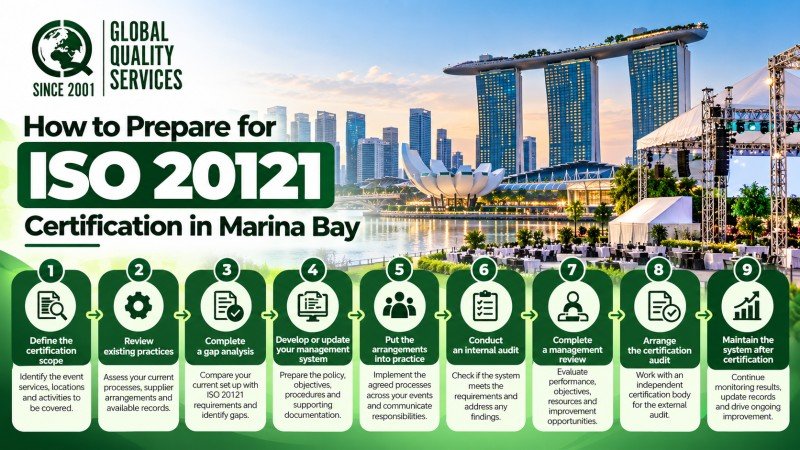
Preparation should start with your current operations, not a collection of generic documents. Global Quality Services can help your team work through the following stages.
1. Define the certification scope
Identify the event services, business activities, and locations you want the management system to cover. A clear scope helps you focus on relevant requirements and avoid including activities your organization does not manage.
2. Review existing practices
Look at the procedures, supplier agreements, event plans, and sustainability records you already use. This review shows which practices support ISO 20121 and which areas need more attention.
3. Complete a gap analysis
Compare your current arrangements with the applicable standard requirements. Record missing controls, unclear responsibilities, and gaps in evidence. Use the findings to set priorities and plan the work.
4. Develop or update your management system
Prepare the policies, objectives, procedures, and records your organization needs. Keep the documents relevant to your events and easy for the people responsible to use.
5. Put the arrangements into practice
Share responsibilities with employees and relevant suppliers. Apply the procedures during real event activities and keep records that show how your organization manages sustainability issues.
6. Conduct an internal audit
Review whether your management system meets the applicable requirements and operates as intended. Record any nonconformities, investigate their causes, and take corrective action.
7. Complete a management review
Have management assess progress against objectives, audit results, outstanding issues, and resource needs. Record decisions and actions that will improve the system.
8. Arrange the certification audit
Choose an appropriate independent certification body and agree on the audit arrangements. The auditor will assess the management system and raise any findings that require attention.
9. Maintain the system after certification
Continue monitoring performance, updating records, and correcting problems. Your organization must keep the system active between audits rather than treat certification as a one-time project.
The time required depends on your organization’s size, event activities, existing practices, and readiness. Global Quality Services can help you plan the preparation work, but the independent certification body makes the certification decision.
What Documents Should You Prepare?
Your records should reflect how your organization manages its event activities. Depending on the scope, you may need:
- Sustainability policy and objectives
- Details of the management system scope
- Stakeholder needs and expectations
- Sustainability impact assessments
- Relevant legal and other obligations
- Supplier selection criteria and communications
- Event operating procedures and sustainability plans
- Employee training and awareness records
- Performance measures and monitoring results
- Internal audit reports
- Corrective action records
- Management review minutes
You may already have some of these records. For example, supplier agreements might include environmental requirements, while event reports might record waste volumes or material use. A gap analysis helps you identify what you can retain and what needs improvement.
Common Problems During ISO 20121 Preparation
Most preparation difficulties arise when sustainability commitments do not match day-to-day work. Watch for these issues:
- Policies without evidence: A written commitment has little value if the organization cannot show how it applies that commitment.
- Supplier requirements that remain informal: Contractors may not understand what your business expects from them.
- Objectives without useful measures: Teams cannot judge progress if they do not collect relevant information.
- Unclear ownership: Tasks may be overlooked when nobody has responsibility for following them through.
- Documents copied from other businesses: Procedures may not reflect your event types, supplier arrangements, or actual operating practices.
- Late audit preparation: Leaving reviews and corrective actions until the last minute can create unnecessary pressure.
Addressing these issues early gives your team more time to test its procedures and gather reliable records before the external audit.
How Global Quality Services Experts Help You with ISO 20121 Certification in Marina Bay
Choosing a consultant is about finding someone who understands management system requirements and can relate them to the way your business operates. Global Quality Services supports organizations with ISO consulting, documentation, training, and certification preparation.
When you work with our team, you can expect:
- Reputed consultant: Guidance on ISO management system requirements and certification preparation.
- Business-focused advice: Recommendations based on your event activities, scope, and existing arrangements.
- Documentation support: Help developing records and procedures that reflect your actual operations.
- Audit preparation: Support with gap analysis, internal audit readiness, and corrective actions.
- Related standards knowledge: Experience supporting management system projects involving standards such as ISO 9001 and ISO 14001.
- Regional support: Assistance for businesses operating in Singapore and other Asian markets.
- Direct communication: Clear discussions about requirements, outstanding tasks, and preparation priorities.
ISO 20121 focuses on event sustainability management. If your organization also needs a broader environmental management system, explore ISO 14001 Certification in Singapore to understand how the two standards may complement each other. The appropriate approach depends on your business needs and the scope of each system.
Discuss Your ISO 20121 Certification Plans with Global Quality Services
If you organize events, manage a venue, or supply services to businesses in Marina Bay, now is a good time to review how your organization handles sustainability. Start by identifying the requirements your clients expect, the impacts your team needs to manage, and the records you can use to demonstrate progress.
Global Quality Services can help you assess your readiness and plan the next steps toward ISO 20121 certification. Contact our team to discuss your business activities, proposed scope, and consulting requirements.
Contact Global Quality Services to request a consultation. We will discuss your current position and help you understand the work involved before you proceed.
Frequently Asked Questions
1. Can a company that organizes only a few events apply for ISO 20121 certification?
Yes. Event volume alone does not determine suitability. The organization should define its activities and scope, then establish a management system that addresses its relevant sustainability impacts.
2. Does ISO 20121 require every event supplier to hold the same certification?
No. The organization should set supplier controls that reflect its activities and significant impacts. It can assess suppliers through appropriate criteria, communication, and records rather than requiring identical certification from everyone.
3. Can we include events held outside Marina Bay in our certification scope?
Potentially, yes. The scope can cover relevant activities across different locations, depending on the organization’s operations and the certification body’s assessment. Define the intended scope clearly before the audit.
4. What evidence can show that our event sustainability objectives are working?
Useful evidence may include waste records, purchasing data, supplier evaluations, energy figures, attendee feedback, and progress against defined targets. Select measures that relate directly to your organization’s significant impacts.
5. Does ISO 20121 certification mean every event is sustainable?
No. Certification assesses the organization’s management system within the agreed scope. The organization must continue to monitor impacts, address problems, and improve its practices as its events and operating conditions change.