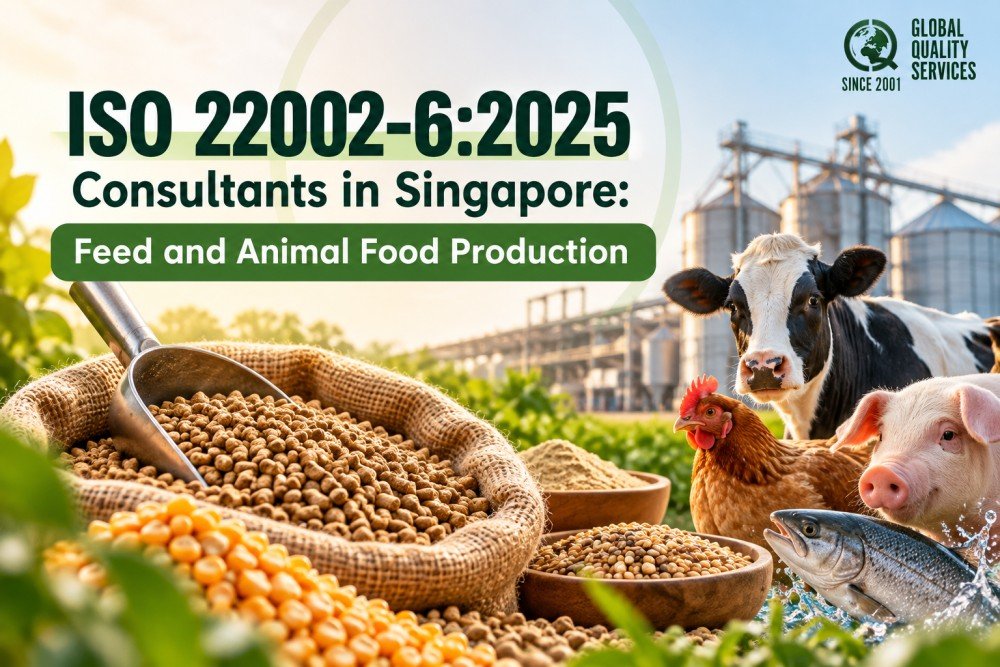
Feed safety can have an impact on animal health, farm efficiency, and consumer safety. If feed companies face contamination issues, this can cause product recalls, disruption to supplies, and damage their reputation with customers. ISO 22002-6:2025 Consultants can help set up prerequisite programmes to ensure feed safety hazards are controlled. This will also help improve controls around production to ensure they meet their food safety management system.
In Singapore, feed for food-producing animals must have a manufacturing and processing licence from the Singapore Food Agency before production can begin. This licence is only valid for a year. This means having good controls and clear documentation in place for feed companies.
Global Quality Services can help you understand what standards apply, identify what areas you have in place, and help prepare for certification. Find out how ISO 22002-6:2025 applies to your feed production, what feed safety risks you have, and how we can help you achieve your goals.
What is ISO 22002-6:2025
ISO 22002-6:2025 is an international standard that sets out prerequisite programmes for managing safety hazards in feed and animal food production. It was published in July 2025 and replaces ISO/TS 22002-6:2016. It should be used with ISO 22002-100 and the appropriate food safety management system requirements.
The standard sets out the requirements for managing the hazards associated with the ingredients, feed production processes, equipment, storage and handling. It covers feed and animal food production.
Feed companies in Singapore will need to consider what hazards are relevant to their ingredients, processes, products and supply chain. It does not replace any Singapore regulation or ISO 22000 requirements.
Who needs ISO 22002-6:2025 in Singapore?
Any organisation involved with feed and animal food production, regardless of their size or complexity.
- Animal Feed Manufacturers
- Feed for cattle, pigs, poultry and other food-producing animals.
- Aquaculture Feed Manufacturers
- Feed for fish and crustaceans raised in aquaculture.
- Pet Food Manufacturers
- Dry, wet, treats and other animal foods.
- Feed Ingredient Suppliers
- Grains, oilseed meals, fish meal, protein sources, premixes and feed additives.
- Feed Processing Plants
- Grinding, mixing, pelleting, extrusion and packaging.
- Feed Importers/Distributors (with production)
- Those undertaking feed processing or other activities.
Depending on which product category you are in, you will need to comply with the relevant regulator. Livestock and aquaculture feeds are regulated by the Singapore Food Agency. Relevant feeds for non-food producing animals are regulated by the Animal and Veterinary Service.
Key Requirements of ISO 22002-6:2025
ISO 22002-6:2025 should be used alongside ISO 22002-100 to set out common prerequisite programme requirements for the food, feed and packaging industry. The standard focuses on feed and animal food production and the risks that need to be managed:
1. Animal Feed Hazards and Risk Assessment
Feed manufacturers will need to identify hazards relevant to their ingredients, processing equipment, conditions and final product. This should consider what type of feed you are producing, what animal species it is intended for, what risks you have from suppliers, and any impacts on animal and human health.
2. Raw Material and Supplier Controls
Raw materials can introduce contamination. You will need controls in place for your supplier approval criteria, raw material specifications, checking upon receipt, and how to manage those materials that do not meet your acceptance criteria.
This should consider the risks relevant to your raw materials such as grains, oilseed meals, animal products, additives, and other feed ingredients. There should also be traceability in place for your incoming materials.
3. Veterinary Drug Residues
Veterinary drug residues and other chemical contamination can introduce risks if they enter your feed via your ingredients, shared equipment or poor handling.
You should identify what contamination routes are relevant to your organisation and have controls in place for acceptance, storage, processing and release. If there are risks, then the manufacturer should have appropriate controls to separate, clean, monitor and manage non-conformances.
4. Batch Separation for Animal Species
Feed for different animal species may have different ingredients, additives or nutrition. The manufacturer should ensure there is no accidental mix-up which could cause a safety, compliance or suitability issue. Batch sequencing, storage, cleaning and identification should consider the risks associated with your products.
5. Mill Hygiene Controls
Feed mills should have controls in place to clean and manage hygiene in line with their equipment, processes and materials. Dust build-up, pests, wear and tear, damp and residue from previous production can impact product safety. This could include having cleaning schedules, preventative maintenance, pest control, dust control and verifying that your cleaning is effective.
6. Traceability, Batch Documentation and Recall
You will need to have documentation in place to link your ingredients, processes, final products, and customers. This will help you investigate any issues, identify affected batches and take action quickly.
7. Storage and Handling
Feed can become degraded or contaminated during storage. The manufacturer should manage the moisture, pests, packaging, and other relevant factors depending on your product and identified risks.
Why ISO 22002-6:2025 is important for Feed Manufacturers in Singapore
Feed safety issues can have an impact on animals, farms, manufacturers and the wider food supply chain. Contaminated feed can introduce food safety risks if it is consumed by animals raised for human consumption. This is highlighted by the Singapore Food Agency. Having a well-managed prerequisite programme will help you manage these risks:
- Better control of contamination: Identify and manage any hazards. Reduced risk of contamination.
- Improved supplier control: Clear expectations for your incoming raw materials and documentation.
- Improved consistency: Reduce avoidable errors, cross-contamination and waste.
- Improved traceability: Identify relevant ingredients and batches.
- Increased confidence from buyers: Show a structured approach to your feed safety and hygiene.
- Improved preparedness for audits: Have documentation to show how you are managing your relevant controls.
- Improved compliance: Ensure your processes meet your relevant customer, certification and regulatory requirements.
Whilst certification will not guarantee that you will never have any contamination, the better you implement, monitor and maintain your controls, the more value you will get from your certification.
Implementing and Preparing for ISO 22002-6:2025 Certification in Singapore
Global Quality Services will help you prepare your management system for the relevant requirements. We will work with you to understand your products, processes, and current controls. Here is the complete process that we follow:
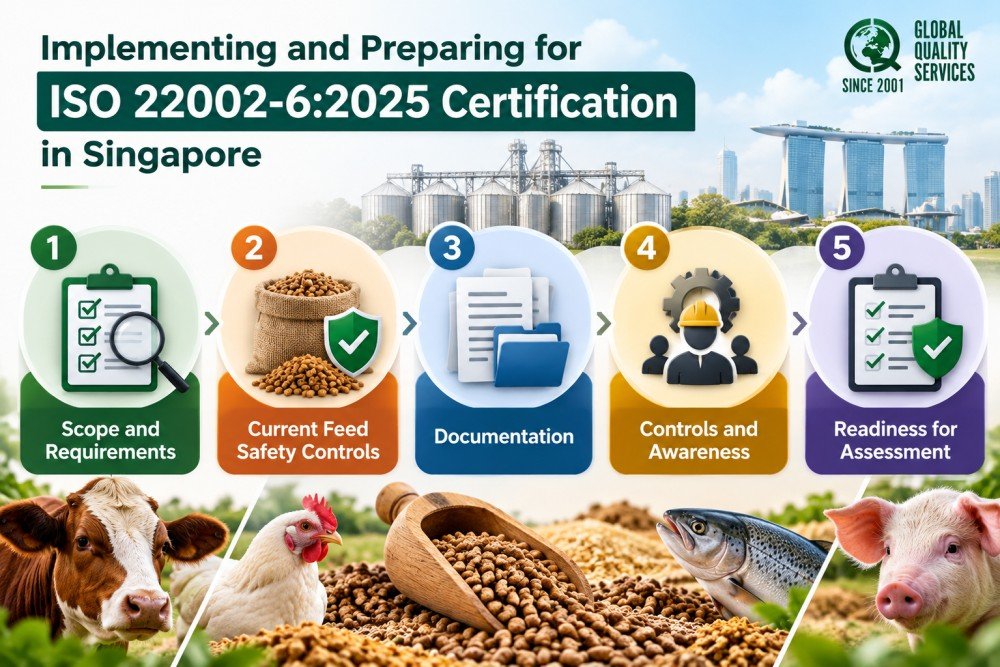
Step 1: Scope and Requirements
Confirm what products you are producing, your production sites and processes. Confirm what edition of ISO 22002:2025 applies to your organisation, what ISO 22002-100 requirements apply, and any relevant Singapore regulations.
Step 2: Current Feed Safety Controls
Review your current controls for raw material acceptance, supplier approval, veterinary drug residues, separation for animal species, mill hygiene, storage and traceability. Identify any gaps.
Step 3: Documentation
Develop or update your relevant procedures, raw material specifications, cleaning schedules, batch documentation, traceability and other prerequisite programme documentation.
Step 4: Controls and Awareness
Ensure you have the required controls in place for your processes, storage and handling. Ensure your staff understands their role and how to follow the relevant procedures and documentation.
Step 5: Readiness for Assessment
Ensure you have the controls documented and working effectively. Review any outstanding items. If you are eligible for certification, ensure you are ready for assessment by an independent certification body.
How Global Quality Services can Help Companies with ISO 22002-6:2025 in Singapore
Choosing the right consultant will ensure you have someone who understands the requirements of management systems, will work with your constraints, and will give you clear advice. We are a reputable consultant to help organisations with international standards and certification requirements. Key reasons to choose us:
- 26 years of consultancy experience
- Experienced team across multiple sectors
- Provide Practical advice
- We have experienced consultants who understand how to implement management systems and what to expect during assessment.
- We will consider your current systems, resources, and production.
- Regional presence across Singapore
We can also help organisations looking to achieve ISO 22000 Certification in Singapore and FSSC 22000 Certification.
Prepare your Feed Safety Management System with Global Quality Services
Improve your controls around feed safety and prepare for the relevant requirements. Get in touch with Global Quality Services to discuss your production processes, risks from your ingredients, current management system, and certification goals. Our team can help you identify the right framework, explain what requirements apply, and give you practical advice on how to get ready. Our regional presence can help you in Singapore, the Philippines, Indonesia, Malaysia, and China. Get in touch with us using our official Singapore website.
Frequently Asked Questions
1. Is ISO 22002-6:2025 a mandatory requirement for Feed Manufacturers in Singapore?
ISO 22002-6:2025 is a voluntary international standard; however, if there is a specific contract/scheme or other requirements, then it may be a requirement. Feed businesses will need to comply with the relevant laws, licences, and regulations in Singapore.
2. What is the difference between ISO 22000 & ISO 22002-6:2025?
ISO 22000 sets out the requirements for a food safety management system. ISO 22002-6:2025 sets out the prerequisite programme requirements for feed and animal food production. This should be used in conjunction with ISO 22002-100 and relevant ISO 22000 requirements.
3. Does ISO 22002-6:2025 apply to Pet Food Manufacturers?
This may apply to pet food and other animal food manufacturers depending on what activities you undertake. You should confirm if it applies to you.
4. How will ISO 22002-6:2025 help me control contamination in my feed?
This standard sets out the requirements for prerequisite programmes to control hazards in feed and animal food production. Depending on your operations, you may have controls in place to manage incoming materials, cleanliness, equipment, cross-contamination, storage, handling and traceability.
5. Who can certify my business to ISO 22002-6:2025?
ISO 22002-6:2025 is a prerequisite programme standard; therefore, it will not be a certification standard for a food safety management system. You should confirm with a competent consultant which certification scheme is applicable and an appropriate independent certification body.