Maintaining food safety controls during transport, storage, and cross-docking is important. This is due to poor hygiene, lack of temperature control, and mixing incompatible products, which can contaminate food. This can cause losses for logistics companies in Singapore, including complaints and loss of supply contracts. Ensuring the correct food safety controls are in place can help to prevent this.
According to the Singapore Food Agency’s food statistics for 2025, there was an improvement in major cases of foodborne illness related to outbreaks of 15 or more people. This reduced from 22.8 to 16.8 per 100,000 population between 2024 and 2025. However, food safety is a shared responsibility throughout the supply chain. Businesses must ensure food is handled and stored correctly.
ISO 22000-5:2025 Consultants in Singapore can help logistics businesses to implement the correct food safety controls. Global Quality Services can help you understand the requirements you need to meet, improve your processes, and ensure you have a food safety management system in place knc dflut-ycxbp evxounwzvk. Read below to understand more about the standard and how we can help your business.
What is ISO 22002-5:2025
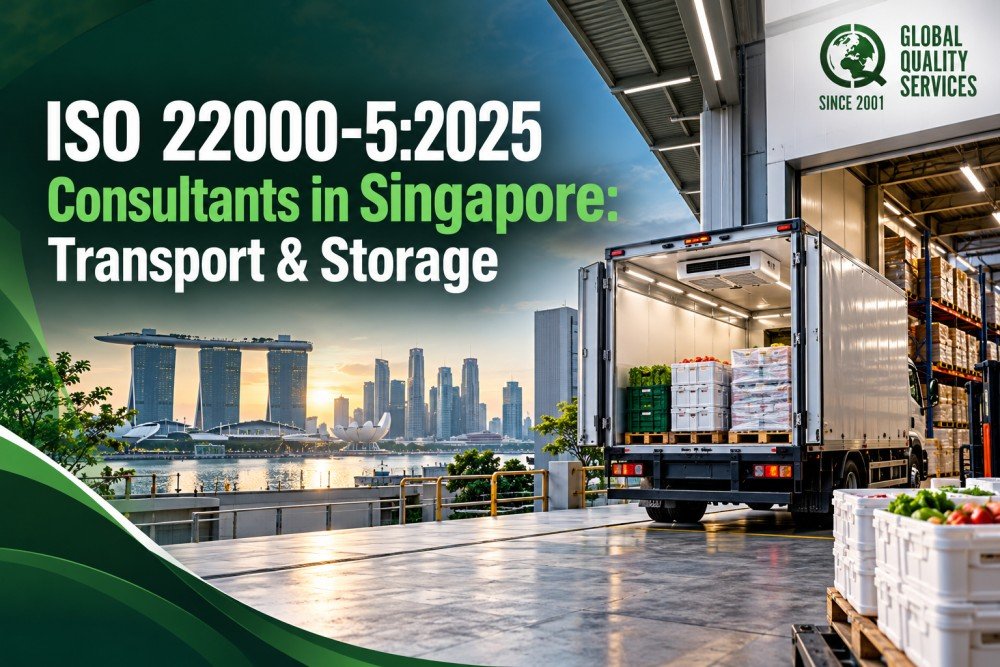
The correct name of this standard is ISO 22002-5:2025 – Prerequisite programmes on food safety – Part 5: Transport and storage. This was published on 29 th July 2025 by the International Organization for Standardization (ISO). It outlines the prerequisite programmes needed to control food safety hazards during transport, storage, cross-docking, and transshipment.
This standard must be used in conjunction with ISO 22002-100:2025, which outlines the general requirements for prerequisite programmes across the food, feed and packaging supply chain. This helps to meet the requirements of the food safety management system ISO 22000.
ISO 22002-5:2025 gives Singapore businesses a specific framework to manage food products during transport and storage. This standard can be used by organisations of all sizes and complexities to ensure the correct controls are in place for their business. Global Quality Services can help you understand what requirements you need to meet.
Why ISO 22002-5:2025 is Important for Food Logistics Businesses in Singapore
Singapore’s food supply chain relies on safe handling, storage, and distribution of food. Logistics companies must ensure they have the correct controls in place to protect food products as they move between ports, warehouses, distribution centres, retailers, etc. If the incorrect controls are in place, businesses may have issues such as:
- Incorrect temperatures for chilled and frozen foods.
- Contamination due to poor cleaning of vehicles, containers or storage.
- Incompatible products being mixed, causing cross-contamination.
- Damage to products during loading/unloading.
- Poor documentation, which makes it difficult to investigate any food safety issues.
- Complaints from customers, rejected deliveries and unnecessary losses.
ISO 22002-5:2025 can help you to put in place the correct prerequisite programmes. By implementing the correct requirements, you can give your customers confidence and show that you take food safety seriously.
For logistics providers in Singapore working with food manufacturers, importers, distributors and retailers, this can help to improve relationships within the supply chain and help your business grow.
Key Requirements of ISO 22002-5:2025 in Singapore
ISO 22002-5:2025 is a Tier 2 addendum specific to the sector. This outlines the requirements for transport and storage. ISO 22002-100:2025 outlines general requirements for the relevant sectors within the supply chain. The following are key areas for food logistics businesses in Singapore.
1. Vehicle and Warehouse Hygiene
Ensure vehicles, containers, loading areas, and warehouses are suitable for the food products. Businesses should ensure they have cleaning schedules, pest control, waste management, and checks in place to ensure there are no conditions that may cause contamination.
2. Temperature Control
Chilled and frozen products should be kept at the correct temperatures during transport and temporary storage. Businesses should ensure they have controls in place to monitor temperature-sensitive areas. Identify where there may be issues and have corrective actions in place if the temperatures are out of range.
3. Prevent Incompatible Products Being Mixed
When transporting different products, there can be a risk of contamination. Businesses should ensure they have considered compatibility, allergens, chemicals, packaging, and segregation.
4. Safe Loading/Unloading and Storage
Ensure food products are protected from contamination and damage. Businesses should ensure they have correct controls in place, such as checking vehicles, packaging, storage, and ensuring products are not coming into contact with contaminated surfaces.
5. Cross Docking and Transshipment
Food products may go through several handling processes. Businesses should have controls in place to ensure food safety throughout unloading, sorting, temporary storage, consolidation, and reloading.
6. Documentation and Corrective Actions
Having documentation such as cleaning, temperature, inspection, and corrective action will help to show controls are in place. Having clear roles will help staff to quickly respond if vehicles, areas of the warehouse, or products do not meet the food safety requirements.
ISO 22002-5:2025 Implementation and Certification Process in Singapore
Global Quality Services helps businesses prepare their food safety management systems for assessment through five practical steps:
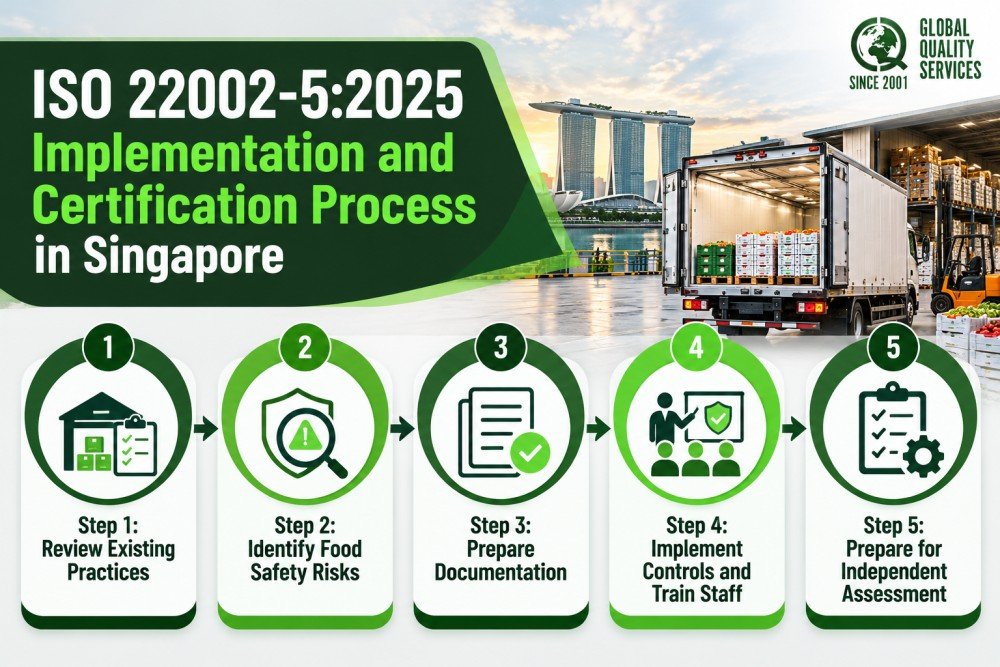
Step 1: Review Existing Practices
Assess current transport, storage, hygiene, and temperature control practices to identify gaps.
Step 2: Identify Food Safety Risks
Review vehicle cleanliness, warehouse hygiene, temperature deviations, and mixed-load contamination risks.
Step 3: Prepare Documentation
Develop or update relevant procedures, temperature logs, cleaning schedules, and inspection records.
Step 4: Implement Controls and Train Staff
Apply the required controls and train employees on hygiene, safe handling, and contamination prevention.
Step 5: Prepare for Independent Assessment
Review implementation records, address outstanding gaps, and prepare for assessment by an independent certification body.
Who in Singapore Would Benefit from ISO 22002-5:2025 Consultancy?
ISO 22002-5:2025 is relevant to businesses that transport or store food within the supply chain. The correct controls will depend on the products being handled, conditions, and processes within the business. Businesses that may benefit from consultancy include:
- Food transport and distribution
- Cold chain transport
- Third-party logistics
- Cold storage and food warehouses
- Importers and distributors with storage
- Cross-docking and transshipment
- Freight
- Temperature-controlled deliveries
How Global Quality Services Experts Can Help with ISO 22002-5:2025
By choosing an experienced consultant, you can ensure your food safety requirements apply to your transport and storage processes. Global Quality Services is a reputable consultant who can provide consultancy, training, documentation, and help with certification for various industries. We can help your business with:
- Over 26 years of consultancy experience.
- ISO management systems and food safety experience.
- Qualified professionals with lead auditor knowledge.
- Practical advice.
- Help with creating clear and effective documentation.
- Focus on audit readiness.
- Experience with various industries.
- Advice on working with third-party certification bodies.
Global Quality Services understands that a food transport business and cold storage will have different risks. We will consider the processes, facilities, handling, and food safety requirements of the business.
If you are looking for a wider food safety management system, you may want to look at ISO 22000 Certification Services in Singapore and FSSC 22000 Certification in Singapore.
Get Your Food Logistics Business Ready for Certification with Global Quality Services
Improve your food transport and storage controls with the help of Global Quality Services. Our consultants can help you understand the requirements you need to meet, improve any gaps, and put in place a food safety management system.
Contact Global Quality Services today to discuss your requirements, book a consultation, and receive a tailored proposal. We have a presence across Singapore, the Philippines, Indonesia, Malaysia and China to help your business with certification.
Frequently Asked Questions
1. Is ISO 22002-5:2025 a certification?
No, ISO 22002-5:2025 outlines the prerequisite programmes for transport and storage. This should be used in conjunction with ISO 22002-100:2025 and supports an ISO 22000-based food safety management system.
2. What is the difference between ISO 22000 and ISO 22002-5:2025?
ISO 22000 outlines the overall requirements for a food safety management system. ISO 22002-5:2025 outlines the specific prerequisite programmes for transport, storage, cross-docking, and transshipment.
3. Does ISO 22002-5:2025 apply to cold storage in Singapore?
Yes, cold storage facilities handling food within the supply chain will be relevant. The correct controls should be in place for temperature, hygiene, handling, and preventing contamination.
4. How does ISO 22002-5:2025 help to prevent contamination during transport?
It provides a framework to put in place the correct prerequisite programmes. Depending on the operation, this may include cleaning vehicles, separating products, monitoring temperatures, handling, and corrective actions.
5. Can small logistics companies in Singapore implement ISO 22002-5:2025?
Yes, this standard can be used by businesses of all sizes and complexities. Businesses should ensure they have controls in place that are suitable for their products, processes, facilities, and food safety risks.