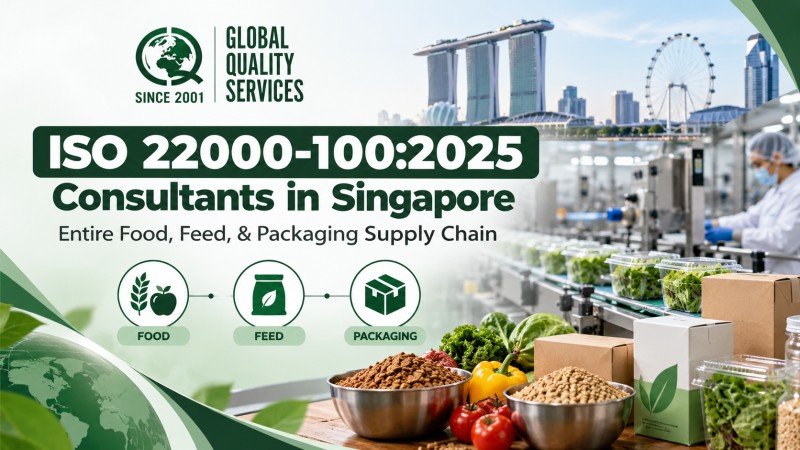
ISO 22002-100:2025 helps businesses across Singapore’s food, feed, and packaging supply chain strengthen hygiene and control contamination risks. According to the Singapore Food Agency’s 2025 food statistics, Singapore imports more than 90% of its food from over 180 countries and regions.
This extensive supply network makes consistent food safety practices essential. Hiring an experienced consultant can help your business identify gaps, implement suitable prerequisite programmes, prepare documentation, and support ISO 22000 certification readiness.
What is ISO 22002-100:2025
ISO 22002-100:2025 is an international standard that specifies common prerequisite programmes for food safety across the food, feed, and packaging supply chain. It helps organizations establish and maintain the hygiene practices and operating controls needed to manage food safety hazards.
The standard works alongside ISO 22000:2018, particularly Clause 8.2, which addresses prerequisite programmes. It brings common requirements together while allowing businesses to apply additional sector-specific requirements where necessary.
For example, a food manufacturer in Singapore may need controls for facility hygiene, water quality, pest management, and supplier handling. A packaging manufacturer may need additional controls suited to its production activities. ISO 22002-100:2025 establishes the shared foundation, while the relevant sector-specific part addresses further operational risks.
Why is ISO 22002-100:2025 Important for Businesses in Singapore?
Singapore’s food supply chain includes importers, food manufacturers, distributors, storage facilities, retailers, and packaging suppliers. These businesses need consistent controls to manage contamination risks as products move between suppliers, facilities, and customers.
ISO 22002-100:2025 helps organizations establish practical hygiene and operational controls across these activities. It also gives teams a consistent approach to managing common food safety risks, especially when several business units or supply chain partners handle the same products.
Here is why the standard matters to Singapore businesses:
- Control contamination risks: Establish clear practices for facility hygiene, cleaning, pest control, and preventing cross-contamination.
- Strengthen food safety management: Support the implementation of prerequisite programmes within an ISO 22000-based food safety management system.
- Improve supplier coordination: Set consistent expectations for suppliers, contractors, and other parties involved in relevant operations.
- Support audit readiness: Maintain documented procedures and records that help demonstrate how the organization manages food safety risks.
- Build customer confidence: Show customers and business partners that food safety controls form part of everyday operations.
Benefits of ISO 22002-100:2025
Implementing ISO 22002-100:2025 can help your organization build stronger food safety practices and improve operational consistency. Here are the key benefits of achieving ISO 22002-100:2025:
1. Consistent Food Safety Practices
The standard establishes common prerequisite programmes across the food, feed, and packaging supply chain. Your teams can follow documented hygiene practices instead of relying on informal instructions that vary between departments.
2. Better Contamination Prevention
Clear procedures for cleaning, pest control, personal hygiene, and material handling help employees identify and control contamination risks. These measures support safer operations throughout production, storage, and distribution.
3. Stronger Supplier and Material Controls
Documented supplier checks, incoming material inspections, and traceability procedures help businesses identify potential issues earlier. They also support more consistent decisions when suppliers fail to meet agreed requirements.
4. Improved Audit Preparation
Organized procedures, inspection records, and corrective action reports make it easier to demonstrate how your business manages food safety. Teams can identify missing evidence before internal or external assessments.
5. More Efficient Multi-Sector Operations
Organizations working across food manufacturing, packaging, distribution, and related activities can use common PRPs as a shared foundation. They can then address additional risks through the relevant sector-specific requirements.
6. Greater Customer Confidence
Customers and supply chain partners often expect businesses to demonstrate sound food safety practices. A well-implemented programme helps you explain your controls and show how your organization manages day-to-day risks.
These benefits depend on effective implementation. The standard itself does not guarantee zero contamination, regulatory compliance, or automatic certification.
Step-by-Step Process for ISO 22002-100:2025 Implementation in Singapore
Implementing ISO 22002-100:2025 requires more than preparing documents. Your business must assess its activities, establish suitable controls, train employees, and maintain records that demonstrate consistent implementation:
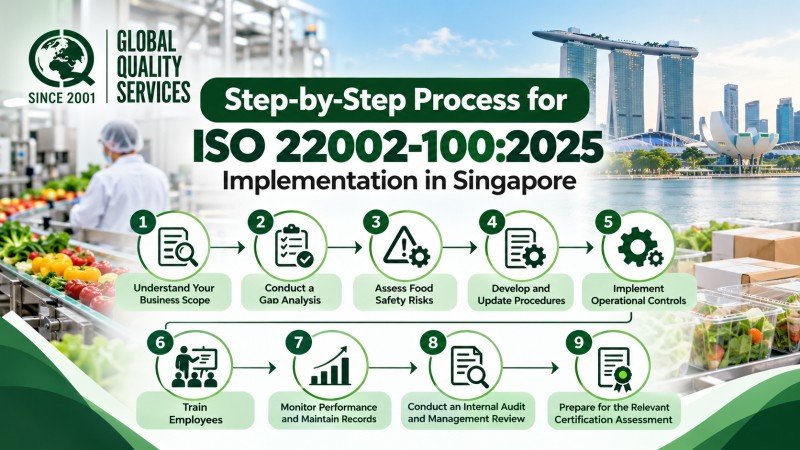
Step 1: Understand Your Business Scope
Identify the activities covered by your food safety management system, including sourcing, production, packaging, storage, transport, and distribution. Define the facilities, products, processes, and departments that need prerequisite programmes.
Step 2: Conduct a Gap Analysis
Compare your existing food safety practices with ISO 22002-100:2025 requirements. Review facility conditions, cleaning routines, pest control, supplier management, traceability, and other relevant controls to identify gaps.
Step 3: Assess Food Safety Risks
Examine how your operations could introduce, spread, or fail to control food safety hazards. Consider raw materials, water, equipment, employees, storage conditions, waste handling, and interactions between products and packaging.
Step 4: Develop and Update Procedures
Create or revise procedures for the applicable prerequisite programmes. Establish clear responsibilities, cleaning schedules, inspection criteria, supplier controls, traceability arrangements, and corrective action processes that match your operations.
Step 5: Implement Operational Controls
Put the approved procedures into practice across relevant departments. Maintain hygienic facilities, monitor cleaning activities, control pests, manage waste, and apply suitable handling and storage practices.
Step 6: Train Employees
Explain the relevant procedures to employees, supervisors, and contractors. Use practical demonstrations to show how their daily responsibilities affect hygiene, contamination prevention, material handling, and food safety records.
Step 7: Monitor Performance and Maintain Records
Conduct routine inspections and review records to confirm that controls work as intended. Investigate deviations, assign corrective actions, and retain evidence of completed checks and follow-up activities.
Step 8: Conduct an Internal Audit and Management Review
Evaluate whether the organization follows its documented procedures and meets applicable requirements. Review audit findings, recurring problems, resource needs, and improvement opportunities before proceeding with any relevant external assessment.
Step 9: Prepare for the Relevant Certification Assessment
If your organization seeks ISO 22000 certification, confirm that its prerequisite programmes meet the applicable requirements. Address outstanding findings and coordinate with an appropriate certification body for the relevant assessment.
Key Requirements of ISO 22002-100:2025
ISO 22002-100:2025 establishes common prerequisite programme requirements that organizations must adapt to their activities. The following areas are useful starting points when assessing your current arrangements. The exact controls should follow the standard’s applicable clauses and your operational risks.
1. Building Design and Facility Layout
Your premises should support hygienic operations and help prevent contamination. Review building condition, workflow, equipment placement, and separation between activities that could create cross-contamination risks.
2. Utilities and Water Management
Assess the suitability and maintenance of relevant utilities, including water, air, and gas where applicable. Establish checks that help prevent utilities from introducing contaminants into products, equipment, or production areas.
3. Cleaning and Sanitation
Create cleaning procedures that specify the areas, equipment, cleaning methods, frequency, responsible employees, and verification activities. Keep records of completed cleaning and address any unsatisfactory results.
4. Pest Control and Waste Management
Implement measures to prevent pest entry and activity. Manage waste through suitable collection, storage, and disposal practices so that waste does not contaminate products, materials, equipment, or clean operating areas.
5. Personal Hygiene and Employee Practices
Define hygiene rules for employees and visitors who enter relevant operational areas. Cover handwashing, protective clothing, personal cleanliness, illness reporting, and other practices appropriate to the activities performed.
6. Prevention of Cross-Contamination
Assess how people, equipment, raw materials, finished products, and packaging move through your facilities. Use appropriate separation, cleaning, handling, and workflow controls to reduce the risk of contamination between activities.
7. Supplier Controls and Traceability
Set criteria for selecting and monitoring relevant suppliers. Maintain records that identify incoming materials, suppliers, batches, and product movements, allowing your team to investigate concerns and trace affected products when necessary.
8. Food Defense and Food Fraud Controls
Consider the risks of intentional contamination, unauthorized access, substitution, or fraudulent materials. Establish controls proportionate to your operations and document the actions you take to address relevant vulnerabilities.
9. Monitoring and Corrective Actions
Define how employees check whether prerequisite programmes operate effectively. Record deviations, investigate their causes, implement corrective actions, and review whether those actions resolve the identified problems.
Documents Required for ISO 22002-100:2025 Implementation
Your organization needs documents and records that reflect its actual activities and demonstrate how it manages food safety risks. The exact documentation depends on your operations, existing food safety system, and applicable sector-specific requirements.
- Food Safety Management System Scope
- Process Flow Diagrams
- Food Safety Hazard Assessment
- Facility Maintenance Records
- Utilities Monitoring Records
- Pest Control Procedures and Records
- Cleaning and Sanitation Procedures
- Personal Hygiene Procedures
- Supplier Approval and Evaluation Records
- Incoming Material Inspection Records
- Storage and Transportation Records
- Waste Management Procedures
- Cross-Contamination Prevention Procedures
- Food Traceability Records
- Food Defense and Food Fraud Assessments
- Employee Training Records
- Inspection and Monitoring Records
- Nonconformity and Corrective Action Records
- Internal Audit Reports
- Management Review Records
Why Choose Global Quality Services for ISO 22002-100:2025 Consulting in Singapore
Preparing for ISO 22002-100:2025 can feel challenging when you manage multiple food safety processes. Global Quality Services helps you identify gaps, prepare documentation, improve hygiene controls, and train employees to follow the right procedures.
Our consultants help you understand the applicable requirements and prepare for relevant certification assessments. Global Quality Services supports ISO 22002-2:2025 Consulting for successful certification. Contact Global Quality Services today to discuss your business needs and plan your implementation journey. Our regional presence across Singapore, the Philippines, Indonesia, Malaysia, and China supports businesses with their certification needs across key Asian markets.
Strengthen Your Food Safety System with ISO 22002-100:2025 Consulting in Singapore
Your food safety practices should do more than meet basic expectations. They should protect your operations, build customer trust, and help you compete for valuable business opportunities. Global Quality Services helps Singapore businesses identify compliance gaps, strengthen hygiene controls, prepare essential documentation, and implement effective prerequisite programmes.
Whether you are a food manufacturer, distributor, or packaging supplier, our consultants provide practical guidance tailored to your operations. Partner with Global Quality Services today to simplify implementation, improve audit readiness, and build a stronger foundation for ISO 22000 certification.
Frequently Asked Questions
1. Is ISO 22002-100:2025 certification mandatory for Singapore businesses?
ISO 22002-100:2025 is not a standalone certification requirement. However, organizations pursuing ISO 22000 certification need suitable prerequisite programmes that meet applicable food safety management system requirements.
2. Can a packaging manufacturer use ISO 22002-100:2025 alone?
A packaging manufacturer can implement the common requirements, but it generally also needs ISO 22002-4:2025 for applicable packaging manufacturing prerequisite programmes.
3. How does ISO 22002-100:2025 differ from ISO 22000:2018?
ISO 22000 specifies food safety management system requirements, while ISO 22002-100 details common prerequisite programmes that support hygienic operating conditions and hazard control.
4. Does ISO 22002-100:2025 apply to small food businesses?
Yes. The standard applies to organizations across the food, feed, and packaging supply chain regardless of size or complexity. Businesses should adapt controls to their activities.
5. Which sector-specific standard should a Singapore business implement alongside ISO 22002-100:2025?
The applicable part depends on your activities. Food manufacturing, catering, packaging, transport and storage, animal feed, and retail may require different sector-specific PRP standards.